Bad Weather Style: Rainy, Windy, Snowy, Humid
How to dress for rain, wind, snow, heat, and humidity without giving up shape or polish.
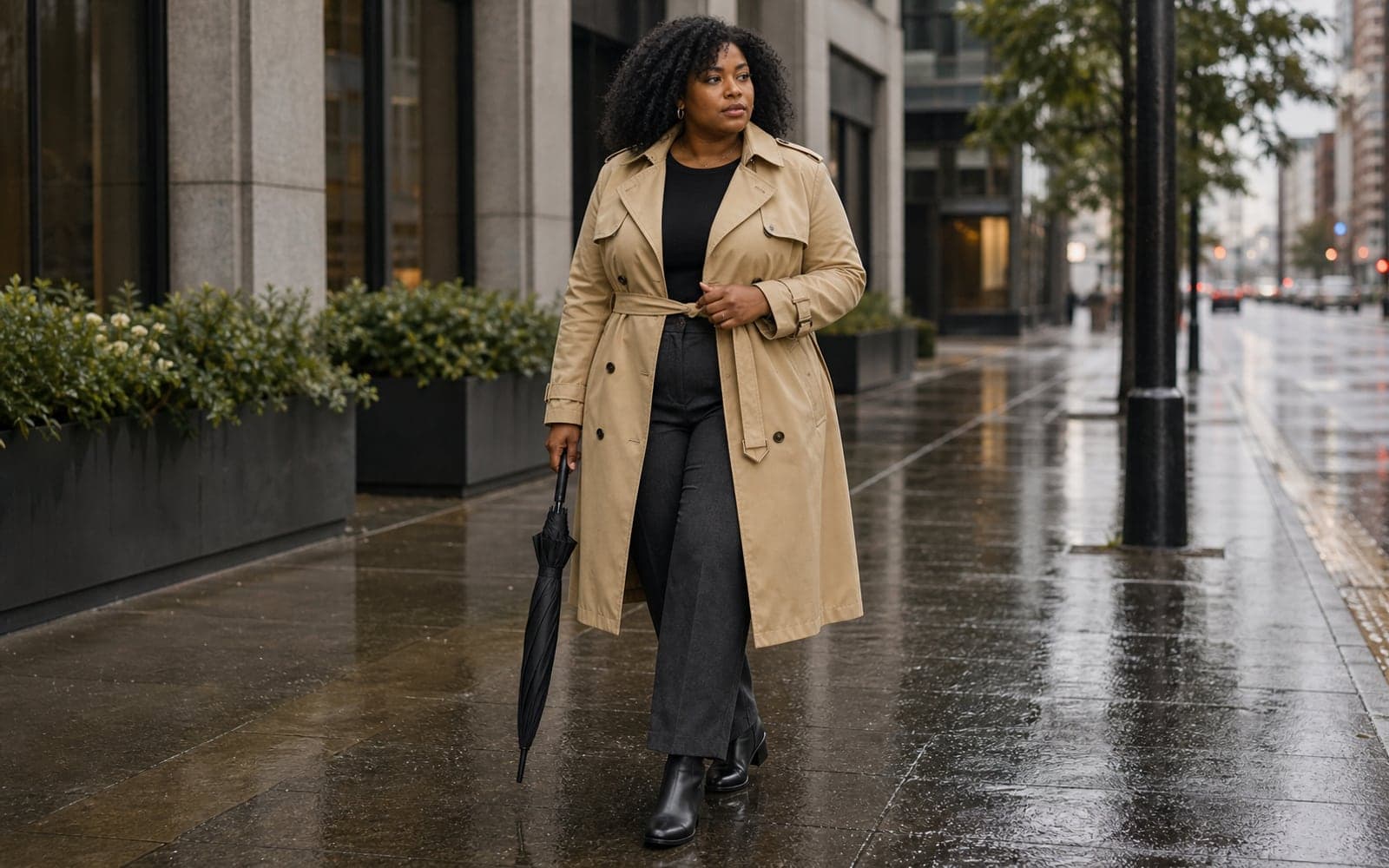
Bad weather does not ruin style. Bad planning does.
The mistake is treating weather as an interruption instead of a styling constraint. Rain, wind, snow, heat, and humidity each change what an outfit needs to do: protect, breathe, anchor, insulate, dry quickly, or hold shape. The best bad-weather outfits are not just practical. They look intentional because every layer has a job.
For women, the useful approach is not to build five separate wardrobes for five weather problems. It is to understand the formula: protective outer layer, climate-appropriate base, stable footwear, controlled volume, and one visual detail that keeps the outfit from looking like emergency gear. A trench, rain shell, waterproof boot, linen trouser, puffer, or technical sandal can all look polished when the proportions are right.
Bad weather style is not about suffering for the outfit. It is about refusing to let the weather make every outfit look accidental.
What This Style Is
Bad weather style is functional dressing with shape. It accepts that the outfit has to deal with water, wind, sweat, cold, slush, or heat, but it still protects the line of the body and the visual mood of the look.
It is:
- A trench coat over a column of black, not a wrinkled cardigan under a soaked wool coat.
- A rain shell with straight-leg denim and waterproof boots, not a hiking jacket thrown over office clothes with no relationship to the rest of the outfit.
- A linen trouser and sleeveless knit in humidity, not a heavy synthetic blouse that clings by noon.
- A belted puffer or long wool coat with tall boots, not five bulky layers with no proportion.
- A technical sandal or sleek flat with breathable tailoring, not flip-flops pretending to be workwear.
The goal is not to hide the weather gear. The goal is to make it part of the outfit.
What It Is Not
Bad weather style is not defaulting to the least flattering item in your closet because the forecast is inconvenient.
Avoid three traps:
- Over-practical gear with no styling logic. A great rain jacket can still look wrong if the rest of the outfit is too delicate, too formal, or too visually unrelated.
- Pretty pieces that fail immediately. Suede in rain, puddle-grazing hems, thin knits in wind, and stiff synthetics in humidity will make the outfit look worse because the clothes stop functioning.
- Bulky layering without shape. Cold weather requires insulation, but not every layer needs to be oversized. Mix volume with structure.
The better rule: choose one weather-solving piece first, then build the outfit around it.
The Core Pieces
These are the pieces that make bad-weather dressing repeatable. You do not need every item, but you need enough coverage across rain, wind, snow, cold, heat, and humidity.
Belted Trench Coat
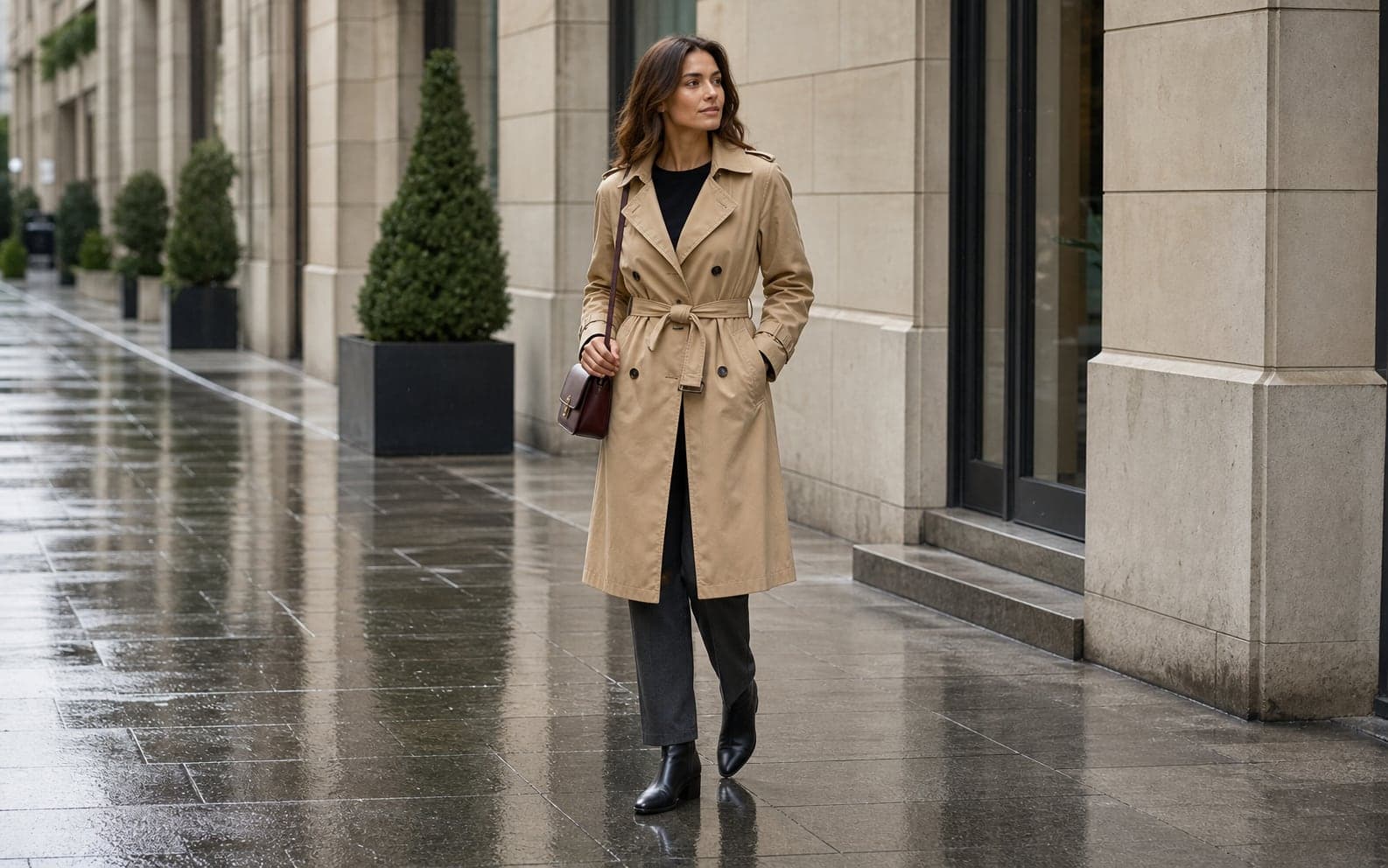
A trench is the most useful polished rain layer when the weather is wet but not severe. Choose cotton-blend, water-resistant, or coated fabric with enough structure to hold the shoulder and waist. Beige, olive, navy, chocolate, and black are the most flexible.
Category: Outerwear; trench coat
Best colors: beige, olive, navy, chocolate, black
Modera tags: neutral or earth tone, water-resistant, structured, classic, rain, work office, casual day, travel
Minimal Rain Shell
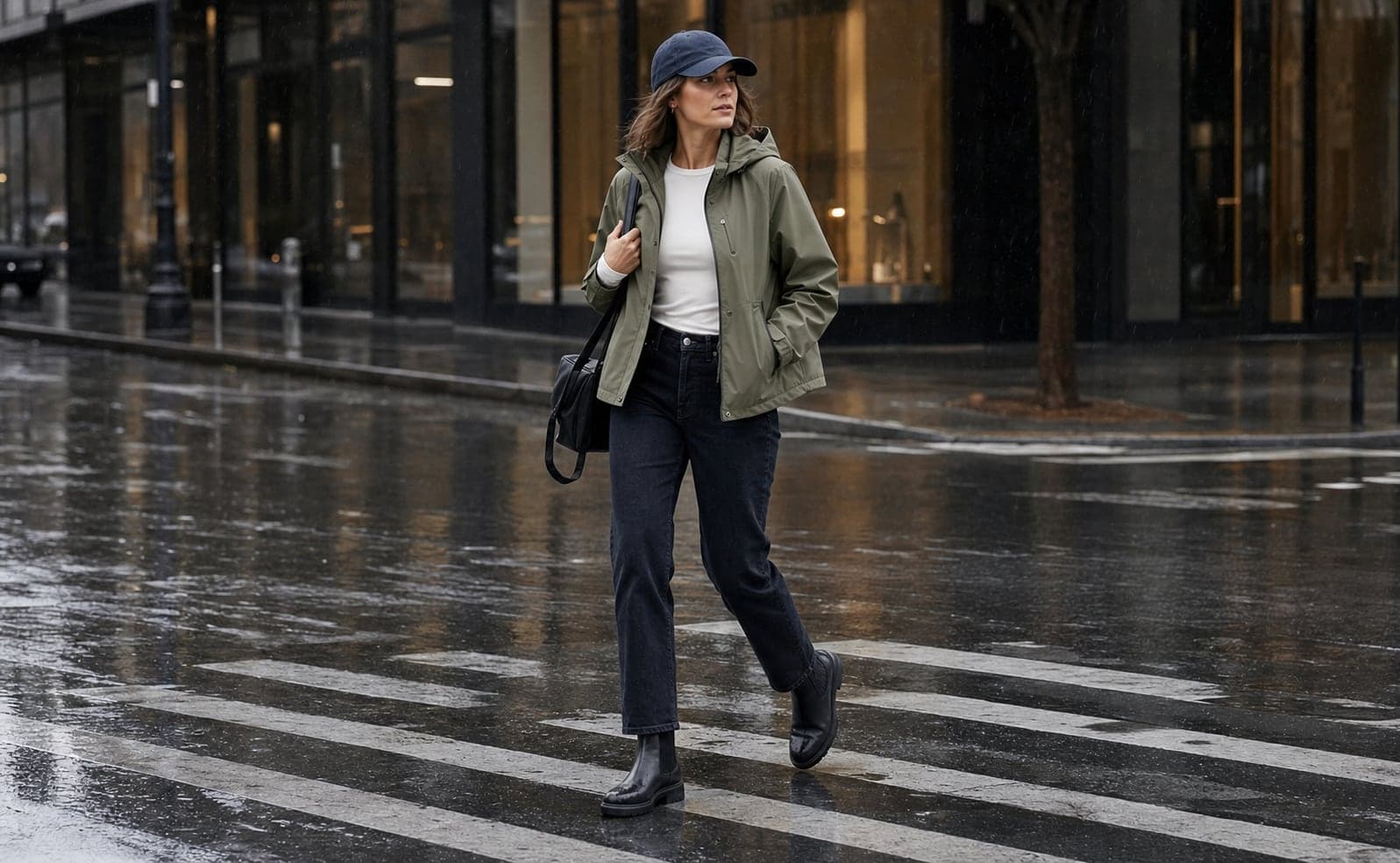
A clean rain shell works when the weather is too wet or windy for a trench. The key is avoiding overly sporty styling unless that is the point. Matte fabric, a clean hood, and a slightly cropped or mid-thigh length make it easier to wear with denim, trousers, or dresses.
Category: Outerwear; rain jacket
Best colors: black, navy, olive, grey
Modera tags: waterproof, smooth texture, technical, rain, wind, outdoor weather, travel
Waterproof Ankle Boots
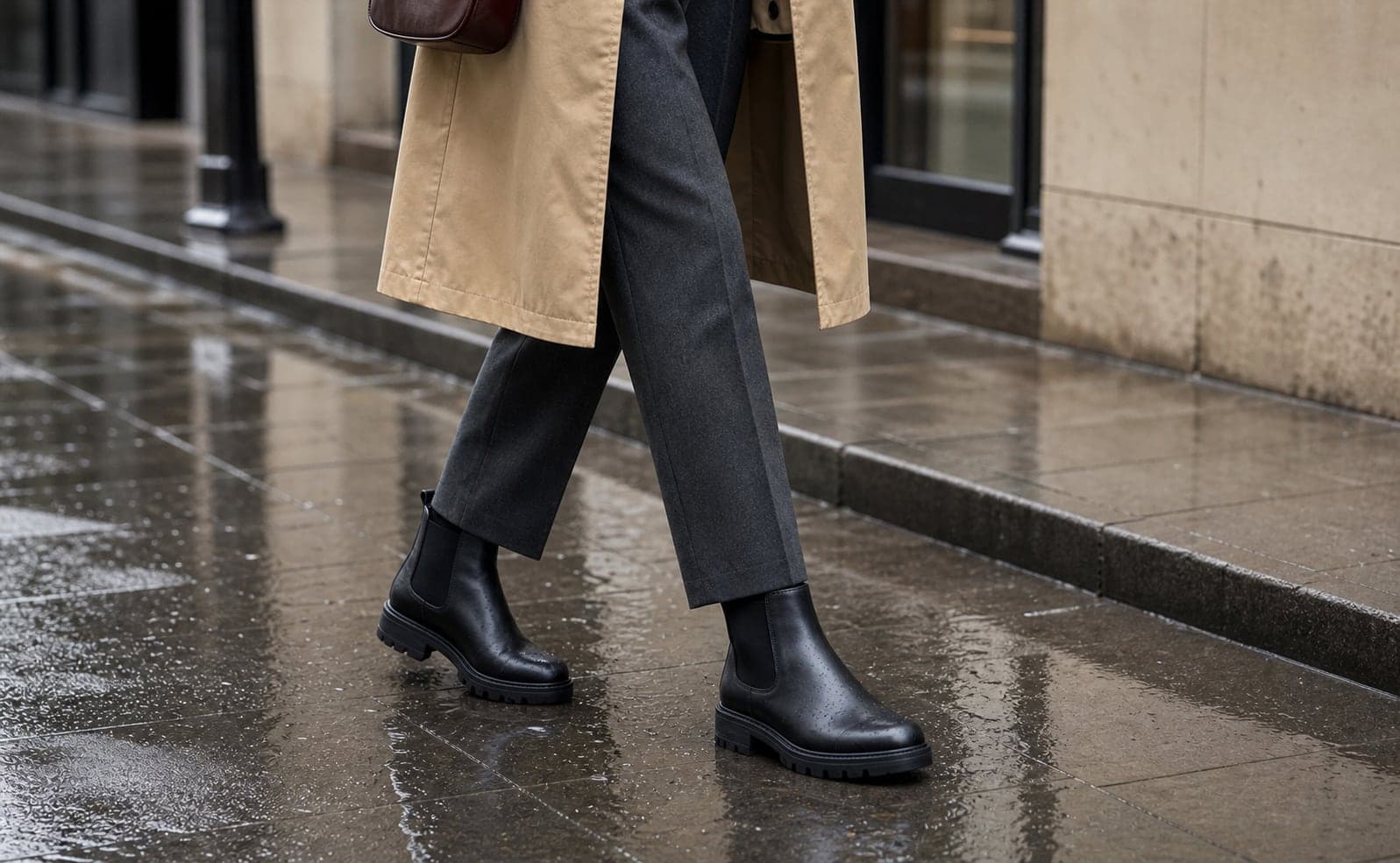
Waterproof boots should look like real footwear, not only utility gear. Chelsea-style rubber boots, leather waterproof boots, lug-sole boots, or sleek combat boots are the most wearable. The shaft should sit cleanly under straight-leg jeans or with tights and a skirt.
Category: Footwear; ankle boot
Best colors: black, brown, burgundy, olive
Modera tags: waterproof, lug sole, technical, classic, rain, snow, casual day, work office
Tall Boots
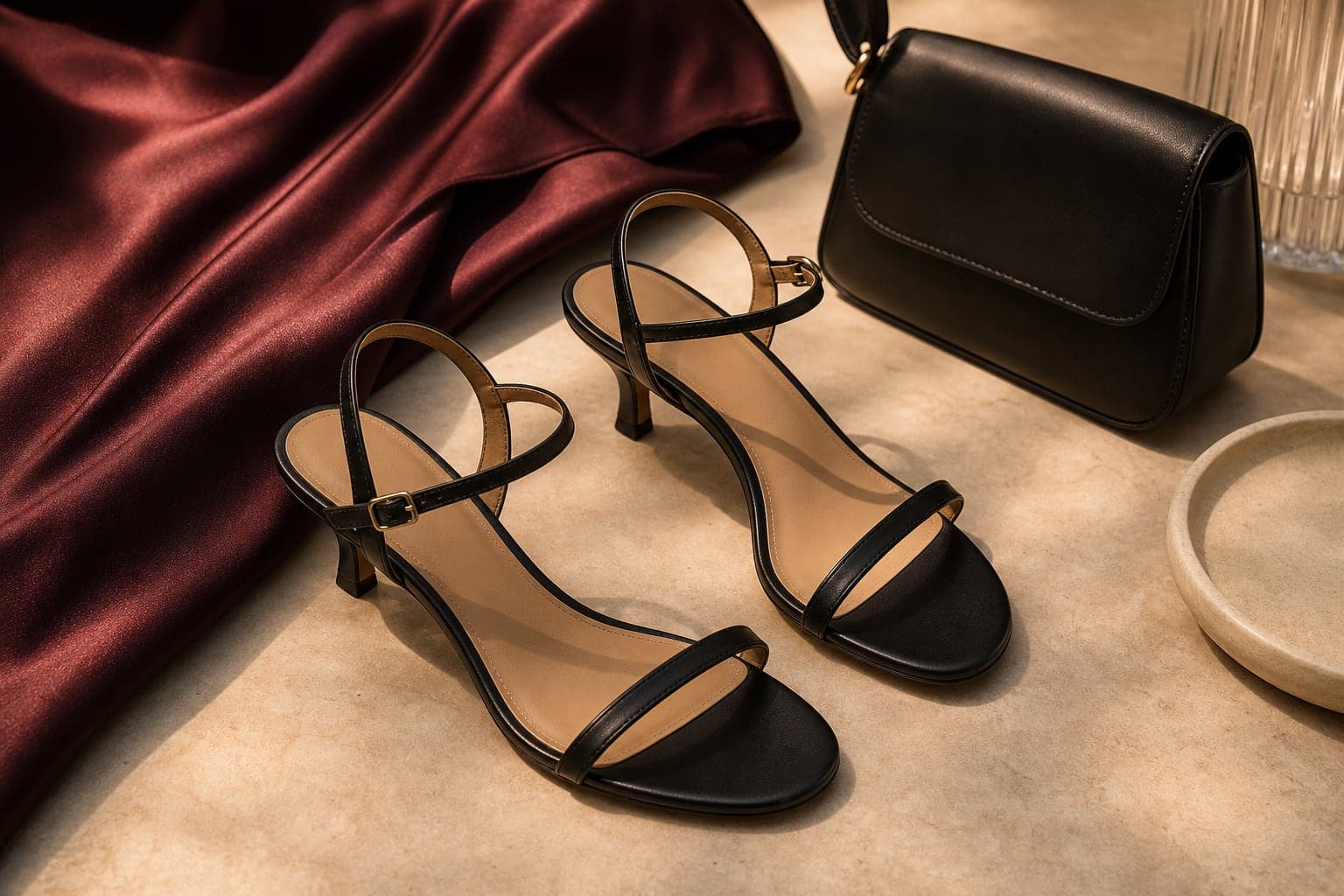
Tall boots solve cold and wet-weather dressing because they protect the lower leg and add shape. They work with midi skirts, knit dresses, slim pants, and long coats. A low block heel or flat sole is more useful than a delicate heel.
Category: Footwear; tall boot
Best colors: black, brown, chocolate
Modera tags: leather or synthetic, smooth, polished, cold, rain, date dinner, work office, casual day
Long Wool Coat
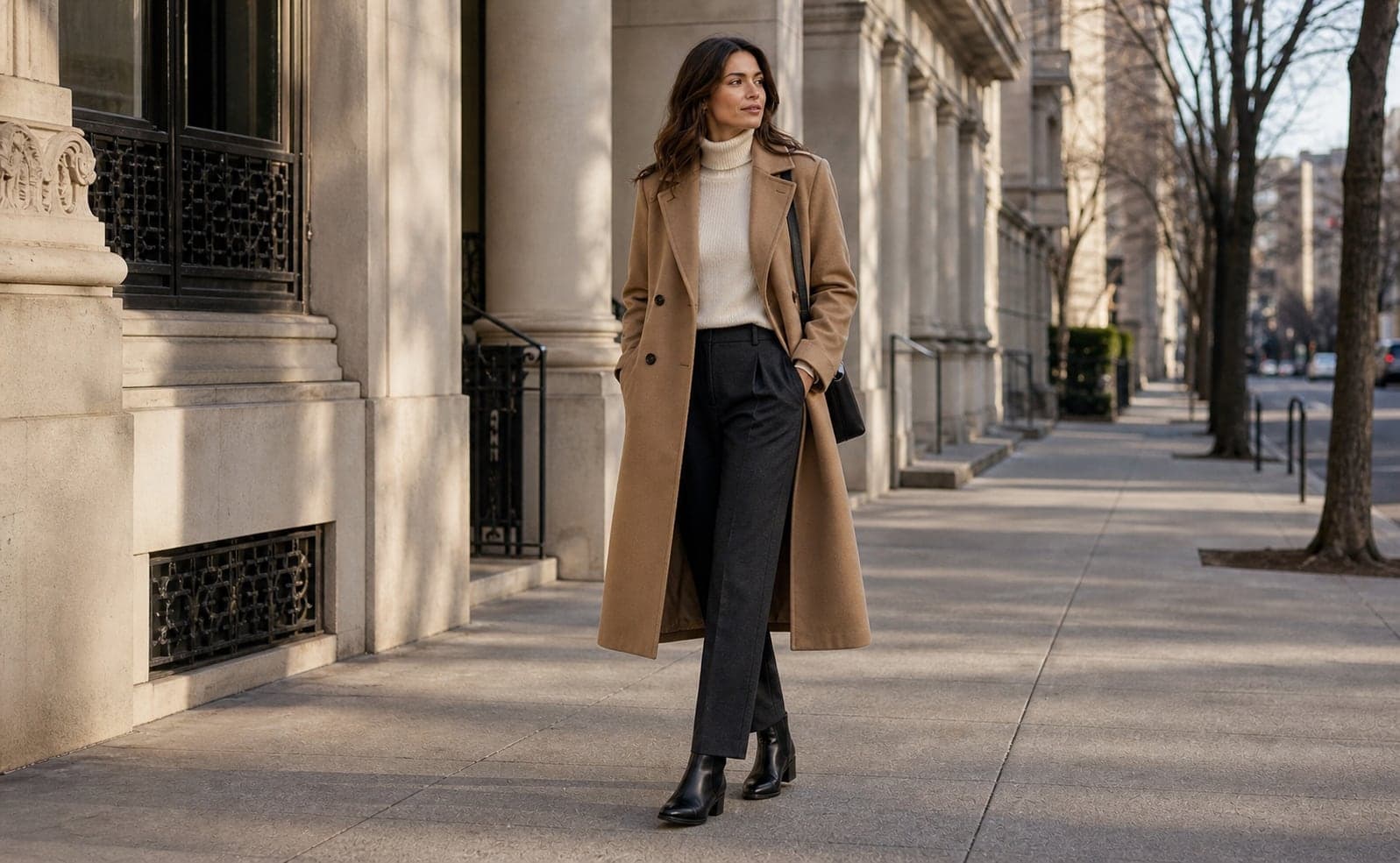
For cold, dry days, a long wool coat gives the cleanest silhouette. It works because it creates one strong vertical line over layers. Choose a coat with enough room for knitwear but not so much volume that the shoulders collapse.
Category: Outerwear; wool coat
Best colors: camel, grey, navy, black, chocolate
Modera tags: wool, structured, classic, cold, work office, date dinner, travel
Shaped Puffer
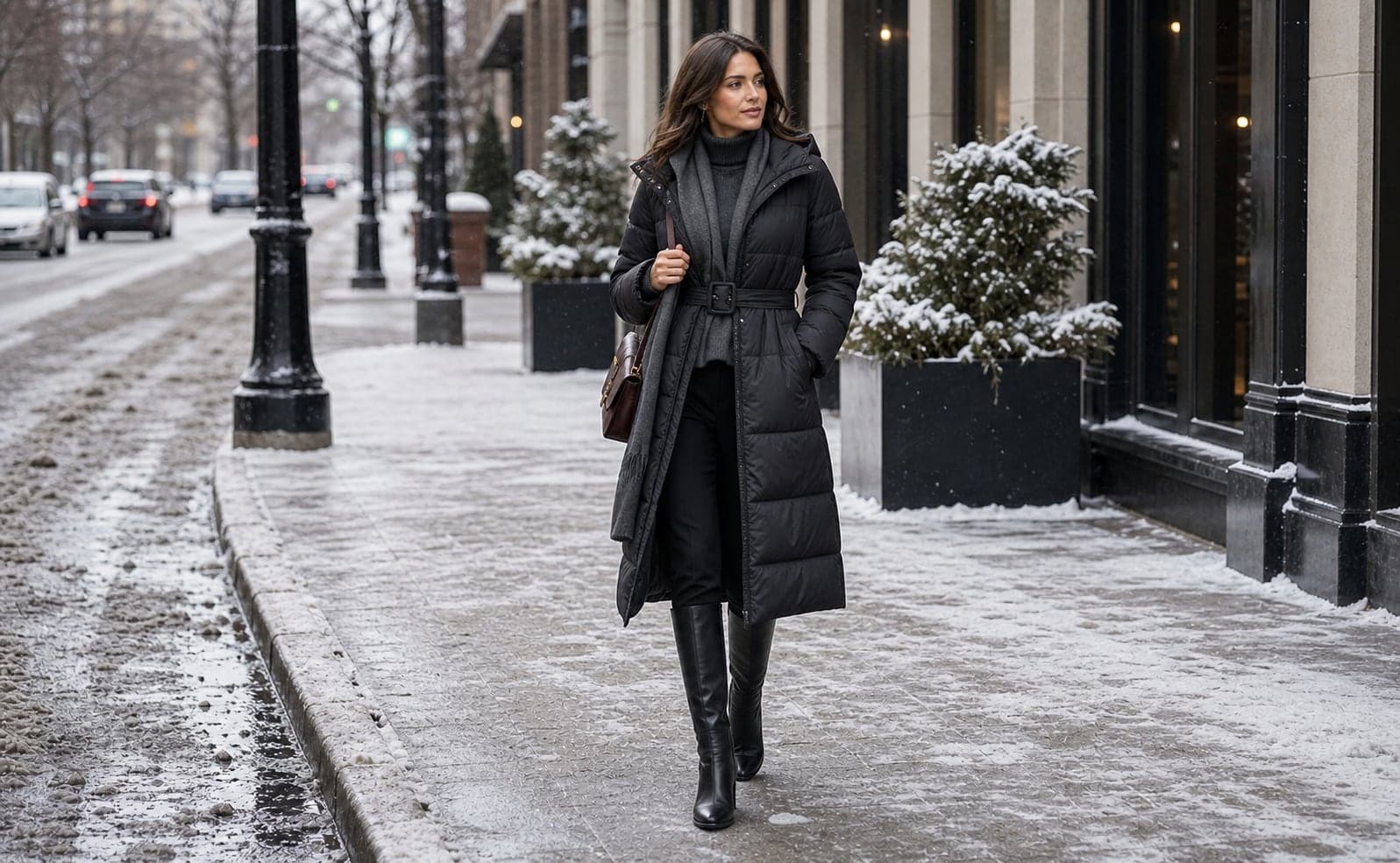
A puffer does not need to look shapeless. Look for a belted waist, cropped cut, chevron quilting, longer hem, or defined collar. The simplest way to style one is to keep the base outfit narrow or clean: straight jeans, leggings with tall boots, a knit dress, or slim trousers.
Category: Outerwear; puffer jacket
Best colors: black, cream, olive, burgundy
Modera tags: quilted, insulated, technical, snow, cold, outdoor weather, casual day
Thermal Base Layer
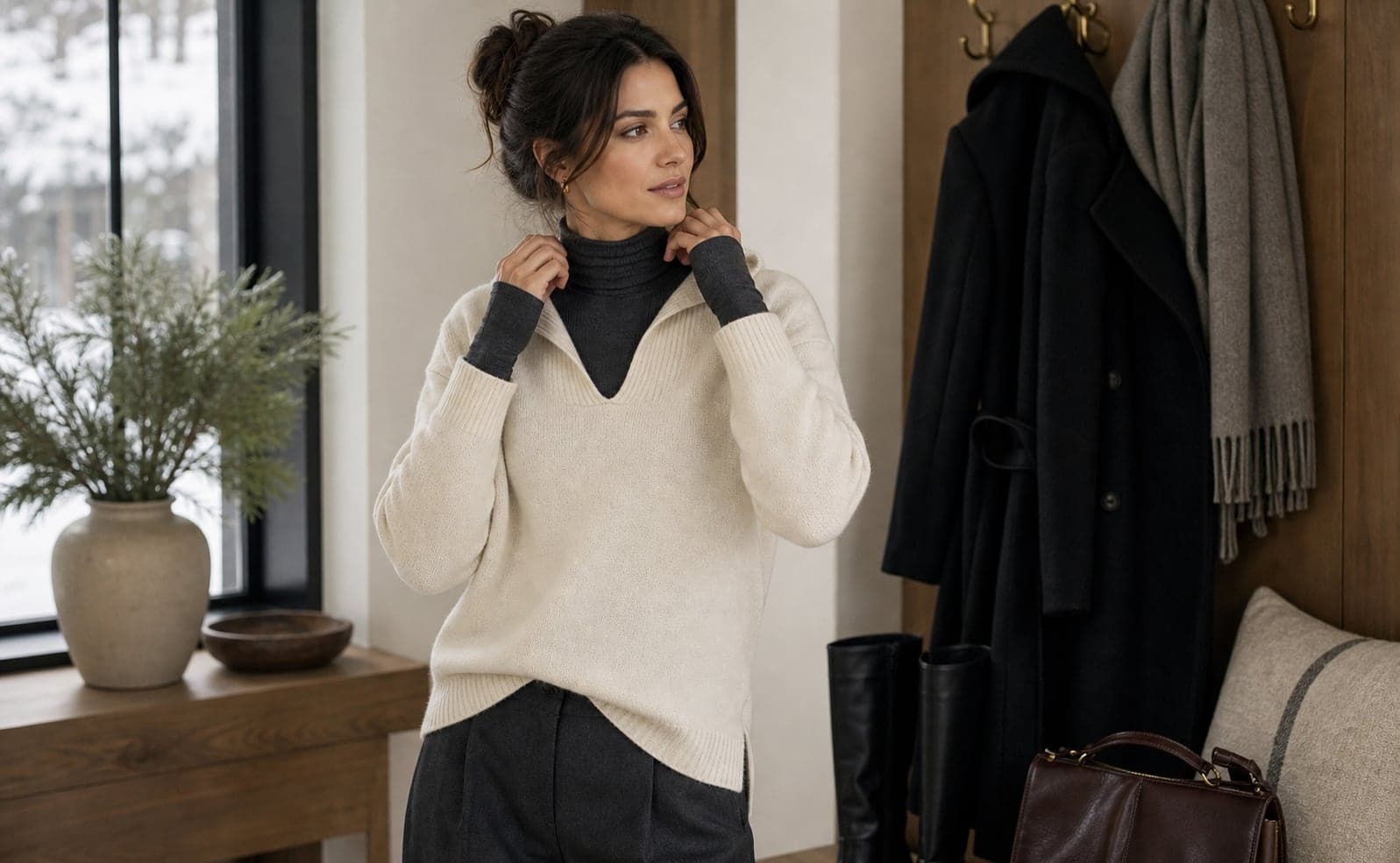
A thin thermal top, heat-tech turtleneck, or fitted merino base layer lets the outer outfit stay cleaner. It should disappear under a sweater, blazer, or coat instead of adding bulk.
Category: Top; base layer
Best colors: black, white, grey, nude
Modera tags: merino, cotton blend, technical, fitted, smooth, cold, layering
Linen or Cotton Trouser
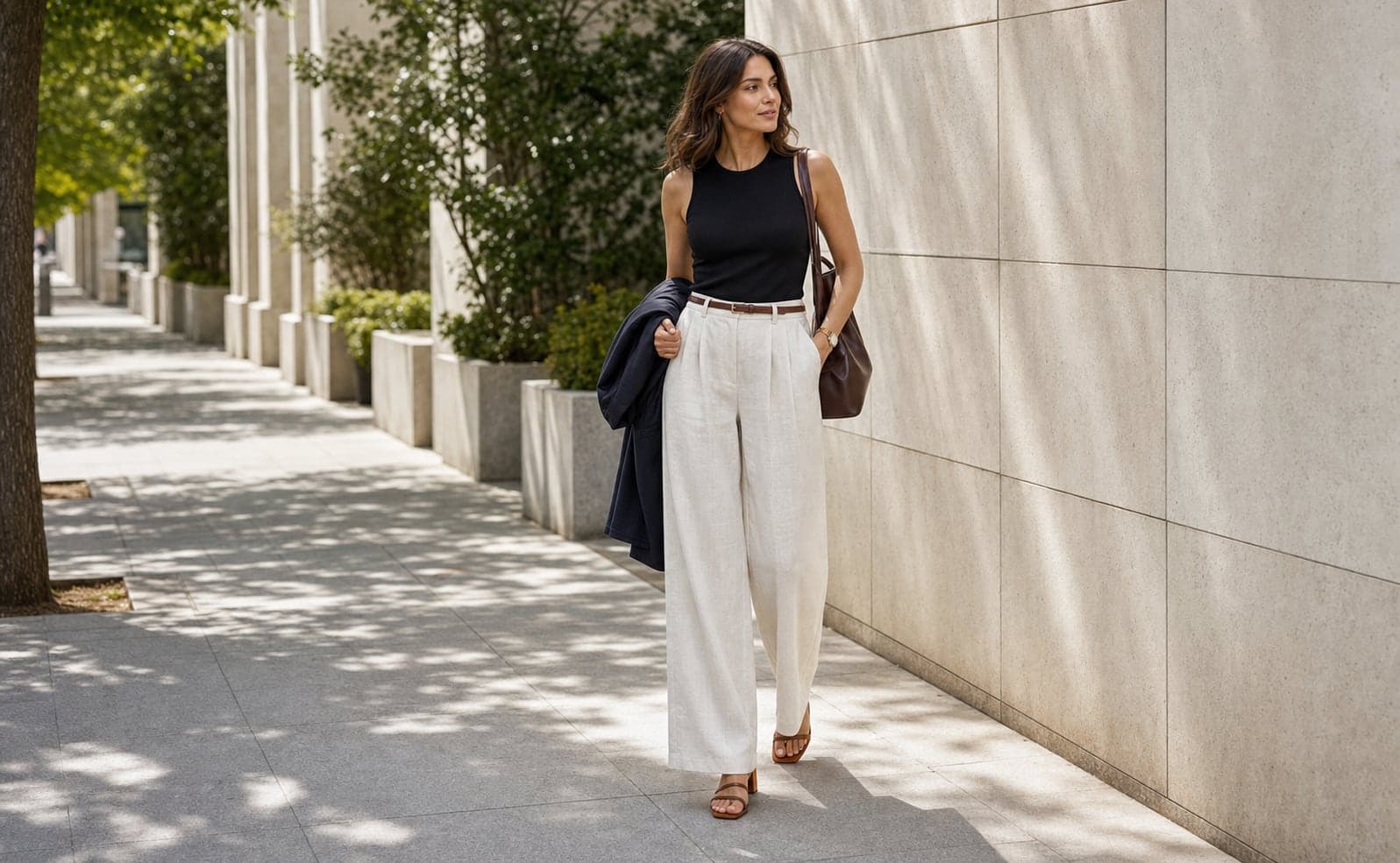
For humidity and heat, breathable trousers are the difference between looking composed and looking trapped. Linen, cotton, and linen-blend trousers work best with a relaxed leg and a waistband that does not dig in.
Category: Bottom; trouser
Best colors: ivory, tan, black, navy, olive
Modera tags: linen or cotton, relaxed, woven, humid, heat, work office, travel, casual day
Sleeveless Knit or Cotton Tank
A sleeveless knit is one of the easiest hot-weather pieces because it reads more polished than a basic tank but still breathes. It works under a blazer, shirt, trench, or lightweight cardigan.
Category: Top; sleeveless knit
Best colors: black, cream, white, brown, navy
Modera tags: cotton, viscose, linen blend, fitted or relaxed, ribbed, heat, humid, work office, casual day
Lightweight Button-Down
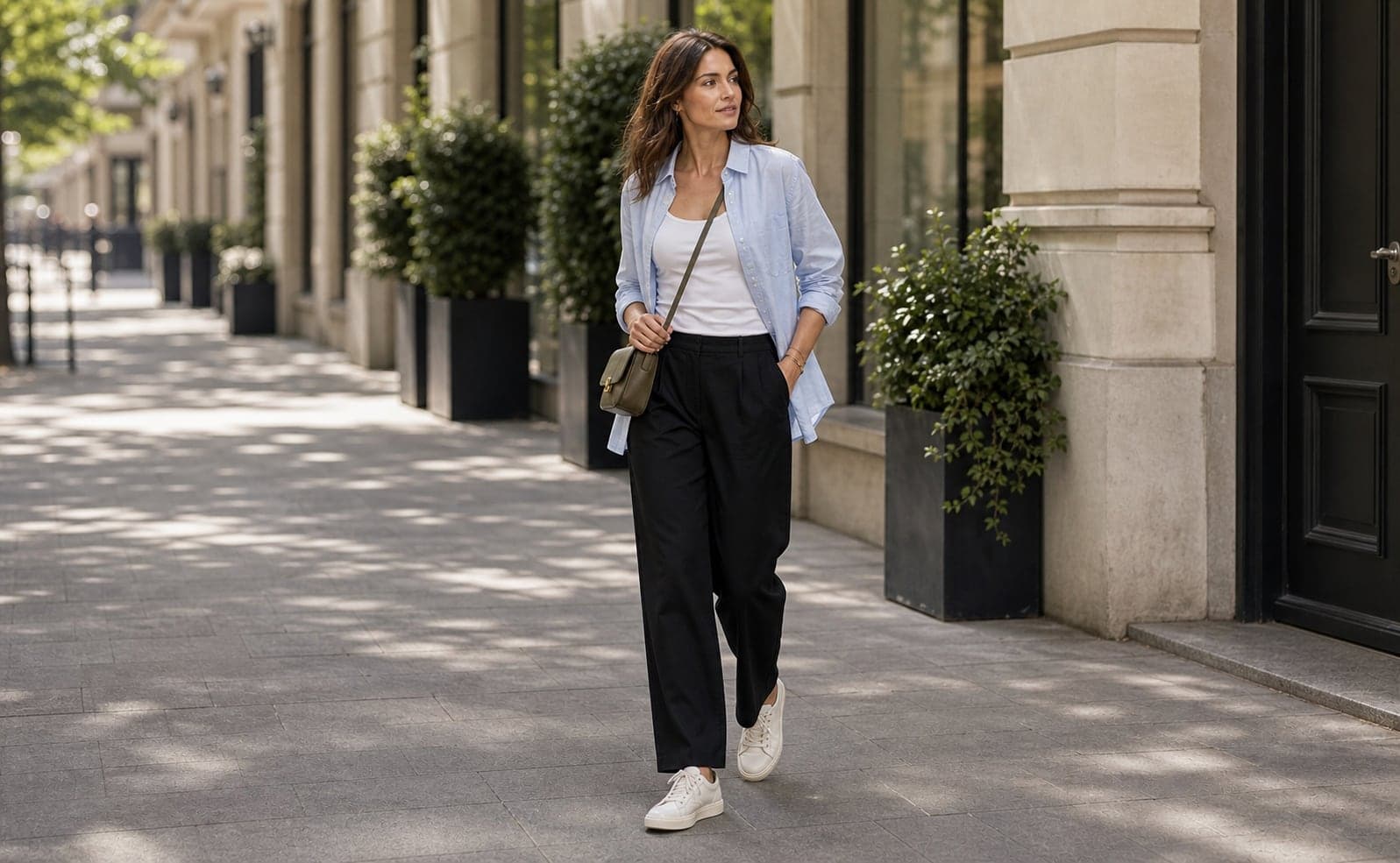
A cotton, linen, or gauze button-down works as a top, sun layer, wind layer, or travel layer. The shape should be relaxed, not sloppy. Wear it open over a tank, tucked into trousers, or tied at the waist with a skirt.
Category: Top; button-down shirt
Best colors: white, blue, stripe, olive, black
Modera tags: cotton or linen, relaxed, woven, heat, humid, wind, travel, work office
Wind-Resistant Overshirt
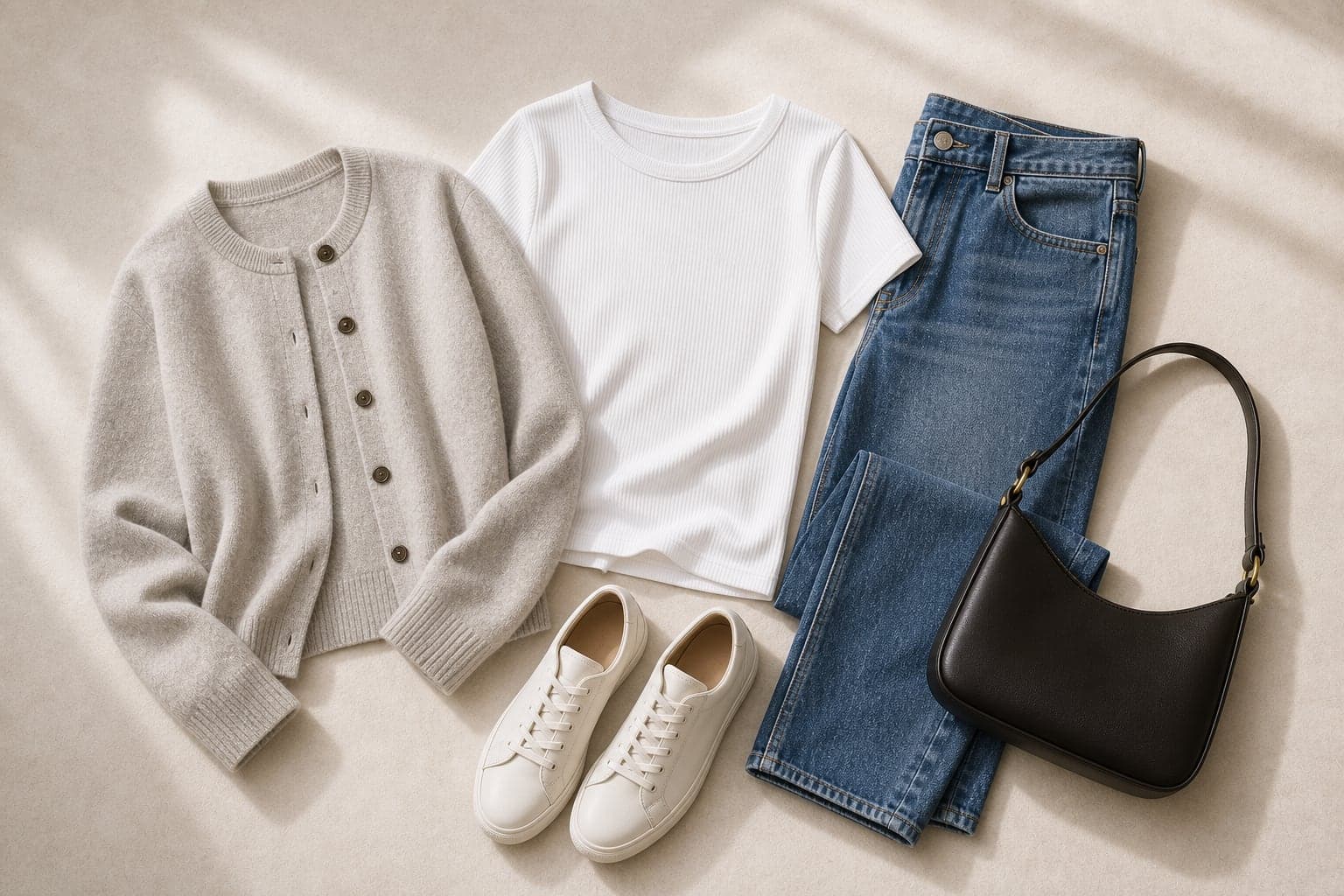
For mild wind, an overshirt gives more structure than a cardigan and less severity than a jacket. Nylon, cotton twill, waxed cotton, or dense poplin can work.
Category: Outerwear; overshirt
Best colors: olive, navy, khaki, black
Modera tags: twill, nylon, cotton, relaxed, utility, wind, casual day, travel
Weather-Resistant Crossbody Bag
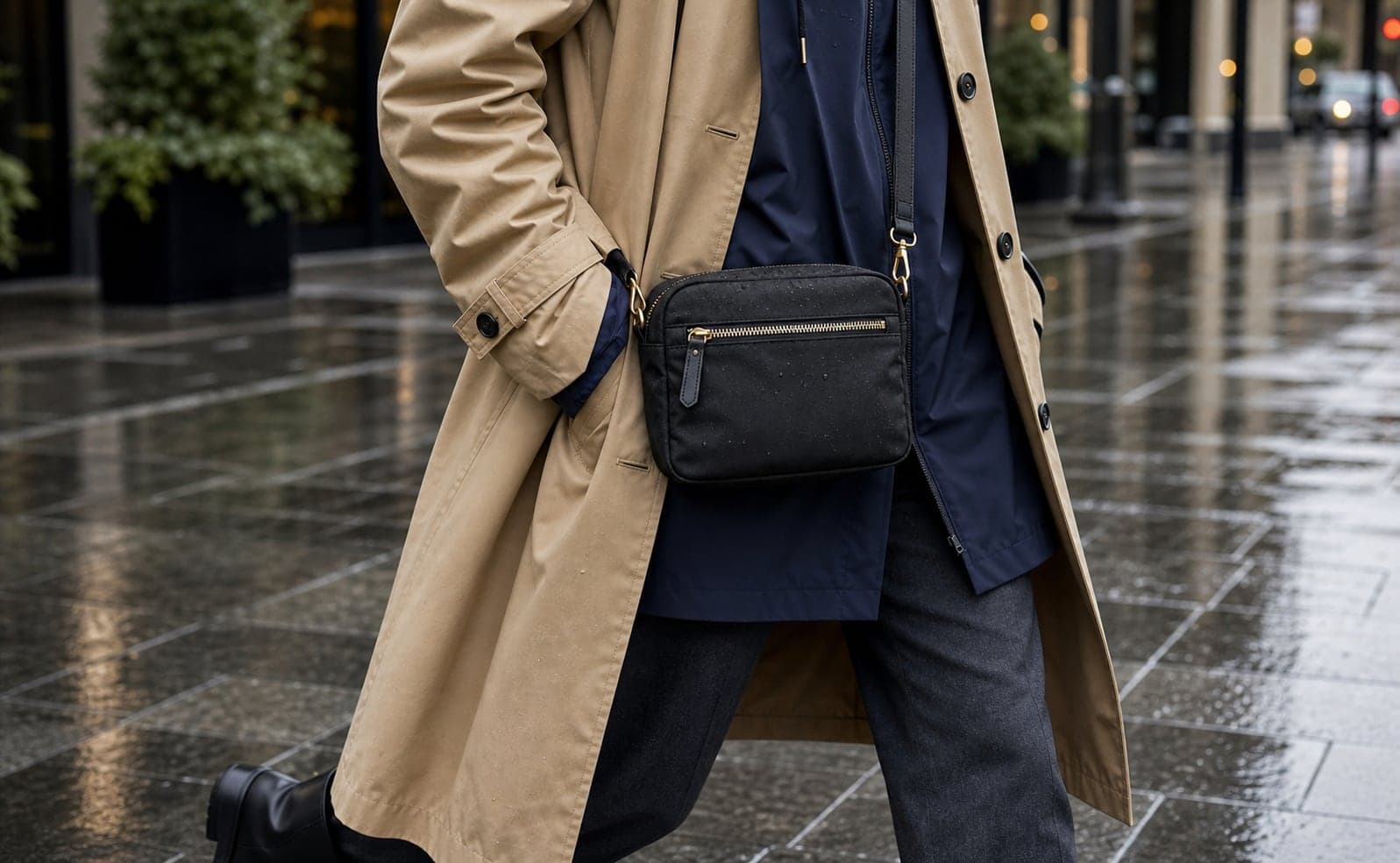
Bad weather punishes bags too. A nylon crossbody, treated leather shoulder bag, or compact sling keeps the outfit practical. Avoid open totes when rain or snow is likely.
Category: Accessory; bag
Best colors: black, brown, olive, metallic
Modera tags: nylon or treated leather, smooth, technical or polished, rain, travel
The Outfit Formulas
Use these as templates for the weather problem in front of you. The goal is not to memorize outfits; it is to understand which pieces solve which condition.
Rainy Workday
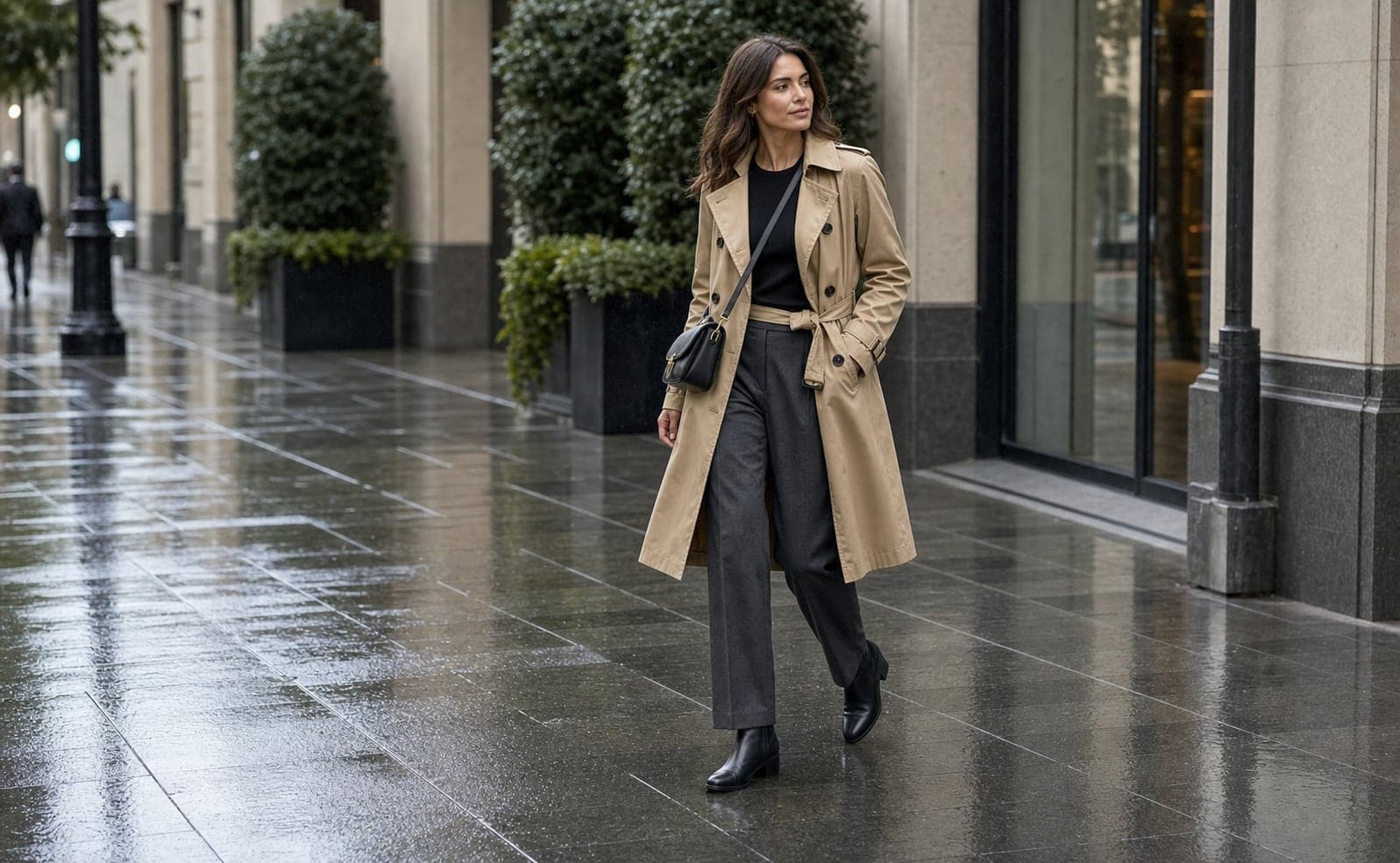
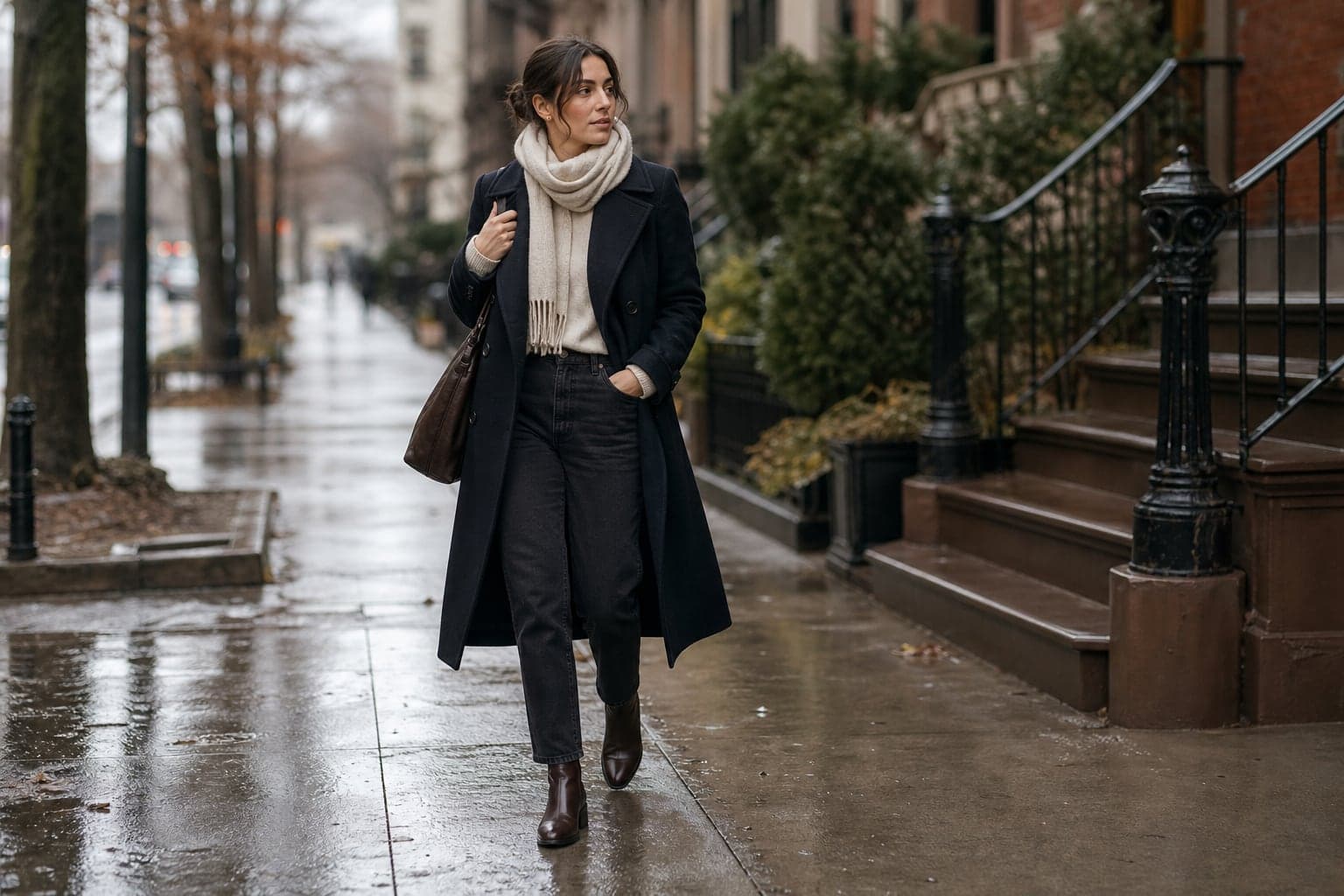
This is the cleanest rain-to-office formula. The trench protects the outfit, the sleeveless knit prevents overheating indoors, and the waterproof boot keeps the outfit realistic. Keep the trousers cropped or full-length but not dragging.
Formula: belted trench + sleeveless knit + straight trousers + waterproof ankle boots + compact leather bag
Best colors: camel trench, black knit, charcoal trousers, black boots
Modera intent: work_office + classic + rain + medium formality
Heavy Rain Weekend
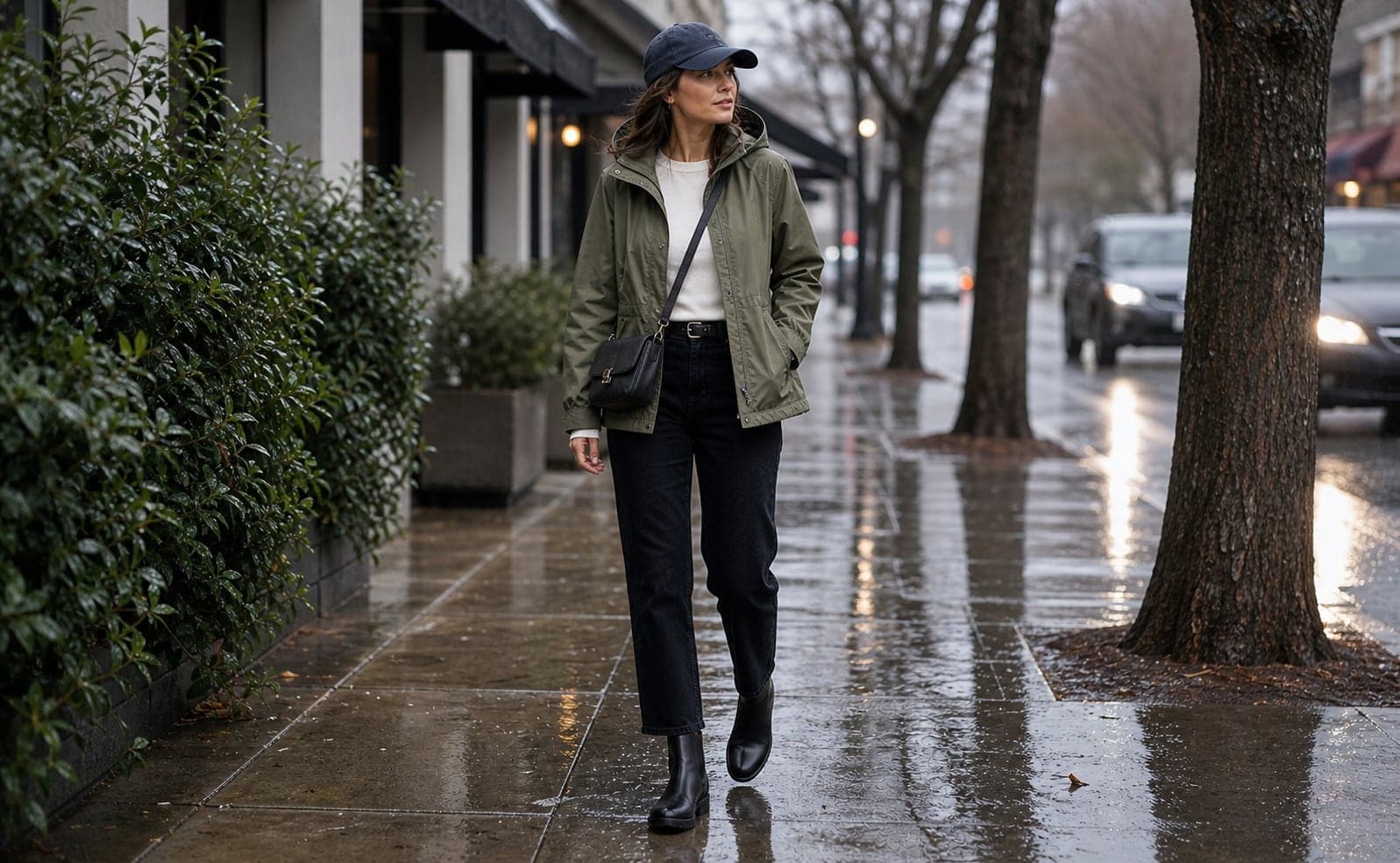
This works because the rain shell is treated as the main styling piece. The base outfit stays simple and fitted enough to balance the jacket. The cap is practical but also gives the outfit a sporty point of view.
Formula: matte rain shell + fitted long sleeve top + straight-leg jeans + Chelsea rain boots + baseball cap
Best colors: olive shell, white top, dark denim, black boots
Modera intent: casual_day + technical + rain + low-to-medium formality
Windy City Day
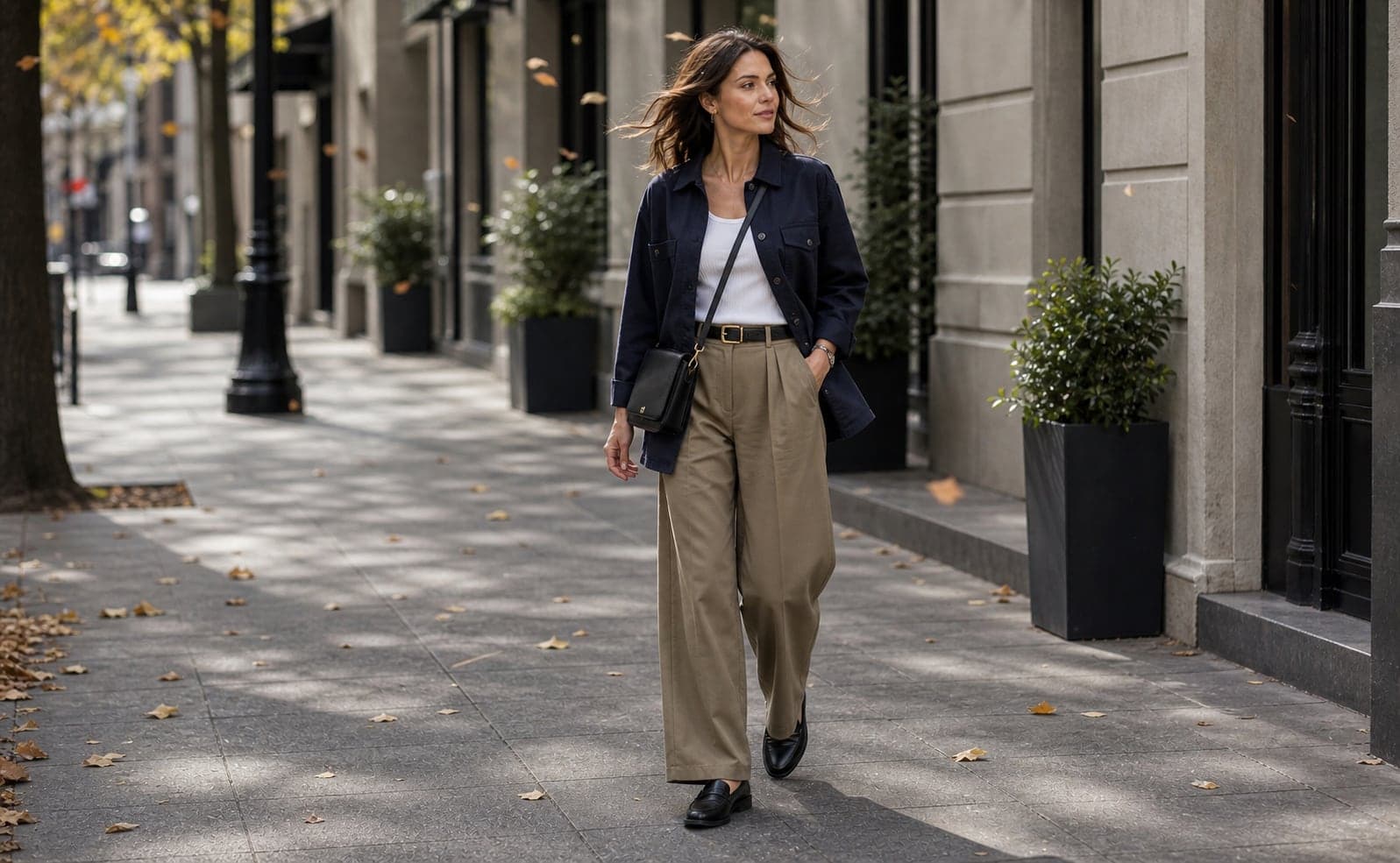
Wind makes loose, delicate layers look chaotic. A structured overshirt holds shape better than a soft cardigan. Keep the trouser leg wide but weighted, and avoid flimsy fabrics that fly open.
Formula: dense cotton overshirt + ribbed tank + wide-leg trousers + sneakers or loafers + crossbody bag
Best colors: navy overshirt, white tank, khaki trousers, black or cream shoes
Modera intent: casual_day + smart_casual + wind + transitional season
Snow Day That Still Has Shape
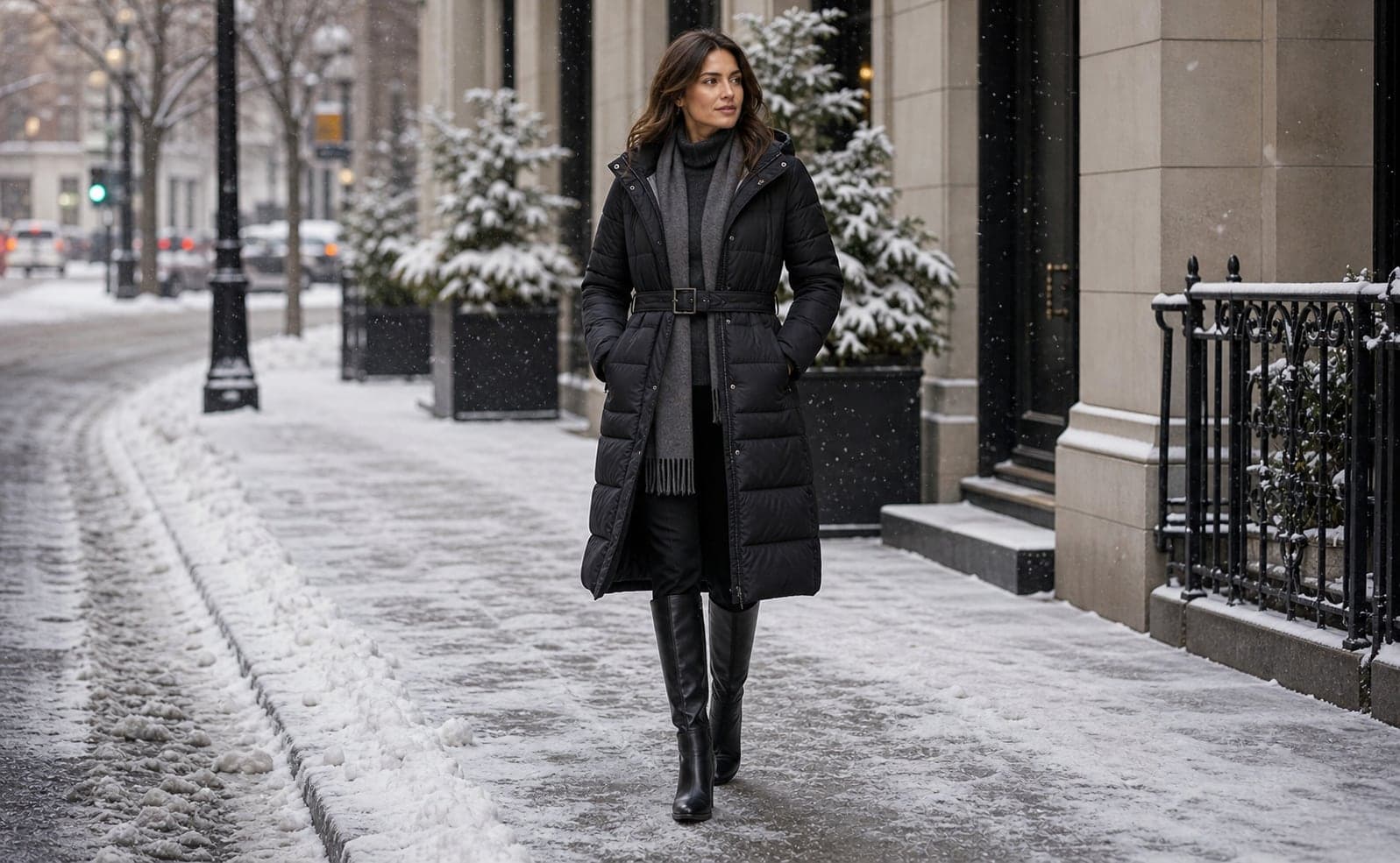
The key is verticality. A long coat creates the line. Tall boots protect the lower leg. A thin base layer adds warmth without volume. If the coat is puffy, keep the pants cleaner. If the coat is tailored, the base layer can be slightly chunkier.
Formula: long puffer or wool coat + thermal turtleneck + slim or straight pants + tall boots + scarf
Best colors: black long puffer, charcoal base, black straight pants, black boots, grey scarf
Modera intent: outdoor_weather + technical + snow + high warmth
Humid Summer Office
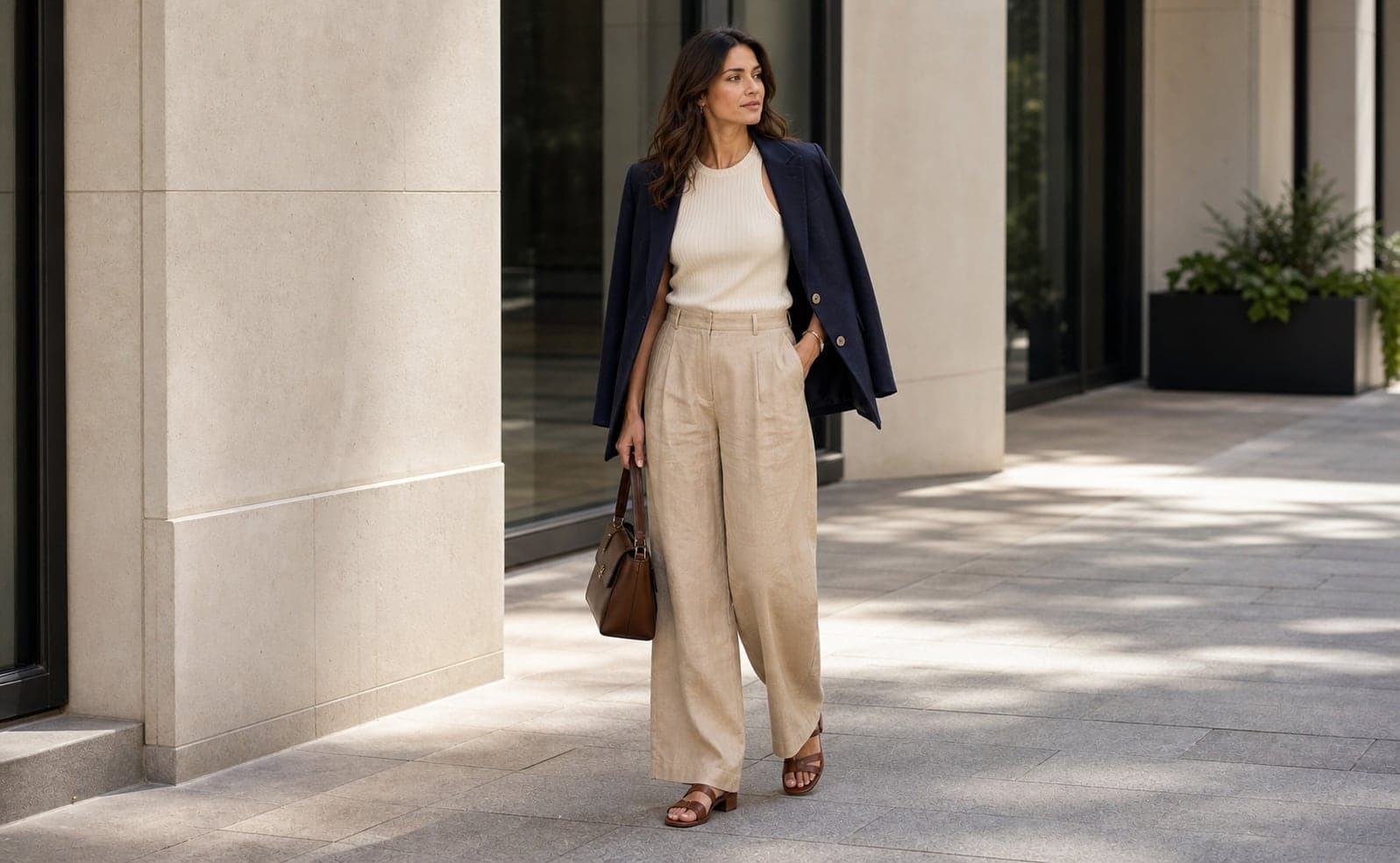
Humidity is not the time for heavy polyester, tight waistbands, or overly structured shirts. Use breathable fabrics and removable layers. The outer layer should be easy to take off without ruining the outfit.
Formula: sleeveless knit + linen trousers + lightweight blazer or button-down layer + polished flats or sandals
Best colors: ivory knit, tan linen trousers, navy lightweight blazer, brown sandals
Modera intent: work_office + polished + humid + warm weather
Hot Rain Day
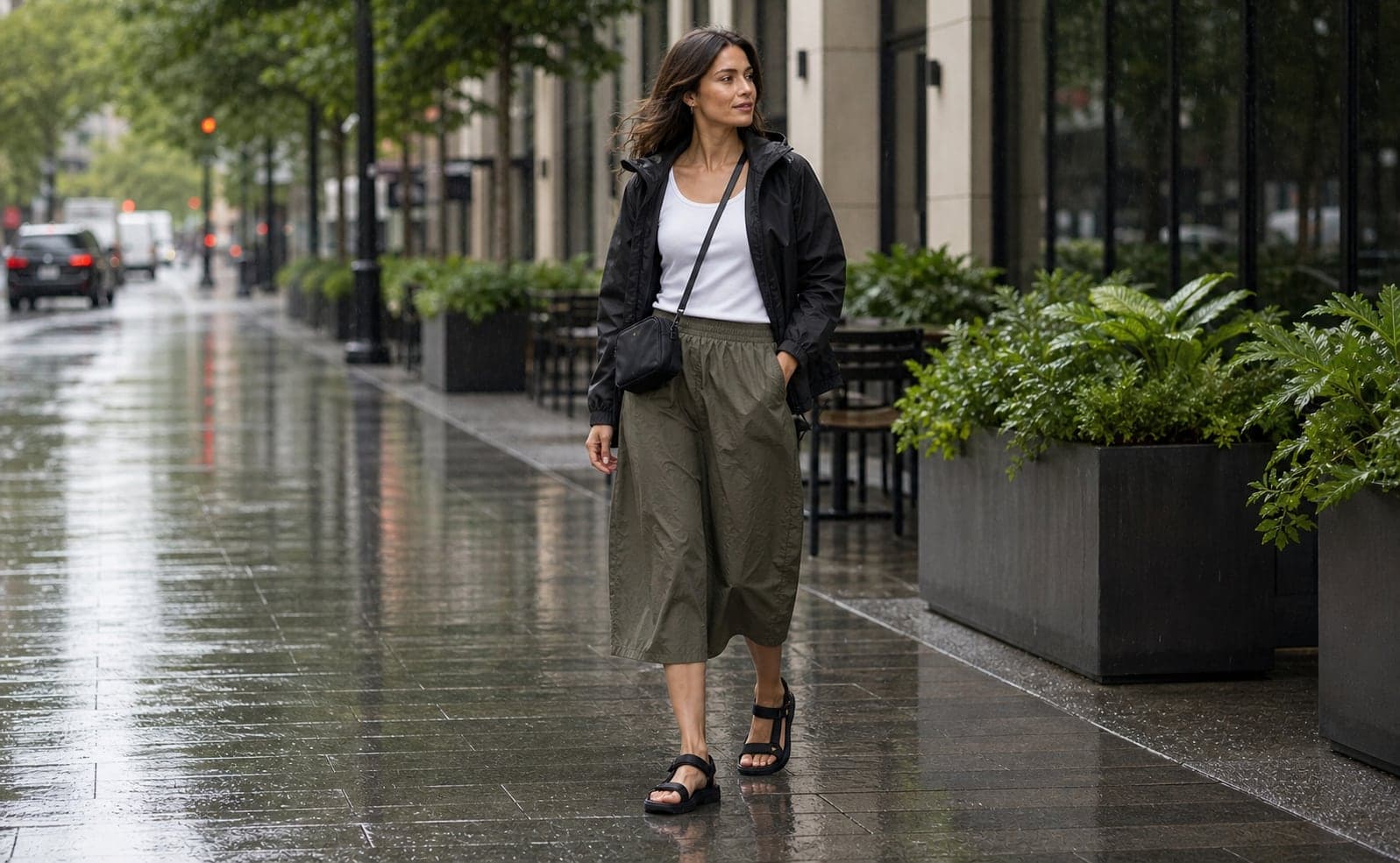
Hot rain is tricky because waterproof layers trap heat. Keep the jacket short and lightweight. Choose a base that can handle humidity and a bottom that dries faster than denim.
Formula: cropped rain shell + cotton tank + nylon midi skirt or relaxed shorts + waterproof sandals or rubber flats
Best colors: black shell, white tank, olive nylon skirt, black waterproof sandals
Modera intent: casual_day + technical + rain + heat
Travel Day With Bad Forecast
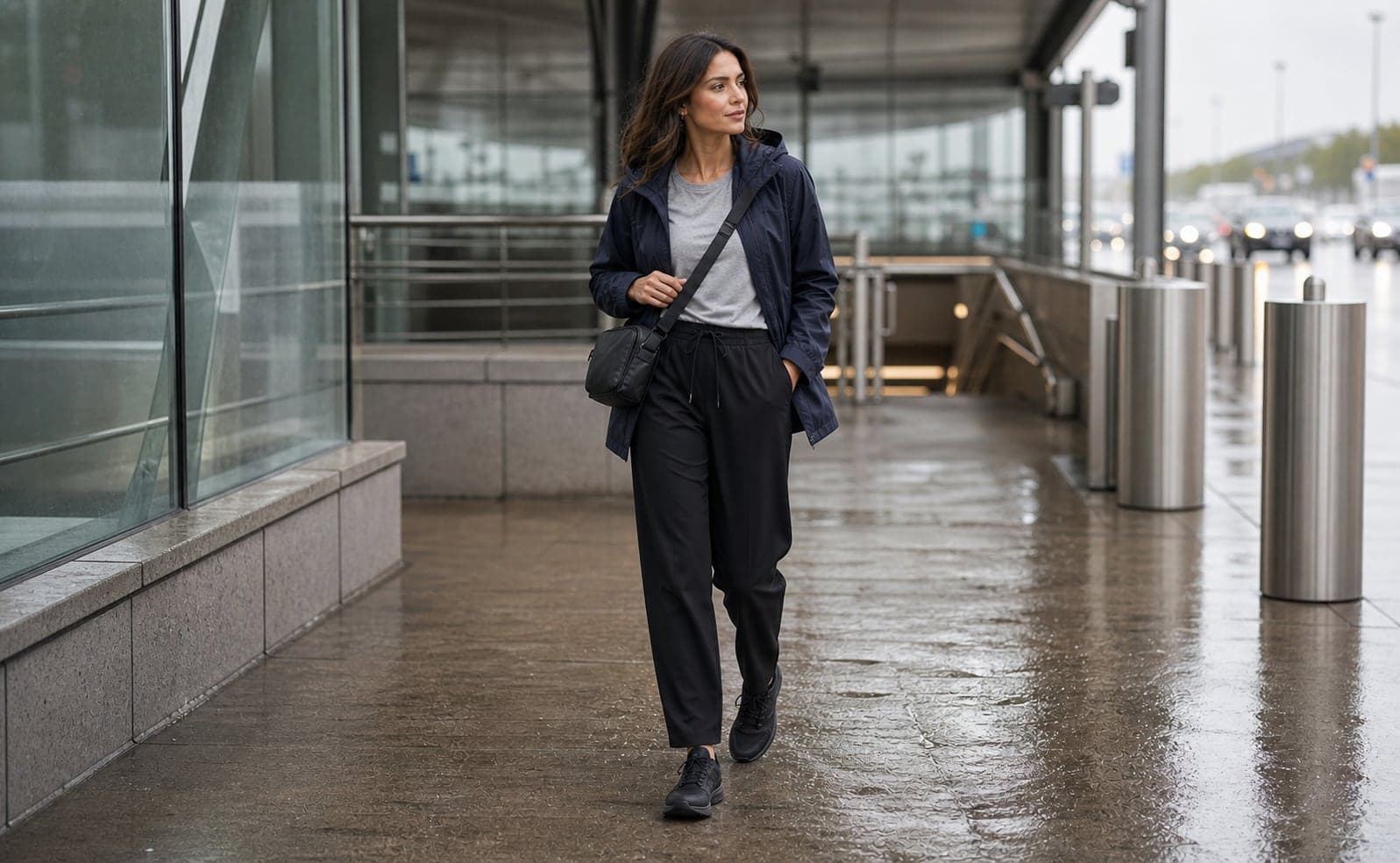
For travel, prioritize adaptability. The shell should pack down. The trouser should resist wrinkling. The shoes should handle walking and weather. This formula works for airport, city walking, and light rain.
Formula: packable shell + breathable tee + pull-on trouser + waterproof sneaker + nylon crossbody
Best colors: navy shell, grey tee, black pull-on trouser, dark sneaker
Modera intent: travel + technical + rain/wind + walking-heavy
Date Night in Cold Rain
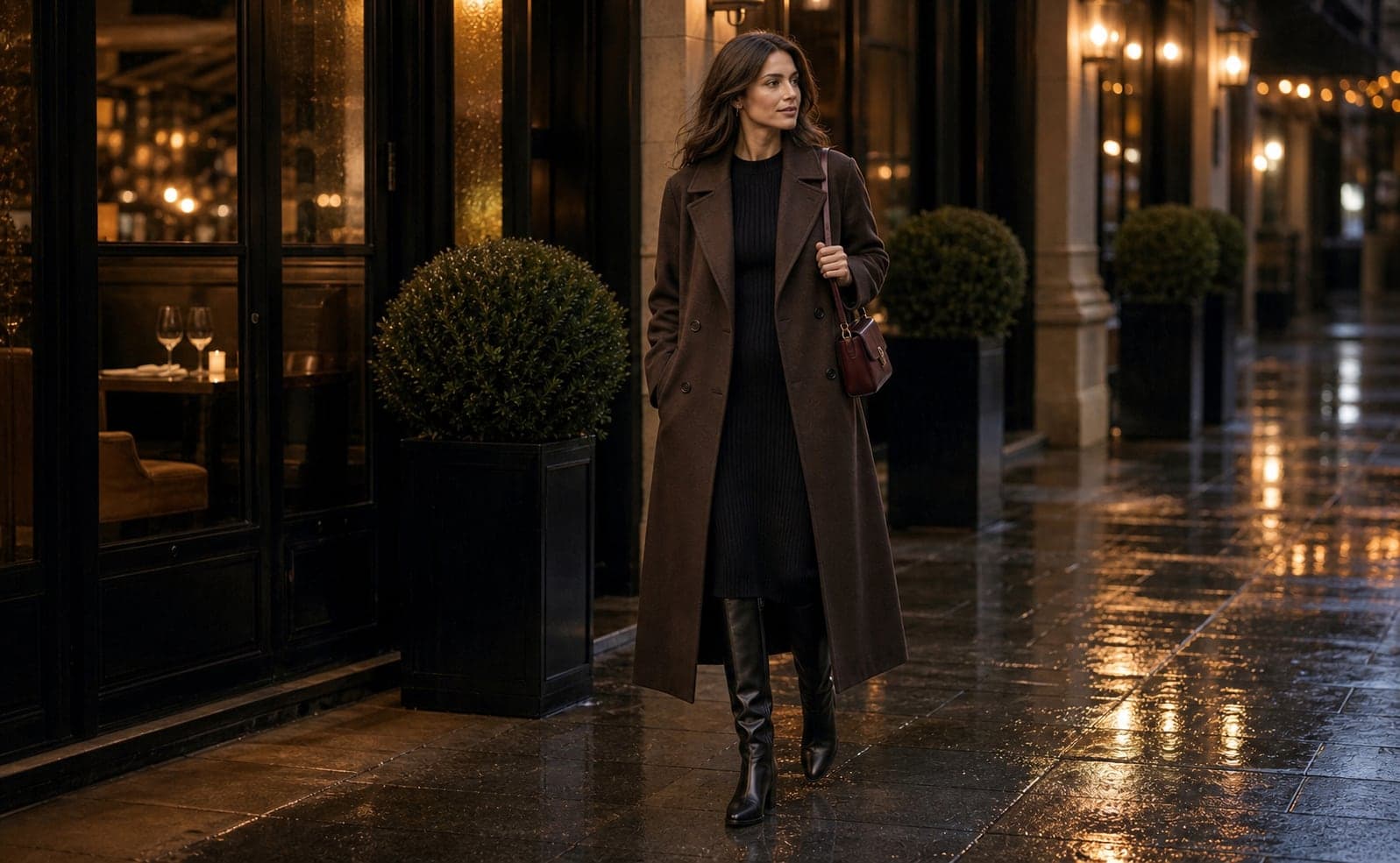
This is the polished alternative to giving up and wearing all-weather gear with no shape. The knit dress keeps the line simple, the tall boots protect the legs, and the coat gives the outfit structure.
Formula: long trench or wool coat + knit dress + tall boots + small shoulder bag
Best colors: chocolate coat, black knit dress, black boots, burgundy bag
Modera intent: date_dinner + polished + cold rain + medium-to-high formality
Elevated Version Using One Premium Piece
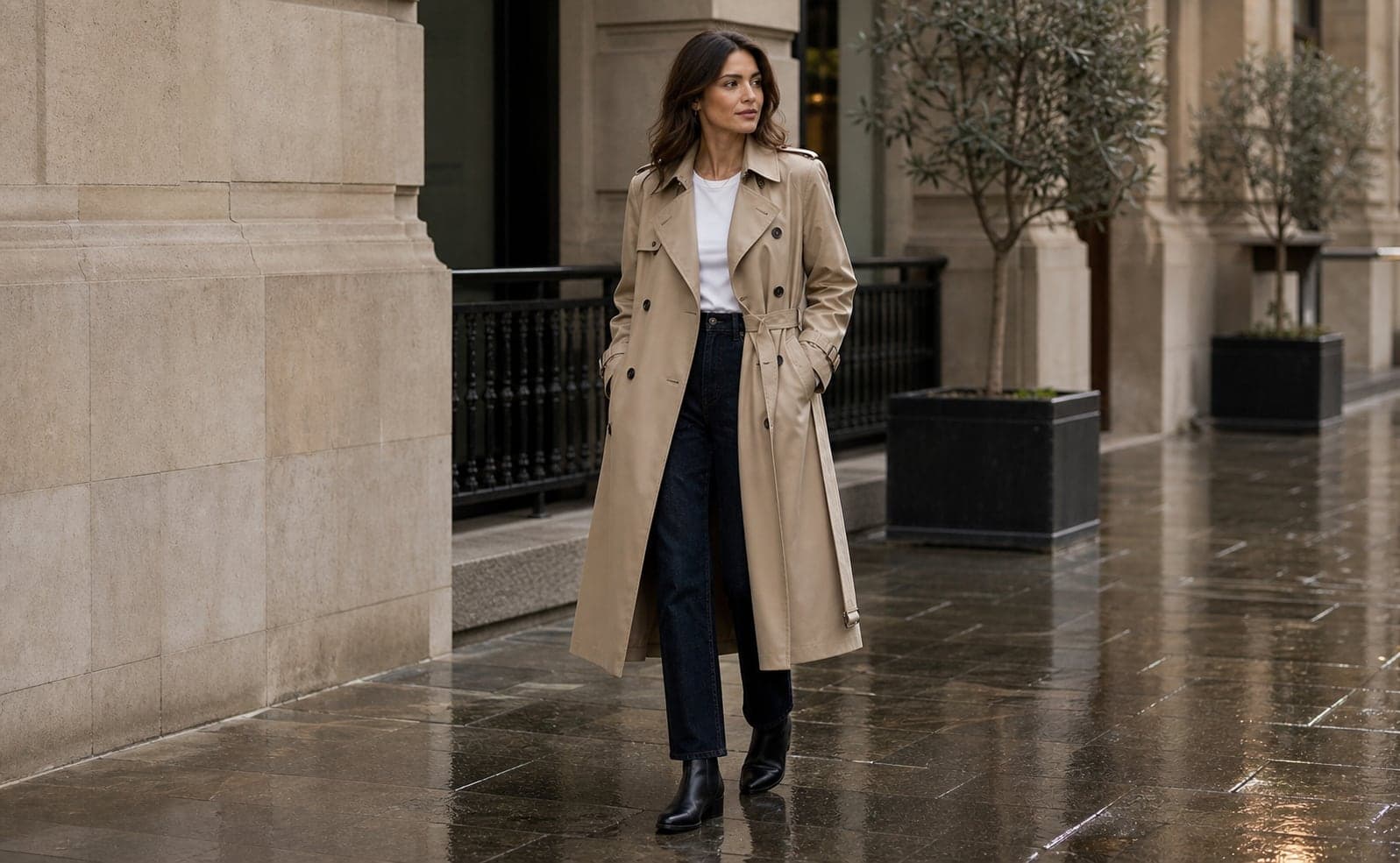
One premium weather piece can carry the whole outfit. The trench should have good fabric, clean shoulders, and a belt that sits correctly. Keep everything else understated so the coat becomes the visual anchor.
Formula: investment trench + simple cotton top + dark denim + sleek waterproof boot
Best use: when one outerwear upgrade needs to make existing basics feel intentional
Budget Version Using Existing Basics
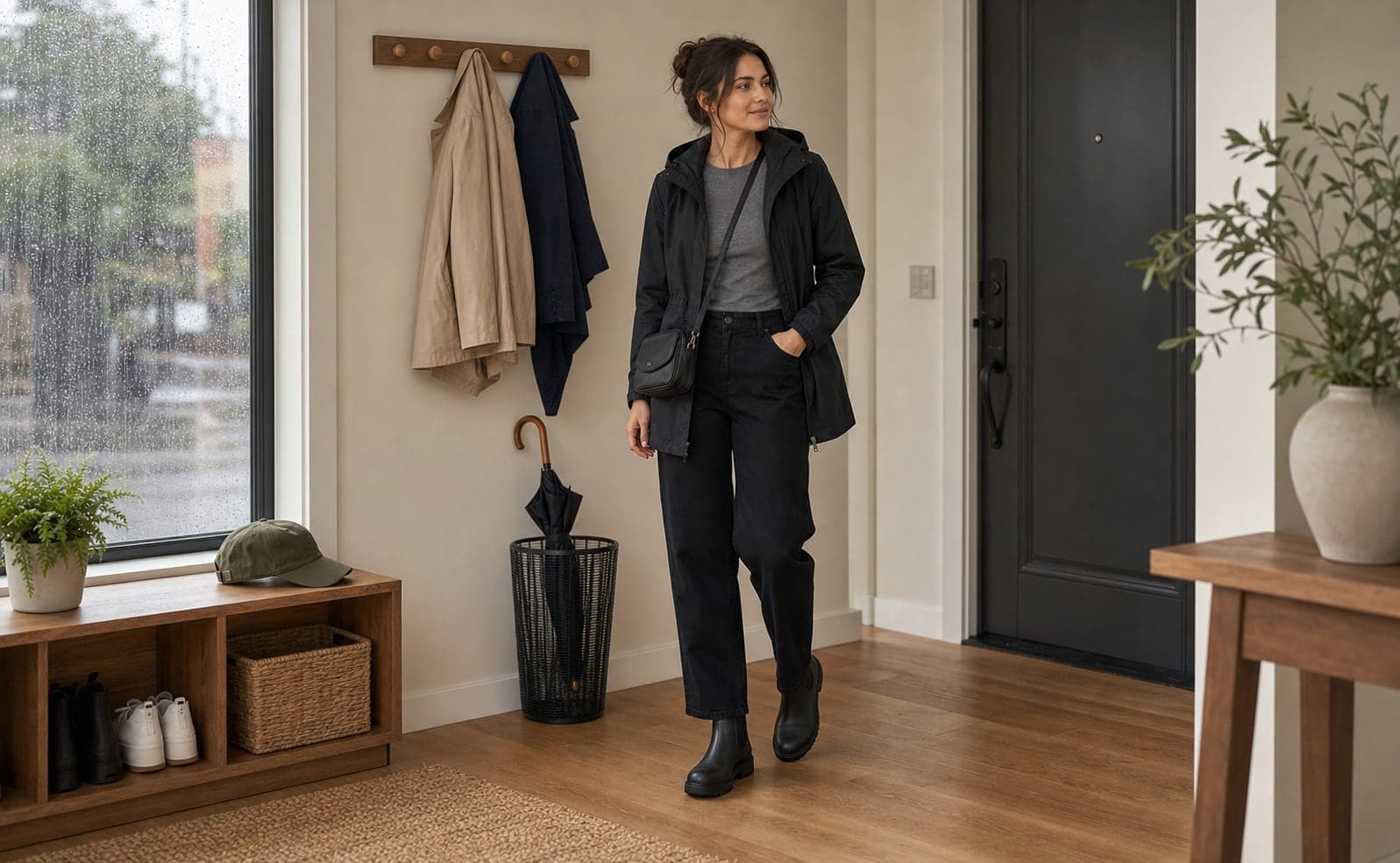
Start with what you own. The rule is: one protective layer, one clean base, one pant that will not be ruined by the weather, and one shoe that matches the conditions. The outfit does not need to be expensive. It needs to be coherent.
Formula: any clean outer layer + fitted base + straight pants + most weather-appropriate shoe
Best use: upgrading bad-weather outfits without rebuilding your closet
Wrong but Interesting Styling Twist
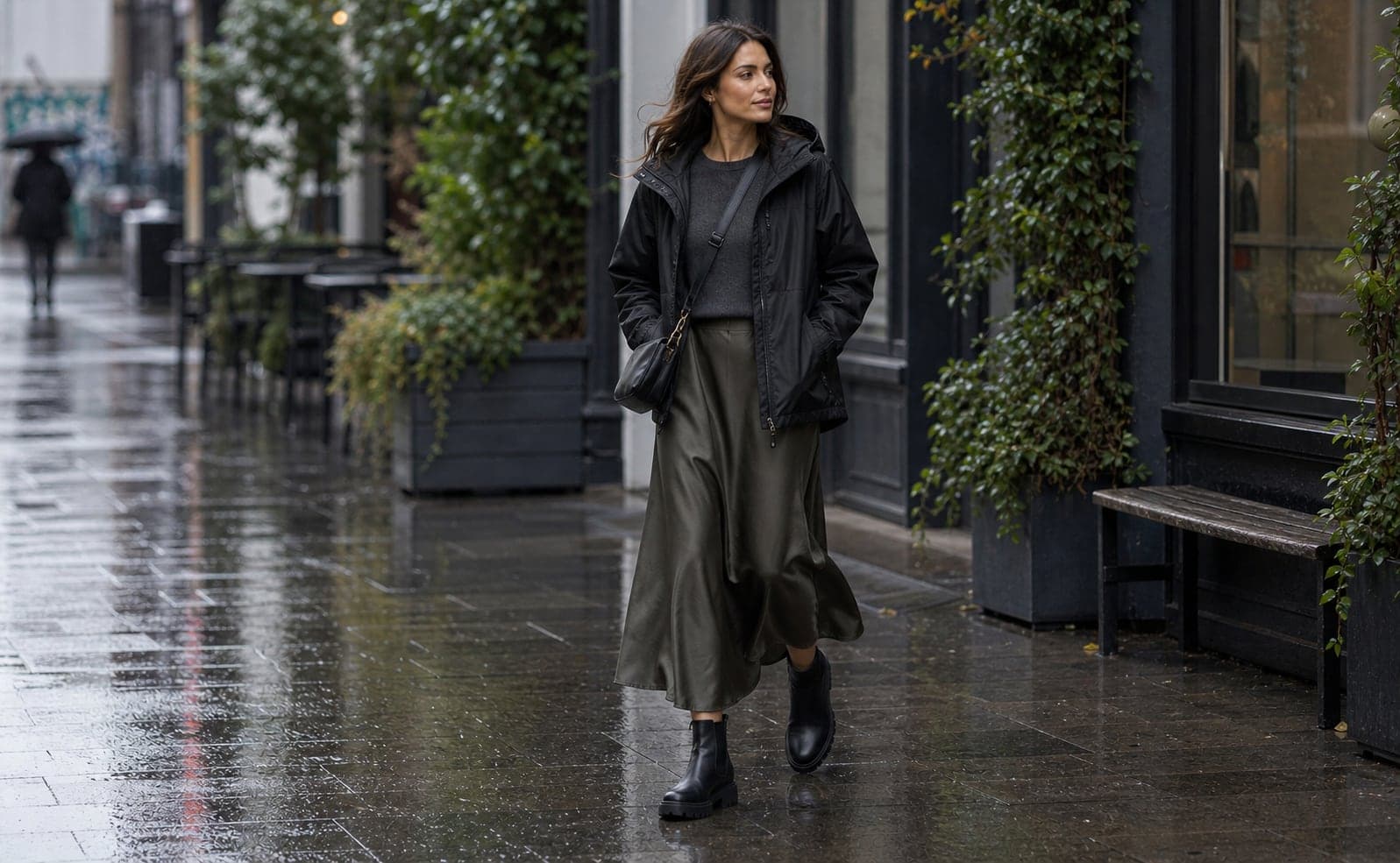
This works when the colors are controlled and the proportions are intentional. The contrast between technical shell and soft skirt feels current because it mixes utility with texture. Keep the palette tight: black, grey, olive, navy, or ivory.
Formula: technical rain shell + satin skirt + waterproof boot
Best use: creative office, gallery day, city weekends, travel
Color and Texture Logic
Bad weather outfits get messy fast. Color and texture keep them controlled.
Use Weather Neutrals
The best bad-weather colors are forgiving: black, navy, charcoal, olive, chocolate, camel, cream, taupe, and deep burgundy. These colors hide minor splashes, work across layers, and make technical pieces look less sporty.
Let Texture Do the Work
When the palette is simple, texture keeps the outfit from feeling flat:
- Matte shell + ribbed knit
- Wool coat + leather boot
- Linen trouser + smooth sleeveless knit
- Quilted puffer + straight denim
- Cotton trench + polished bag
- Nylon skirt + waterproof sandal
The outfit should not be all slick synthetics or all soft knits. Mix surface textures so each piece has a job.
Keep Light Colors Strategic
Cream, white, and pale grey can work in bad weather, but use them away from puddles and slush. A cream sweater under a trench is safer than cream wide-leg pants in rain. A white tank under a rain shell is easier than white suede shoes.
Use Accessories Carefully
Bad weather is not the best moment for fragile accessories. Choose pieces that add polish without becoming a liability: small hoop earrings, scarf, compact bag, cap, waterproof watch, or leather gloves.
Fit and Proportion Rules
Balance Volume With Shape
If the coat is oversized, keep the base clean. If the trouser is wide, keep the top closer to the body. If the puffer is bulky, use tall boots, a slim pant, or a vertical scarf to restore shape.
Watch Hem Lengths
Bad weather exposes bad hems. Wide-leg pants should not drag. Midi skirts should clear puddles. Dresses should work with boots. Cropped pants can be practical in rain if the footwear is strong.
Layer Thin Before Thick
Cold-weather outfits look better when warmth starts with a thin base layer. A thermal top under a sweater under a coat is cleaner than three bulky midlayers.
Match Footwear Weight to Outerwear
A heavy puffer needs footwear with visual weight: tall boots, lug soles, or structured sneakers. A delicate flat under a winter coat can look unbalanced. A lightweight trench can handle sleeker boots or loafers.
Do Not Fight the Forecast
If it is raining, wear weather-appropriate shoes. If it is humid, choose breathable fabric. If it is windy, avoid flimsy layers. The outfit only works if it survives the day.
Common Mistakes
Wearing the Wrong Shoe
The fastest way to make a bad-weather outfit fail is wearing shoes that cannot handle the forecast. Suede flats in rain, thin leather soles in snow, open sandals in dirty puddles, or delicate heels on slush are not worth it.
Treating the Coat as an Afterthought
In bad weather, the coat is the outfit for most of the day. It needs to match the formality, color, and proportion of what is underneath.
Choosing Fabric That Traps Heat
Humidity makes poor fabric choices obvious. Heavy synthetics, tight polyester blouses, and lined pieces without breathability will make the outfit uncomfortable and visually worse.
Over-Layering Without a Plan
Warmth is not just more clothes. Use base layer, midlayer, outer layer. Each layer should fit under the next and serve a purpose.
Ignoring the Bag
A beautiful open tote in rain is a problem. Use a zippered bag, nylon crossbody, treated leather bag, or compact shoulder bag.
Thinking Technical Means Unstylish
Technical pieces can look sharp if the silhouette is clean, the palette is controlled, and the styling is deliberate. The issue is not rain shells or puffers. The issue is when they are disconnected from the rest of the outfit.
How to Build the Look From Your Existing Wardrobe
Start with the forecast, not the outfit fantasy.
Step 1: Pick the Weather Problem
Choose the primary issue:
- Rain
- Wind
- Snow
- Cold
- Heat
- Humidity
- Mixed weather
Do not try to solve everything equally. Pick the dominant problem first.
Step 2: Choose the Shoe
Footwear determines how realistic the outfit is. For rain, start with waterproof boots or rubber flats. For snow, insulated or lug-sole boots. For humidity, breathable flats, sandals, or sneakers.
Step 3: Choose the Outer Layer
The outer layer should match both the weather and the event. Trench for polished rain. Shell for heavier rain. Wool coat for cold dry weather. Puffer for snow or deep cold. Overshirt for wind.
Step 4: Build a Clean Base
Underneath, keep the outfit simple: tank and trousers, knit dress, tee and jeans, button-down and skirt, thermal and pants. The base should work if the outer layer comes off indoors.
Step 5: Add One Visual Detail
This prevents the outfit from looking purely defensive. Add one of these:
- Ribbed knit texture
- Strong scarf
- Team-color cap
- Polished bag
- Tall boot
- Metallic earring
- Belted waist
- Tonal color palette
Modera Tagging Checklist
Use this structure to make bad-weather outfits searchable and recommendable in Modera.
Categories
- Top
- Bottom
- Outerwear
- Footwear
- Accessory
- Dress
- Skirt
Required Tags
- Color family
- Fit
- Material
- Texture
- Pattern
- Season
- Weather
- Event
- Vibe
- Formality
Useful Weather Tags
- Rain
- Wind
- Snow
- Cold
- Heat
- Humid
- Transitional
- Mixed weather
Useful Materials
- Cotton
- Linen
- Wool
- Merino
- Nylon
- Polyester shell
- Coated cotton
- Leather
- Rubber
- Technical blend
- Viscose
Useful Textures
- Smooth
- Ribbed
- Quilted
- Woven
- Matte
- Glossy
- Waterproof
- Brushed
- Twill
- Knit
Useful Vibes
- Polished
- Technical
- Classic
- Smart casual
- Athletic
- Minimal
- Streetwear
- Rugged workwear
Useful Events
- casual_day
- work_office
- date_dinner
- night_out
- travel
- outdoor_weather
FAQ
How do you dress stylishly in bad weather?
Start with the weather problem first: rain, wind, snow, heat, or humidity. Choose the correct footwear and outerwear, then build a clean base outfit underneath. The outfit looks stylish when the functional piece feels integrated, not thrown on.
What should women wear on rainy days?
A polished rainy-day outfit can be a trench coat, sleeveless knit, cropped trousers, and waterproof ankle boots. For heavier rain, use a matte rain shell, straight-leg jeans, rain boots, and a compact crossbody bag.
How do you dress for humidity without looking too casual?
Choose breathable fabrics like linen, cotton, gauze, and lightweight knits. Pair a sleeveless knit with linen trousers, a removable blazer or button-down, and polished flats or sandals. Avoid heavy synthetics and clingy cuts.
Can puffers look stylish?
Yes. Choose a puffer with shape: belted waist, cropped length, long vertical line, defined collar, or clean quilting. Pair it with slim or straight pants, tall boots, or a simple knit dress so the outfit keeps structure.
What shoes work best for bad weather?
For rain, use waterproof ankle boots, rubber Chelsea boots, treated leather boots, or waterproof sneakers. For snow, use insulated or lug-sole boots. For humid heat, choose breathable flats, sandals, or sneakers that can handle walking.
Source Notes
- 01Harper's Bazaar - Office Outfit Ideas That Can Withstand a Heatwave — Used for breathable workwear logic, including linen, cotton, breezy tailoring, removable layers, and professional warm-weather footwear.
- 02Harper's Bazaar - The New Rules of Linen Dressing — Used for modern linen styling beyond beachwear, including matching sets, tailored shorts, and dresses.
- 03The Guardian - Goodbye Pilates Princess, Hello Gym Goblin — Used for the broader movement toward looser, more practical, vintage-inspired active and sporty clothing.
- 04Vogue - Key Spring/Summer 2026 Fashion Trends — Used for broader women's fashion context around individuality, texture, lace, satin, ruffles, and expressive detail.