Building a Personal Style Formula
How to turn taste into repeatable outfit logic.
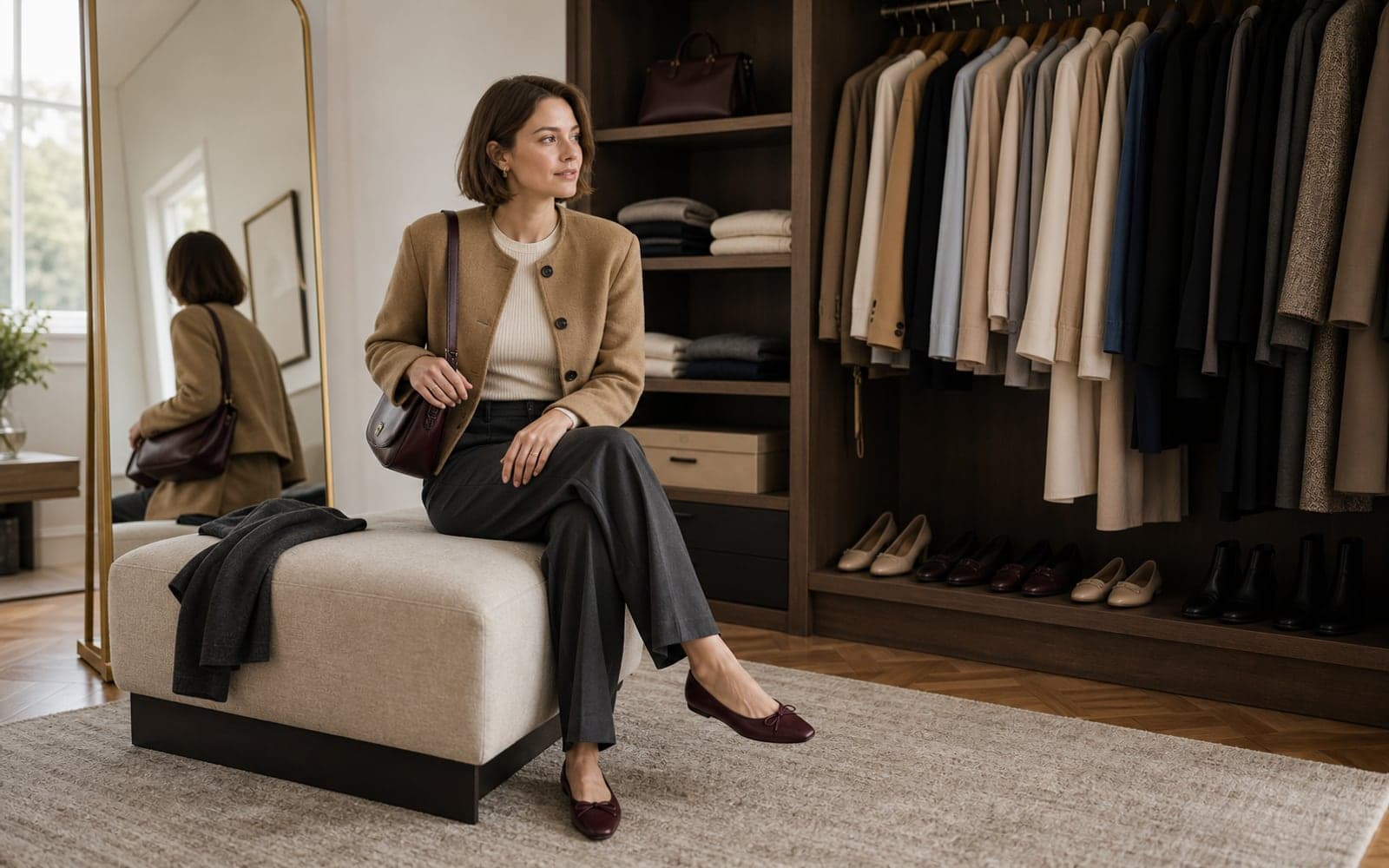
Personal style is not a mood board. It is a decision system.
Most people do not struggle because they have no taste. They struggle because their taste is scattered across screenshots, saved posts, impulse buys, old versions of themselves, and clothes that almost work. The result is a closet full of pieces and very few reliable outfits.
A personal style formula fixes that. It turns preference into repeatable logic: the shapes you like, the colors you return to, the textures that feel like you, the shoes that make outfits believable, the events you actually dress for, and the details that separate your style from a generic capsule wardrobe.
The goal is not to dress the same every day. The goal is to build a visual language you can repeat, adjust, and trust.
What a Personal Style Formula Is
A personal style formula is a repeatable outfit structure that reflects how you want to look and how you actually live.
It includes:
- your core silhouettes
- your dominant color palette
- your preferred textures
- your reliable outfit combinations
- your event needs
- your weather realities
- your comfort boundaries
- your statement details
- your no-go pieces
- your styling tension
The formula should make getting dressed easier without making your wardrobe boring.
A good formula is specific enough to guide you, but flexible enough to evolve.
What It Is Not
A personal style formula is not:
- a strict uniform
- a trend identity
- a shopping list
- a minimalist capsule by default
- a list of “essentials” copied from someone else
- a rule that prevents experimentation
- a way to erase personality
- a fantasy version of your life
The formula has to survive real use. If it only works for imagined vacations, perfect weather, or a lifestyle you do not live, it is not your formula.
Why Most Closets Feel Incoherent
A closet usually becomes confusing for one of five reasons.
The pieces belong to different identities
One part of the closet says minimal. Another says romantic. Another says office. Another says downtown. Another says vacation. None of those are wrong, but they need a shared logic.
The outfit formulas are missing
Owning a satin skirt is not the same as knowing whether it works with boots, sneakers, a sweater, a blazer, or a leather jacket.
The color palette is accidental
A closet with too many unrelated colors creates friction. The pieces may be good individually but weak together.
The shoes do not support the clothes
Shoes decide whether an outfit reads casual, polished, romantic, sporty, corporate, or awkward. Weak shoe logic ruins strong clothing.
The wardrobe is built around fantasy events
If most of your life is work, errands, dinner, travel, and casual weekends, but most of your buying is for imaginary occasions, the closet will not function.
A personal style formula brings the closet back to reality.
Step 1: Define Your Three Style Words
A three-word style method is useful because it forces clarity. The words should not all describe the same thing. Use one word for polish, one for personality, and one for practicality.
Examples:
- polished / relaxed / romantic
- minimal / sharp / warm
- classic / sporty / feminine
- downtown / sleek / practical
- soft / tailored / modern
- romantic / casual / structured
- vintage / clean / playful
- refined / easy / textural
Avoid vague words unless you define them. “Chic” means nothing by itself. “Polished but relaxed” is better. “Minimal with warmth” is better. “Romantic but not precious” is better.
Your words should explain decisions:
- What do I buy?
- What do I avoid?
- How do I style basics?
- Which shoes make sense?
- Which details feel like me?
- Why does this outfit feel off?
If the words cannot answer those questions, they are not useful yet.
Step 2: Identify Your Repeat Outfit Shapes
Most people have a few silhouettes they return to again and again. Those are not boring. They are information.
Common women’s formulas:
Formula A: Fitted Top + Wide Bottom
Fitted tank, bodysuit, slim knit, or cropped tee with wide-leg jeans, trousers, full skirt, or relaxed cargos.
Why it works: Creates balance and shape.
Best for: casual day, dinner, travel, smart casual.
Modera tags: fitted top, wide-leg bottom, casual_day, smart_casual, balanced proportion
Formula B: Loose Top + Slim or Straight Bottom
Oversized shirt, sweater, sweatshirt, or blazer with straight jeans, leggings, slim trousers, or column skirt.
Why it works: Comfortable but controlled.
Best for: work, weekend, travel, casual dinner.
Modera tags: oversized top, straight bottom, relaxed fit, smart_casual, travel
Formula C: Dress + Grounded Shoe
Midi dress, knit dress, slip dress, or shirt dress with boots, flats, sneakers, or sandals.
Why it works: One-piece clarity plus practical styling.
Best for: travel, dinner, office, weekend, events.
Modera tags: dress, footwear anchor, date_dinner, casual_day, work_office
Formula D: Column Base + Statement Layer
Black dress, tonal set, slim trousers and top, or monochrome base with leather jacket, trench, blazer, long coat, or textured cardigan.
Why it works: Simple base, strong outerwear.
Best for: office, dinner, cold weather, night out.
Modera tags: monochrome, outerwear-led, polished, minimal, night_out
Formula E: Soft Piece + Structured Piece
Satin skirt with leather jacket. Lace top with trousers. Knit dress with long coat. Silk blouse with denim.
Why it works: Prevents outfits from becoming too precious or too hard.
Best for: date night, dinner, office-to-evening, events.
Modera tags: texture contrast, romantic, structured, polished
Formula F: Casual Base + Polished Shoe
Jeans, tee, knit, or button-down with loafers, pointed flats, heeled boots, or sleek sandals.
Why it works: Raises everyday outfits without changing the whole closet.
Best for: weekend, work casual, casual dinner, travel.
Modera tags: casual base, polished footwear, smart_casual, classic
The goal is to find your three to five most reliable shapes and build around them.
Step 3: Build a Color System
A personal palette is not just “colors you like.” It is the set of colors that make your wardrobe easy to combine.
Start with four groups.
Base Colors
These are your main outfit colors.
Examples:
- black
- navy
- cream
- white
- grey
- chocolate
- olive
- denim blue
Support Colors
These work with your base colors but add range.
Examples:
- tan
- camel
- burgundy
- charcoal
- ivory
- soft blue
- forest green
- taupe
Accent Colors
These add personality in smaller doses.
Examples:
- red
- cobalt
- butter yellow
- silver
- gold
- emerald
- blush
- lavender
Avoid Colors
This category matters. If a color never works with your wardrobe, stop buying it because it looks good on someone else.
The simplest palette formula:
- 3 base colors
- 3 support colors
- 2 accent colors
- 2 avoid colors
This is enough structure to make shopping and styling easier without forcing a bland capsule.
Step 4: Define Your Texture Language
Texture is often what separates personal style from generic basics.
Ask which textures feel like you:
- crisp cotton
- ribbed knit
- smooth satin
- soft cashmere
- worn denim
- pebbled leather
- suede
- lace
- sheer mesh
- linen
- boucle
- wool
- patent leather
- metallics
- technical nylon
Then decide how you use them.
Minimal Style
Usually relies on smooth, matte, structured, tonal textures.
Romantic Style
Often uses satin, lace, drape, soft knits, sheer layers, and delicate detail.
Downtown Style
Often uses leather, denim, mesh, black knits, metallics, and sharp shoes.
Classic Style
Often uses cotton, wool, denim, leather, cashmere, stripes, and tailored textures.
Sporty Style
Often uses nylon, fleece, jersey, track materials, sneakers, caps, and relaxed knits.
Polished Style
Often uses structured wool, silk, satin, leather, crepe, refined knits, and clean accessories.
Your texture language should support your style words.
Step 5: Audit the Closet by Outfit, Not Item
Do not start by asking, “Do I like this piece?”
Ask, “Can I make three outfits with this piece that fit my real life?”
Use this test:
- Can I wear it with shoes I actually own?
- Does it fit one of my repeat formulas?
- Does it match my color system?
- Does it support one of my style words?
- Does it work for an actual event in my life?
- Is the fit good enough now, not someday?
- Does it need a missing piece to work?
If the item only works in theory, it is not functional yet.
Closet editing is not about minimalism. It is about clarity.
Step 6: Create Personal Outfit Templates
Write down your formulas like rules you can actually use.
Examples:
Template 1: Polished Casual
Dark denim + fitted knit + structured jacket + loafers + small bag
Events: casual_day, work_office, date_dinner
Vibes: classic, smart_casual, polished
Template 2: Romantic Dinner
Satin skirt + matte top + leather jacket or long coat + boots + earrings
Events: date_dinner, night_out
Vibes: romantic, polished, downtown
Template 3: Travel Day
Relaxed trousers + tank + button-down layer + flat shoes + lightweight jacket
Events: travel, casual_day
Vibes: practical, relaxed, smart_casual
Template 4: Office Formula
Tailored trousers + sleeveless knit + blazer + loafers or flats
Events: work_office
Vibes: polished, minimal, classic
Template 5: Weekend Formula
Straight jeans + tee or knit + overshirt/cardigan + clean sneakers
Events: casual_day, travel
Vibes: relaxed, classic, casual
Template 6: Night Out Formula
Black base + leather or metallic detail + sharp boot + small bag
Events: night_out, date_dinner
Vibes: sleek, downtown, statement
Once you have templates, outfit creation becomes faster because you are not starting from zero.
Step 7: Define the Styling Tension
The best personal style usually has tension.
Examples:
- romantic but structured
- minimal but warm
- sporty but polished
- classic but not conservative
- downtown but not sloppy
- feminine but not precious
- relaxed but intentional
- preppy but modern
- technical but not outdoorsy
- vintage but clean
This tension is what makes the outfit personal.
Without tension, the outfit becomes generic. Too much minimalism can look sterile. Too much romance can look costume-like. Too much streetwear can look juvenile. Too much classic can look stiff. The second word corrects the first.
Use tension as a styling tool.
Step 8: Build a Shopping Filter
A personal style formula should reduce bad buying.
Before buying anything, ask:
- Which style word does this support?
- Which outfit formula does it complete?
- What three items will I wear it with?
- What event does it serve?
- Does the color fit my palette?
- Does the texture fit my wardrobe?
- Do I own the right shoes for it?
- Is this filling a gap or creating a new problem?
- Would I still want this if it were not trending?
- Can I wear it this month?
If the answer is vague, do not buy it yet.
The Core Pieces
These are not universal essentials. They are useful anchors depending on the formula you choose.
For Polished Minimal
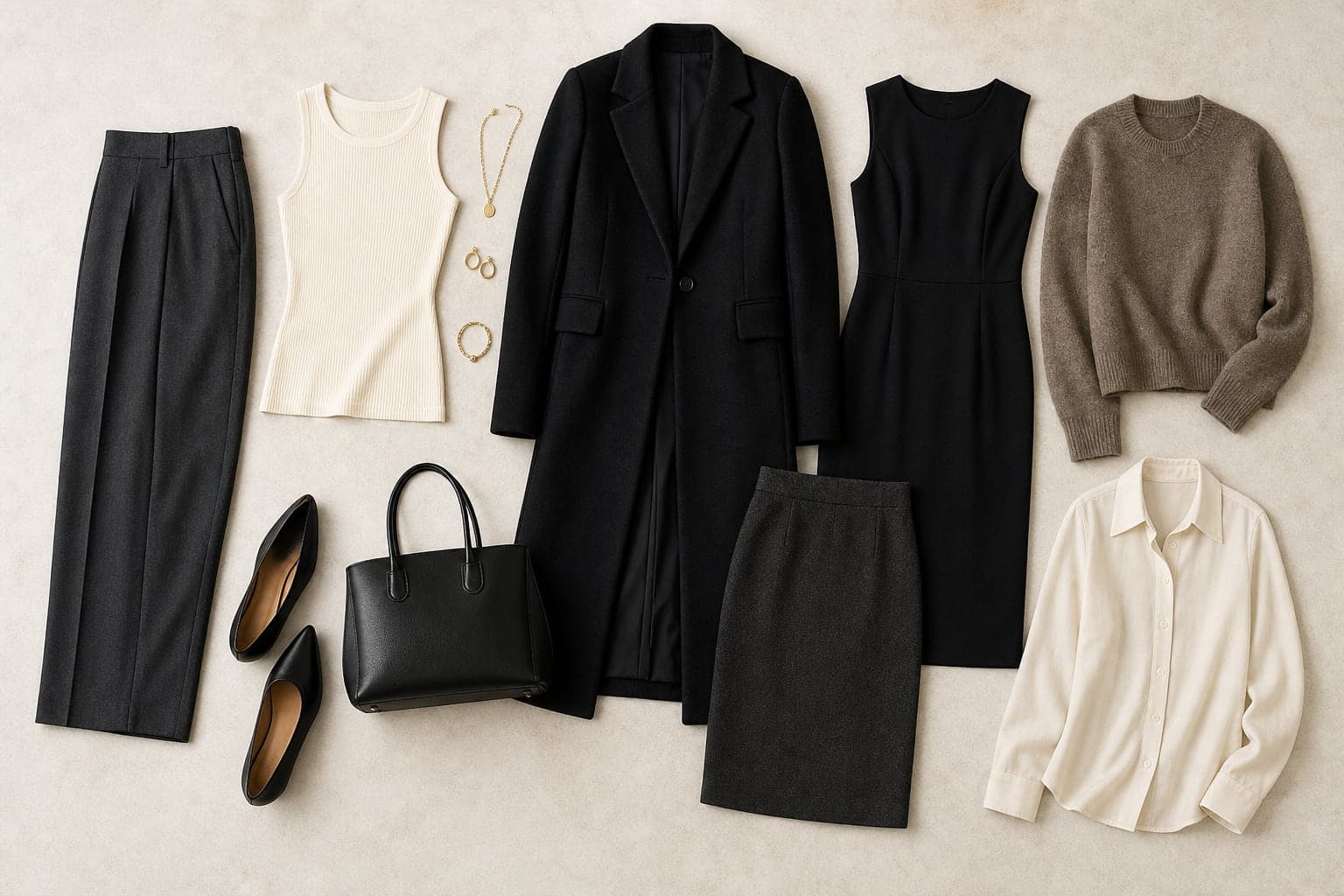
This formula works best when the clothes are clean, tonal, and shaped. Keep the palette tight, the lines simple, and the accessories quiet enough to make the tailoring stand out.
Core pieces: tailored trousers, clean tank or knit, long coat, pointed flats, structured bag, simple jewelry, column skirt, monochrome dress
For Romantic Practical
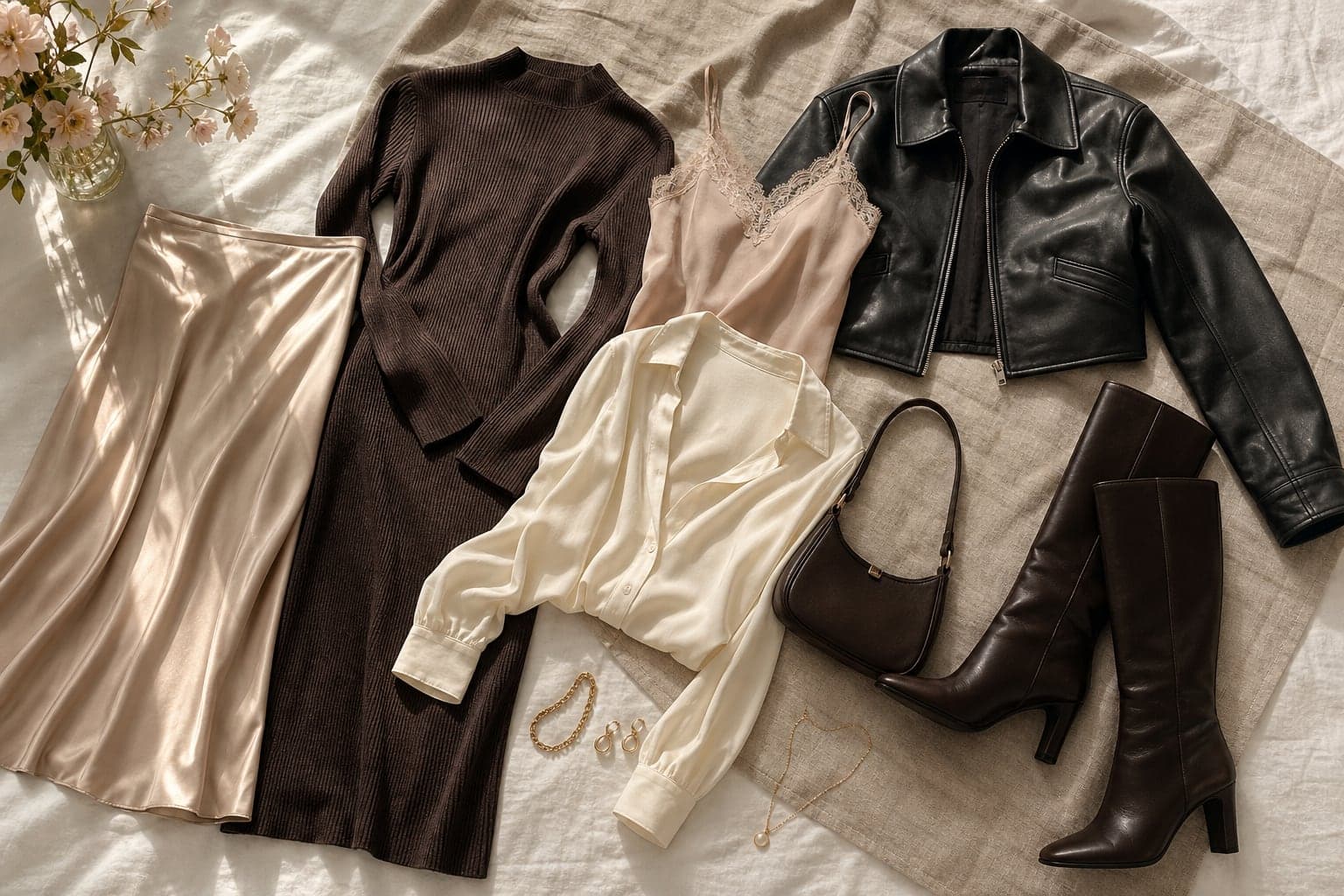
Romance becomes easier to wear when every soft piece has a grounded partner. Use leather, boots, or a clean bag to keep satin, lace, and drape from feeling too precious.
Core pieces: satin skirt, knit dress, lace-trim piece, soft blouse, leather jacket, tall boots, small shoulder bag, delicate jewelry
For Downtown Sleek
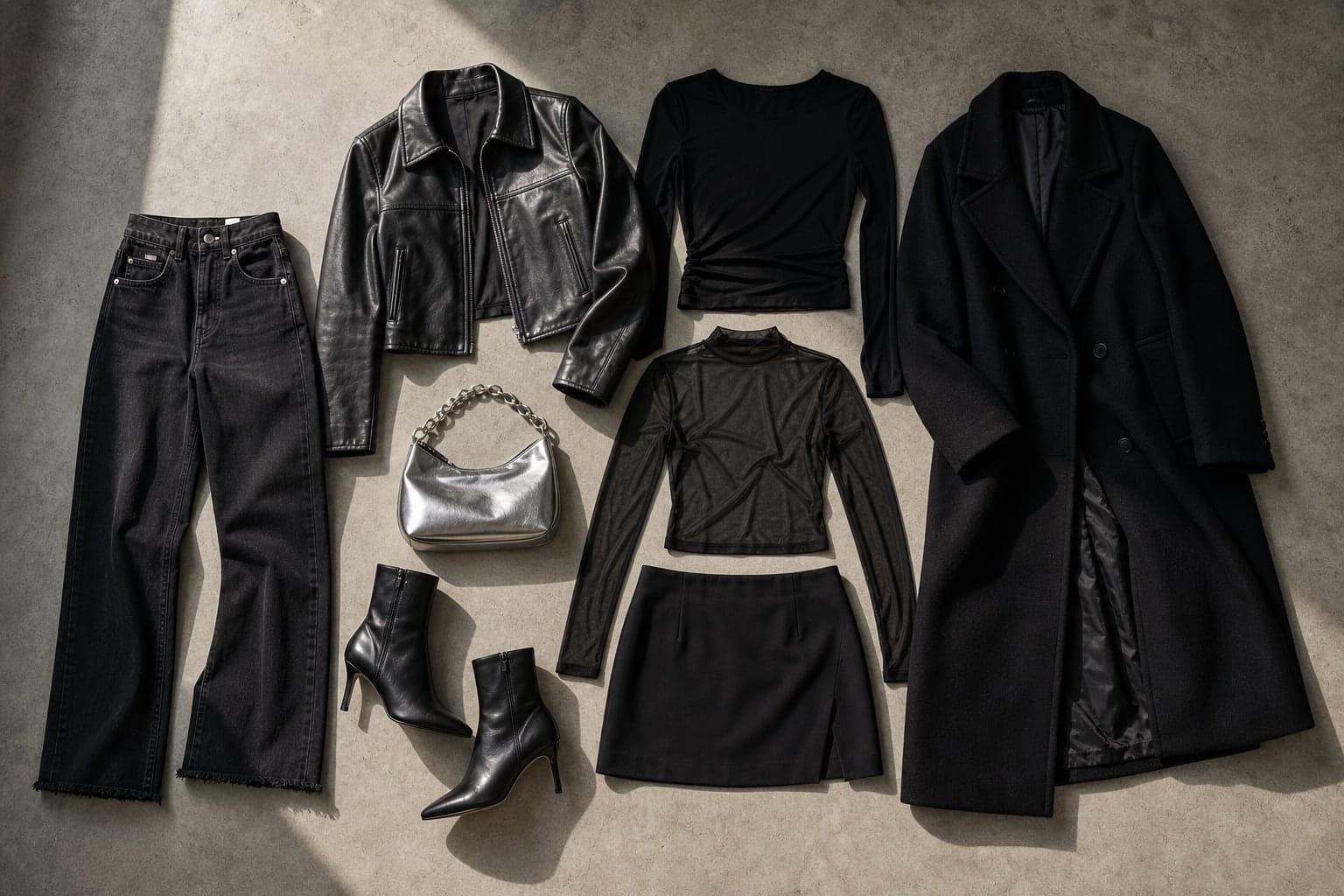
The downtown version depends on sharp shape and controlled darkness. Black pieces need texture variation: leather, denim, mesh, wool, metal, and polished shoes.
Core pieces: black denim, leather jacket, fitted top, sheer layer, mini skirt, heeled boots, metallic accessory, long coat
For Classic Smart Casual
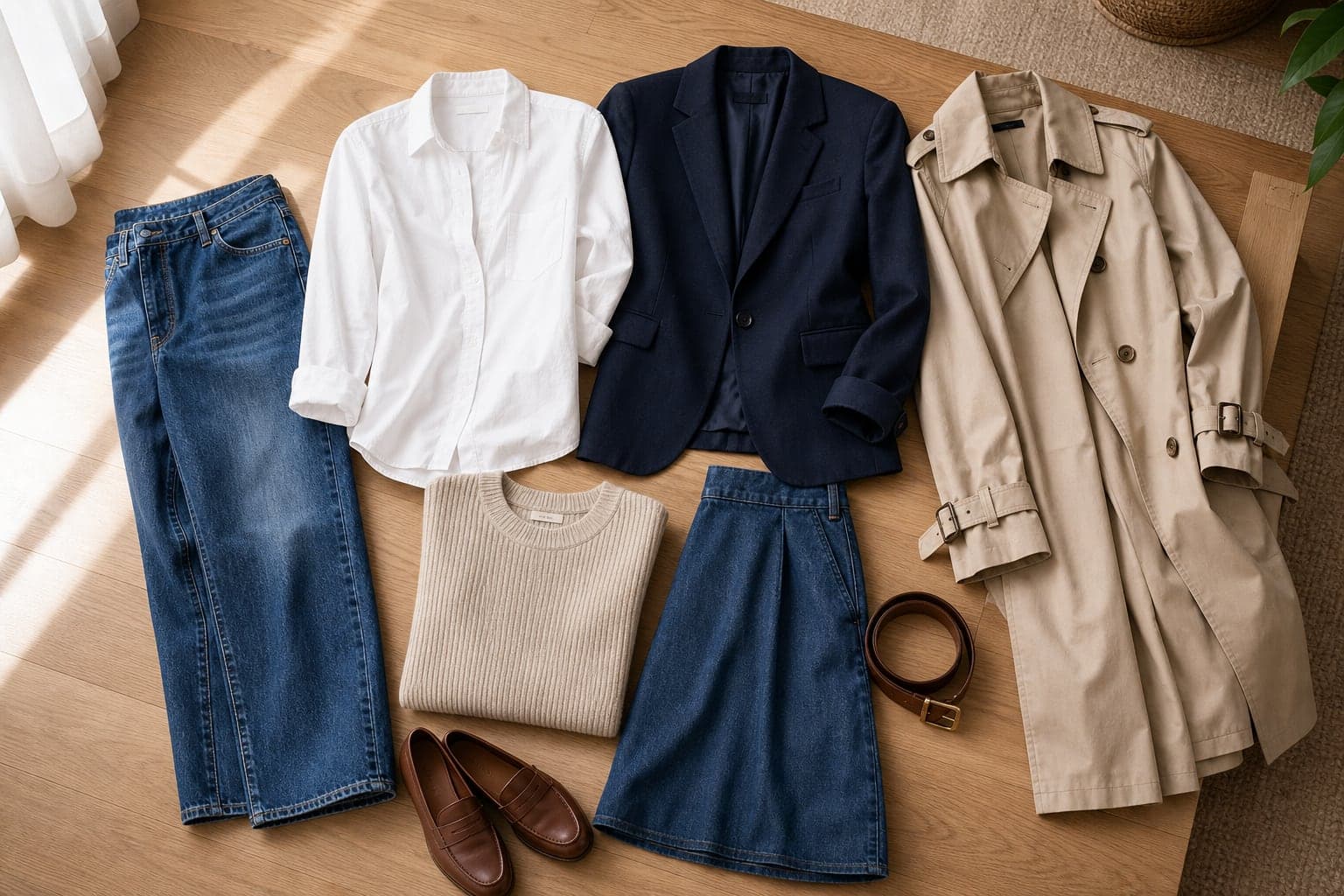
Classic smart casual is strongest when the pieces are familiar but not stiff. Denim, shirting, a blazer, a trench, and loafers can move between work, weekend, and dinner.
Core pieces: straight-leg jeans, cotton shirt, blazer, loafers, trench, ribbed knit, midi skirt, leather belt
For Sporty Polished
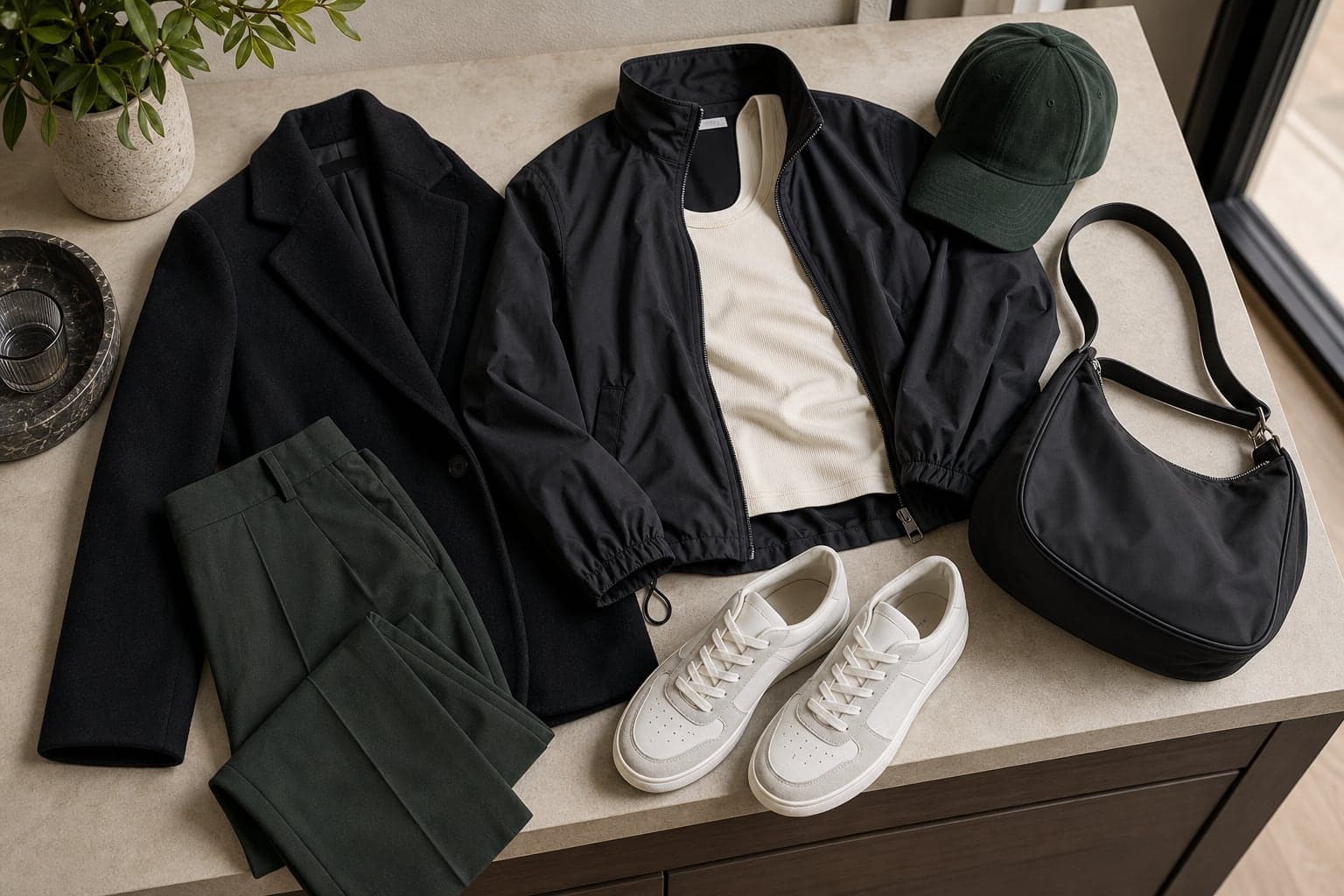
Sporty pieces look intentional when the surrounding items are refined. Pair clean sneakers, nylon, and caps with tailored trousers, structured coats, and bags with shape.
Core pieces: relaxed trousers, track jacket, clean sneakers, fitted tank, nylon layer, cap, structured coat, sleek bag
For Travel-Ready
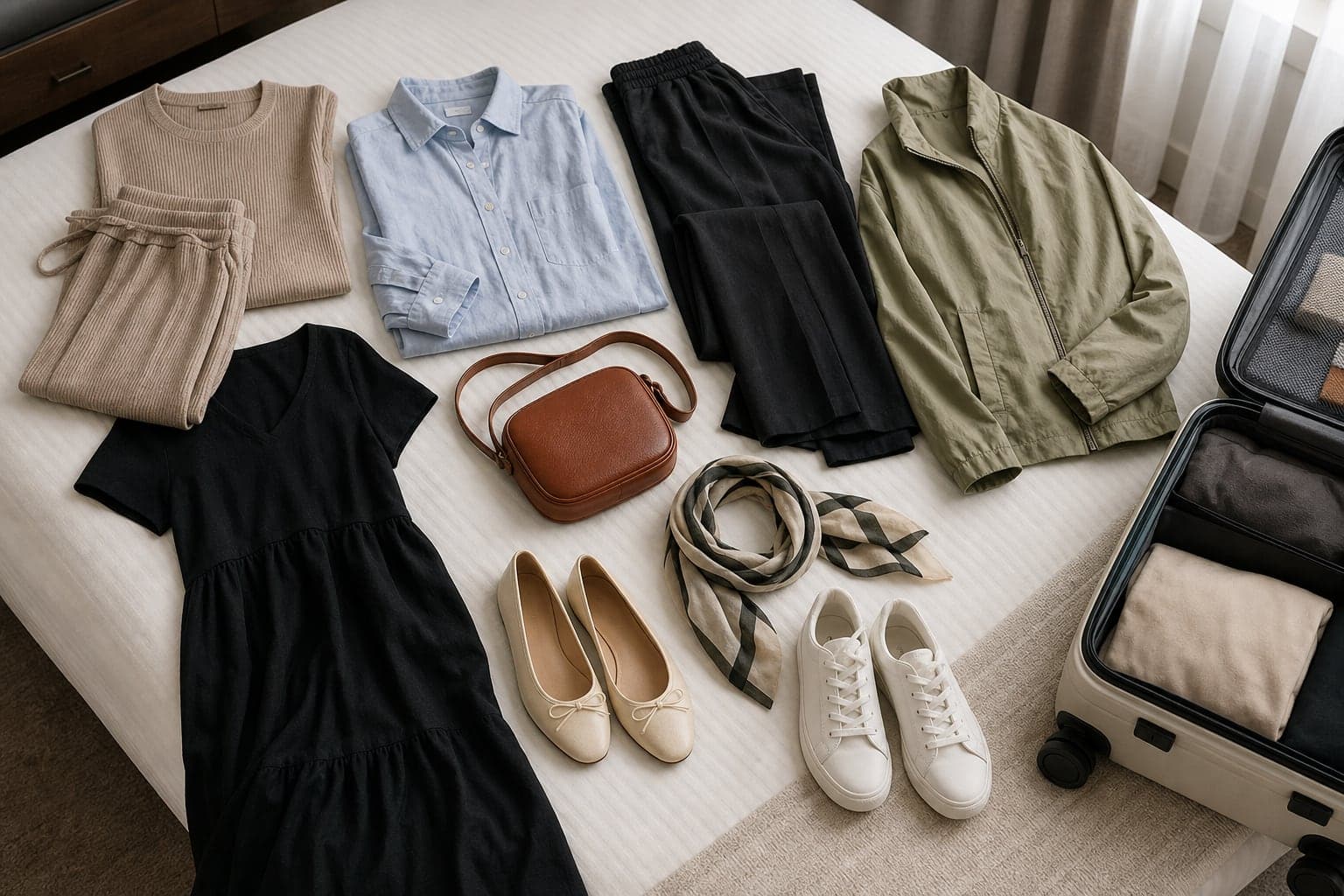
Travel-ready style needs comfort, repeatability, and a tight color system. The best travel pieces can handle walking, packing, temperature changes, and dinner without changing the whole outfit.
Core pieces: matching set, wrinkle-resistant trousers, button-down layer, walkable flats or sneakers, packable jacket, simple dress, crossbody bag, scarf
Choose anchors that match your actual life.
The Outfit Formulas
Use these as templates, not costumes. Change the exact pieces, but keep the structure and proportion logic intact.
Casual Day Formula
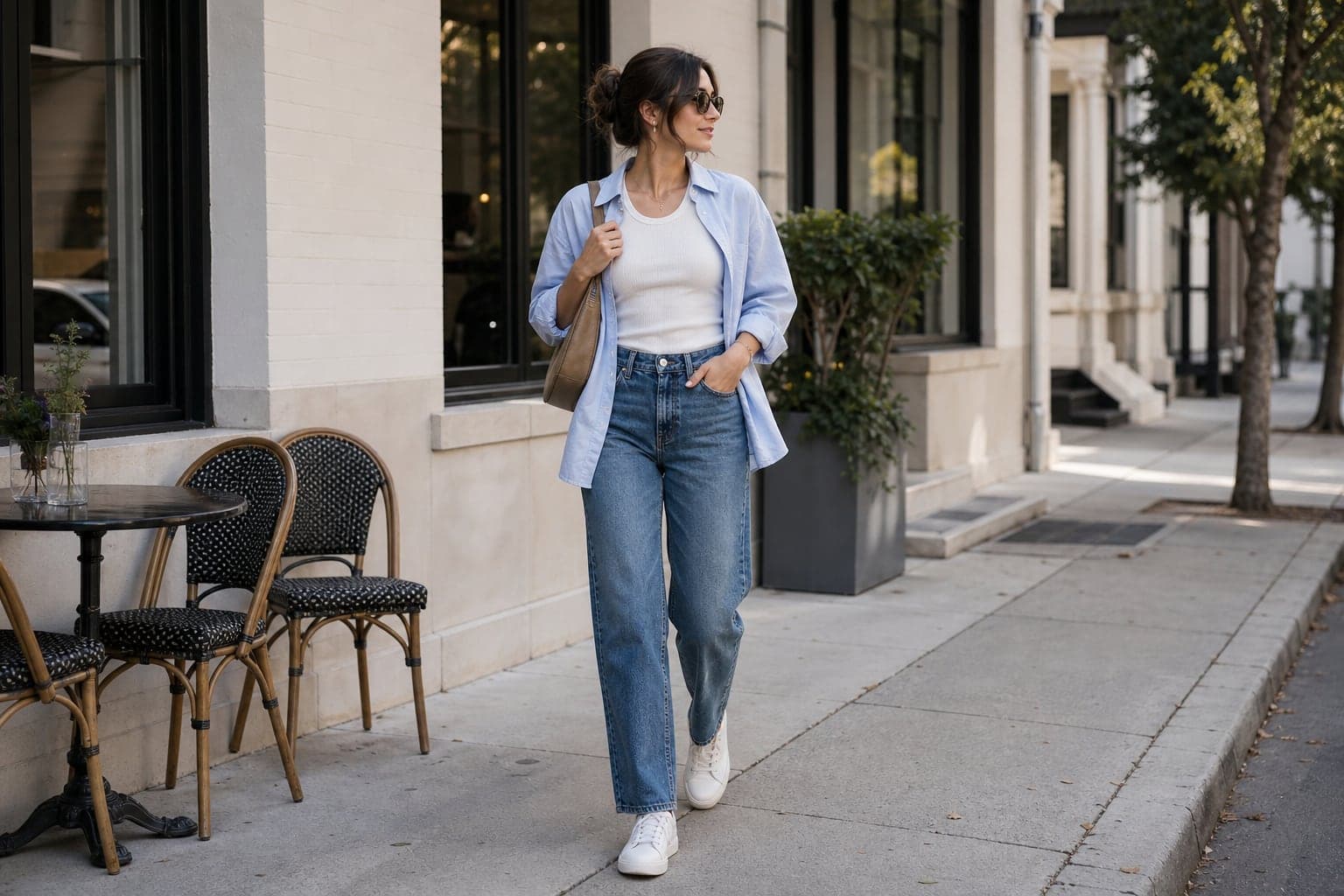
This is a good base for a relaxed but intentional wardrobe. It works because the layers are simple and the proportions are clear.
Formula: straight jeans + ribbed tank + open cotton shirt + clean sneakers + small bag
Modera tags: casual_day, relaxed, smart_casual, denim, cotton, sneakers
Work Formula
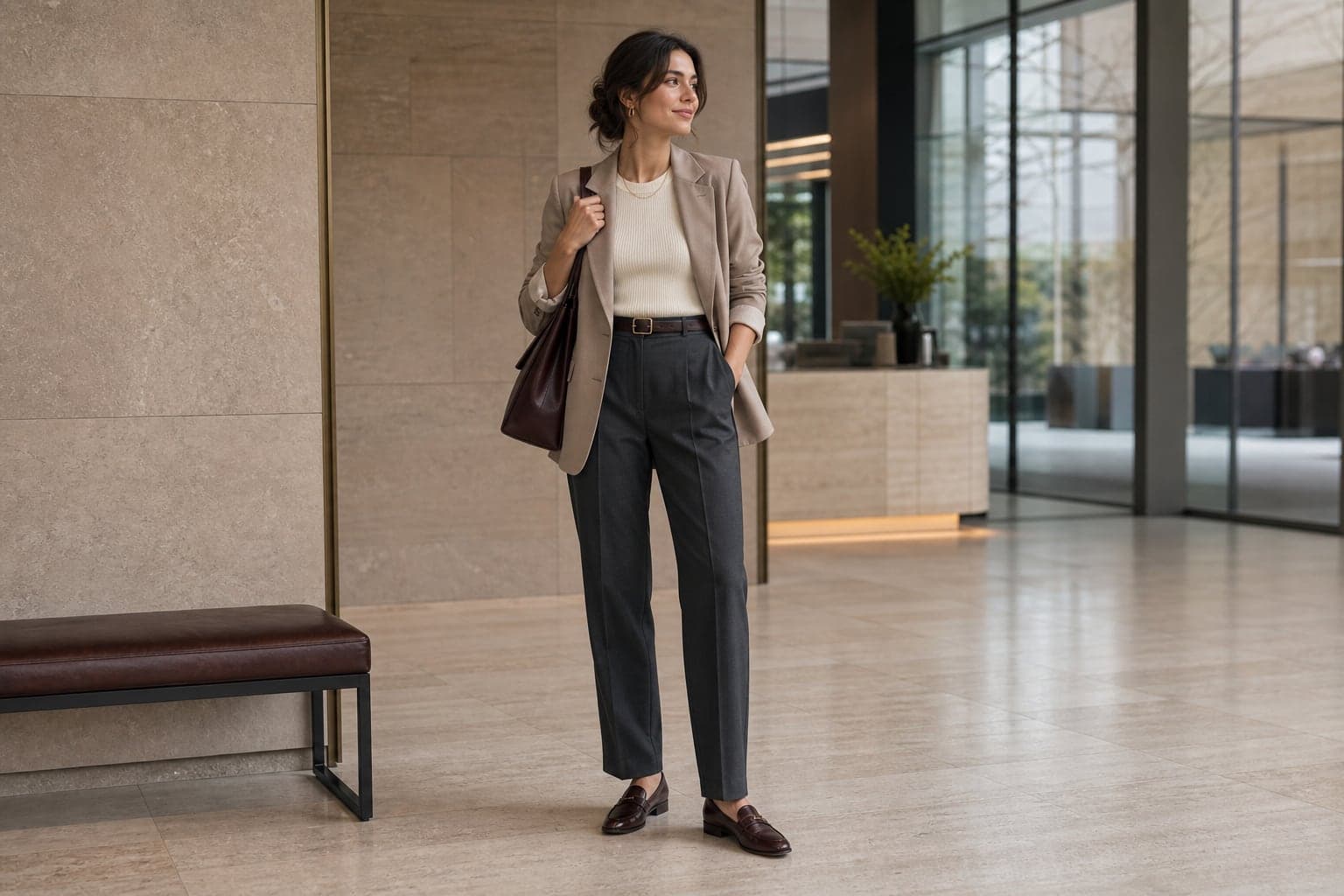
This creates authority without relying on stiff corporate dressing.
Formula: tailored trousers + sleeveless knit + blazer + loafers + structured bag
Modera tags: work_office, polished, minimal, trousers, blazer, loafers
Travel Formula

This is practical without looking like airport-only clothing.
Formula: relaxed trousers + tank + button-down layer + flat shoes + lightweight jacket
Modera tags: travel, casual_day, practical, layered, walkable footwear
Date Formula
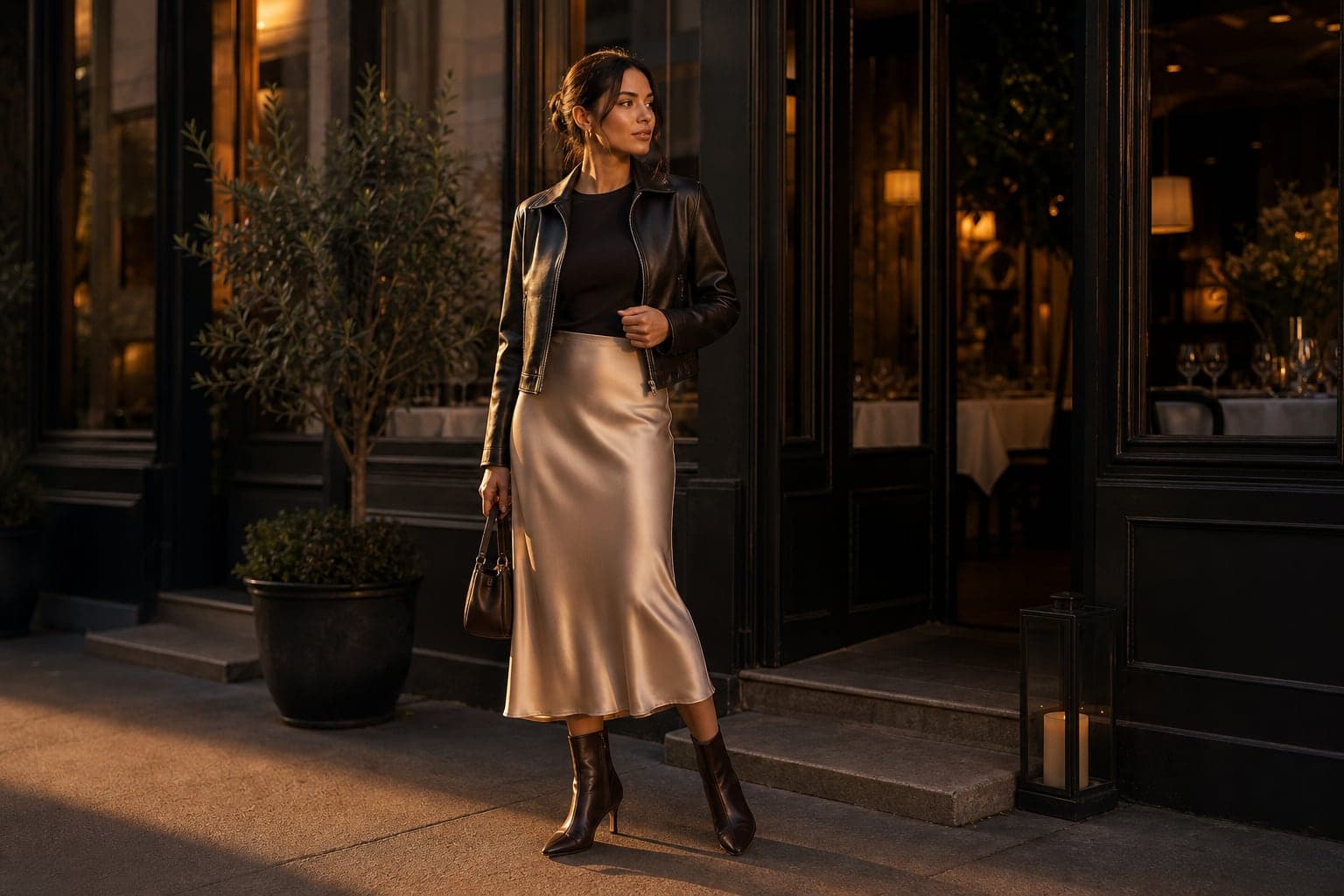
The satin creates romance; the leather and boots keep it grounded.
Formula: satin skirt + matte fitted top + leather jacket + boots + earrings
Modera tags: date_dinner, romantic, downtown, satin, leather, boots
Night Out Formula
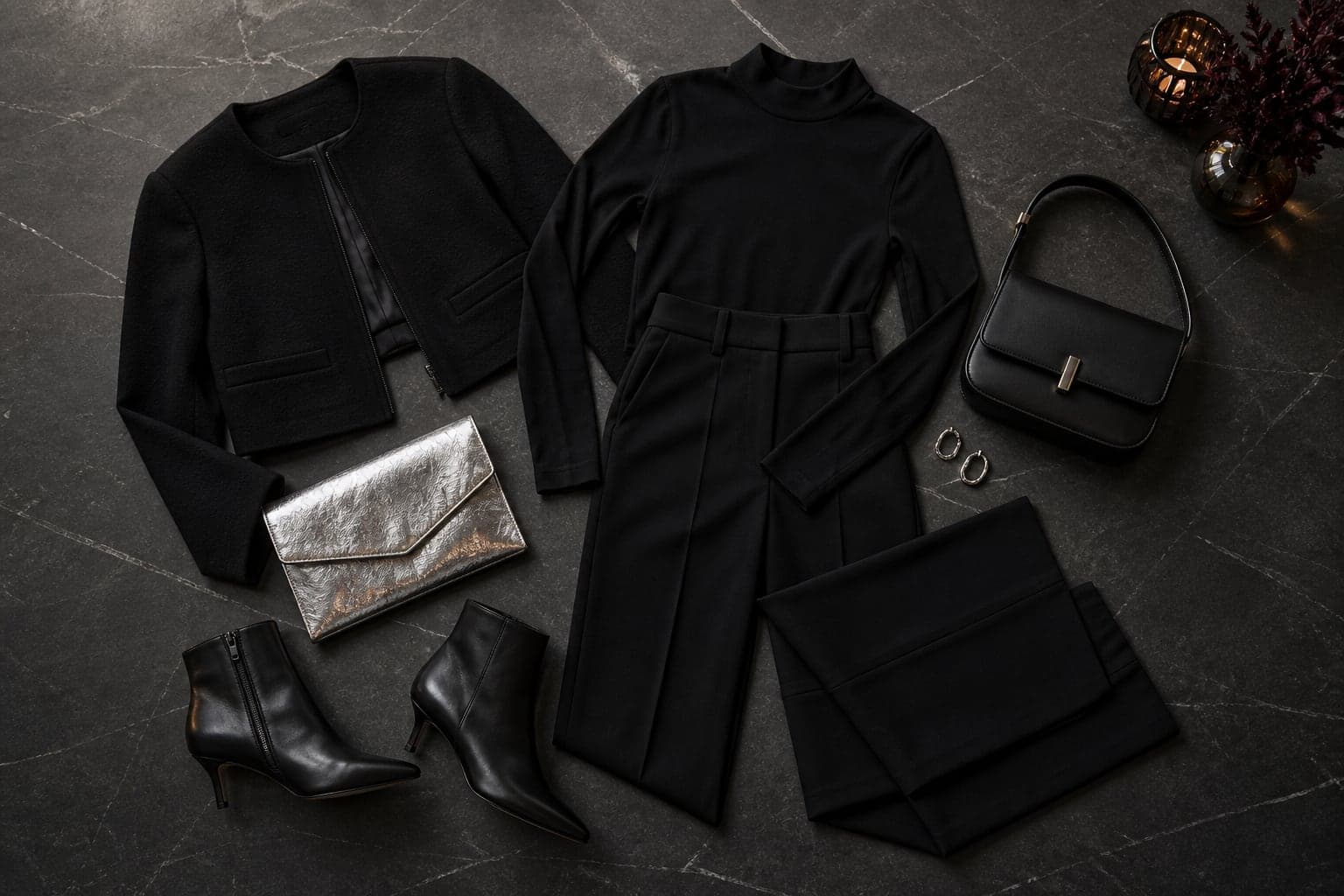
A simple dark base gives the statement detail room to work.
Formula: black base + sheer or metallic detail + sharp boots + small bag
Modera tags: night_out, sleek, statement, black, metallic, boots
Weather Formula

Cold-weather style works when the outerwear has shape and the base stays clean.
Formula: thermal base + straight jeans or trousers + long coat + scarf + boots
Modera tags: outdoor_weather, cold_weather, polished, long coat, boots, layered
Elevated Version
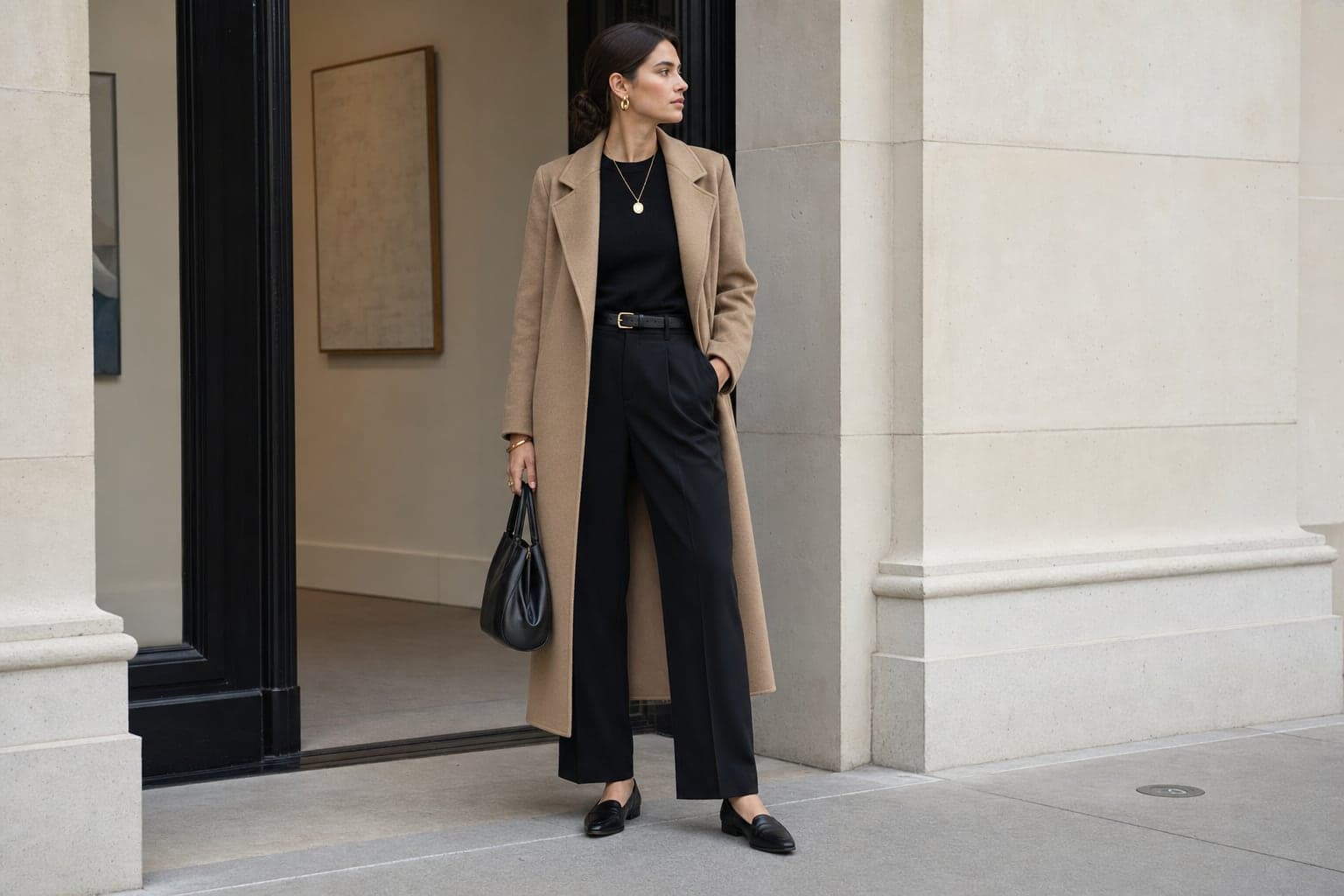
This is the fastest way to make simple clothes look more intentional.
Formula: monochrome base + excellent coat + sculptural jewelry + polished shoe
Modera tags: polished, minimal, monochrome, structured outerwear, metallic accessory
Budget Version
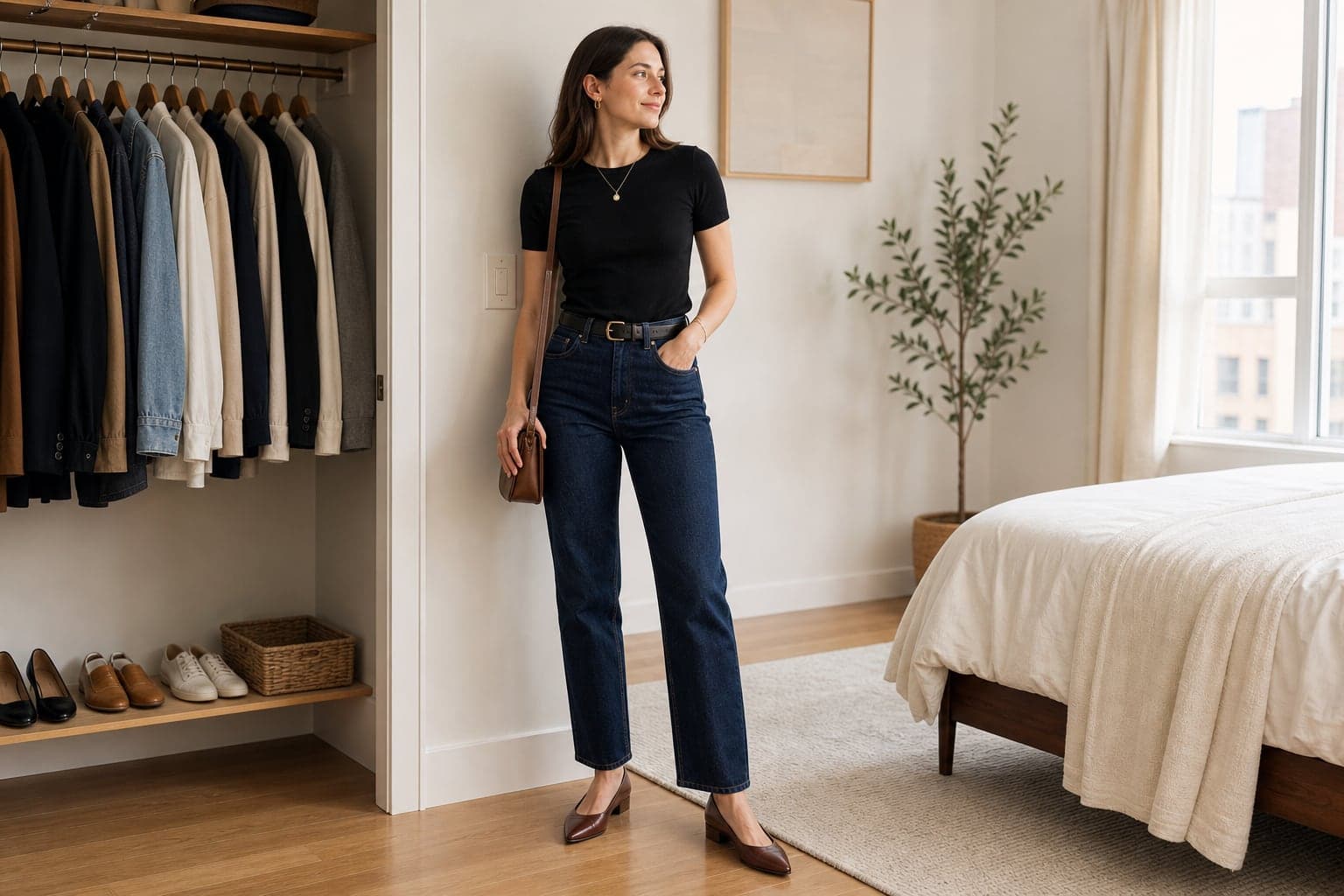
When the budget is limited, improve fit and styling before buying more pieces.
Formula: best-fitting jeans + best-fitting top + intentional shoe + one accessory
Modera tags: casual_day, smart_casual, budget, denim, accessory-led
Wrong but Interesting Twist
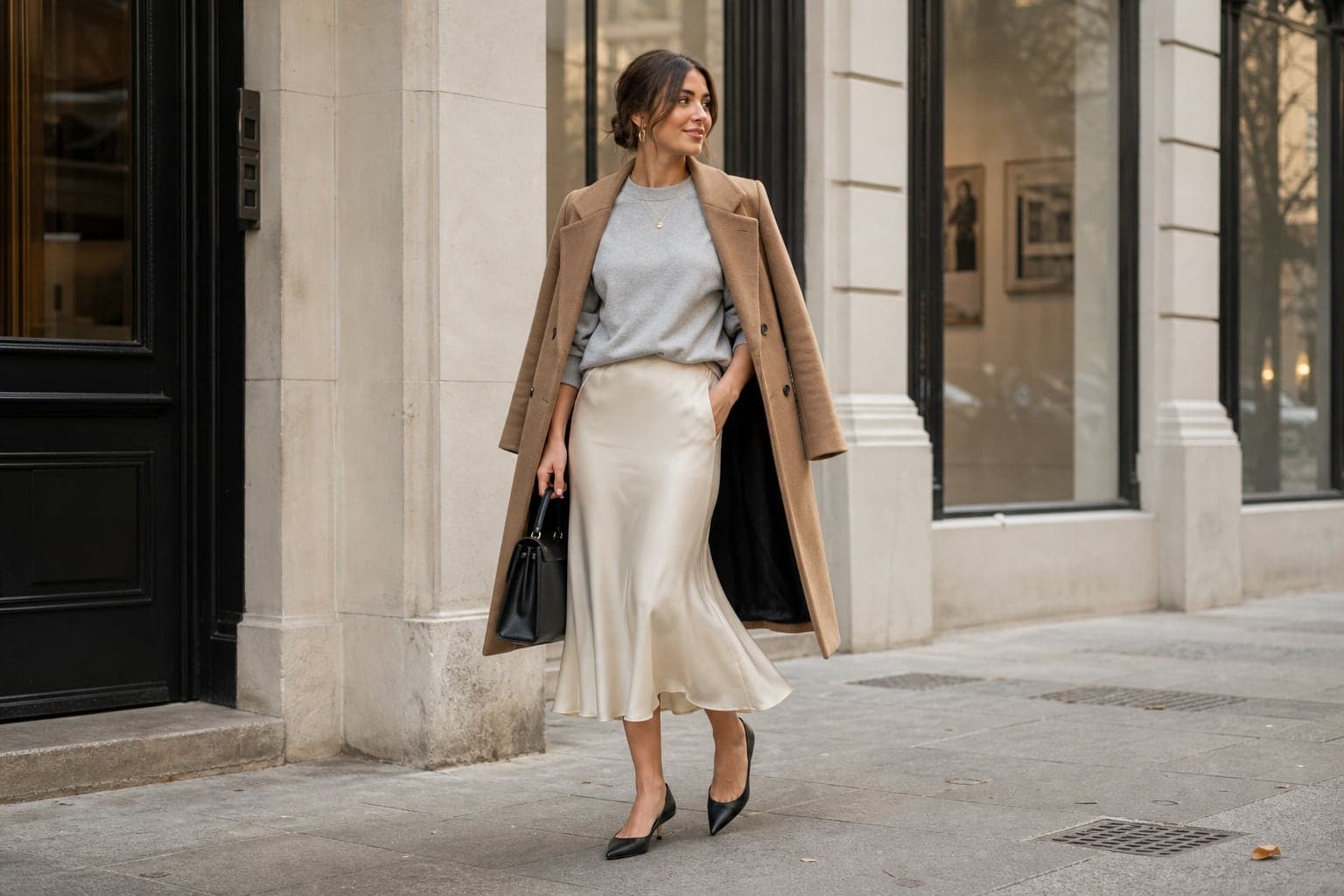
This works because the unexpected piece is controlled by the shoe and coat.
Formula: romantic skirt + sporty sweatshirt + pointed flats + structured coat
Modera tags: high-low, romantic, sporty, smart_casual, structured outerwear
Common Mistakes
Mistake 1: Choosing aesthetic labels instead of outfit logic
“Minimal,” “romantic,” or “streetwear” is not enough. You need formulas that turn those words into outfits.
Mistake 2: Buying for a fantasy lifestyle
If you rarely attend formal events, do not let formal pieces dominate your wardrobe. Build for your real week.
Mistake 3: Ignoring shoes
Shoes determine whether your formula works. If the shoes are wrong, the outfit will feel wrong.
Mistake 4: Keeping pieces that require imaginary support
If an item needs the perfect shoe, perfect jacket, perfect weather, and perfect mood, it may not belong.
Mistake 5: Confusing variety with versatility
A closet with many unrelated pieces is not versatile. A closet with repeatable combinations is.
Mistake 6: Treating personal style as fixed
Your formula should evolve. The point is to create a current system, not a permanent identity.
How to Enter the Look Using Your Existing Wardrobe
Start with the outfits you already repeat.
Pull five outfits you wear often. Then write down:
- silhouette
- color palette
- shoe type
- top fit
- bottom fit
- texture
- outerwear
- accessory
- event
- vibe
Look for patterns.
Maybe you always like high-rise bottoms and fitted tops. Maybe you prefer dark colors with one warm accent. Maybe you need walkable shoes. Maybe you like soft tops with structured jackets. Maybe your favorite outfits all include a third piece.
Those patterns are your formula.
Then build three lists:
Keep
Pieces that fit your formula and your real life.
Fix
Pieces that need tailoring, repair, better styling, or a missing partner.
Pause
Pieces that are good but do not currently fit your style, body, climate, or life.
Do not rush to donate everything. First understand why something is not working.
Modera Checklist
Use this checklist to tag and generate personal style formulas inside Modera.
Core categories
- Top
- Bottom
- Dress
- Outerwear
- Footwear
- Accessory
Required tags
- color family
- fit
- material
- texture
- pattern
- season
- weather
- event
- vibe
- formality
Style identity fields
- primary style words
- secondary style tension
- preferred silhouette
- preferred palette
- preferred materials
- preferred footwear
- avoided colors
- avoided fits
- event frequency
- weather reality
- comfort requirements
Useful vibes
- minimal
- classic
- smart_casual
- streetwear
- rugged_workwear
- preppy
- athletic
- vintage
- funky
- polished
- romantic
- technical
Useful events
- casual_day
- work_office
- date_dinner
- night_out
- wedding_formal
- workout_sport
- travel
- outdoor_weather
- game_day
Formula tags
- fitted_top_wide_bottom
- loose_top_straight_bottom
- dress_grounded_shoe
- column_base_statement_layer
- soft_piece_structured_piece
- casual_base_polished_shoe
- monochrome_base
- outerwear_led
- accessory_led
- high_low_mix
FAQ
What is a personal style formula?
A personal style formula is a repeatable outfit system based on your preferred silhouettes, colors, textures, shoes, events, and style identity. It helps you get dressed consistently without making every outfit the same.
How do I find my personal style?
Start by studying outfits you already wear often. Look for repeated shapes, colors, fabrics, shoes, and styling choices. Then define three style words and build outfit formulas around your real life.
What is the three-word method?
The three-word method uses three descriptive words to define your style direction. The most useful version includes one word for polish, one for personality, and one for practicality.
How do I make my closet more cohesive?
Create a color system, identify repeat outfit formulas, edit by outfit rather than item, and stop buying pieces that do not match your real events, shoes, palette, or style words.
Does a personal style formula mean wearing the same thing every day?
No. It means repeating outfit logic, not exact outfits. You can use the same formula with different colors, fabrics, shoes, and accessories.
Source Notes
- Vogue — Getting Dressed 101: Allison Bornstein: https://www.vogue.com/article/allison-bornstein-wear-it-well
- Reddit r/femalefashionadvice — Quiet Luxury Without Formula: https://www.reddit.com/r/femalefashionadvice/comments/16viraf/how_do_you_do_quiet_luxury_without_looking_like_a/
- Reddit r/femalefashionadvice — Sources to Stay Up to Date: https://www.reddit.com/r/femalefashionadvice/comments/1euo4nh/what_sources_do_yall_use_to_stay_up_to_date_on/
- Reddit r/capsulewardrobe / FFA Capsule Discussions: https://www.reddit.com/r/capsulewardrobe/comments/1msytv0/a_capsule_wardrobe_does_not_equal_what_should_i/
Final Takeaway
Personal style becomes easier when it stops being abstract.
Define your words. Find your formulas. Build a palette. Learn your textures. Edit by outfit. Buy only what strengthens the system.
The result is not a smaller personality. It is a sharper one.