Cold Weather Layering
How to stay warm without losing shape, proportion, or polish.
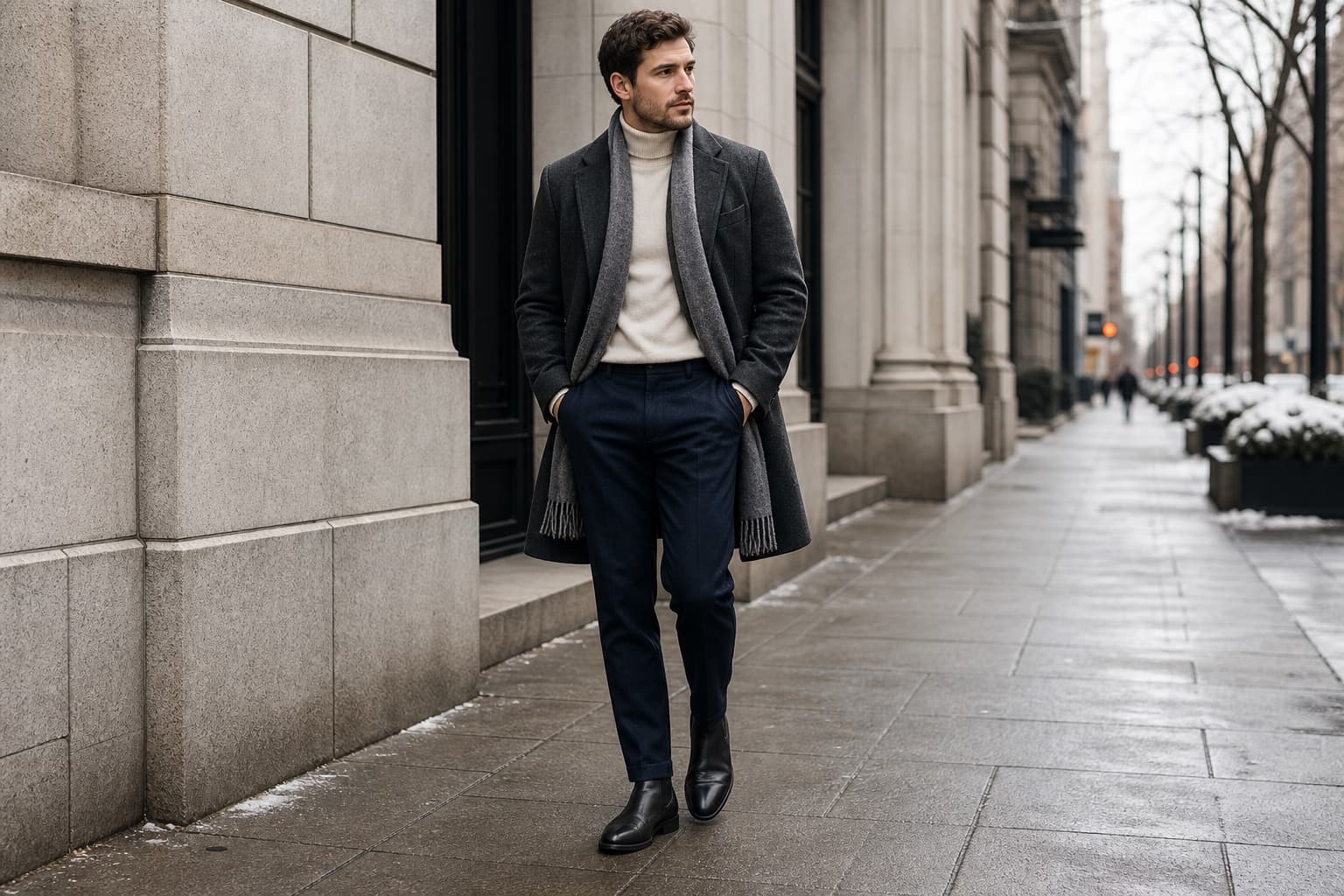
Cold weather style fails when warmth becomes the only objective. The result is familiar: a heavy parka over a thin office shirt, jeans that collapse into salt-stained sneakers, a scarf added as an afterthought, and no visible structure once the coat comes off. Good winter dressing is not about wearing the thickest possible piece. It is about building a system.
The system is simple: base layer, warmth layer, shape layer, weather layer, and ground layer. Each piece has a job. The base manages comfort. The mid-layer traps heat. The outer layer handles wind, rain, or snow. The shoe keeps the whole outfit grounded. Accessories close the gaps.
The best version still looks like you. If your style is classic, the system may be a wool coat, knitwear, flannel trousers, and boots. If your style is technical, it may be a shell, fleece, thermal base, cargos, and weatherproof shoes. If your style is streetwear, it may be a cropped puffer, heavyweight hoodie, wide denim, and winter sneakers. The logic is the same.
What Cold Weather Layering Is
Cold weather layering is not simply stacking clothes. It is a sequence of compatible layers that protect against temperature, wind, moisture, and context.
A good winter outfit should pass four tests:
- Warmth: Can you be outside long enough for the actual day?
- Mobility: Can you walk, sit, commute, and move without bulk fighting you?
- Shape: Does the outfit still have a clear silhouette?
- Context: Does it work for where you are going once the coat comes off?
The mistake is treating the coat as the whole outfit. The coat matters, but winter style is won underneath it. A man in a great parka over random layers looks unfinished indoors. A man in a simple coat over a good knit, clean trousers, and proper boots looks dressed before and after he takes the coat off.
What It Is Not
It is not wearing a ski jacket to every winter setting. It is not trying to make a topcoat handle a blizzard. It is not wearing a thin sweater under a giant coat and calling it warm. It is not sacrificing footwear because the rest of the outfit looks good.
Cold weather dressing needs honesty. A wool coat can be sharp, but it is not always enough for freezing wind. A parka can be practical, but it can overwhelm tailoring. A fleece can be stylish, but not if it looks like outdoor gear randomly inserted into a dress outfit. The goal is to match the layer to the weather and the setting.
The Core Pieces
The cold-weather wardrobe works best when each layer has a job: warmth, shape, weather protection, or grounding.
Thermal Base Layer
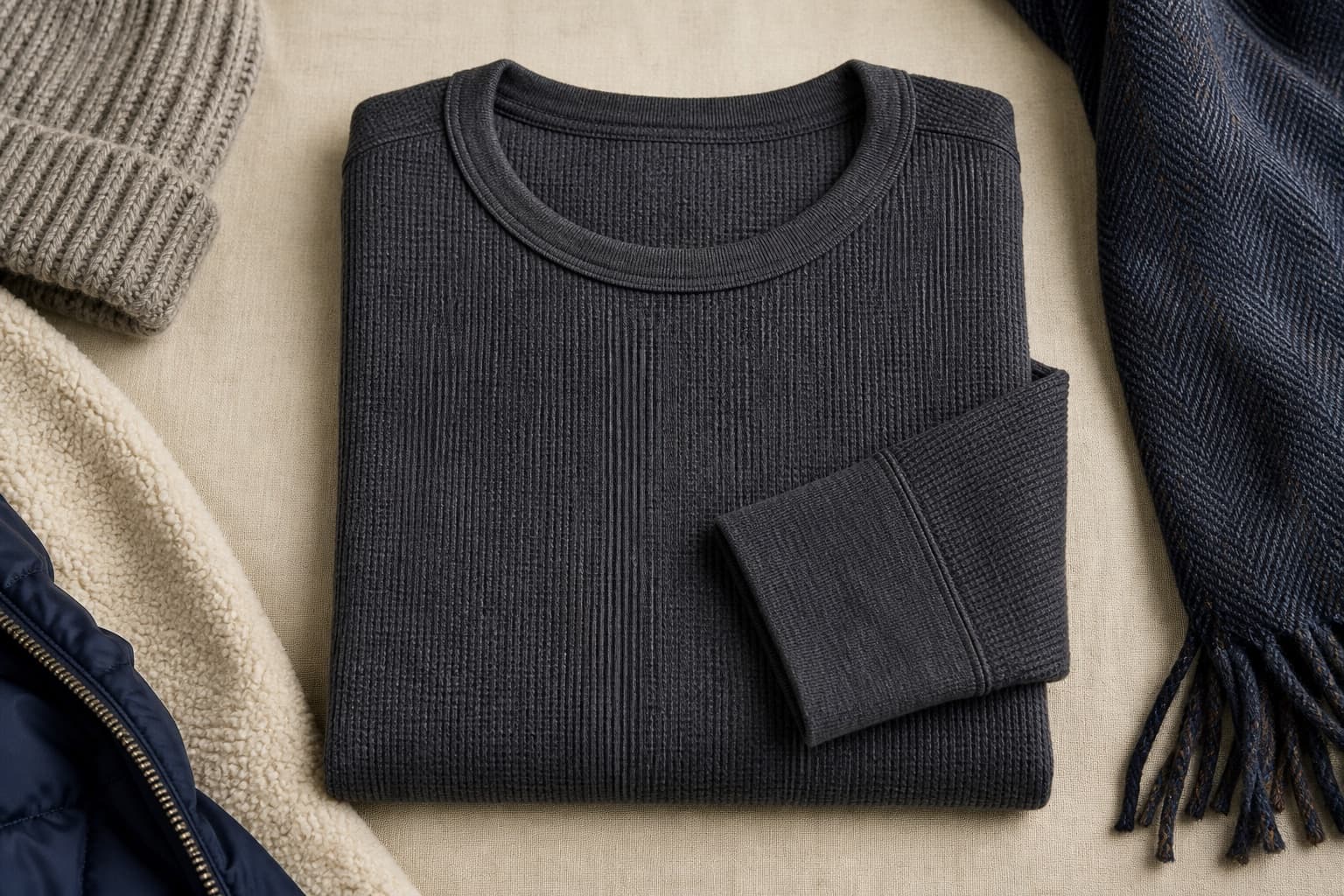
A base layer is invisible insurance. It should sit close enough to fit under shirts, sweaters, and jackets without adding bulk. Merino is useful because it regulates temperature and resists odor better than standard cotton. Cotton can work for mild cold but becomes less useful when wet or sweaty. Use it under flannels, overshirts, crewnecks, cardigans, and even dress shirts when the collar and cuffs stay hidden.
Category: Top
Type: Thermal shirt / base layer
Best colors: Black, charcoal, heather gray, navy
Fit: Slim, close to body
Material: Merino wool, cotton blend, synthetic thermal knit
Weather: Cold, wind, snow
Heavyweight T-Shirt or Long Sleeve
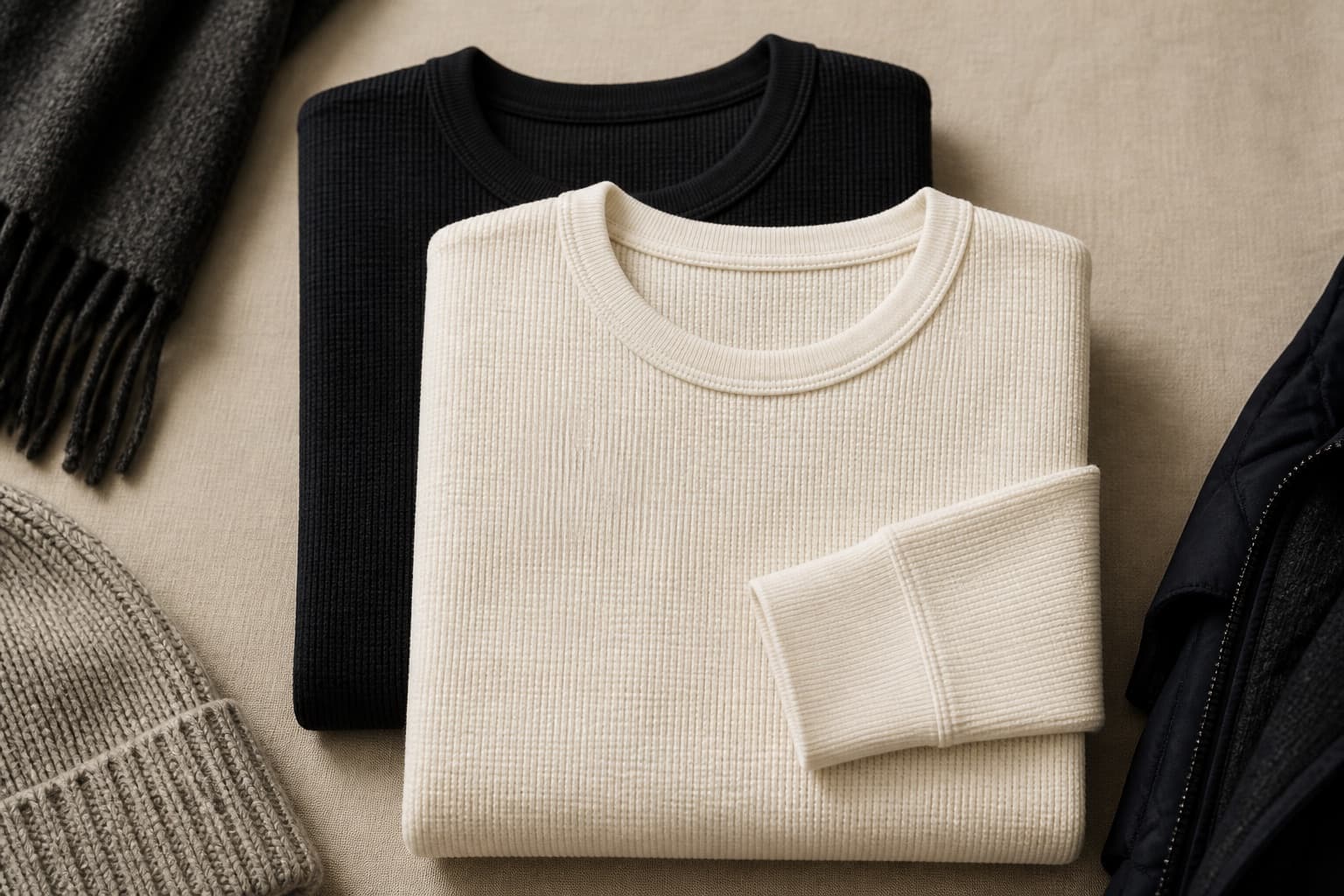
A thin summer tee has no place as a winter foundation unless it is under a true thermal. Heavy cotton gives structure under overshirts and sweaters. A ribbed or waffle long sleeve adds quiet texture without looking technical.
Category: Top
Type: T-shirt / long sleeve T-shirt
Best colors: White, black, charcoal, cream, navy
Fit: Regular, relaxed, or slim depending on layer
Material: Heavyweight cotton jersey
Texture: Smooth, ribbed, waffle
Flannel Shirt
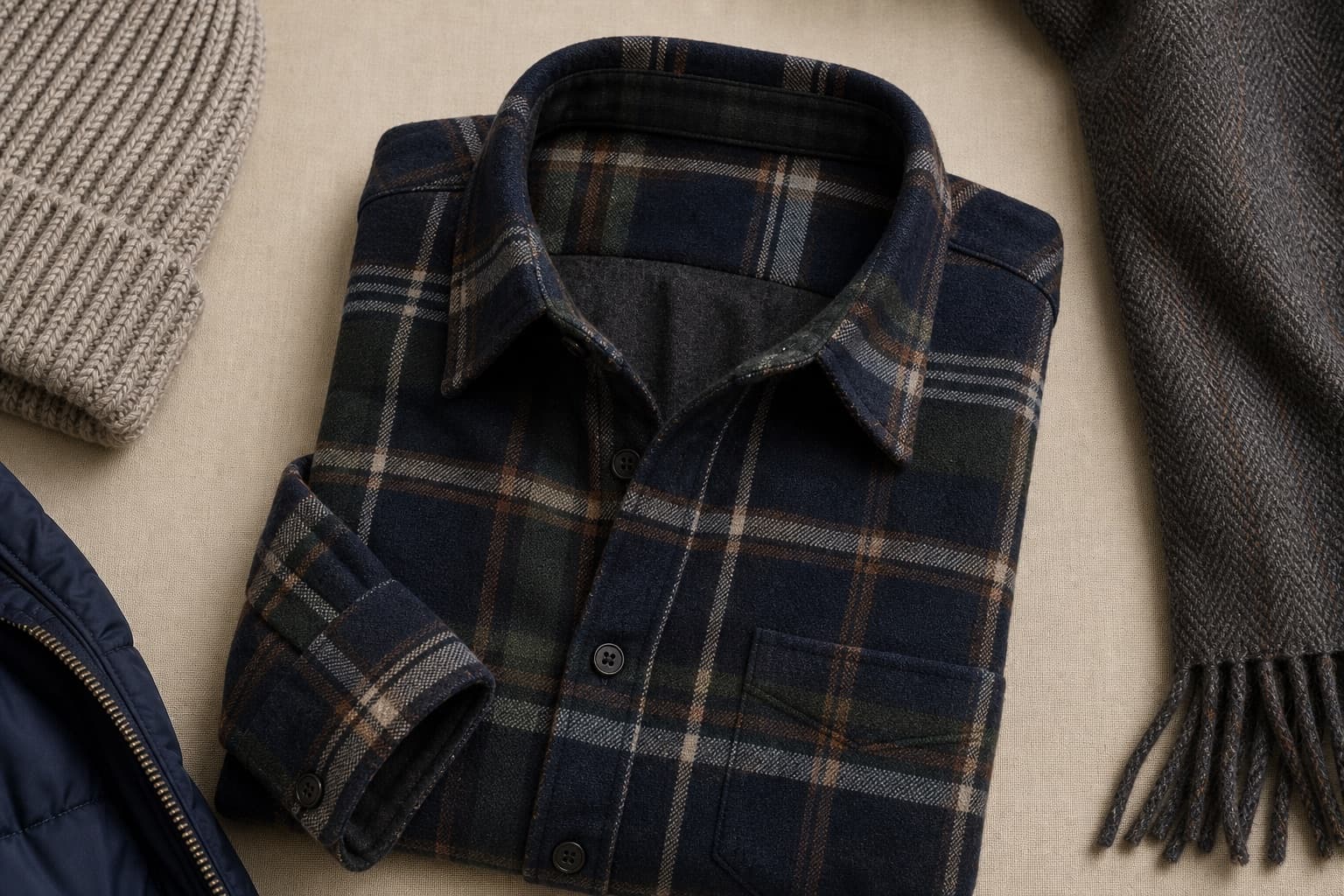
A flannel shirt is a useful cold-weather bridge: warmer than a standard Oxford, less bulky than a sweater, and easier to wear open over a tee. Keep the pattern controlled. Oversized buffalo checks can work, but they make the outfit more casual immediately.
Category: Top
Type: Flannel shirt
Best colors: Navy, charcoal, forest, brown, burgundy, cream check
Fit: Regular or relaxed
Material: Brushed cotton, wool blend
Pattern: Solid, check, plaid
Vibe: rugged_workwear, classic, casual
Merino Crewneck
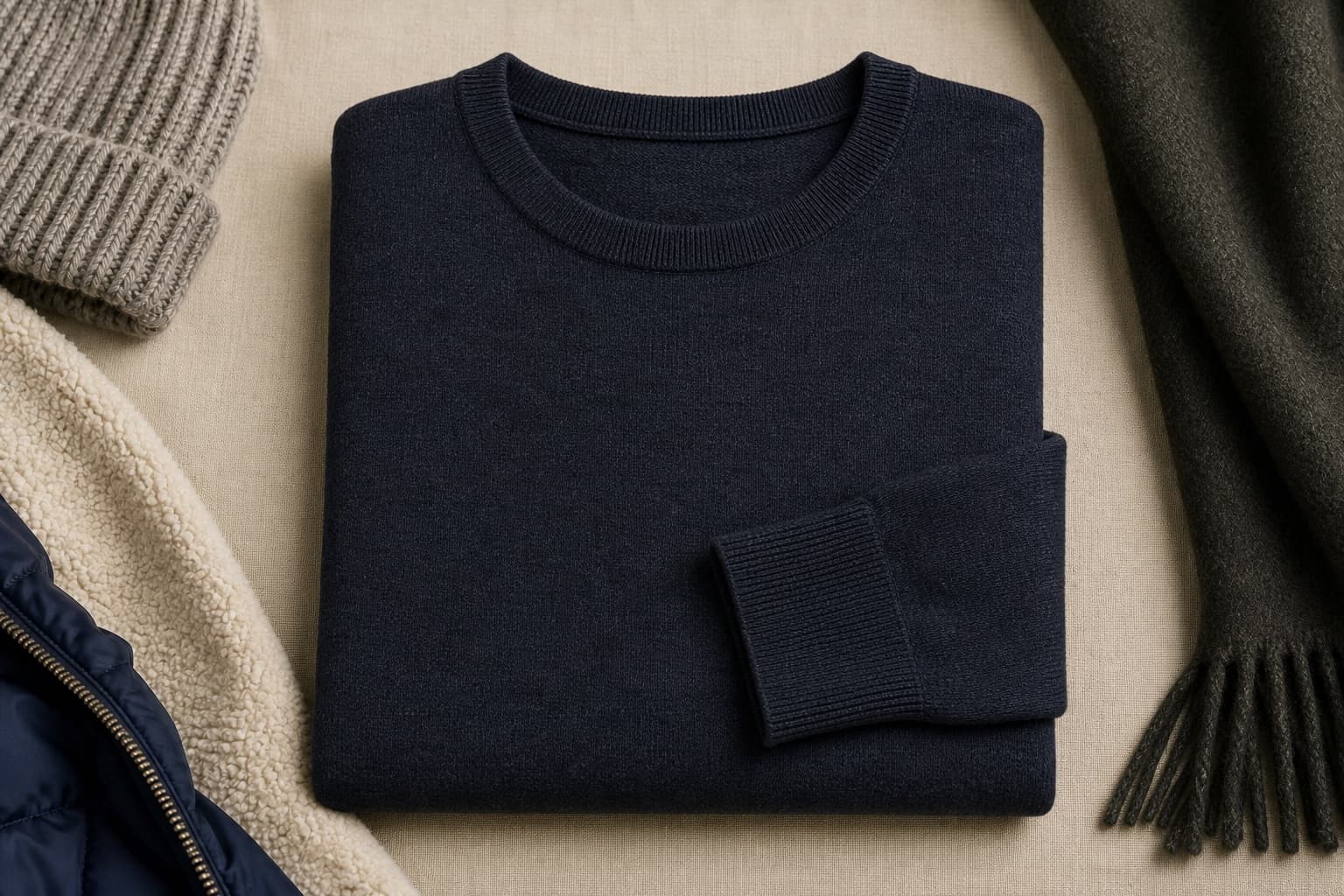
The merino crewneck is the cleanest indoor winter layer. It fits under topcoats and parkas, works over shirts, and looks sharper than a sweatshirt. Use fine-gauge merino for office and dinner; use thicker knitwear for casual days.
Category: Top
Type: Sweater
Best colors: Charcoal, navy, camel, chocolate, forest, black, cream
Fit: Regular, slightly relaxed
Material: Merino wool
Texture: Fine knit
Formality: Smart casual to formal
Shetland, Donegal, or Chunky Wool Sweater
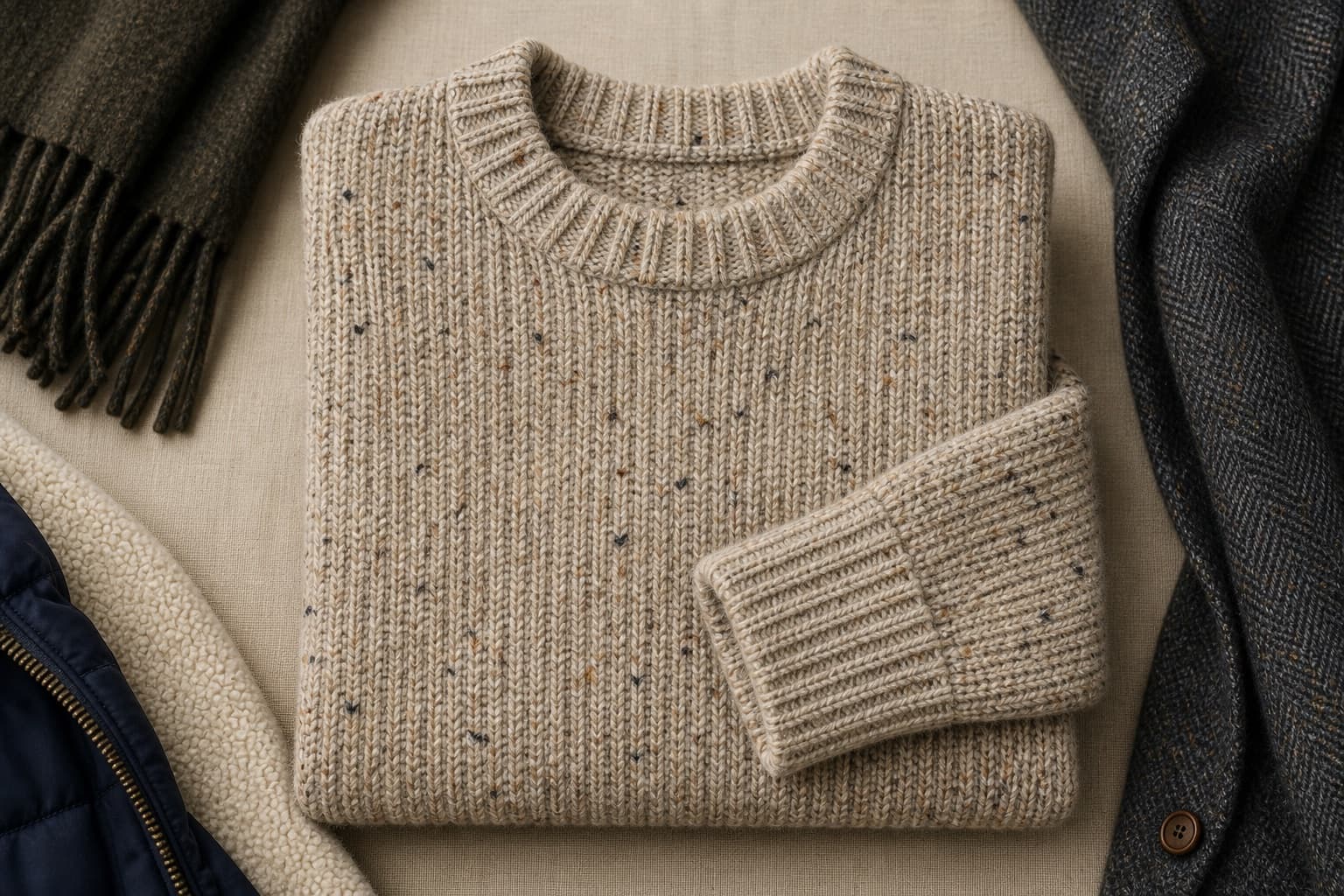
Texture is what makes winter outfits feel intentional. A flecked Donegal sweater under a navy coat adds interest without relying on pattern. A chunky sweater under a parka makes casual winter outfits look considered rather than purely functional.
Category: Top
Type: Textured sweater
Best colors: Oatmeal, gray, moss, navy, brown, rust
Fit: Regular or relaxed
Material: Wool
Texture: Brushed, flecked, ribbed, cable knit
Vibe: classic, rugged_workwear, vintage
Fleece Jacket or Vest
Fleece can look sharp when it has a clear role. A black fleece under a shell reads technical. A cream pile fleece with denim reads retro outdoor. A navy fleece vest over a flannel reads practical. It goes wrong when it is treated as a substitute for every mid-layer.
Category: Top / Outerwear
Type: Fleece jacket / fleece vest
Best colors: Black, navy, olive, brown, cream, charcoal
Fit: Regular or slightly relaxed
Material: Fleece, wool fleece, pile fleece
Texture: Brushed, pile, technical
Vibe: technical, outdoor_weather, casual
Overshirt or Shirt Jacket
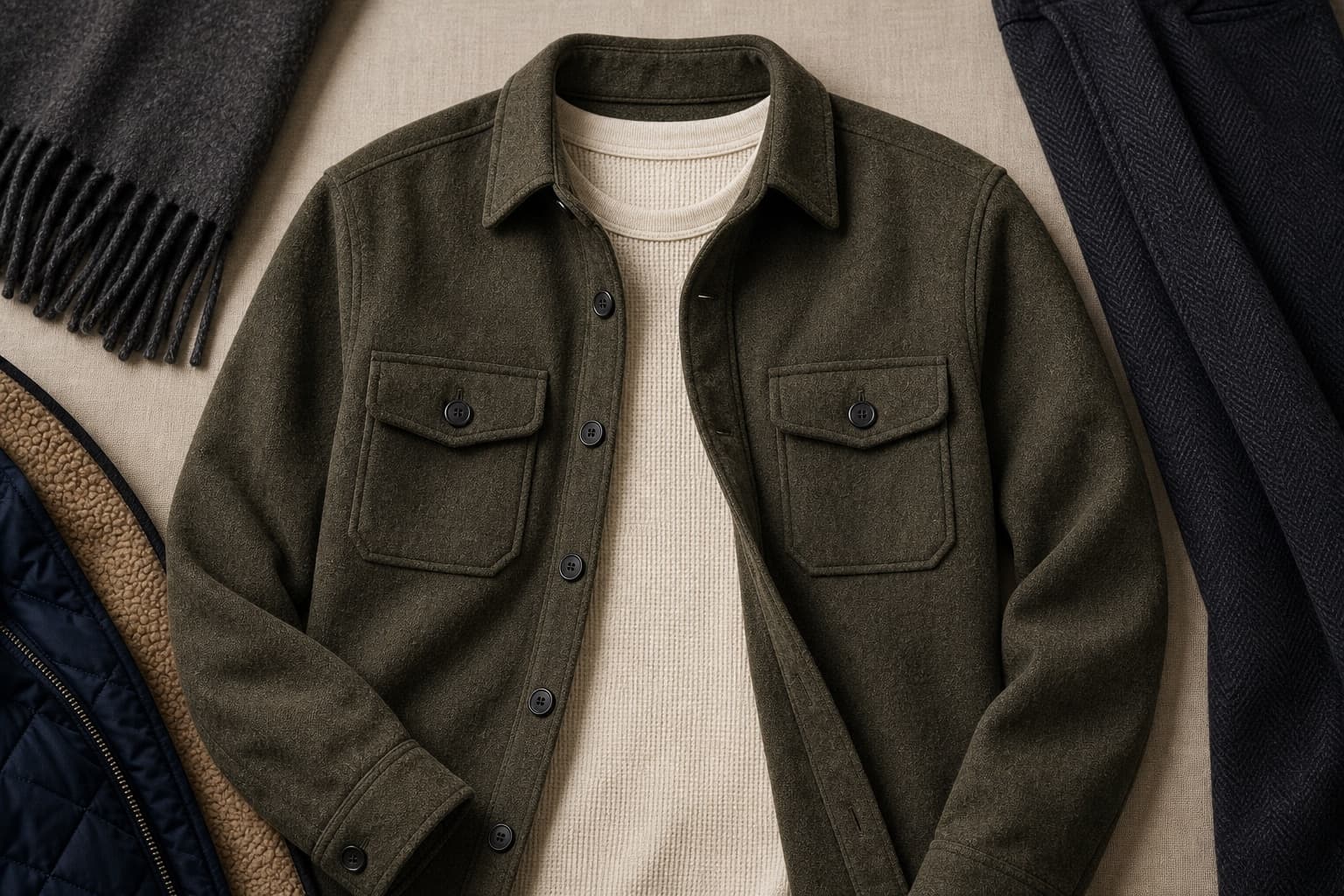
The overshirt is the flexible middle layer. It can sit over a thermal and tee, under a parka, or replace a jacket on mild days. In winter, choose heavier fabrics: wool, corduroy, moleskin, canvas, quilted nylon.
Category: Outerwear
Type: Overshirt / shirt jacket
Best colors: Olive, navy, charcoal, camel, black, plaid
Fit: Relaxed enough to layer
Material: Wool, flannel, canvas, corduroy, quilted nylon
Season: Fall, winter, early spring
Chore Coat or Canvas Jacket
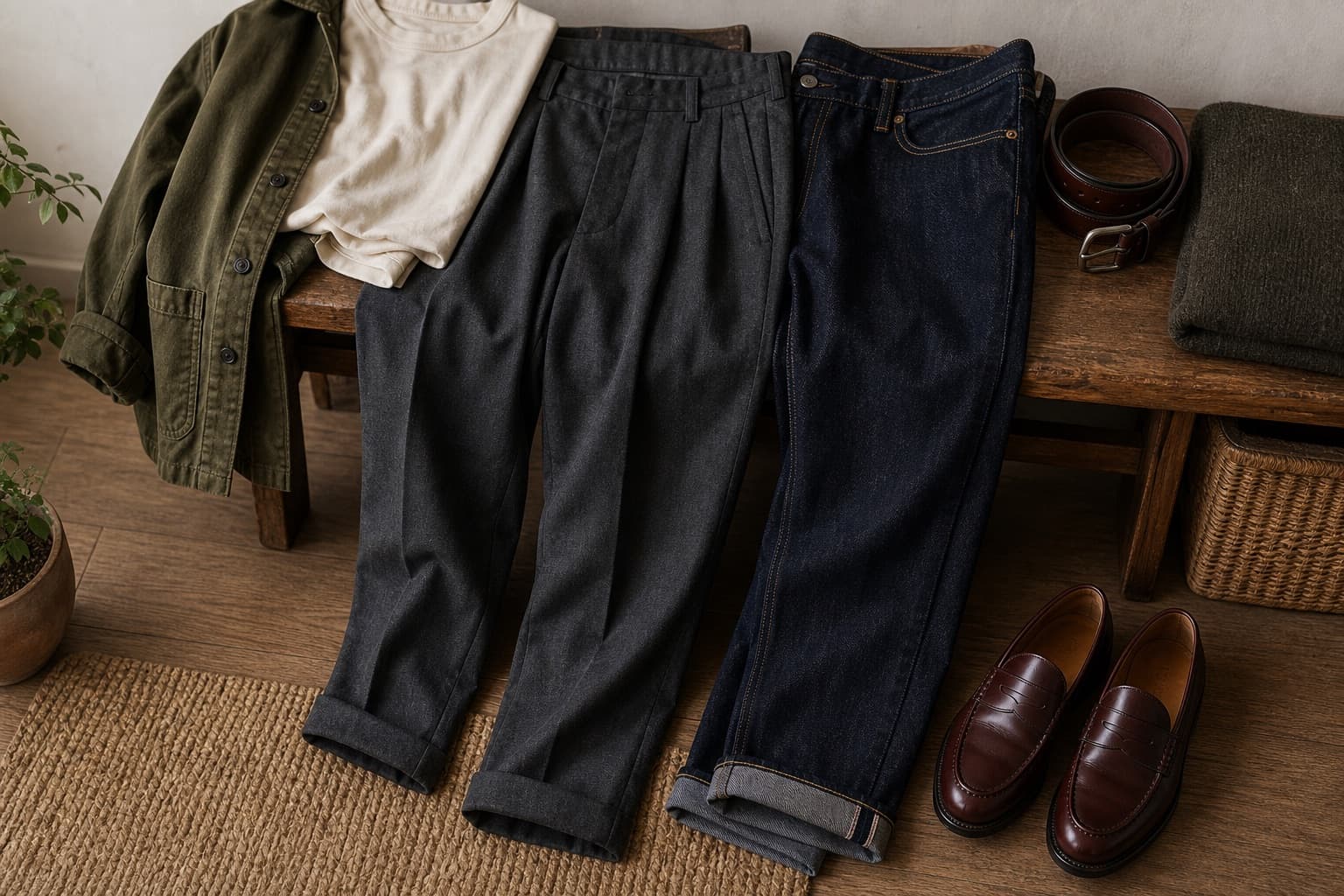
A chore coat is not enough for deep winter on its own, but it is useful under a larger coat or for milder cold. It gives structure and pockets. Lined versions work especially well with denim, wool trousers, and boots.
Category: Outerwear
Type: Chore coat / work jacket
Best colors: Navy, brown, olive, black, ecru
Fit: Relaxed, structured
Material: Canvas, duck cotton, wool blend, lined cotton
Vibe: rugged_workwear, smart_casual, casual
Wool Topcoat
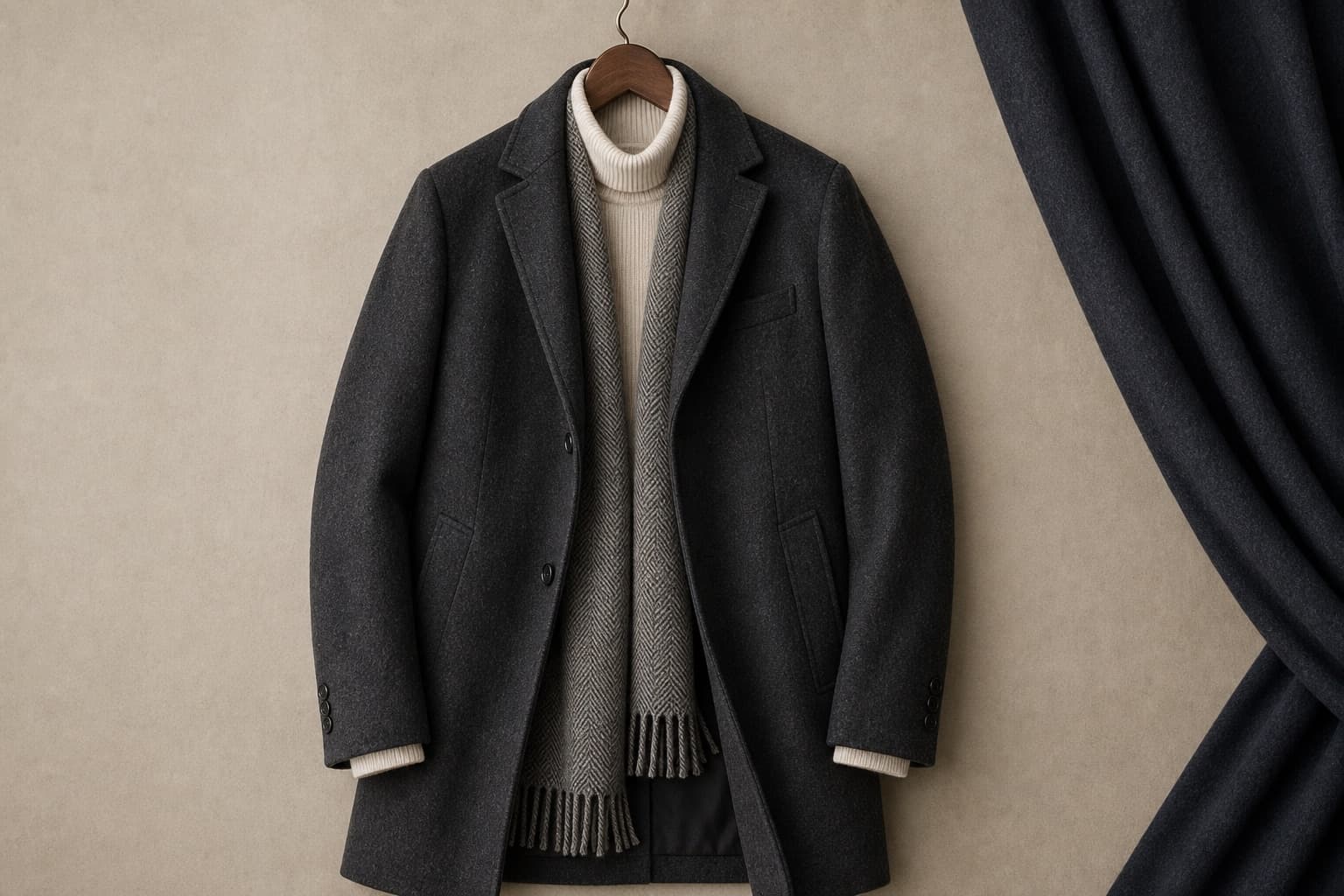
The wool coat is the cleanest winter outer layer for office, dinner, and dressier weekends. The key is room. If it only fits over a shirt, it is too tight for real winter. It should fit over a sweater or blazer without pulling at the chest or upper arm.
Category: Outerwear
Type: Topcoat / overcoat
Best colors: Navy, charcoal, camel, black, herringbone gray
Fit: Tailored with room for knitwear
Material: Wool, cashmere blend, heavy wool blend
Formality: Smart casual to formal
Parka
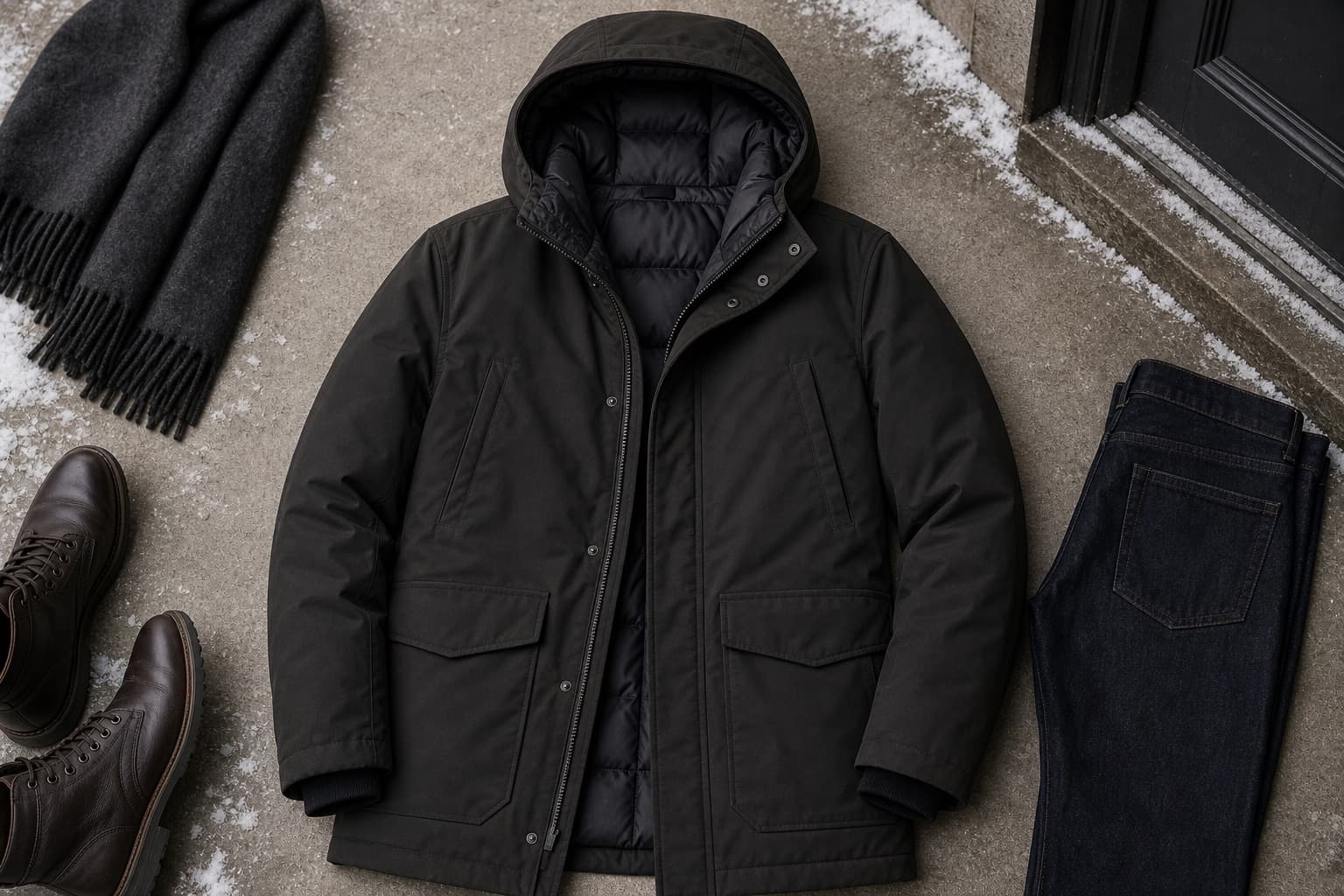
The parka is for actual cold. It should cover the hips, block wind, and have enough structure not to collapse into a sleeping bag shape. A good parka should work over jeans, cargos, chinos, and casual trousers. For office-heavy wardrobes, choose a cleaner dark parka with minimal hardware.
Category: Outerwear
Type: Parka
Best colors: Black, navy, olive, charcoal, dark brown
Fit: Regular, slightly relaxed
Material: Insulated nylon, cotton blend shell, waterproof shell
Weather: Freezing, wind, snow
Puffer Jacket
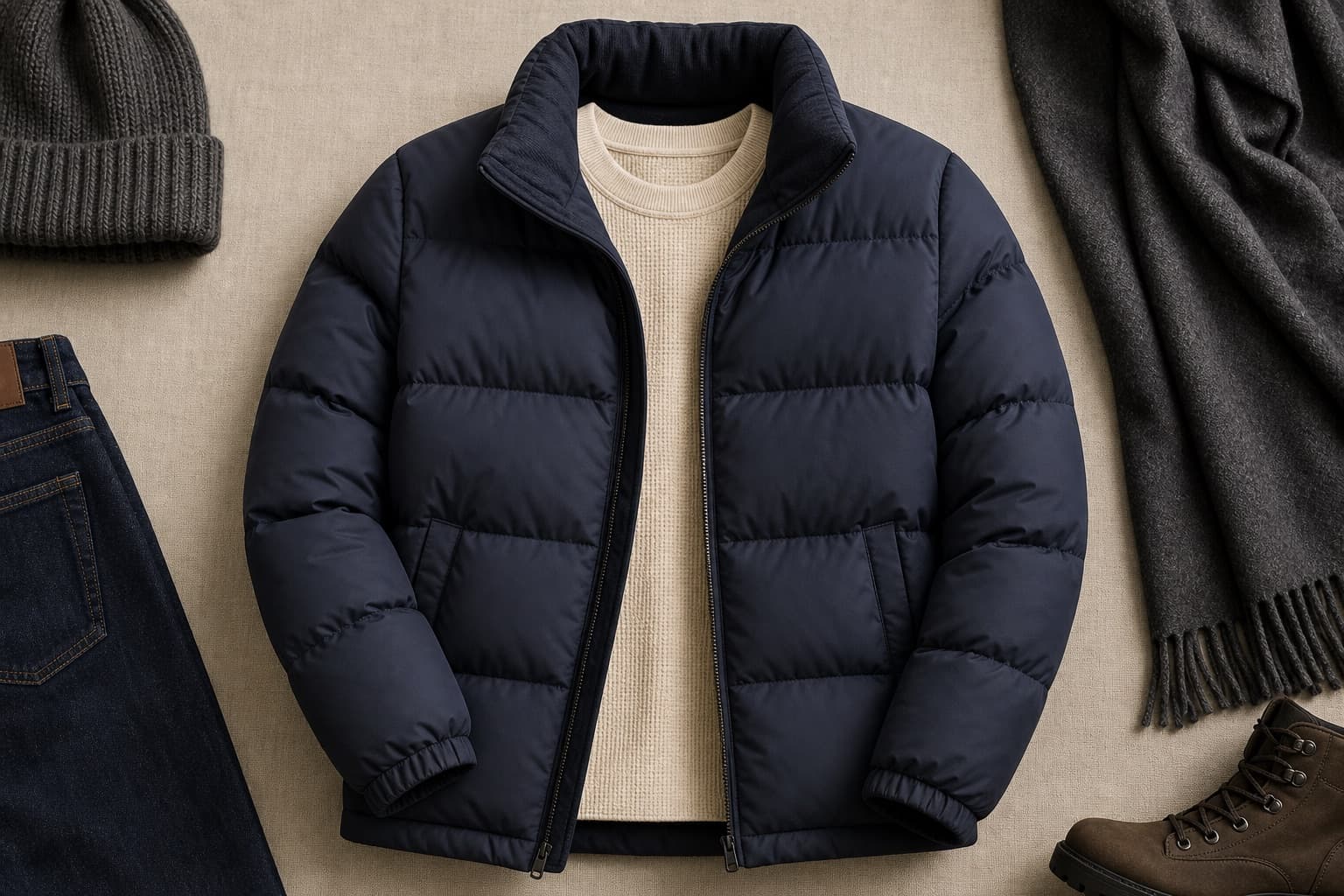
A puffer gives warmth with less weight. The shape matters. Cropped puffers work with wider pants and sneakers. Longer puffers work better for commuting and severe cold. Shiny puffers feel more streetwear; matte puffers feel more versatile.
Category: Outerwear
Type: Puffer jacket
Best colors: Black, charcoal, navy, olive, brown, cream
Fit: Cropped, regular, or long depending on use
Material: Down, synthetic insulation, nylon shell
Vibe: streetwear, technical, casual
Weatherproof Boots
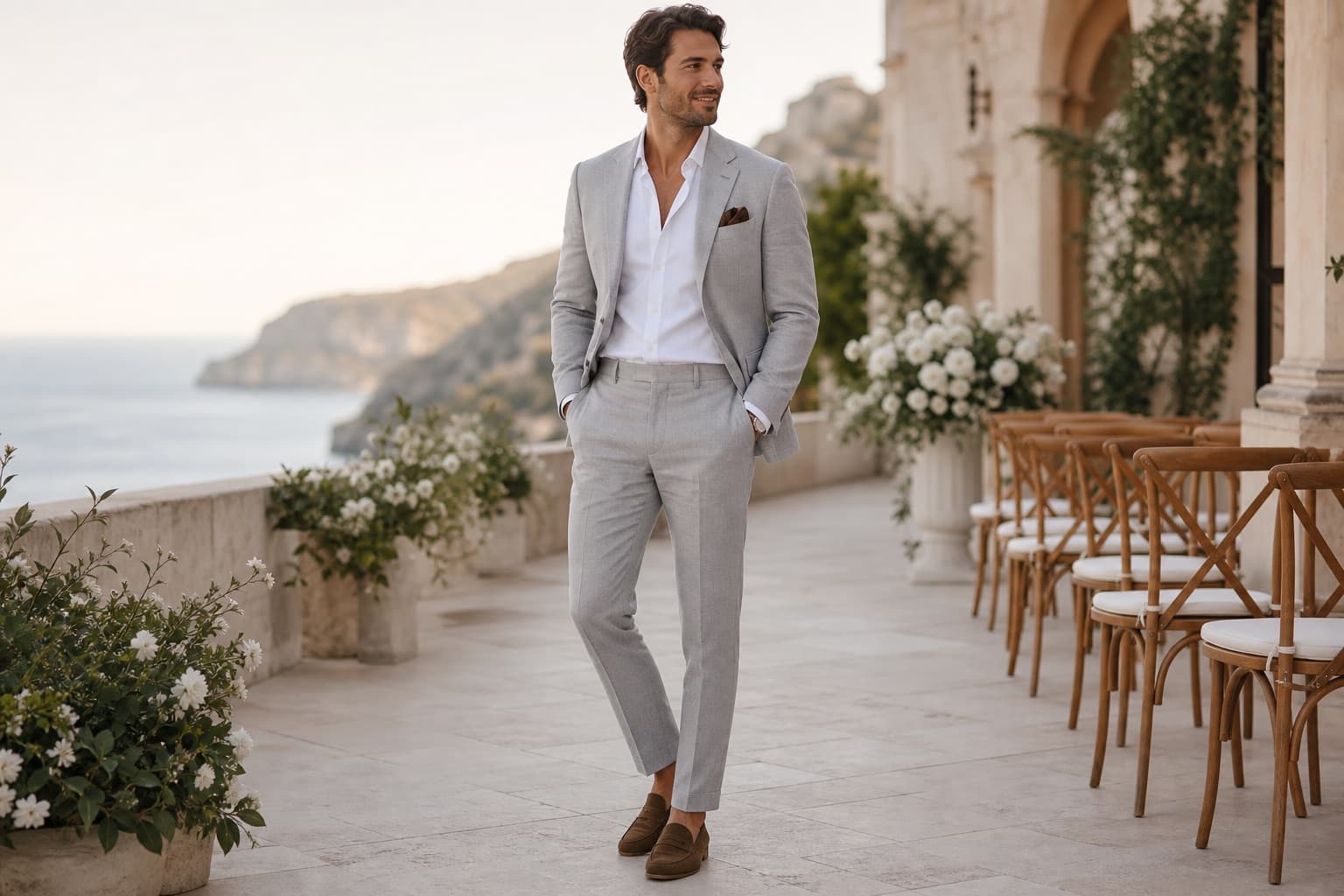
Winter footwear determines whether the outfit survives the day. Clean leather boots, lug-sole boots, chukkas with weatherproof treatment, and insulated boots all have a place. Avoid wearing delicate dress shoes into slush. It ruins the shoe and the outfit.
Category: Footwear
Type: Boot
Best colors: Black, dark brown, tan, olive
Material: Leather, suede, rubber, waterproof membrane
Texture: Smooth, grained, lug sole
Weather: Rain, snow, slush, cold
Scarf
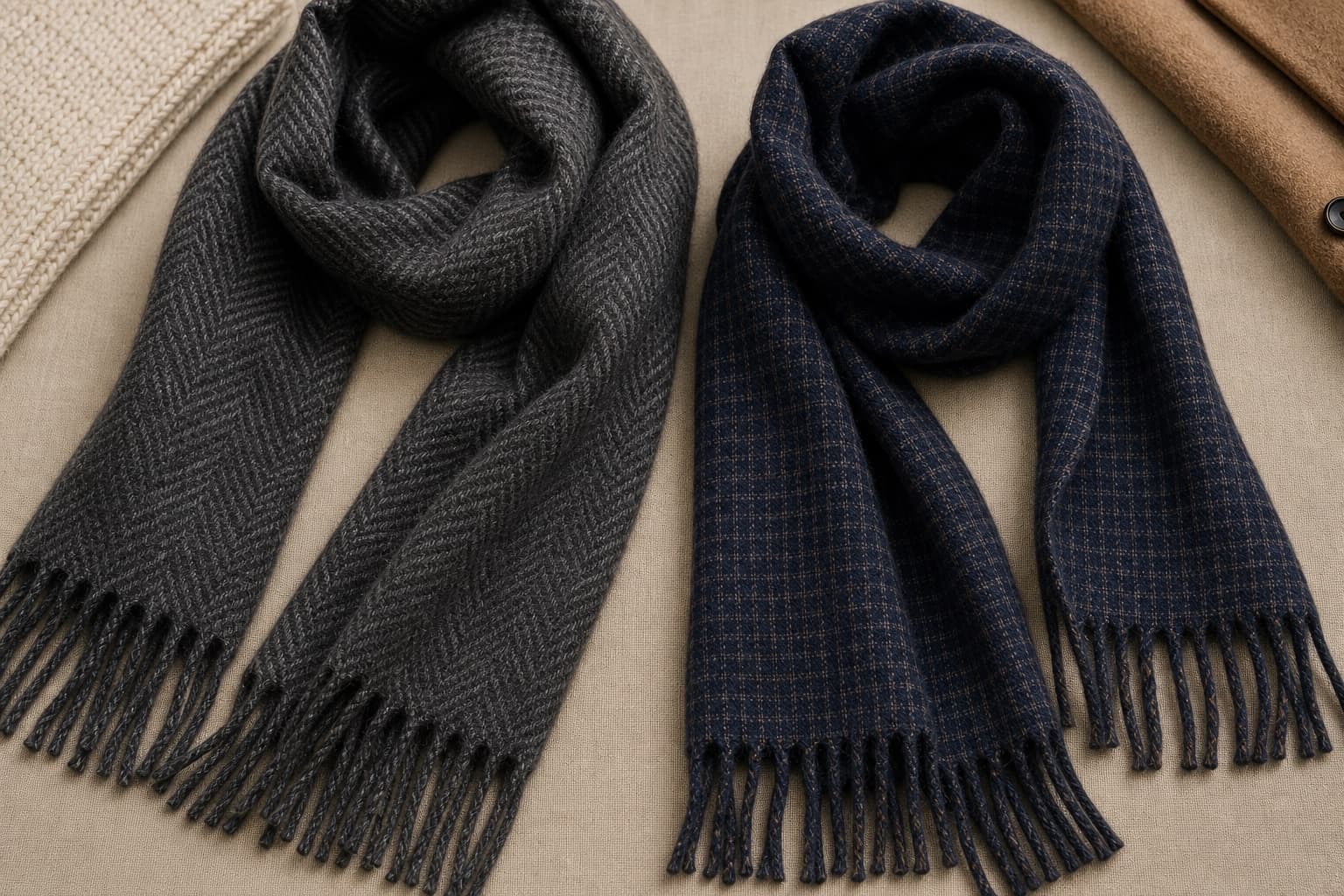
A scarf solves the gap between coat collar and neck. It also adds texture near the face. Keep scale in mind: a thin scarf with a heavy parka looks weak; a huge scarf with a slim topcoat can look theatrical.
Category: Accessory
Type: Scarf
Best colors: Charcoal, navy, camel, burgundy, olive, cream, gray check
Material: Wool, cashmere, merino, alpaca
Pattern: Solid, check, herringbone
Vibe: classic, smart_casual, minimal
Beanie or Winter Cap
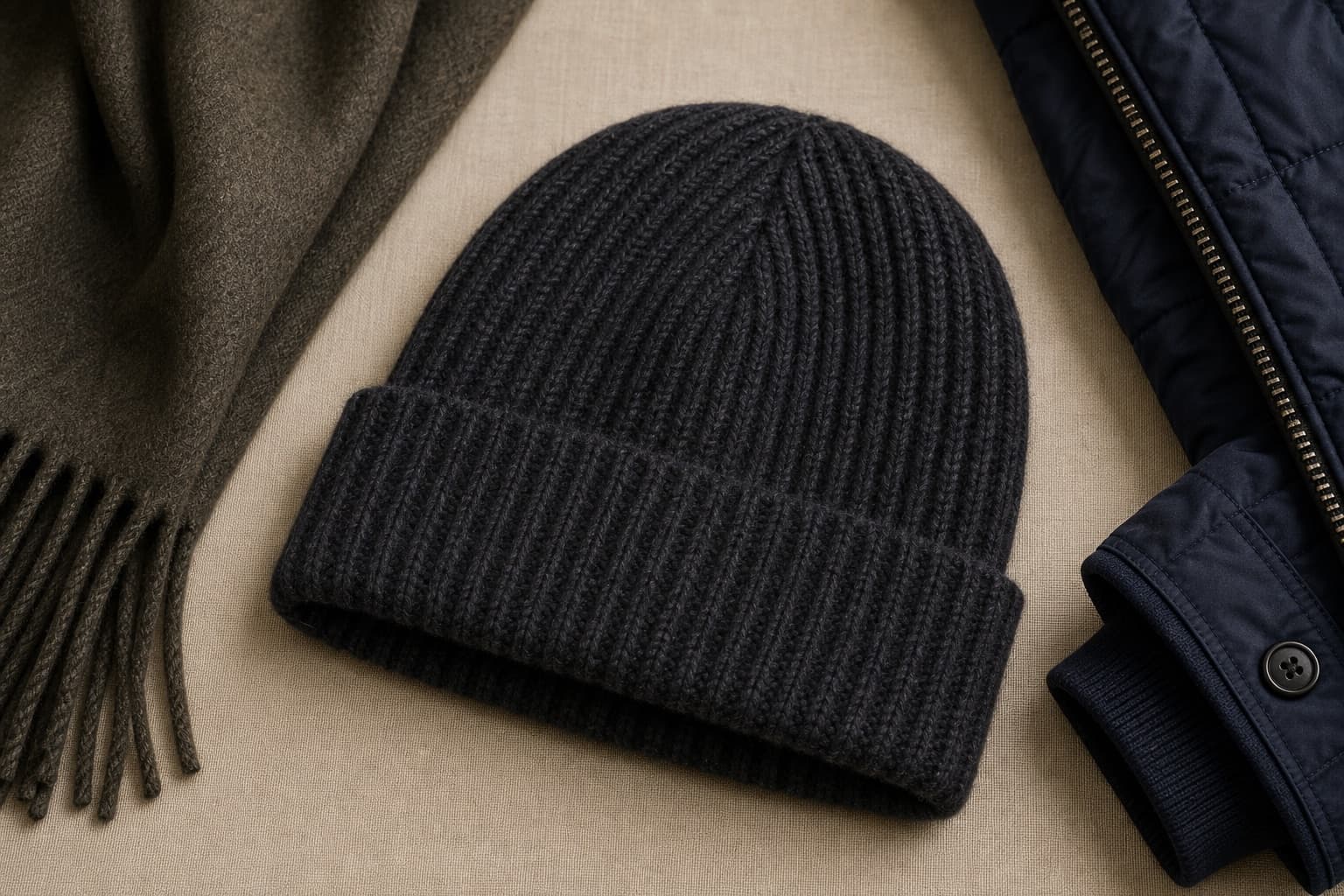
A beanie should frame the outfit rather than dominate it. Ribbed wool in a neutral color is the safest. Bright colors can work, but then the rest of the outfit needs restraint.
Category: Accessory
Type: Beanie / cap
Best colors: Black, navy, charcoal, olive, brown, cream
Material: Wool, cashmere, ribbed knit, fleece-lined knit
Fit: Close, ribbed, watch-cap style
Gloves
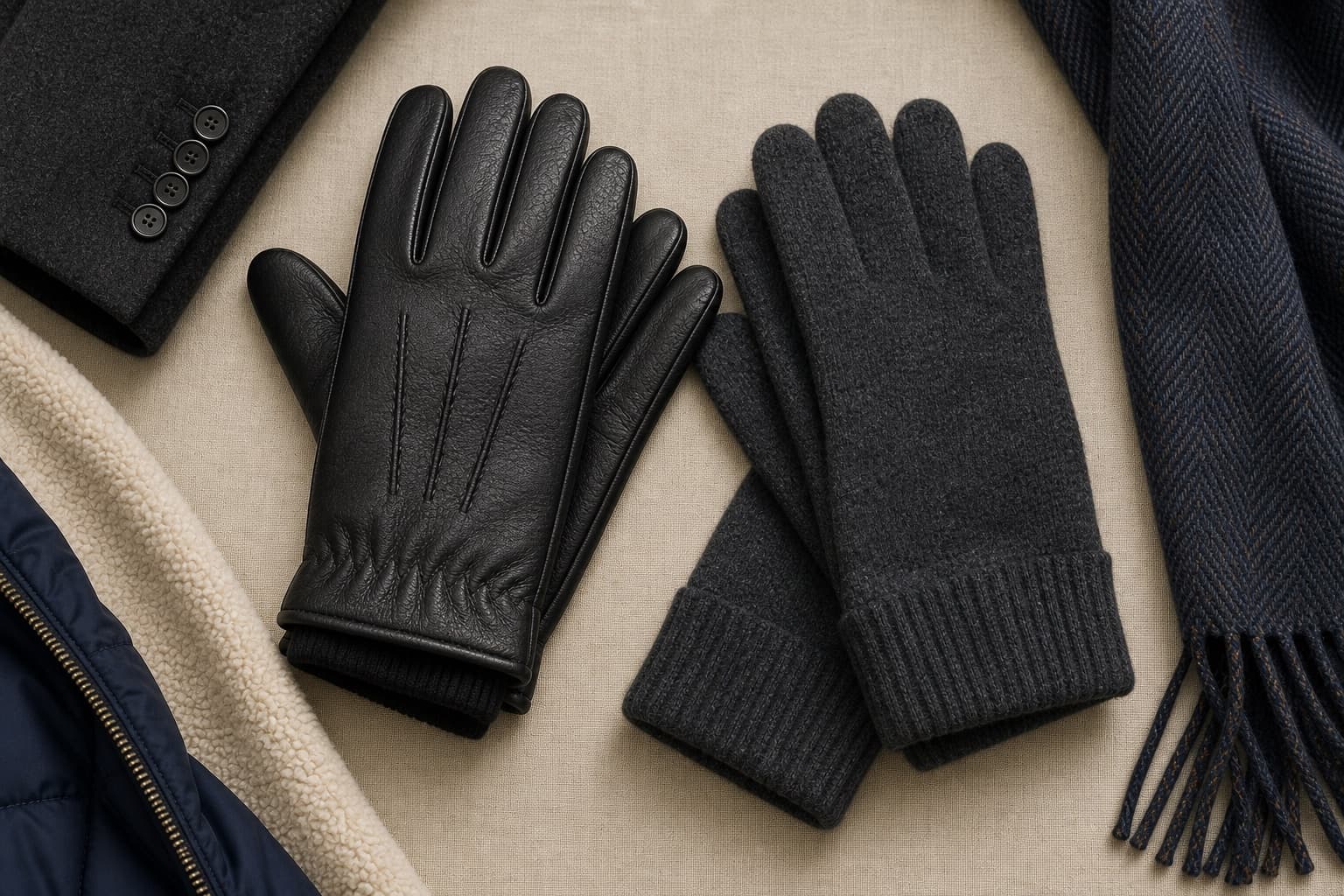
Gloves are not optional in real cold. Leather gloves work with wool coats. Technical gloves work with parkas and shells. Wool gloves work for mild cold but lose usefulness when wet.
Category: Accessory
Type: Gloves
Best colors: Black, brown, charcoal, navy
Material: Leather, wool, fleece, technical fabric
Formality: Casual to formal
The Outfit Formulas
These formulas show how the same layering logic changes across errands, office days, travel, dinner, nightlife, and real bad weather.
Casual Day: The City Winter Uniform
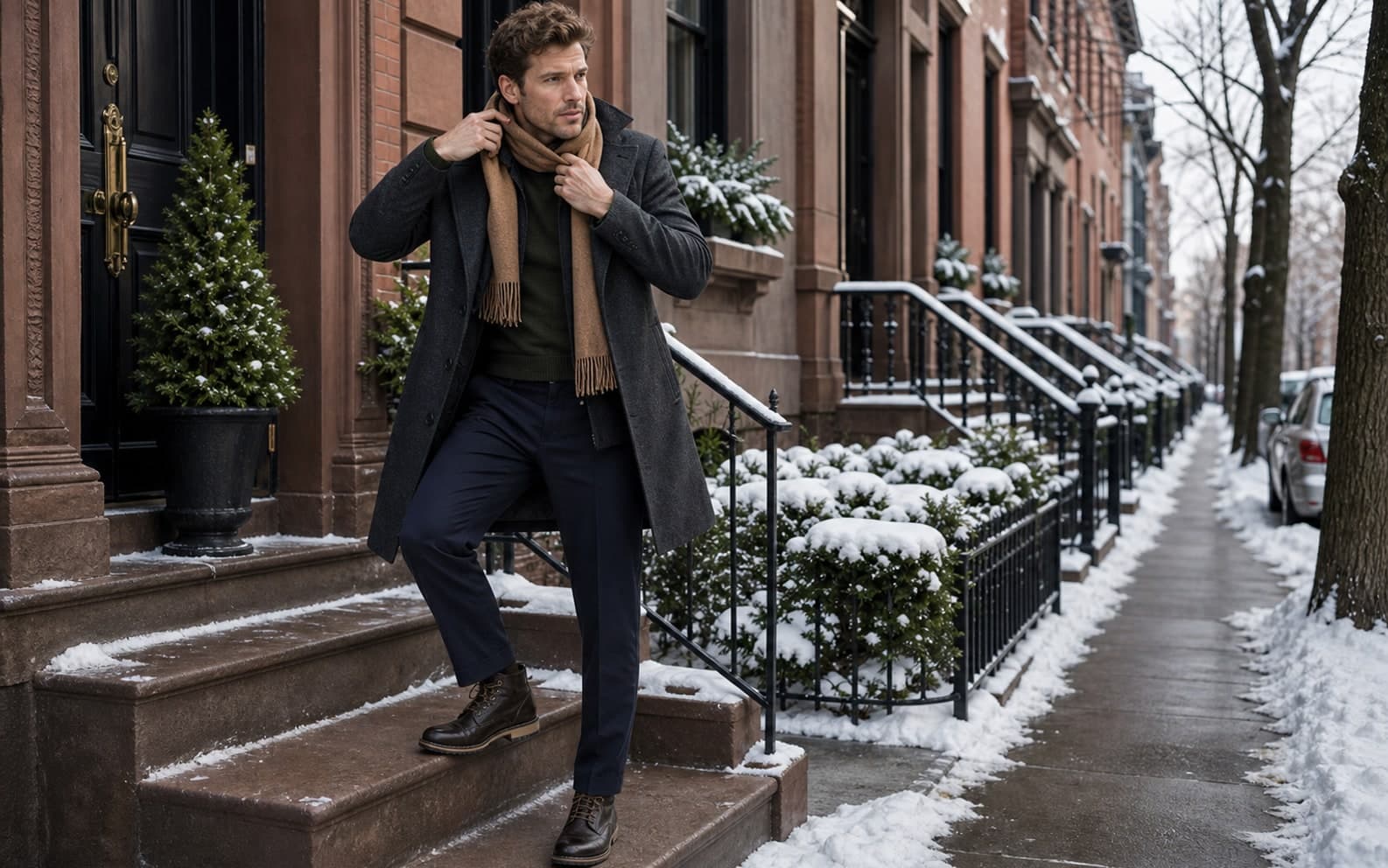
This is the easiest cold-weather outfit for walking, errands, casual lunch, and weekend plans. The thermal adds invisible warmth. The overshirt gives shape indoors. The parka handles wind and low temperatures.
Formula: Thermal base + heavyweight tee + wool overshirt + relaxed jeans + lug-sole boots + parka
Best palette: Black, olive, charcoal, washed denim
Modera tags: casual_day, outdoor_weather, rugged_workwear, cold, relaxed fit
Office: Polished Without Freezing
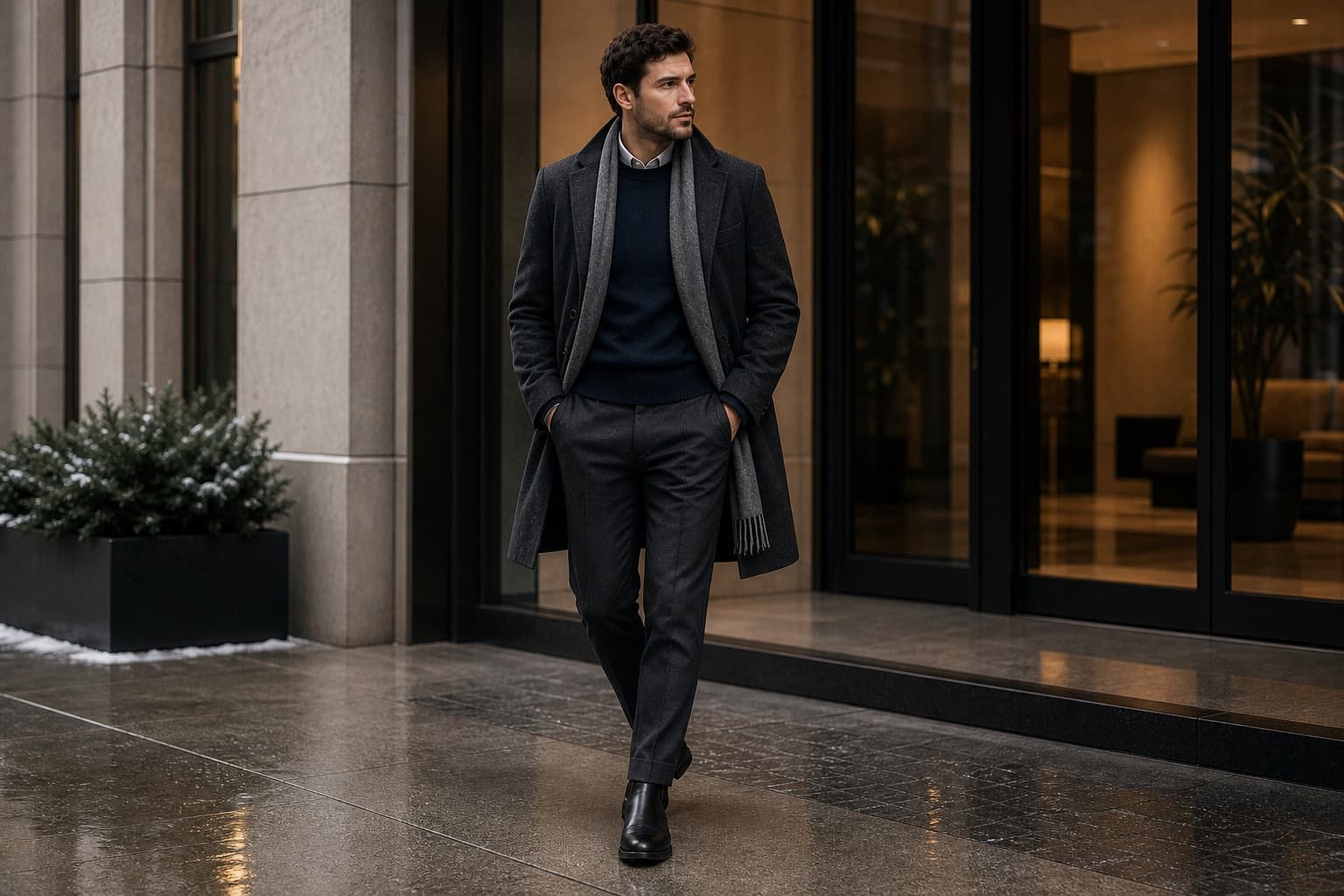
This avoids the common office mistake: dress shirt plus thin coat. A merino crewneck is clean enough for most offices and warmer than a shirt. Wool trousers retain polish while adding seasonal weight.
Formula: Merino crewneck + wool trousers + leather boots + topcoat + scarf
Best palette: Navy, charcoal, camel, black
Modera tags: work_office, smart_casual, classic, winter, polished
Hybrid Office: Comfortable but Not Sloppy
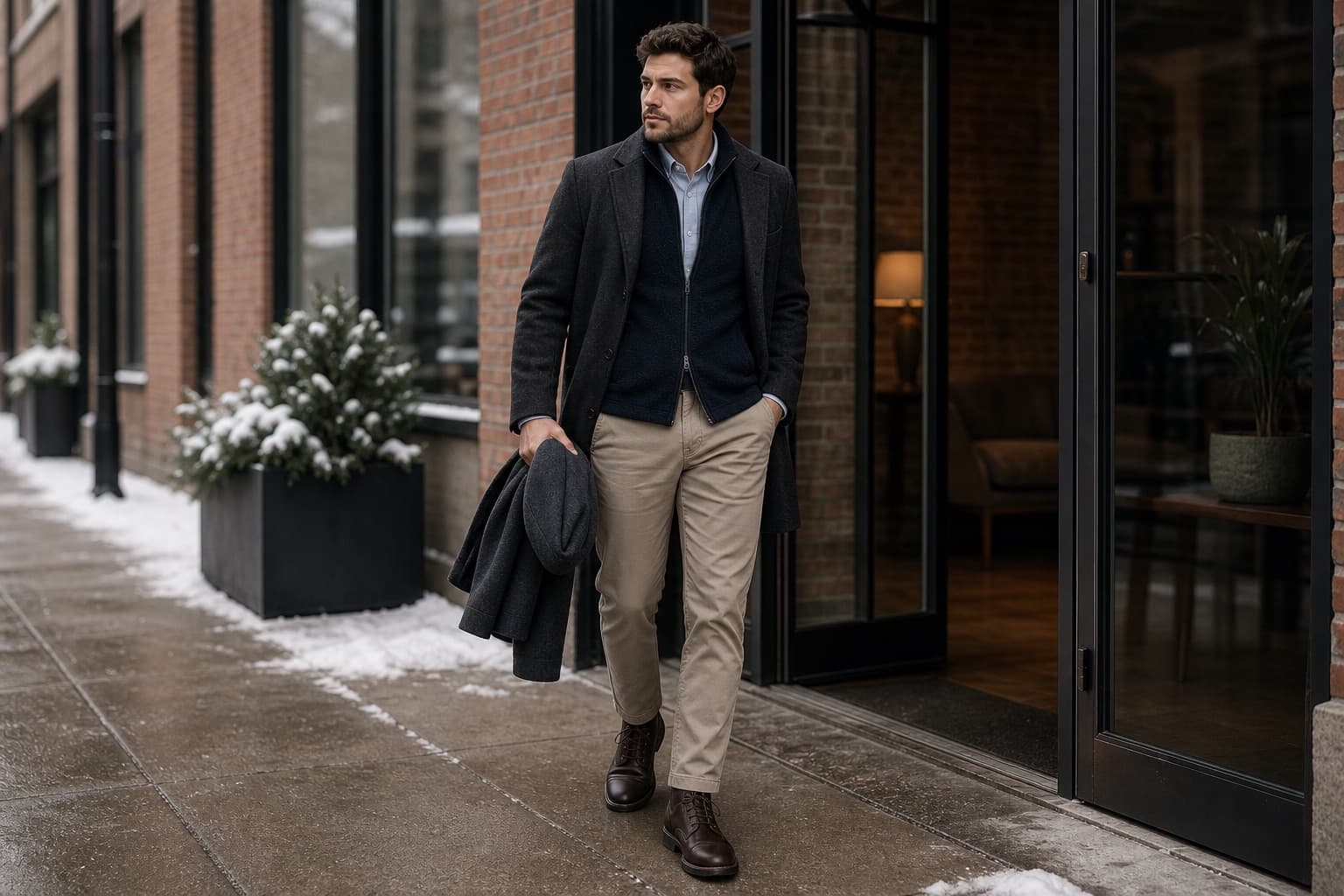
The fleece vest adds warmth without making the outfit look like weekend gear. The Oxford and boots keep it structured. This works best in casual or creative offices.
Formula: Oxford shirt + fleece vest + relaxed chinos + derby boots + wool coat
Avoid: Bright performance vest, running shoes, thin chinos, logo-heavy fleece
Travel Day: Warm, Mobile, Repeatable
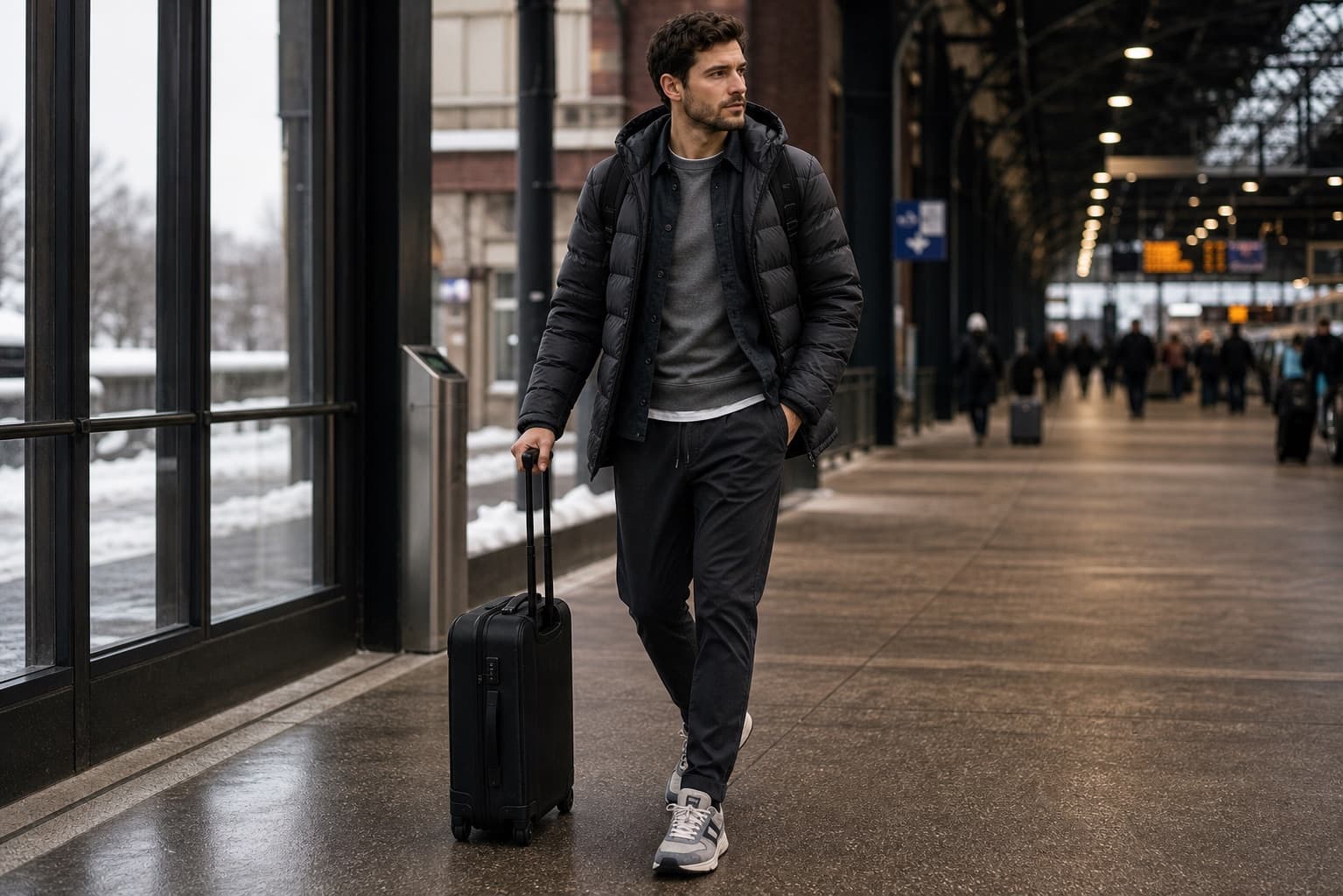
Travel layering needs flexibility. Airports, trains, cars, and city streets all have different temperatures. Use lightweight layers that can be removed without making the outfit fall apart.
Formula: Thermal long sleeve + crewneck sweatshirt + nylon overshirt + drawstring trousers + retro runners or weatherproof sneakers + packable puffer
Best palette: Charcoal, navy, olive, gray, black
Modera tags: travel, athletic, technical, casual, cold
Date Dinner: Texture Under a Clean Coat
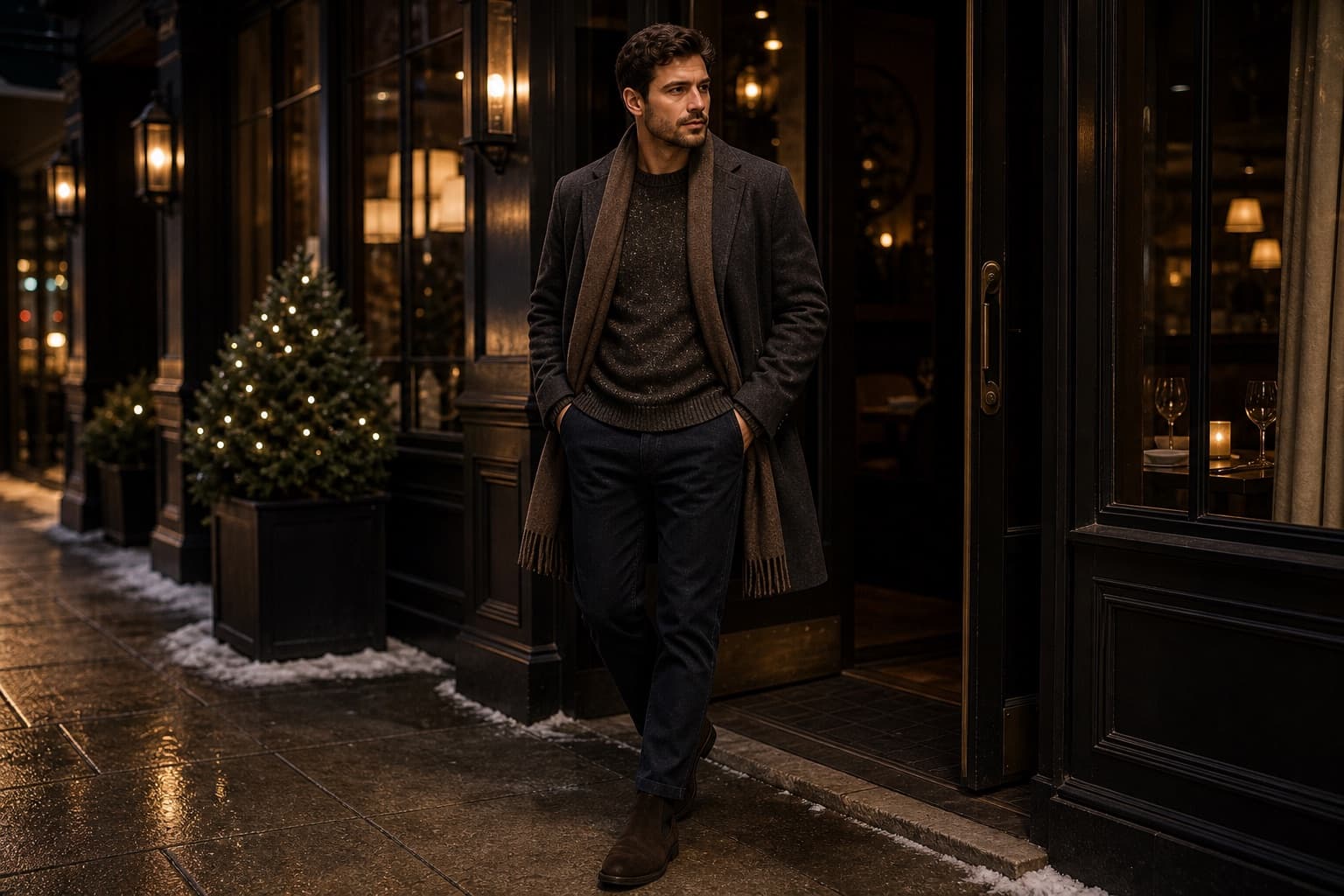
This is warm without looking bulky. The texture of the sweater does the visual work. The coat keeps the line clean. Dark denim works if the restaurant is casual; wool trousers work if the setting is sharper.
Formula: Textured wool sweater + dark trousers or dark denim + suede or leather boots + wool topcoat + scarf
Best palette: Charcoal, black, espresso, navy, camel
Night Out: Dark Layers With Shape
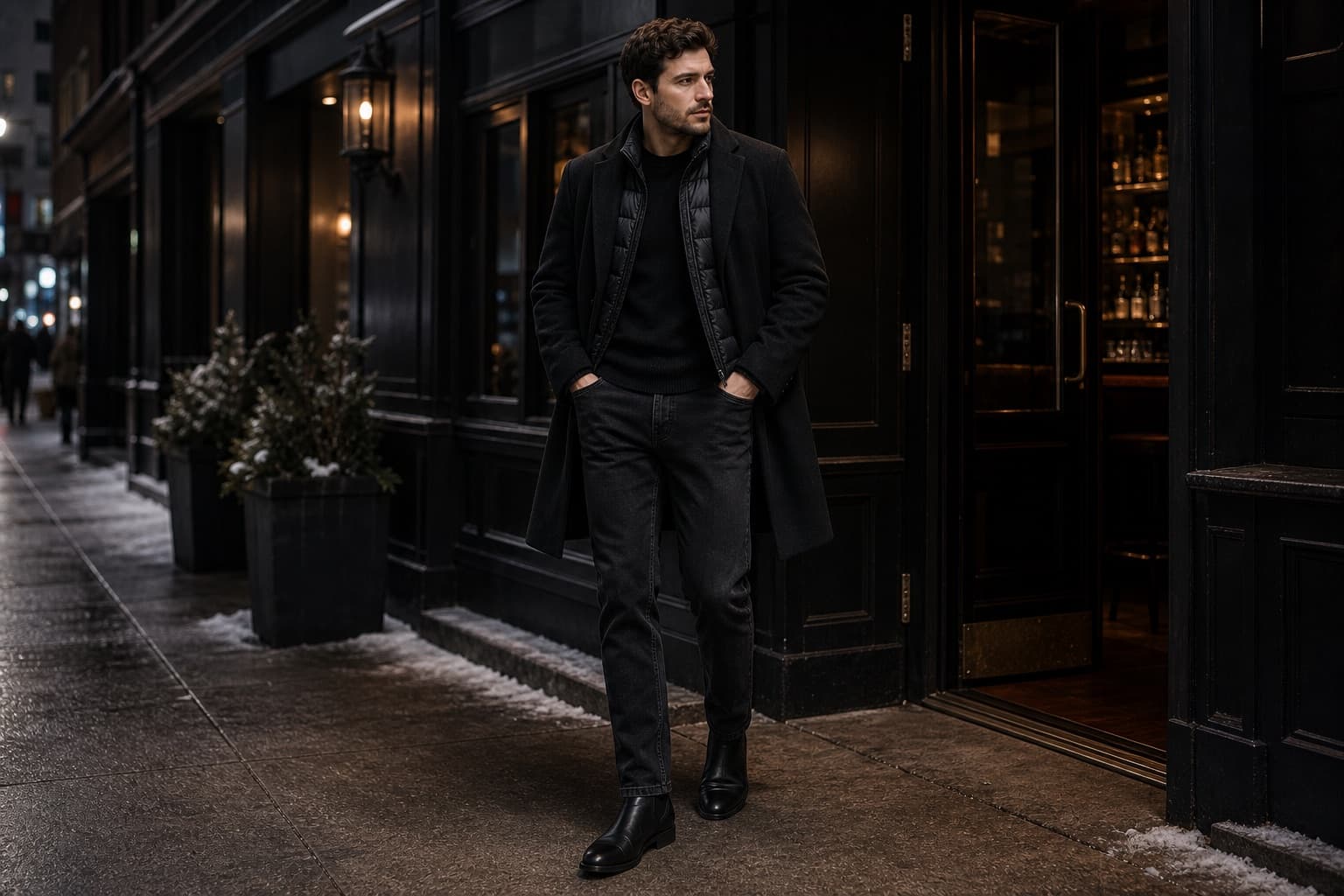
For bars, lounges, and colder nightlife, shape matters more than formality. A cropped insulated jacket gives structure. Washed black denim prevents the outfit from becoming flat. Boots make the outfit feel intentional.
Formula: Black thermal + black knit + cropped puffer or leather jacket under topcoat + washed black jeans + boots
Avoid: Bulky ski parka at a dressier venue unless the weather demands it
Snow or Slush: Practical Without Giving Up Style
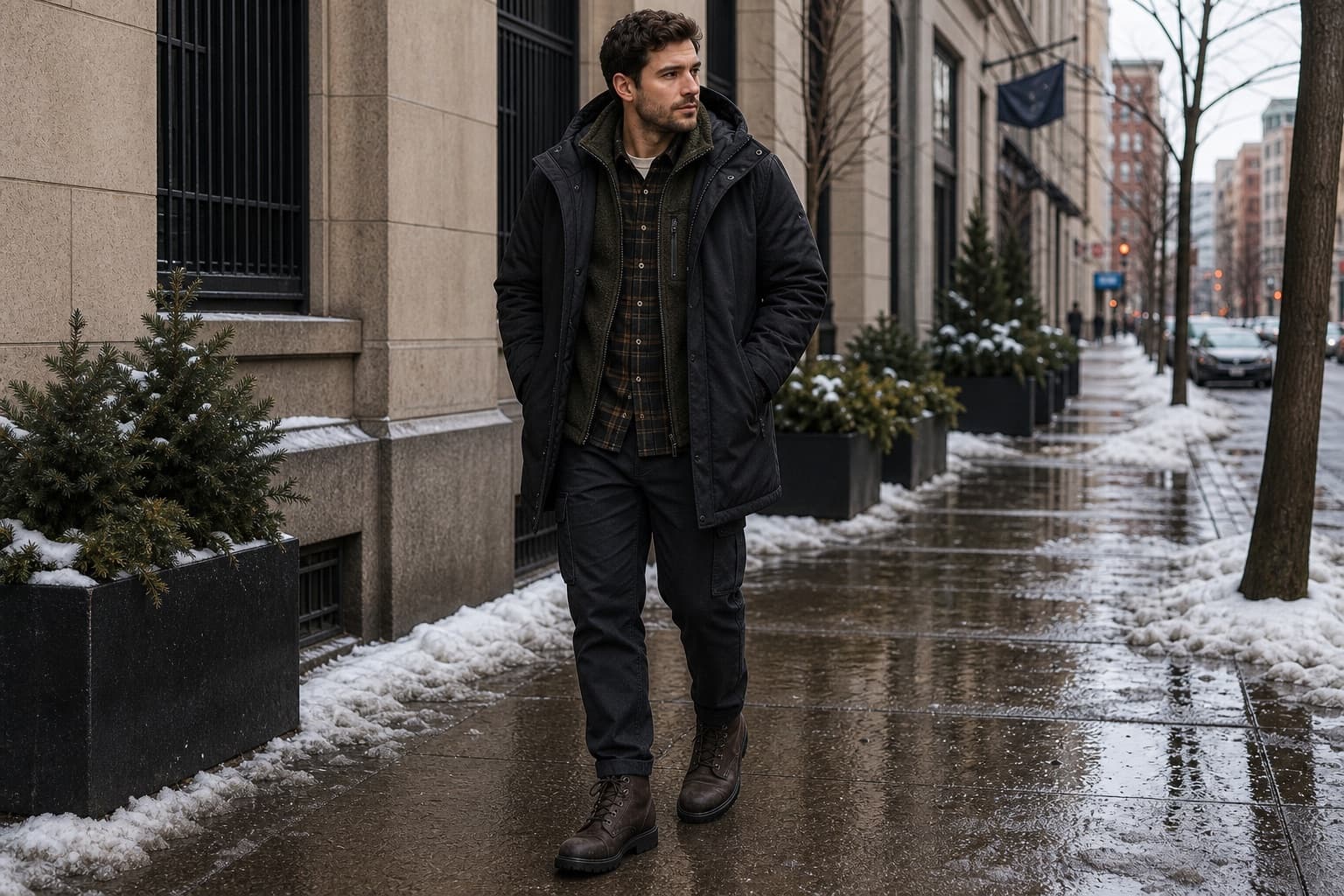
This is the bad-weather version. Each layer has a function: base warmth, shirt structure, fleece insulation, parka protection, boots for traction. Use matte materials and dark colors to keep it from looking like a ski outfit.
Formula: Thermal base + flannel shirt + fleece jacket + waterproof parka + straight cargos or denim + waterproof boots
Best palette: Black, olive, charcoal, brown
Modera tags: outdoor_weather, snow, technical, rugged_workwear
Elevated Version: One Premium Texture
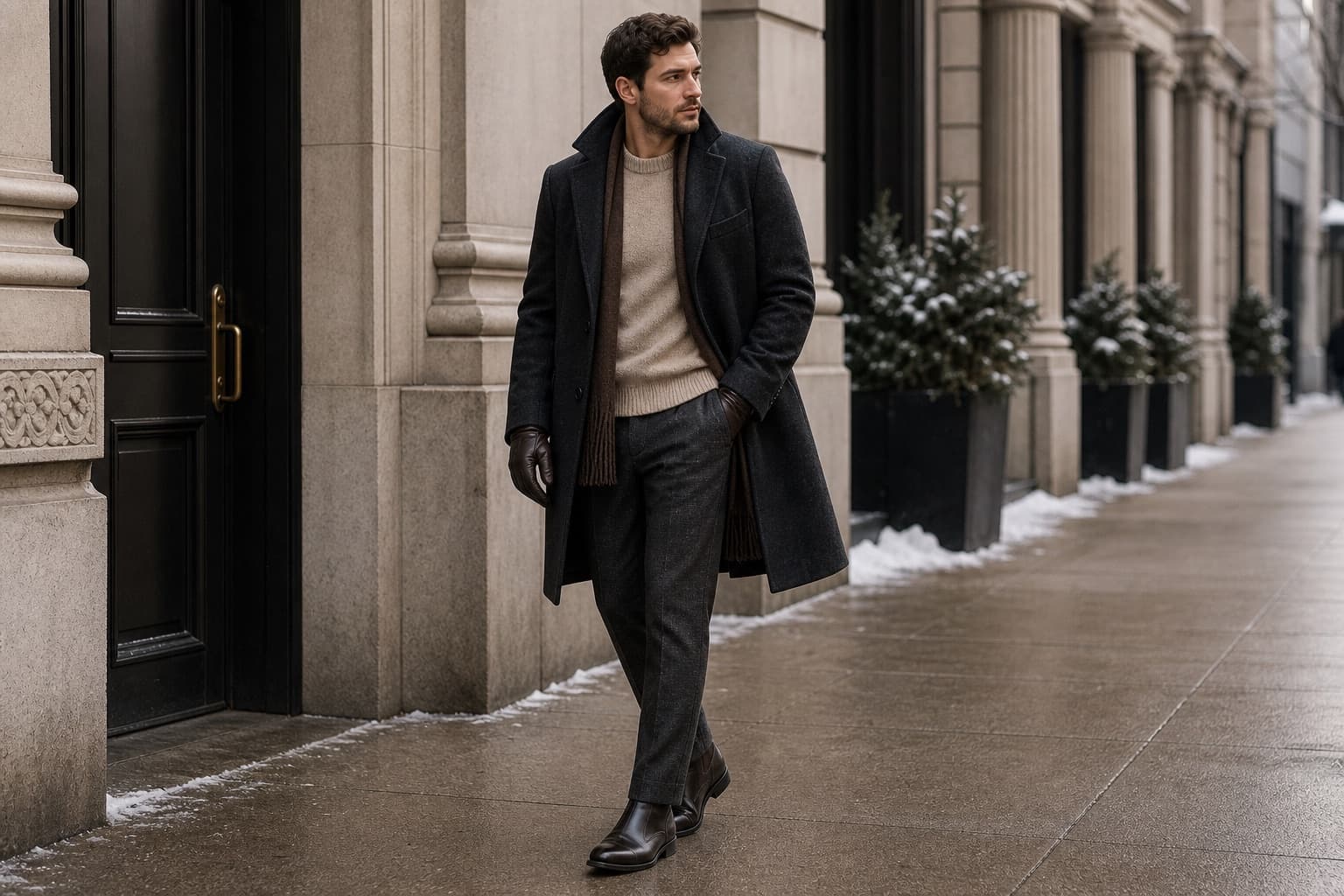
The premium piece is the knit or coat. Everything else stays quiet. This outfit works because the materials are rich but the formula is simple.
Formula: Cashmere or brushed wool knit + flannel trousers + leather gloves + heavy wool coat + polished boots
Best palette: Camel, charcoal, navy, chocolate, cream
Budget Version: Better Layering With Existing Basics
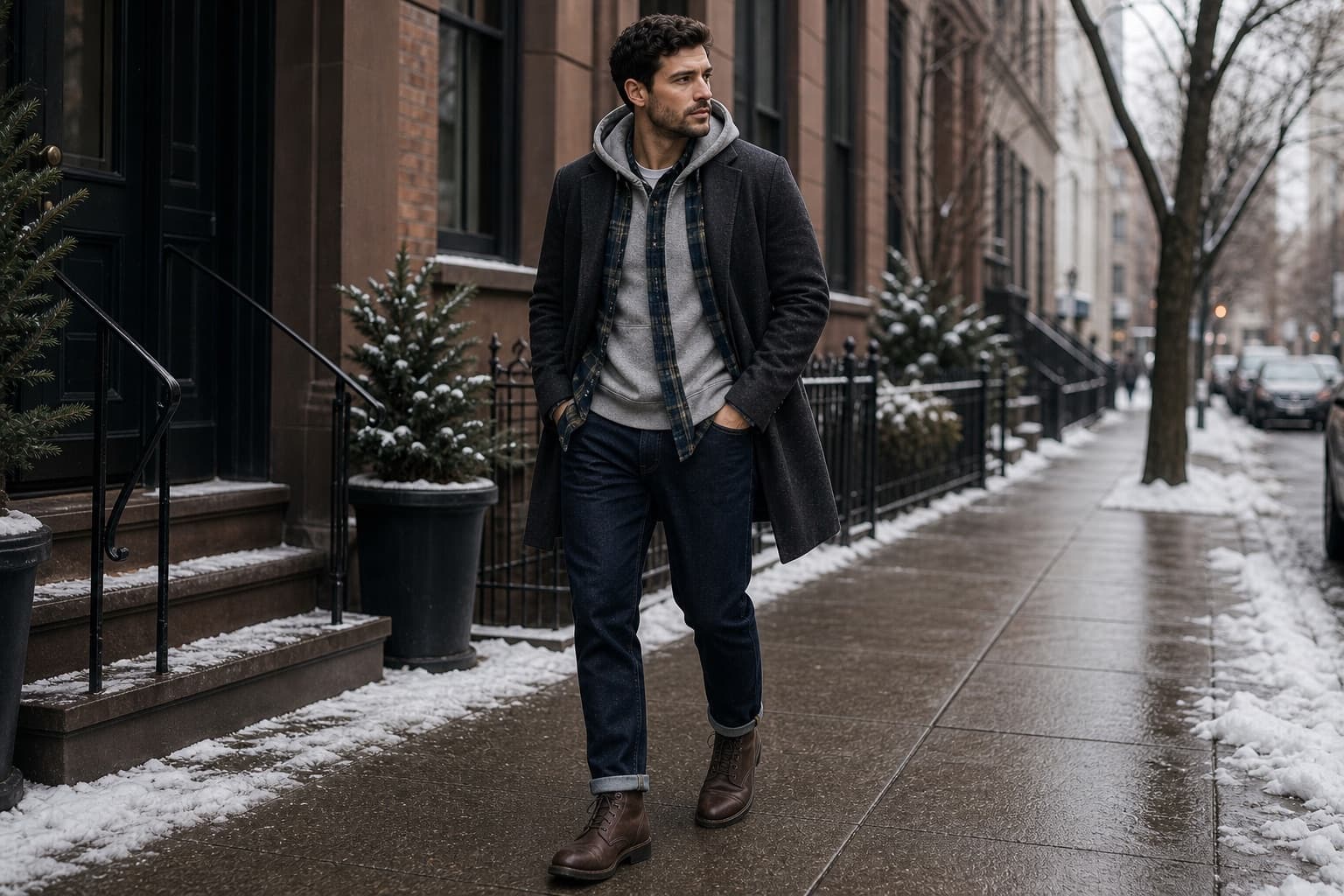
You do not need to rebuild your closet. Start by adding a thermal base layer and better socks. Then improve the outer layer and footwear. Warmth usually improves faster through better layering than through buying one expensive coat.
Formula: Thermal top + hoodie or sweatshirt + open flannel + jeans + clean boots + warm coat
Wrong but Interesting: Topcoat Over Technical Fleece
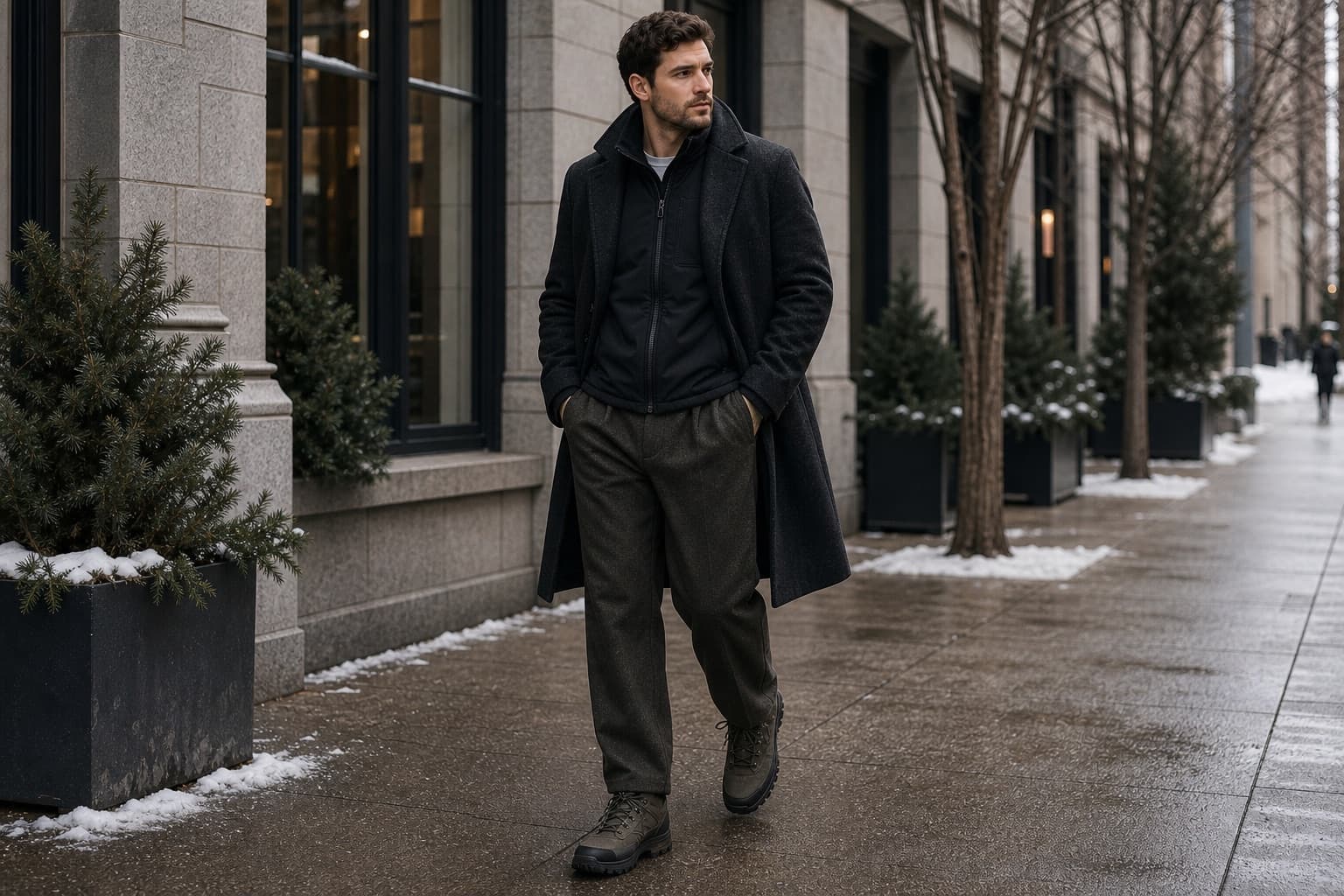
This works only if the palette is controlled. The contrast between formal outerwear and technical mid-layer feels current when the colors are quiet and the proportions are intentional.
Formula: Black technical fleece + relaxed wool trousers + topcoat + trail shoes or lug boots
Color and Texture Logic
Winter dressing benefits from darker palettes, but dark does not mean flat.
Strong Winter Base Colors
- Black
- Charcoal
- Navy
- Olive
- Brown
- Camel
- Heather gray
- Cream
- Washed denim blue
Accent Colors That Work in Cold Weather
- Burgundy
- Rust
- Forest green
- Deep teal
- Oatmeal
- Dark orange
Texture Is the Main Styling Tool
Winter style is built from texture more than color. Combine:
- Wool coat + merino knit
- Denim + fleece
- Flannel + canvas
- Nylon parka + ribbed beanie
- Leather boots + wool trousers
- Suede jacket + chunky knit
This keeps neutral outfits from becoming visually dead. A navy coat, navy sweater, and navy trousers can work if the textures are different. If everything is smooth and flat, the outfit looks like a uniform without intention.
Fit and Proportion Rules
Rule 1: Layer Thin to Thick
Start close to the body and build outward. Thermal, shirt, knit, overshirt, coat. Reversing this creates bulk and discomfort.
Rule 2: Leave Room in Outerwear
A winter coat that fits perfectly over a T-shirt is too small. It should fit over a sweater without pulling at the chest, shoulders, or upper arms.
Rule 3: Keep the Hem Relationship Clear
A long topcoat over short layers looks clean. A parka should cover the layers underneath or clearly sit above them. Random hems poking out from under outerwear usually look accidental.
Rule 4: Match Footwear Weight to Outerwear Weight
Heavy parka plus thin sneakers looks unbalanced. Wool coat plus rugged snow boots can look clumsy unless the trousers have enough weight. Boots, sneakers, and trousers need to match the visual mass of the coat.
Rule 5: Avoid Bulk at Every Point
If the parka is huge, keep the pants straighter. If the pants are wide, use a more controlled jacket. If the sweater is chunky, avoid an overly tight coat.
Rule 6: Build an Indoor Outfit
Your coat is temporary. The outfit underneath should still work when the coat comes off. This is especially important for offices, restaurants, parties, and travel.
Common Mistakes
Mistake 1: Depending on One Giant Coat
A heavy coat over weak layers makes you overheat indoors and freeze when the coat opens. Better layering gives more control.
Mistake 2: Wearing Summer Pants in Winter
Thin chinos, lightweight denim, and linen trousers can look off in cold weather. Choose heavier twill, wool trousers, corduroy, moleskin, lined pants, or proper denim.
Mistake 3: Forgetting the Neck, Hands, and Feet
Most heat loss discomfort happens at the exposed points. A scarf, gloves, warm socks, and better boots often make a bigger difference than another sweater.
Mistake 4: Mixing Formal and Technical Pieces Without a Palette
A topcoat with trail shoes can work. A topcoat with neon trail shoes, slim office trousers, and a bright fleece usually does not. Keep color and silhouette controlled.
Mistake 5: Wearing Delicate Shoes in Bad Weather
Leather dress shoes, suede loafers, and white sneakers have limits. Bad weather needs soles, traction, and protection.
Mistake 6: Treating Fleece as Invisible
Fleece is visible. If it is bright, logo-heavy, or too sporty, it changes the whole outfit. Choose fleece intentionally.
Mistake 7: Letting Accessories Fight the Outfit
Beanie, scarf, gloves, backpack, and socks all show. They should support the palette, not create five separate color stories.
FAQ
How should men layer clothes in cold weather?
Start with a close base layer, add a warm mid-layer, then use outerwear that matches the weather. A good sequence is thermal, shirt or tee, sweater or fleece, coat, then scarf, gloves, and weather-appropriate boots.
What is the best winter coat for men?
It depends on the setting. A wool topcoat is best for office, dinner, and smarter outfits. A parka is better for freezing wind, snow, and long outdoor time. A puffer is useful when you want warmth without heavy weight.
Can fleece look stylish?
Yes. Fleece looks best when it has a clear role and controlled color. Black, navy, olive, cream, and brown fleece layers are easier to style than bright performance fleece. Pair fleece with denim, cargos, shells, or casual trousers.
What shoes should men wear in winter?
Weatherproof boots are the safest choice for cold, rain, snow, and slush. Leather boots, lug-sole boots, insulated boots, and some weatherproof sneakers can all work. Avoid delicate dress shoes and thin sneakers in bad weather.
How do you avoid looking bulky in winter?
Layer thin to thick, choose outerwear with enough room, use texture instead of excess volume, and avoid oversized pieces at every layer. Build an indoor outfit first, then add weather protection.
Source Notes
- [permanent_style] Permanent Style: https://www.permanentstyle.com/
- [gq_wardrobe_essentials] GQ — The Wardrobe Essentials Every Guy Should Own in 2026: https://www.gq.com/story/wardrobe-essentials-for-men-2026
- [reddit_throwingfits_trends] Reddit r/ThrowingFits — Trend Report Feb 2026: https://www.reddit.com/r/ThrowingFits/comments/1r5xvdy/trend_report_feb_2026_what_are_you_seeing/