Finding Your Personal Uniform
A practical system for building repeatable outfits that still feel personal.
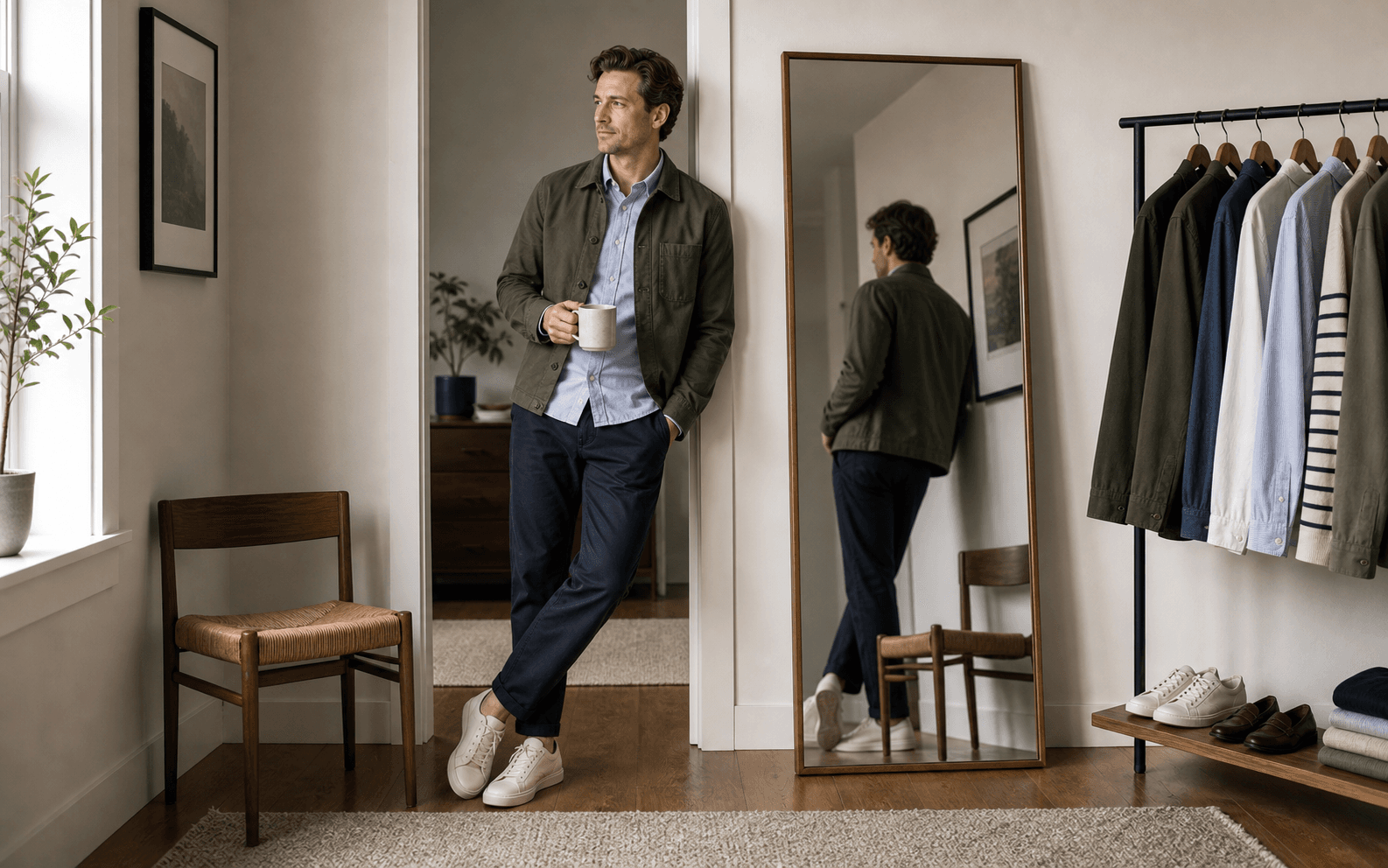
A personal uniform is not wearing the same outfit every day. It is knowing the kind of outfit that reliably works for your body, your schedule, your taste, and your environment. It removes the random part of getting dressed without flattening your style into a boring template.
Most men do not have a style problem because they lack clothes. They have a system problem. The closet has good pieces, old pieces, aspirational pieces, gifts, sale mistakes, work clothes, gym clothes, and one jacket that only works with one pair of pants. The result is friction: too many options, not enough coherence.
The point of a personal uniform is to reduce that friction. You define the formulas that make you look like yourself, then repeat them with controlled variation. The strongest version is not a costume. It is a visual language.
What a Personal Uniform Is
A personal uniform is a repeatable outfit structure. It can be simple or expressive, minimal or rugged, polished or athletic. The consistency comes from proportion, color, material, and silhouette, not from owning ten identical shirts.
A good uniform does four things:
- Makes daily dressing easier.
- Creates a recognizable style direction.
- Reduces bad purchases.
- Gives your wardrobe a clear logic inside Modera.
It is not a capsule wardrobe in the strict sense, although the two overlap. A capsule asks, "What few pieces can make the most outfits?" A personal uniform asks, "What outfit logic makes me look most like myself?"
That distinction matters. Some men look best in minimal navy, gray, white, and black. Others need texture: suede, denim, canvas, washed cotton, leather. Others need contrast: tailored trousers with sneakers, a clean shirt with a rugged jacket, a simple tee with a better watch.
The uniform should serve the person, not the other way around.
What It Is Not
A personal uniform is not laziness. It is editing.
It is not dressing anonymously. It is repeating the details that suit you.
It is not refusing trends. It is using trends only when they strengthen your existing language.
It is not a costume. If your uniform requires you to perform a character, like heritage workwear guy, techwear guy, finance guy, or old-money guy, it is probably too rigid.
A useful personal uniform should work in real life: commuting, dinners, casual offices, travel, bad weather, weekend errands, dates, and social events where the dress code is unclear.
The Three Inputs
Before choosing pieces, define your uniform through three inputs: body, life, and taste.
Body
Your uniform should respect your proportions. Some men look sharp in cropped jackets and relaxed trousers. Some need longer coats and straighter lines. Some look best in softer shoulders; others need structure.
Ask:
- Do I prefer fitted, relaxed, or oversized clothing?
- Do cropped jackets make me look sharper or boxier?
- Do wider pants balance my frame or overwhelm it?
- Do I look better in high contrast or tonal outfits?
- Which shoe shapes work with my pants?
Life
A personal uniform has to match your actual week. If you walk 10,000 steps a day, shoes matter. If you work in a hybrid office, your uniform needs polish without stiffness. If you live somewhere with real weather, your outerwear is part of the outfit, not an afterthought.
Ask:
- How formal is my work environment?
- How much do I walk?
- How often do I go out at night?
- Do I need rain, cold, or heat solutions?
- Do I dress for commuting, driving, biking, or travel?
Taste
Taste is the part most people skip. They buy what seems useful but never ask what they actually want to look like.
Use three style words, but make them concrete. "Classic, relaxed, textured" is better than "elevated." "Minimal, athletic, technical" is better than "cool." "Smart casual, vintage, rugged" is better than "timeless."
Your words should guide decisions. If a piece does not support at least two of the three, it probably does not belong in the core uniform.
Core Style Archetypes
These are not boxes. They are starting points. Most good personal uniforms blend two or three.
Minimal City Uniform
Visual language: clean, tonal, sharp, low contrast
Best pieces: black tee, navy overshirt, charcoal trousers, white or gray sneakers, wool coat
Best colors: black, white, gray, navy, stone
Vibes: minimal, smart_casual, classic
This works for men who want their wardrobe to be quiet but precise. The risk is looking flat. Add texture: heavyweight cotton, wool, suede, washed denim, matte nylon.
Smart Casual Uniform
Visual language: relaxed polish, soft structure, versatile shoes
Best pieces: knit polo, Oxford shirt, overshirt, relaxed trousers, loafers, leather sneakers
Best colors: navy, olive, cream, brown, charcoal
Vibes: classic, smart_casual, polished
This is the most useful uniform for men who move between office, dinner, travel, and weekend plans. It avoids corporate stiffness by using softer layers and less formal fabrics.
Rugged Workwear Uniform
Visual language: durable, textured, grounded
Best pieces: denim shirt, chore jacket, canvas overshirt, straight jeans, boots, wool sweater
Best colors: indigo, olive, tobacco, ecru, brown, black
Vibes: rugged_workwear, vintage, classic
This works when the clothes have real texture. Avoid turning it into costume by mixing one cleaner piece into the outfit: a plain tee, simple trouser, minimal sneaker, or cleaner coat.
Streetwear-Adjacent Uniform
Visual language: relaxed proportions, sneakers, cropped outerwear, utility details
Best pieces: heavyweight tee, hoodie, bomber, relaxed jeans, cargos, retro runners
Best colors: black, gray, olive, washed navy, cream
Vibes: streetwear, athletic, technical
The adult version uses restraint. One volume piece, one grounding piece, one interesting shoe, one clean layer.
Preppy Casual Uniform
Visual language: collegiate, clean, sporty, layered
Best pieces: Oxford shirt, rugby shirt, cardigan, chino, loafers, canvas sneakers, ball cap
Best colors: navy, white, green, burgundy, khaki, gray
Vibes: preppy, classic, casual_day
This can look sharp or juvenile depending on fit. Keep the pants relaxed, the shoes substantial, and the colors slightly muted.
Technical Travel Uniform
Visual language: functional, clean, weather-aware
Best pieces: merino tee, nylon overshirt, travel trouser, rain shell, trail sneaker, technical backpack
Best colors: black, slate, olive, navy, gray
Vibes: technical, athletic, minimal
This is useful for men who prioritize movement, walking, weather, and travel. The key is avoiding overdesigned gear. One technical piece is enough unless the weather requires more.
The Core Pieces
These are the pieces that make repeatable dressing easier. Choose the versions that match your archetype.
Signature T-Shirt
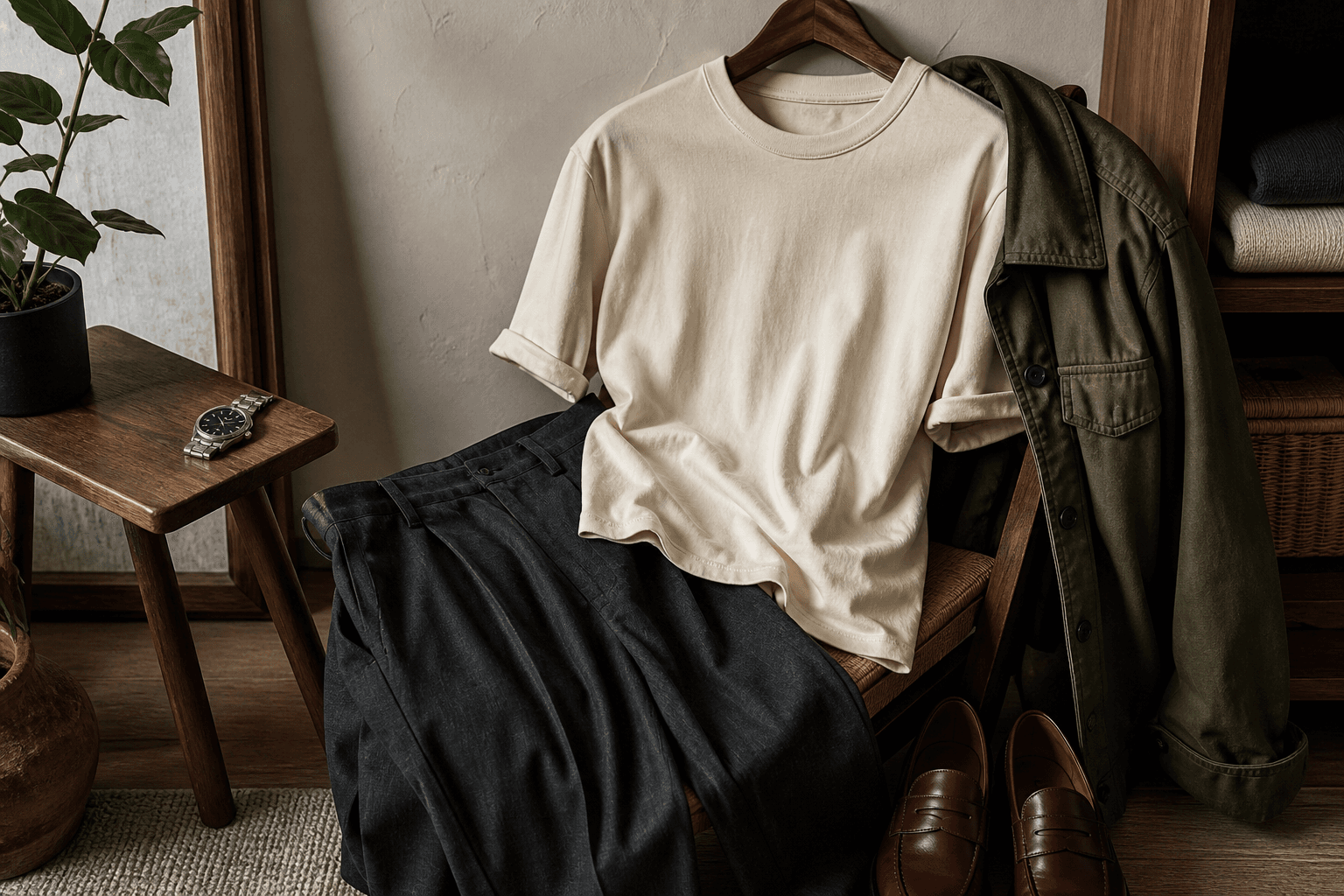
Most uniforms need a default tee. The tee sets the baseline. Thin, stretched, or overly long tees make even good jackets look worse.
Category: Top
Type: T-shirt
Best fits: standard, relaxed, boxy
Best materials: cotton jersey, heavyweight cotton, linen-cotton blend
Best colors: white, black, gray, navy, cream
Better Shirt
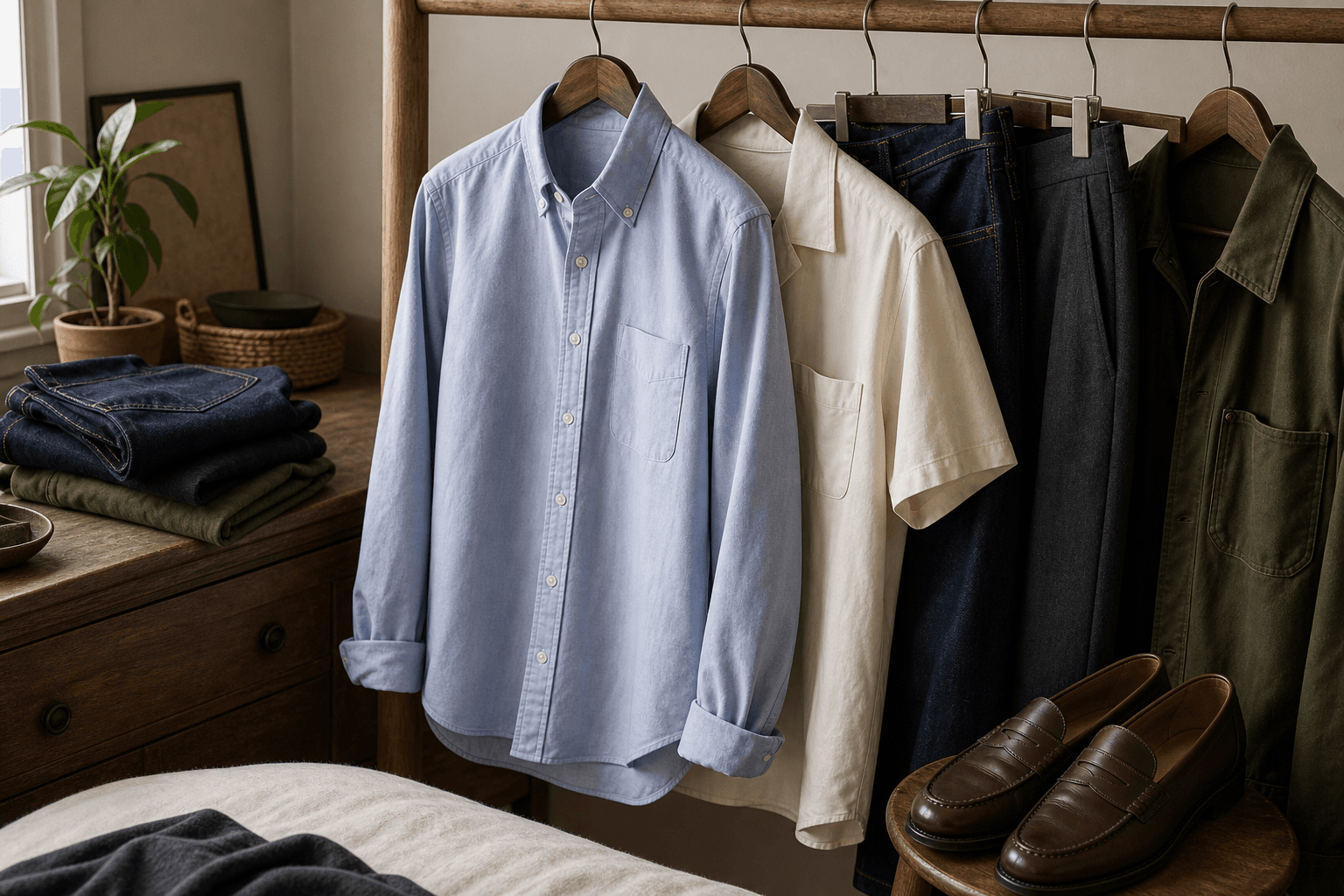
A better shirt gives your uniform range. It makes jeans look sharper and trousers less formal.
Category: Top
Type: Oxford, poplin shirt, denim shirt, camp collar
Best fits: relaxed but clean
Best materials: cotton oxford, poplin, chambray, linen
Best colors: white, blue, navy, ecru, stripe
Knit or Sweatshirt Layer
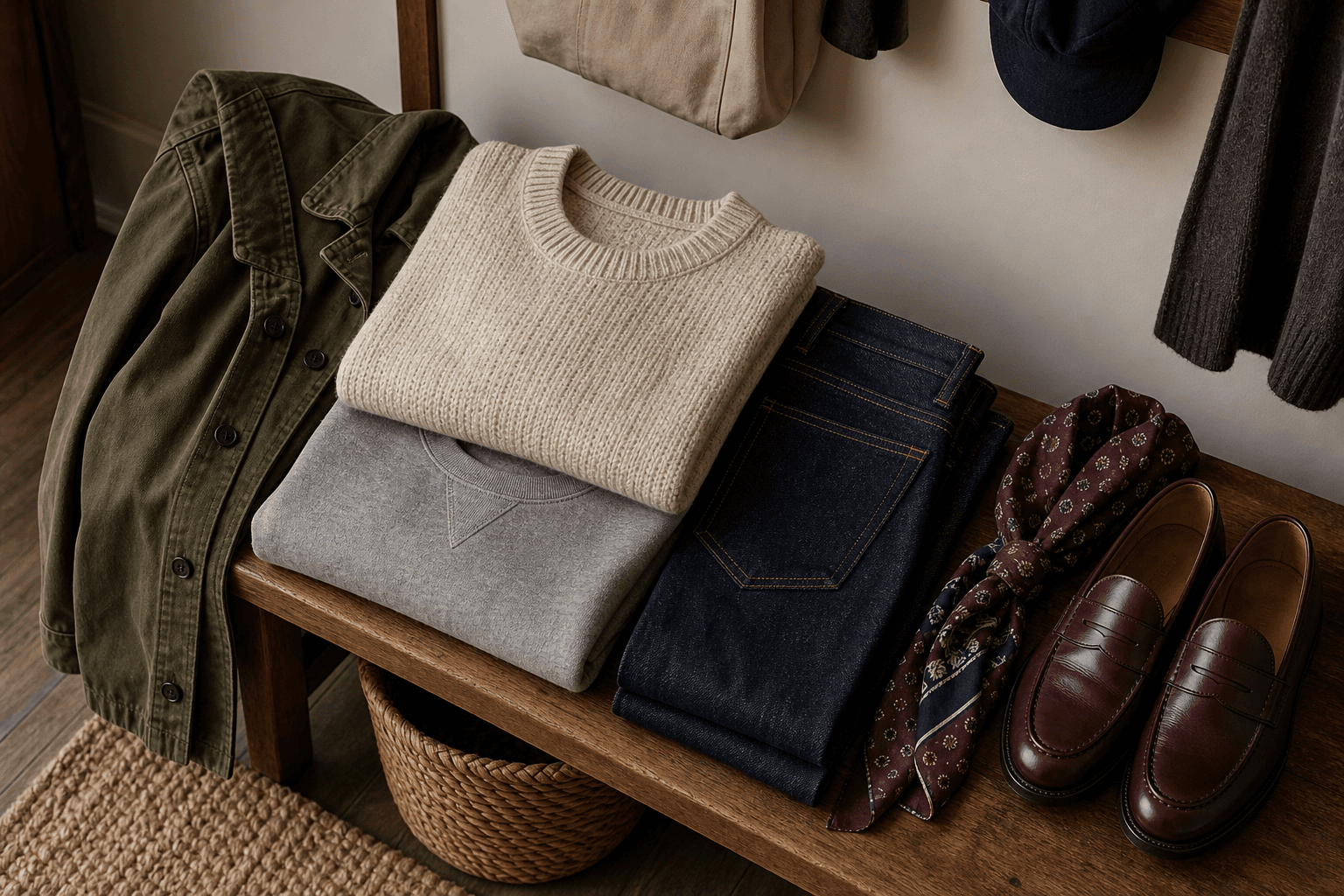
This is the comfort piece. The difference between sloppy and intentional is weight, shape, and color.
Category: Top
Type: crewneck sweater, cardigan, hoodie, sweatshirt
Best fits: relaxed, standard, slightly cropped
Best materials: merino, lambswool, cotton fleece, cashmere blend
Best colors: gray, navy, black, cream, forest, brown
Overshirt
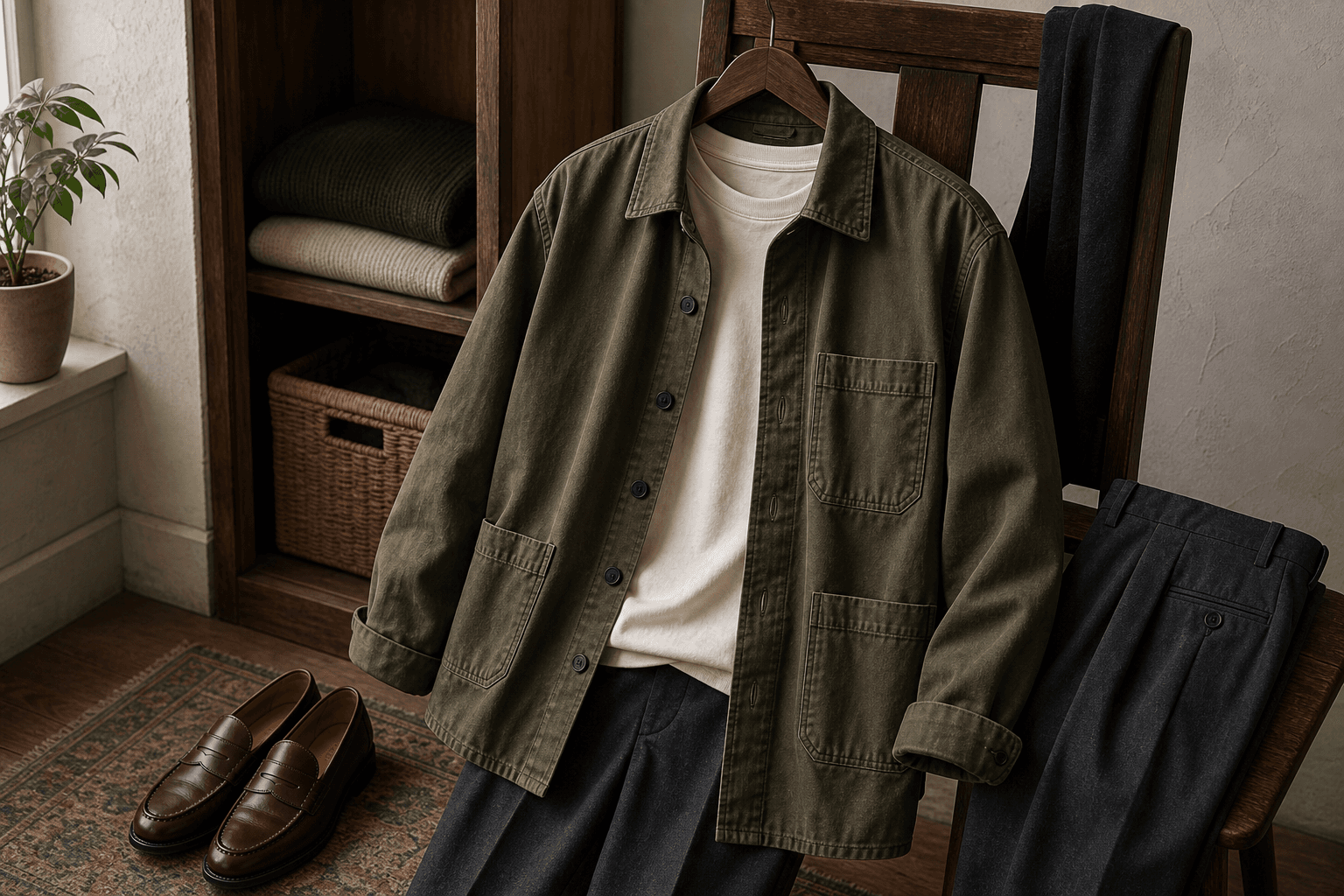
The overshirt is one of the best personal-uniform pieces because it works across casual day, office, travel, and date night. It adds shape without becoming formal.
Category: Outerwear
Type: overshirt, chore shirt, utility shirt
Best fits: relaxed, structured
Best materials: twill, canvas, denim, wool blend, ripstop
Best colors: olive, navy, black, ecru, brown
Main Jacket
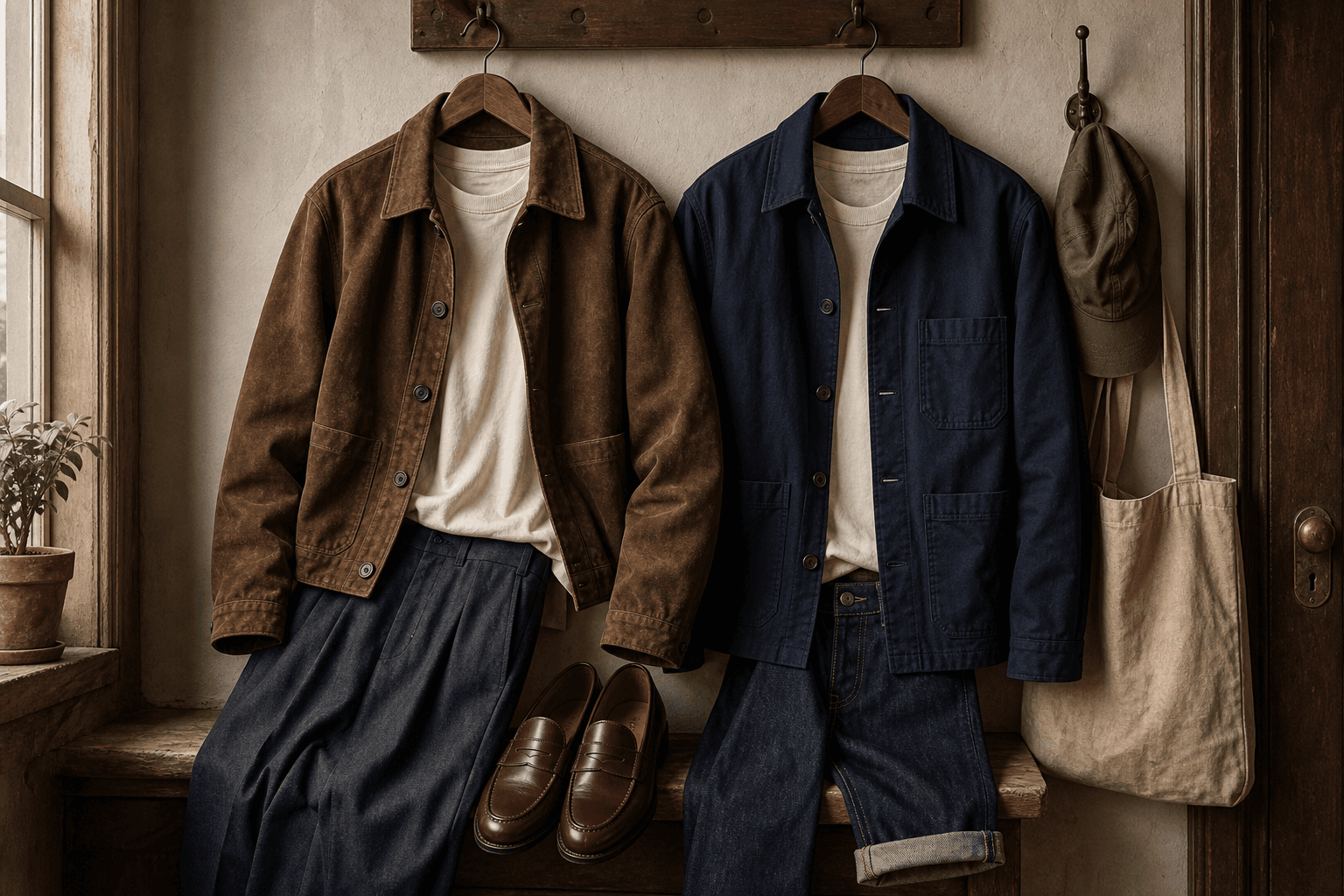
Your main jacket is often the thing people remember. Pick one that reflects the uniform rather than fighting it.
Category: Outerwear
Type: bomber, chore jacket, Harrington, trucker, field jacket, wool coat
Best fits: proportional to pants
Best materials: nylon, cotton, suede, wool, waxed cotton
Best colors: navy, black, olive, charcoal, brown
Straight or Relaxed Bottom
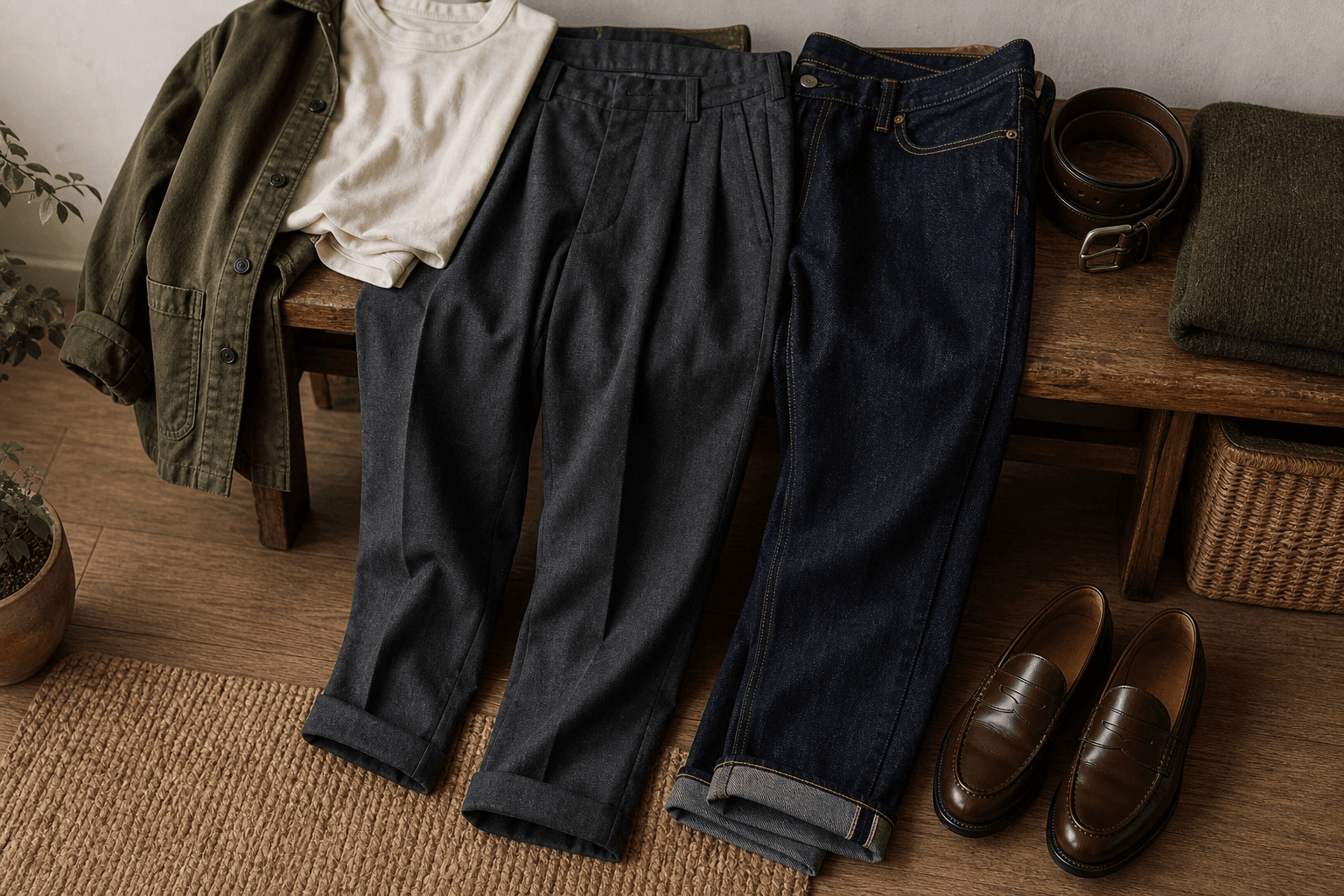
Most personal uniforms improve when the pants get slightly more relaxed. Pants control silhouette more than almost anything else.
Category: Bottom
Type: straight jean, relaxed trouser, chino, cargo, fatigue pant
Best fits: straight, relaxed straight, wide, tapered only if balanced
Best materials: denim, cotton twill, wool blend, canvas, nylon blend
Best colors: indigo, washed black, charcoal, navy, olive, stone
Anchor Shoe
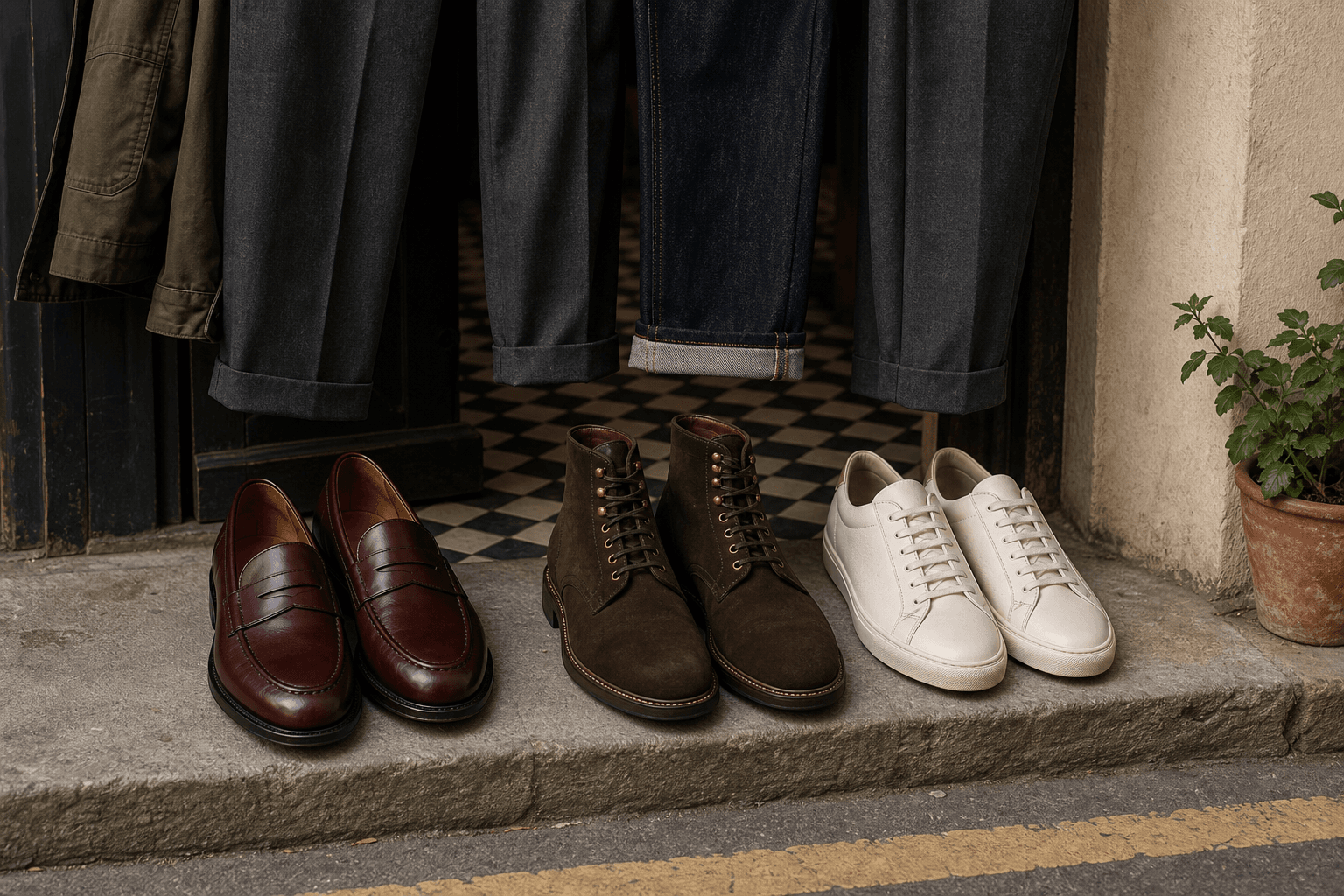
The anchor shoe determines how formal the uniform feels. Loafers pull casual pieces upward. Sneakers pull tailored pieces downward. Boots ground texture and outerwear.
Category: Footwear
Type: loafer, leather sneaker, retro runner, derby, boot
Best colors: black, brown, white, gray, navy, oxblood
Best materials: leather, suede, canvas, mesh, rubber
Repeat Accessory
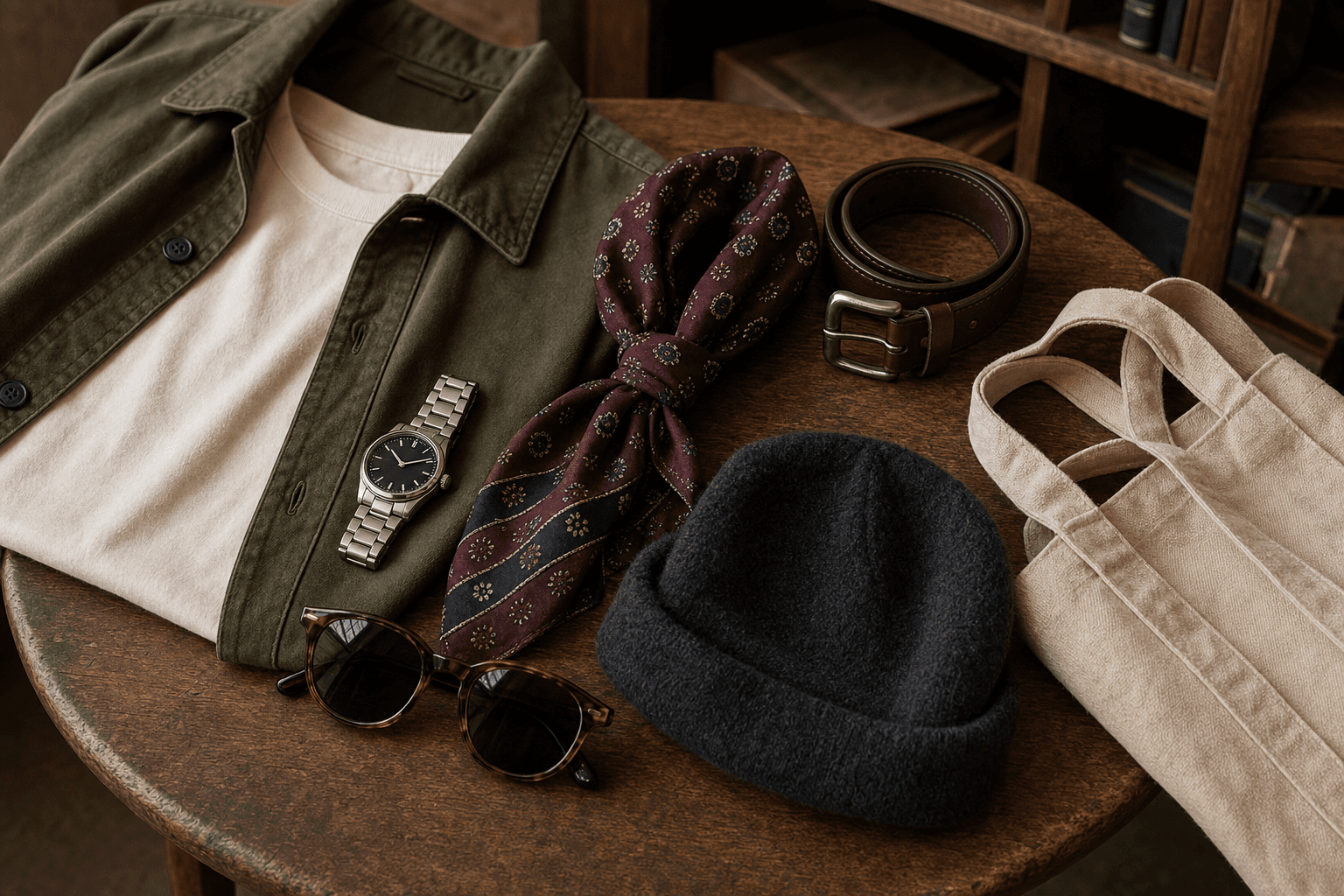
One repeat accessory creates recognition. Too many accessories create noise.
Category: Accessory
Type: watch, cap, belt, bag, scarf, sunglasses
Best materials: leather, canvas, nylon, wool, metal
Best colors: black, brown, navy, olive, silver, gold
The Outfit Formulas
Use these as templates, not costumes. Change the exact pieces, but keep the proportion, color logic, and role of each item intact.
Everyday Uniform
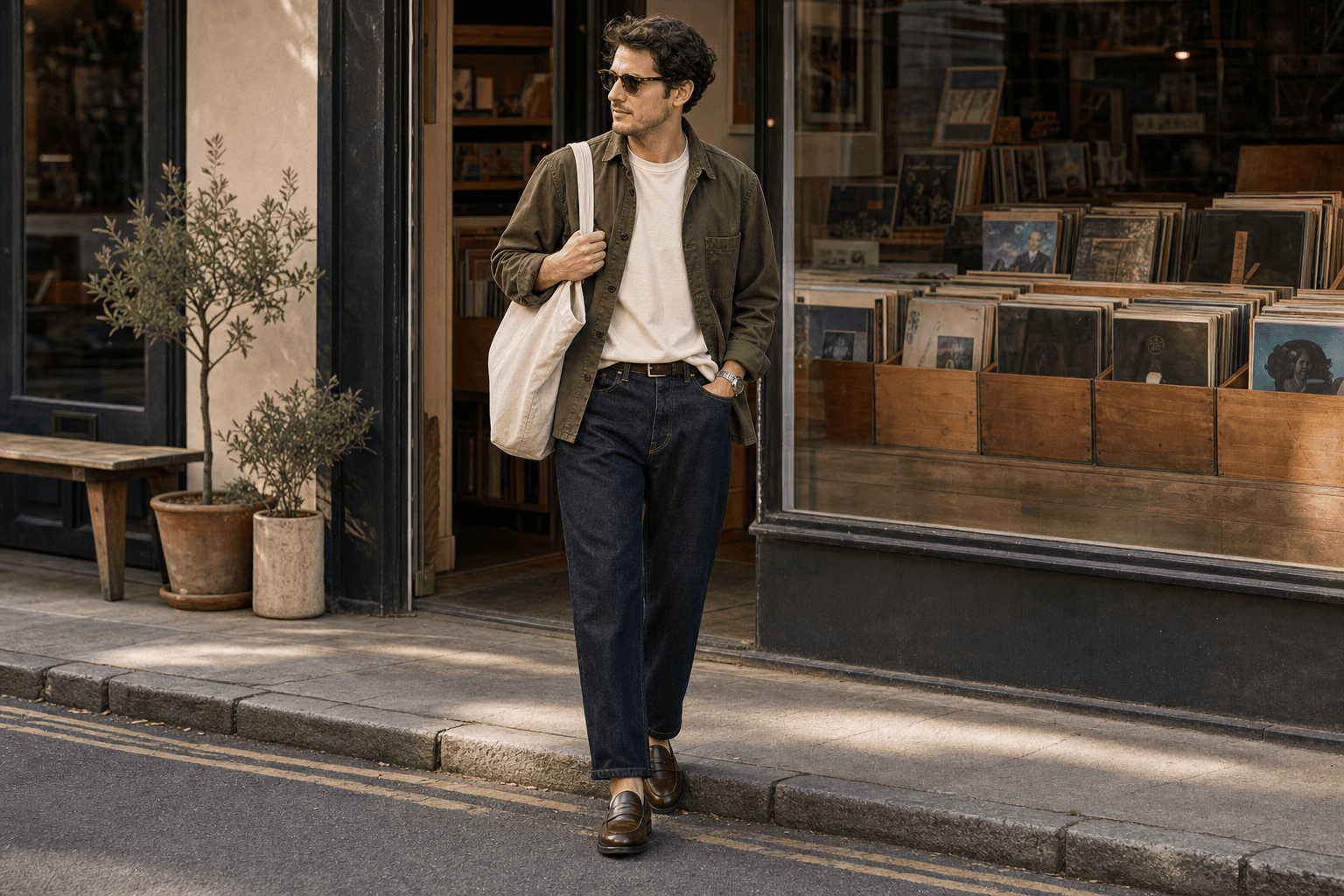
This is the most useful base. Change the shoe to change the formality: retro runners for casual, loafers for sharper, boots for rugged.
Formula: heavyweight tee + relaxed straight jeans + overshirt + anchor shoe
Tags: casual_day, minimal/classic/streetwear, spring/fall, relaxed fit, low-to-mid formality
Work-Appropriate Uniform
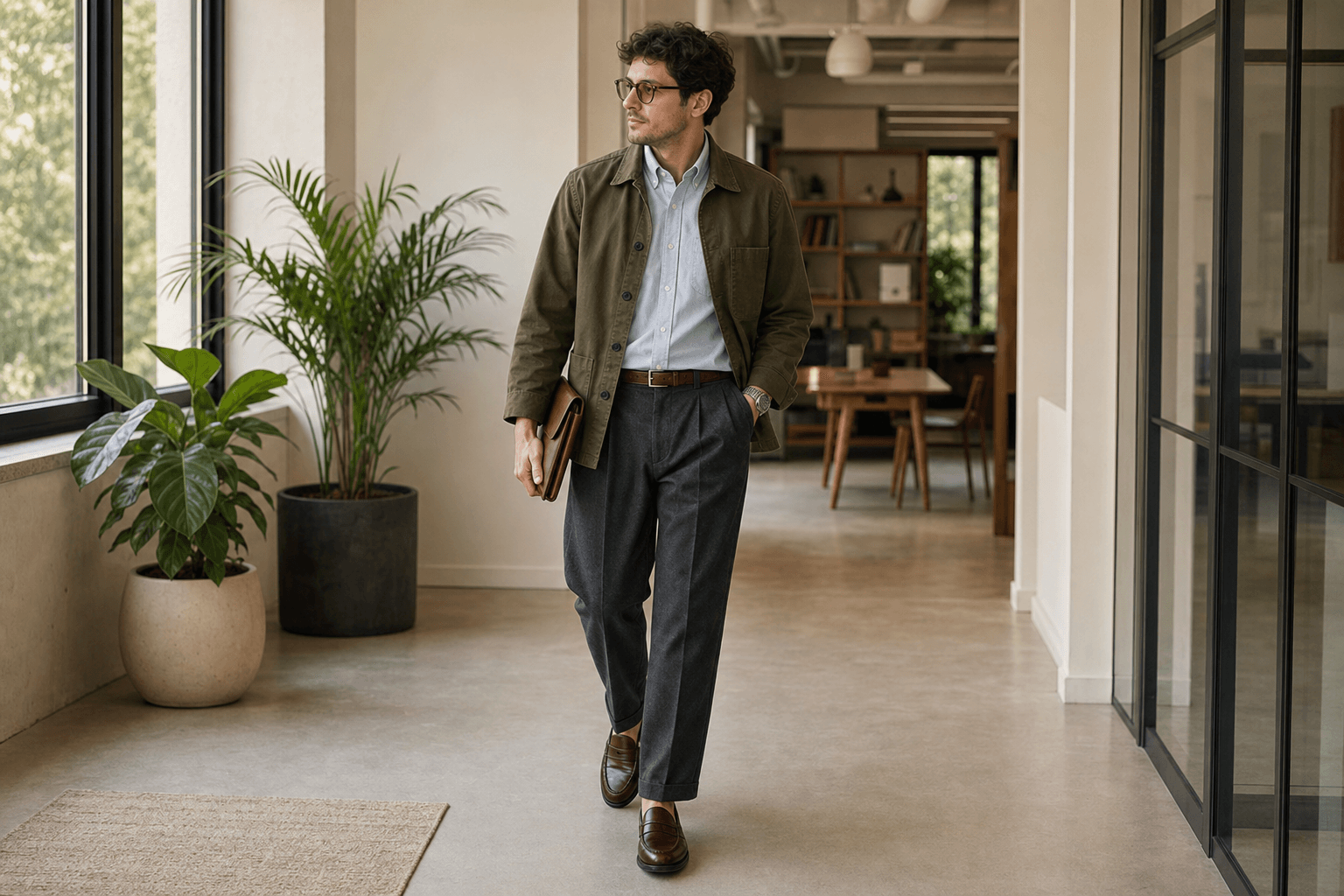
This avoids looking corporate because the jacket is softer than a blazer and the trousers have more ease. It still reads intentional.
Formula: Oxford shirt + relaxed trouser + chore jacket + loafers or leather sneakers
Best colors: blue shirt, navy or charcoal trouser, olive or ecru jacket, brown loafers
Travel Uniform
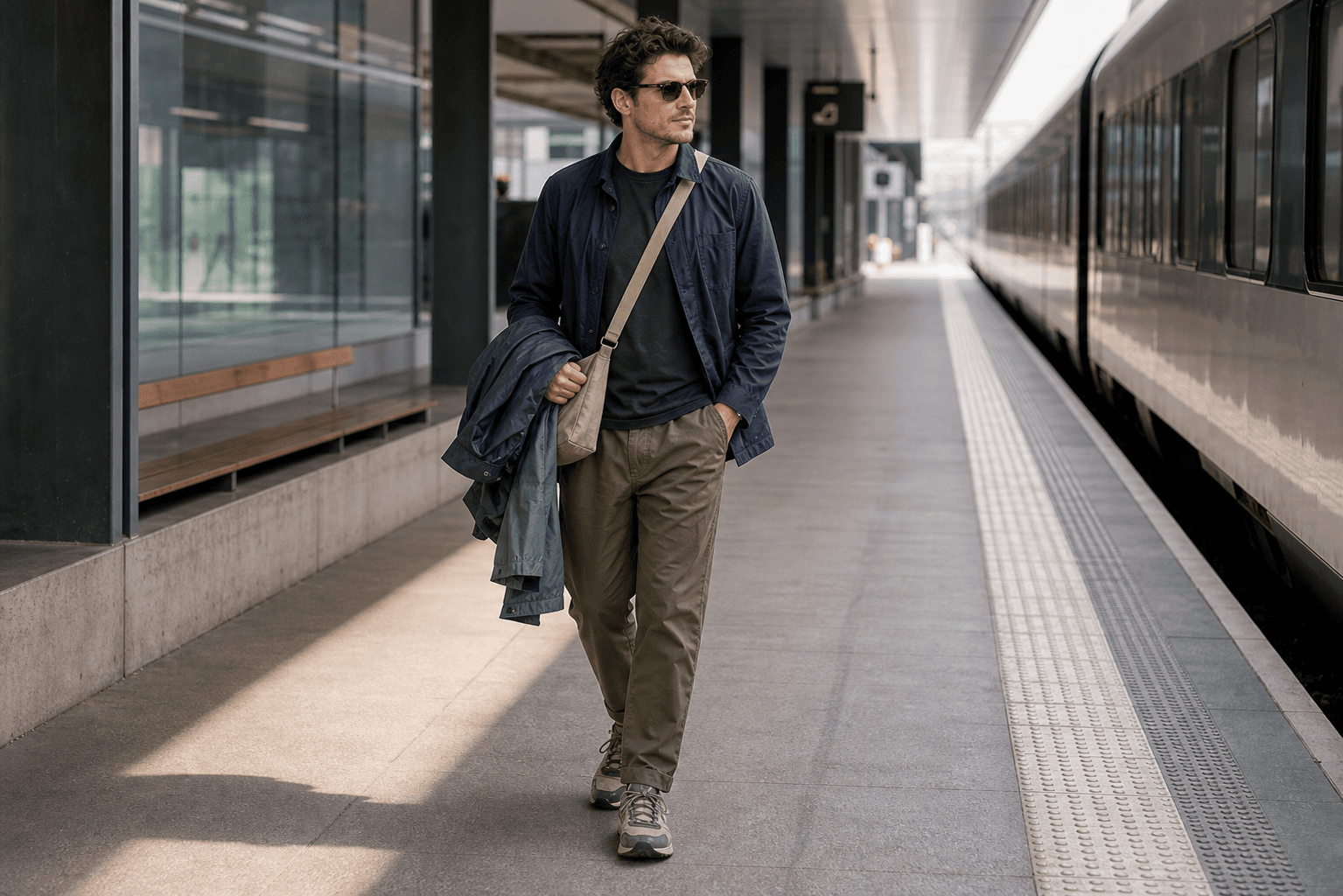
The travel uniform needs comfort, pockets, temperature control, and shoes that can handle walking. Keep the palette tight so pieces repeat easily.
Formula: merino or heavyweight tee + nylon overshirt + travel trouser + comfortable sneaker + compact bag
Weather adjustment: add a rain shell or lightweight wool layer
Date Night Uniform
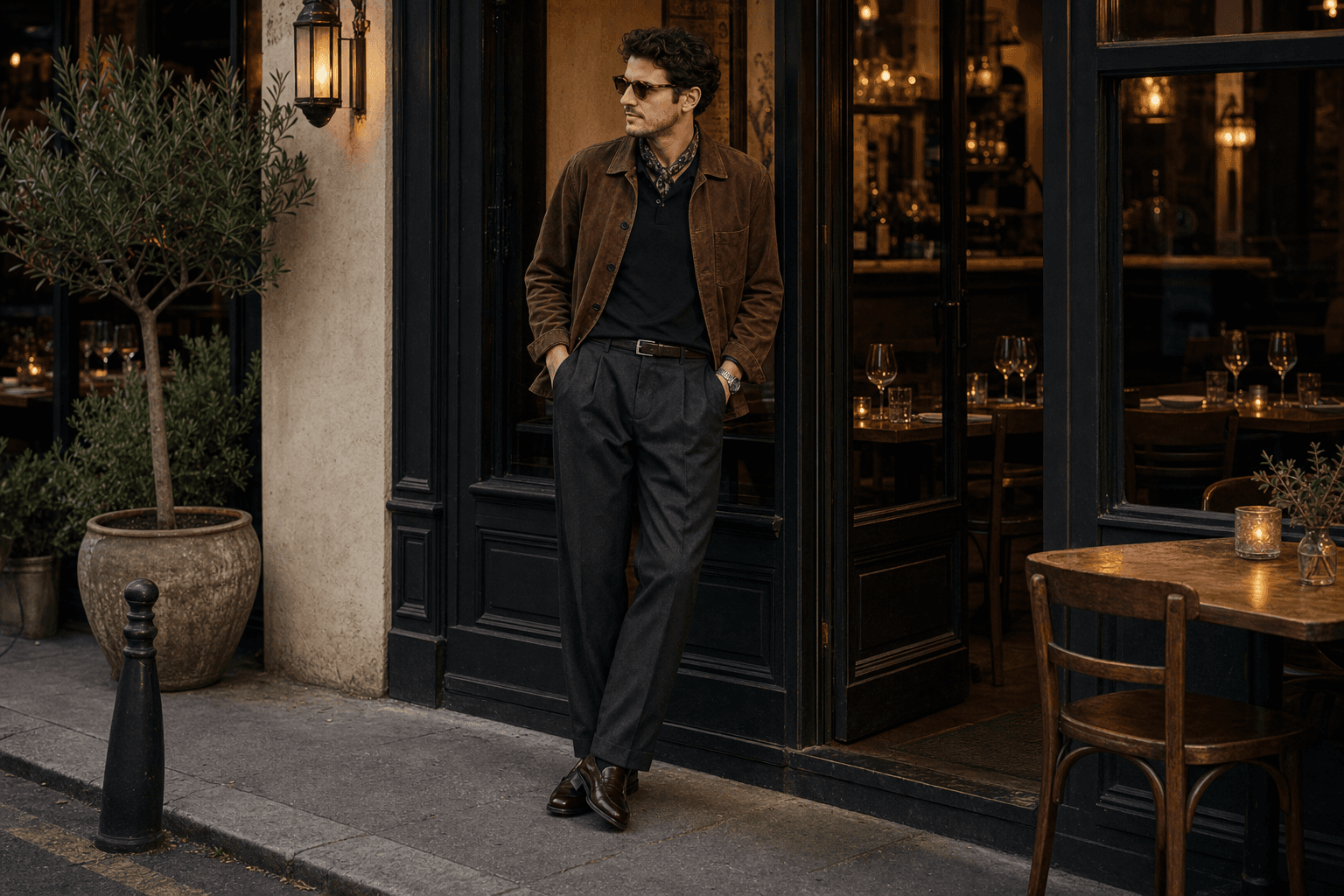
This works because it is sharp without looking like office clothing. The texture makes the outfit feel considered.
Formula: knit polo or black tee + dark relaxed trouser + suede jacket + loafers or boots
Avoid: shiny dress shirts, distressed denim, loud sneakers, novelty watches
Weekend Uniform
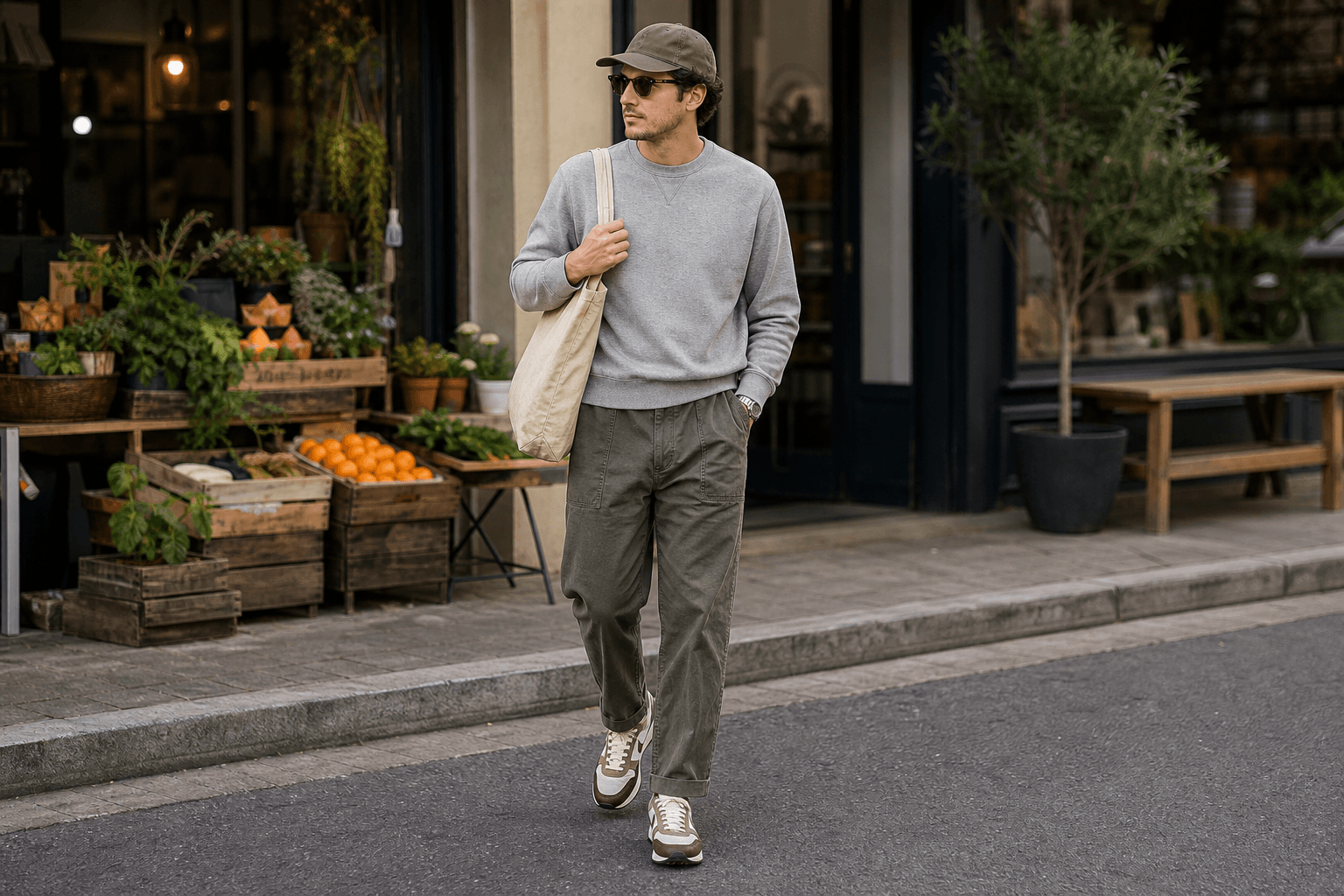
This is casual but not careless. The key is making sure the sweatshirt has shape and the pants are clean.
Formula: sweatshirt + fatigue pants or washed denim + retro runners + cap
Bad Weather Uniform
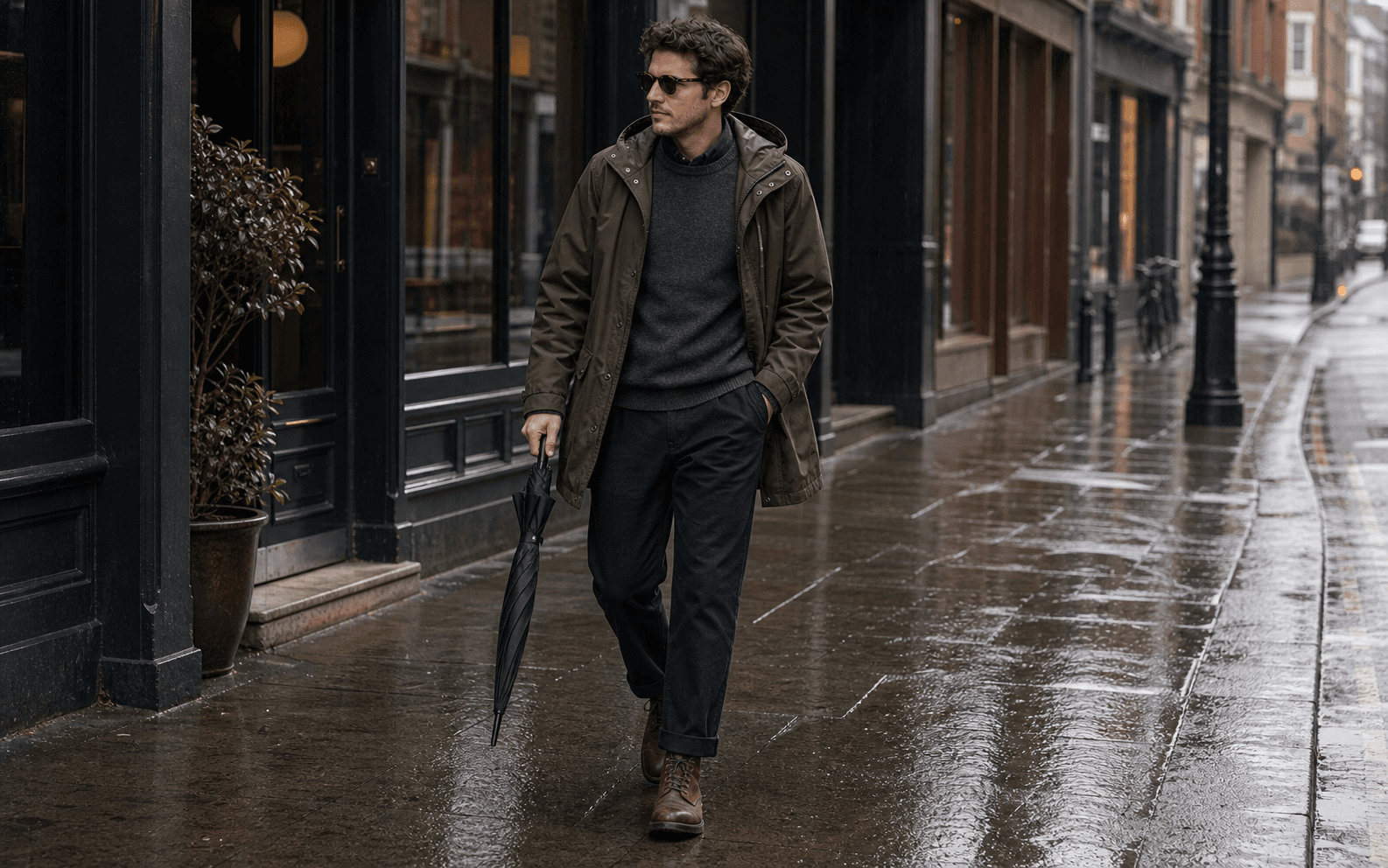
Bad weather should not destroy the uniform. Keep the same silhouette and color logic, then swap in weather-aware materials.
Formula: thermal or knit base + wool sweater or fleece + weather shell + straight pants + weather-ready boots
Elevated Version
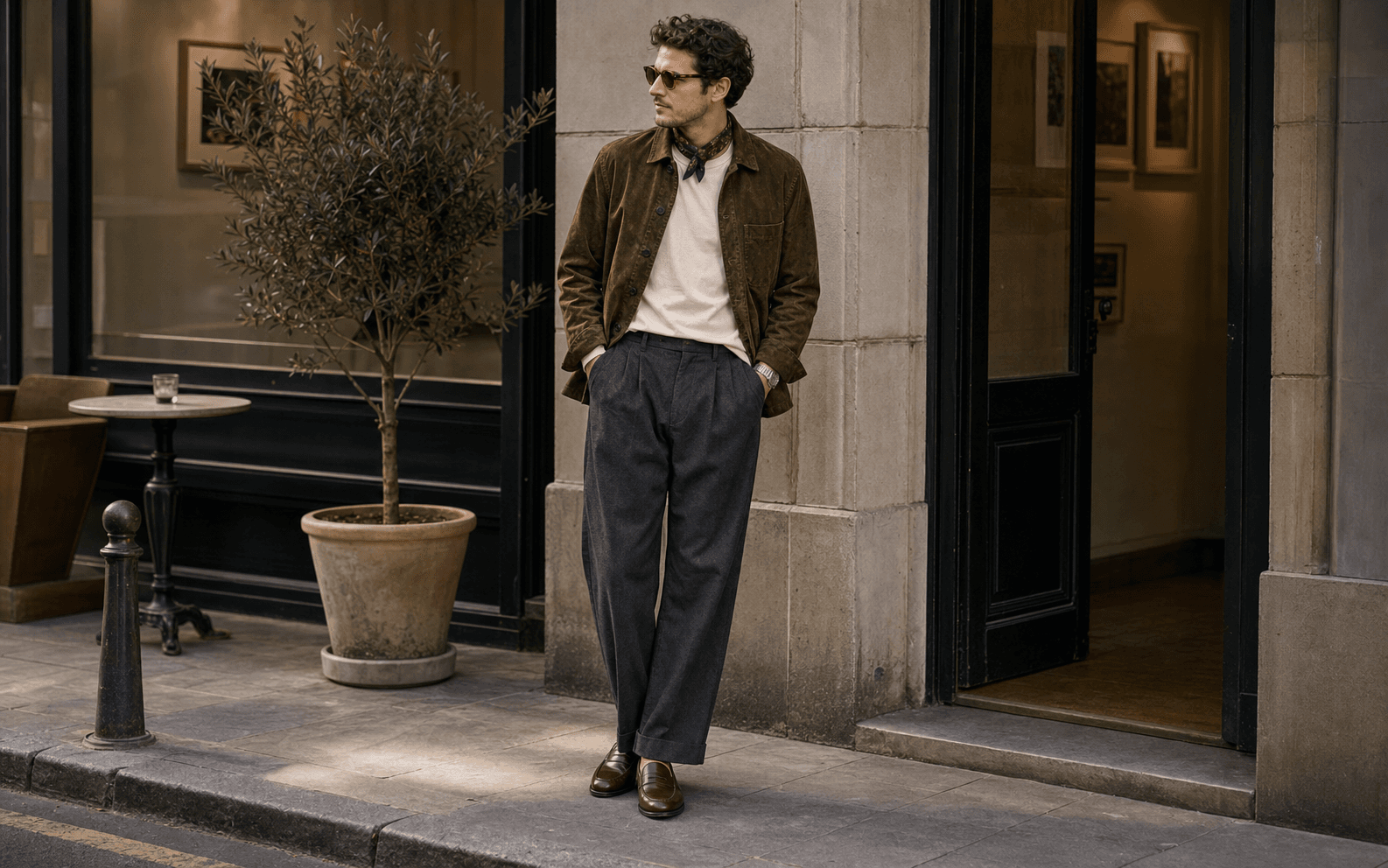
This is the premium version of a simple uniform. It does not need logos or complex styling. The material does the work.
Formula: plain tee + relaxed trouser + suede overshirt + loafers + clean watch
Budget Version
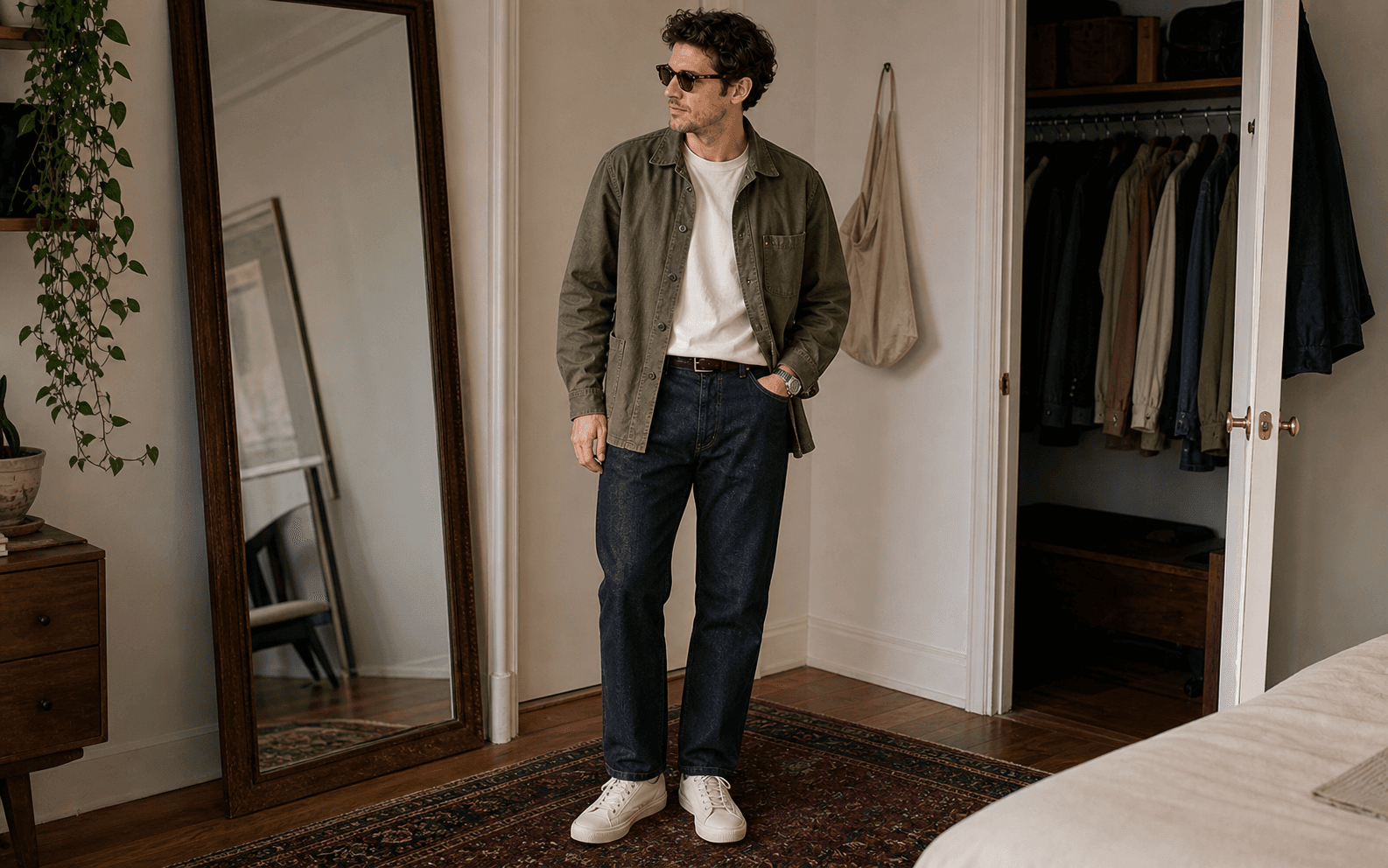
The budget version depends on fit and restraint. Better to repeat a clean silhouette than buy random statement pieces.
Formula: best-fitting tee + clean jeans + thrifted overshirt + simple sneakers
Wrong But Interesting
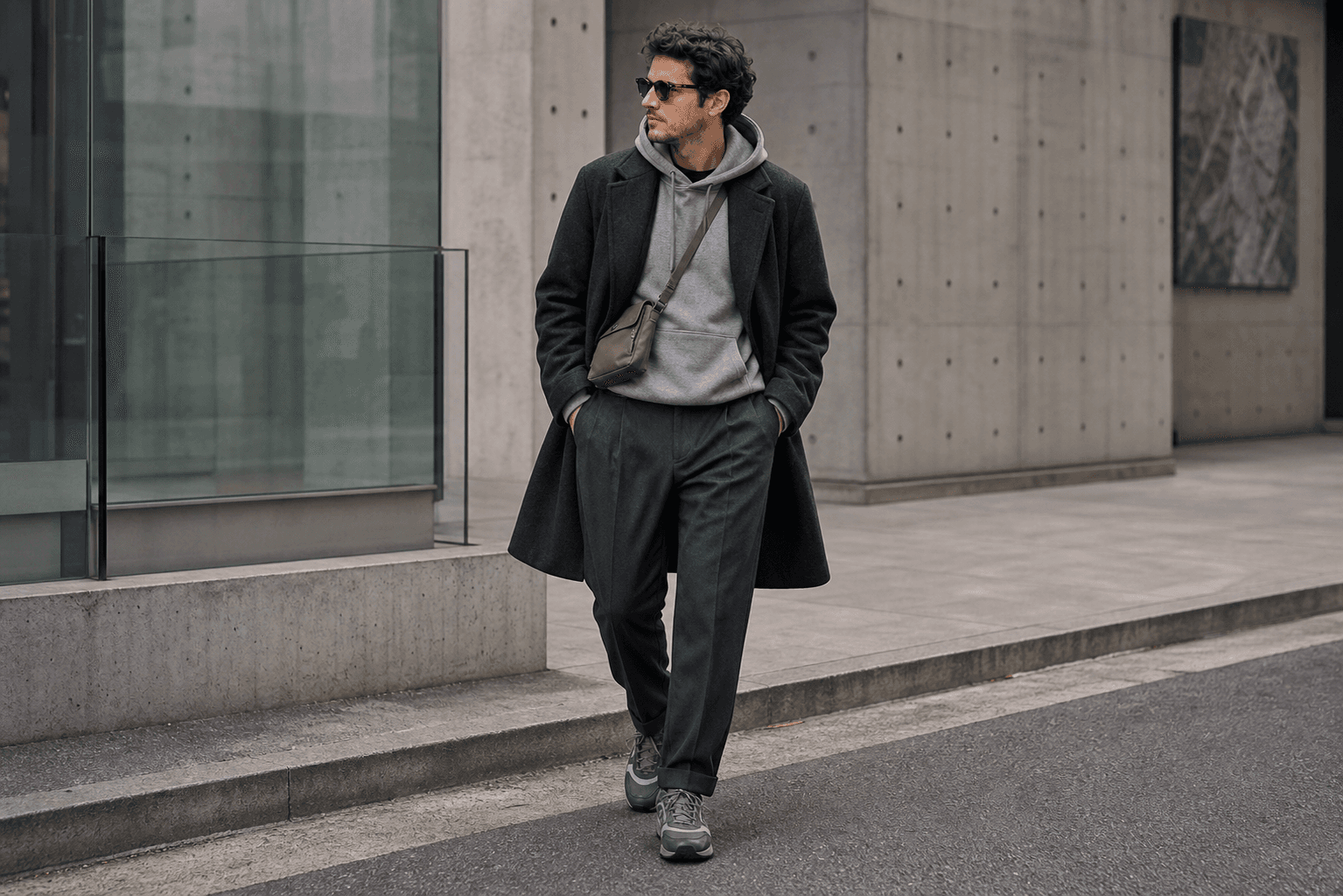
This only works if the palette is controlled. It combines tailoring, sportswear, and technical footwear in a way that feels current but still functional.
Formula: tailored trouser + hoodie + topcoat + trail sneaker
Color Logic
A personal uniform needs a home palette. Start with three base colors, two secondary colors, and one accent.
Minimal City Palette
- Base: black, white, gray
- Secondary: navy, stone
- Accent: silver or dark green
Smart Casual Palette
- Base: navy, white, charcoal
- Secondary: olive, brown
- Accent: burgundy or pale blue
Rugged Palette
- Base: indigo, olive, brown
- Secondary: ecru, black
- Accent: rust or faded red
Streetwear Palette
- Base: black, gray, cream
- Secondary: washed navy, olive
- Accent: cobalt, muted orange, team color
The mistake is not color. The mistake is too many unrelated colors. Your uniform should make color decisions easier.
Texture Logic
Texture is what keeps a uniform from looking repetitive. If you repeat the same silhouette, change the fabric.
Use combinations like:
- Cotton tee + wool trouser + suede jacket
- Oxford shirt + denim + leather loafers
- Hoodie + nylon shell + washed jeans
- Knit polo + cotton twill trouser + canvas chore jacket
- Merino tee + ripstop overshirt + trail sneaker
A uniform can be visually consistent while still feeling varied because texture changes the mood.
Fit and Proportion Rules
Rule 1: Pick a Default Pant Shape
Most men benefit from a default bottom: straight jean, relaxed trouser, fatigue pant, or chino. Once that is stable, tops and shoes become easier to pair.
Rule 2: Match Jacket Length to Pants
Wide or relaxed pants usually work better with cropped or structured outerwear. Slimmer pants can handle longer coats. Very long tops with very loose pants require more skill.
Rule 3: Keep One Clean Line
If the top is relaxed and the pant is relaxed, the jacket should create shape. If the pant is wide, the shoe should have enough visual weight. If the outfit is tonal, the textures should differ.
Rule 4: Do Not Let Comfort Remove Shape
Comfort is not the enemy. Shapelessness is. A personal uniform should be easy to wear, but still have a clear silhouette.
Rule 5: Repeat With Variation
The point is not to wear the same thing. It is to repeat the structure:
- Tee + overshirt + straight pants + sneakers
- Knit + chore jacket + trousers + loafers
- Hoodie + coat + relaxed denim + boots
Then vary color, fabric, and formality.
Common Mistakes
Mistake 1: Choosing an Aesthetic Before Knowing Your Life
A full technical wardrobe is useless if you mostly go to dinners and offices. A tailoring-heavy uniform is useless if you walk everywhere and hate dry cleaning. Start with your real week.
Mistake 2: Buying Statement Pieces Before Base Pieces
A personal uniform needs reliable base pieces first. Statement pieces only work when the foundation is stable.
Mistake 3: Copying Someone Else Too Literally
Influencers and magazines can clarify taste, but copying an outfit exactly often fails because your body, weather, schedule, and social context are different.
Mistake 4: Making the Uniform Too Narrow
If your uniform only works in one season or one setting, it is too fragile. Build casual, work, travel, date, weather, and night-out versions.
Mistake 5: Ignoring Shoes
Shoes decide whether the same outfit reads casual, sharp, rugged, athletic, or formal. A personal uniform needs at least two anchor shoes.
Mistake 6: Treating "Personal Style" Like a Shopping List
Personal style is not more buying. It is better filtering. Buy only what strengthens your existing formulas.
How to Build It From Your Closet
Start by pulling your most-worn pieces, not your favorite fantasy pieces. Your real wardrobe is revealed by behavior.
Sort them into groups:
- Most worn tops
- Most worn bottoms
- Outerwear you actually use
- Shoes you can wear all day
- Accessories you repeat
- Pieces you like but never style
Then identify the pattern. Maybe you always wear navy, gray, and olive. Maybe you prefer denim and overshirts. Maybe every outfit you like has a cropped jacket. Maybe you keep buying sneakers but actually look better in loafers.
Build three repeat formulas from what already works. Then fill gaps deliberately.
FAQ
What is a personal uniform for men?
A personal uniform is a repeatable outfit structure that reflects your body, lifestyle, and taste. It is not wearing the exact same clothes every day. It is repeating the outfit logic that works for you.
How do I find my personal style?
Start with what you already wear most. Identify repeated colors, fits, shoes, materials, and outfit combinations. Then define three style words and build formulas around them.
Is a personal uniform the same as a capsule wardrobe?
No. A capsule wardrobe is about a small set of versatile clothes. A personal uniform is about repeatable outfit formulas. They can overlap, but the uniform is more focused on visual identity.
How many outfits should be in a personal uniform?
Start with three: casual, work or polished casual, and date/night-out. Then add weather and travel versions.
How do I avoid looking boring if I repeat outfits?
Repeat the silhouette, not every detail. Change texture, color depth, shoes, outerwear, and accessories while keeping the same formula.