The Modern Men’s Capsule Wardrobe
A practical system for getting dressed better with fewer, sharper pieces.
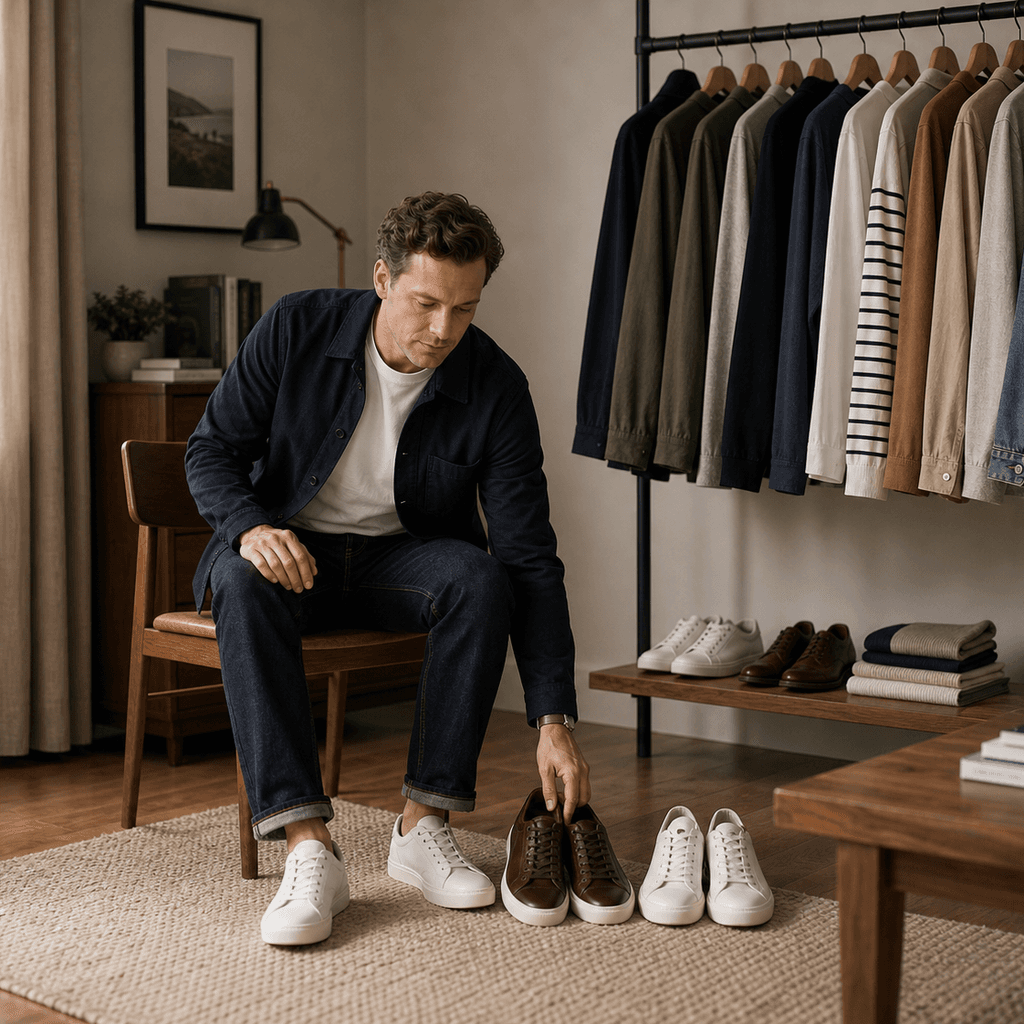
A good capsule wardrobe is not a tiny closet full of beige basics. It is a working system: a small set of clothes that fit your body, match each other, and solve most of your real-life situations without making you think too hard.
That distinction matters. A bad capsule feels restrictive. It turns style into a checklist and leaves you dressed correctly but flatly. A good capsule gives you range. It lets a white oxford, straight jeans, loafers, and a chore jacket become casual, sharp, or date-ready depending on proportion, texture, and footwear. It is not about owning the fewest clothes possible. It is about owning fewer dead ends.
Modern menswear has moved away from one dominant uniform and toward personal systems: repeatable silhouettes, better textures, practical layering, climate-aware fabrics, and pieces that can move between work, travel, dinner, and weekends. The goal is not to dress like someone else. The goal is to build a visual language you can repeat without looking repetitive.
What a Men’s Capsule Wardrobe Is — and What It Is Not
A capsule wardrobe is a controlled set of pieces designed to work together. The modern version is less rigid than the old “ten essentials every man needs” formula. It should account for your climate, job, body type, lifestyle, and taste.
| It is: | It is not: |
|---|---|
|
|
The strongest men’s basics are pieces that can move across contexts: jeans, loafers, crewnecks, outerwear, simple shirts, and versatile layers. Many men do not need more clothes first; they need fewer pieces that actually combine into coherent outfits.
The Core Pieces
The exact list should change by climate and lifestyle, but this is the strongest baseline for a modern men’s capsule.
White T-Shirt
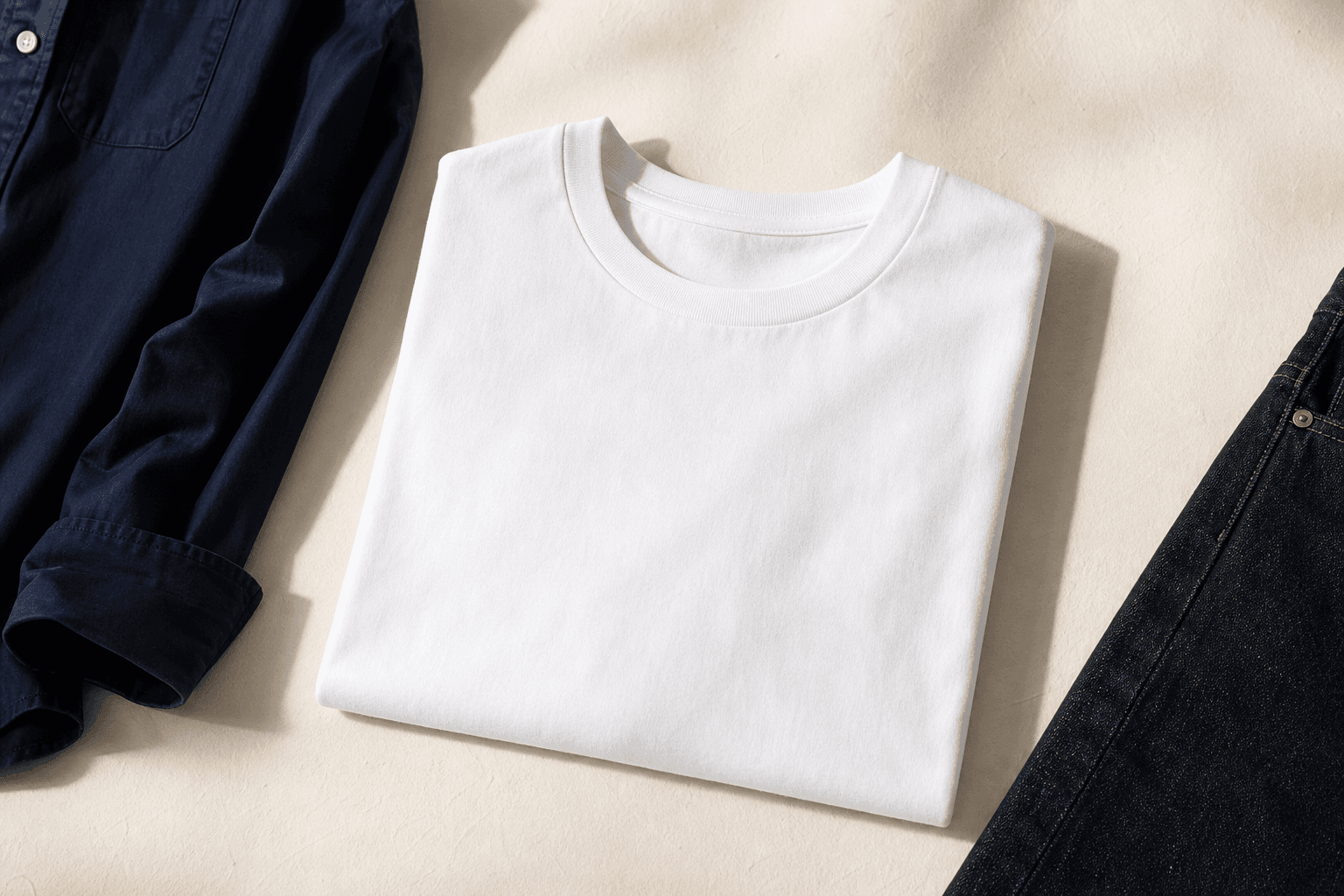
A clean white tee is not a statement. It is a spacing device. It breaks up darker layers, makes denim feel lighter, and gives chore jackets, overshirts, bombers, and cardigans a neutral base.
Black, Navy, or Charcoal T-Shirt
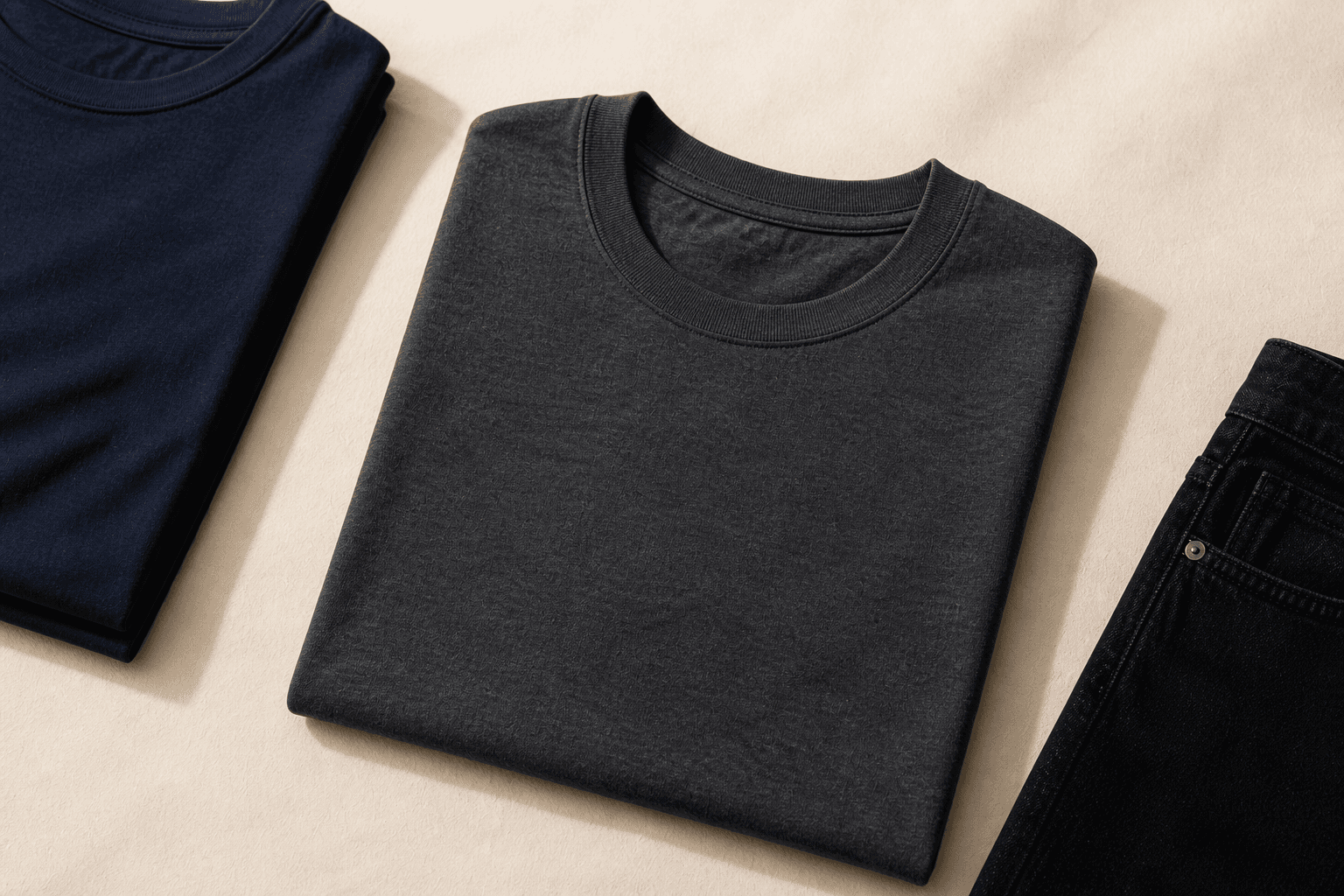
A dark tee is more useful for city dressing, travel, and night-out outfits. It pairs cleanly with black denim, wool trousers, leather jackets, and suede outerwear.
Oxford Cloth Button-Down
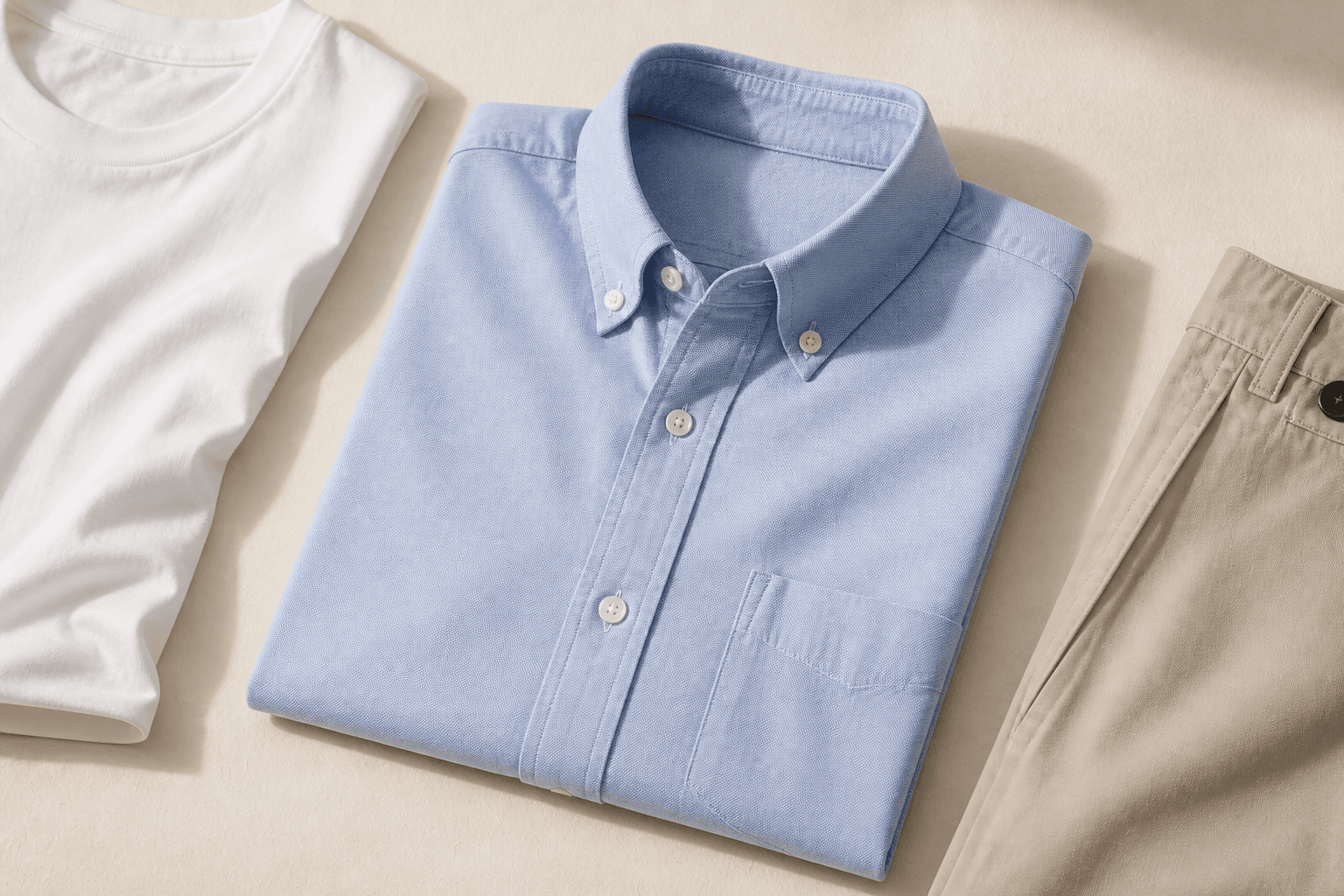
The oxford shirt is the bridge between casual and put-together. It works open over a tee, tucked into chinos, under a crewneck, or with tailoring that does not need to look corporate.
Best colors: white, blue, pale stripe
Fine-Gauge Knit or Crewneck Sweater
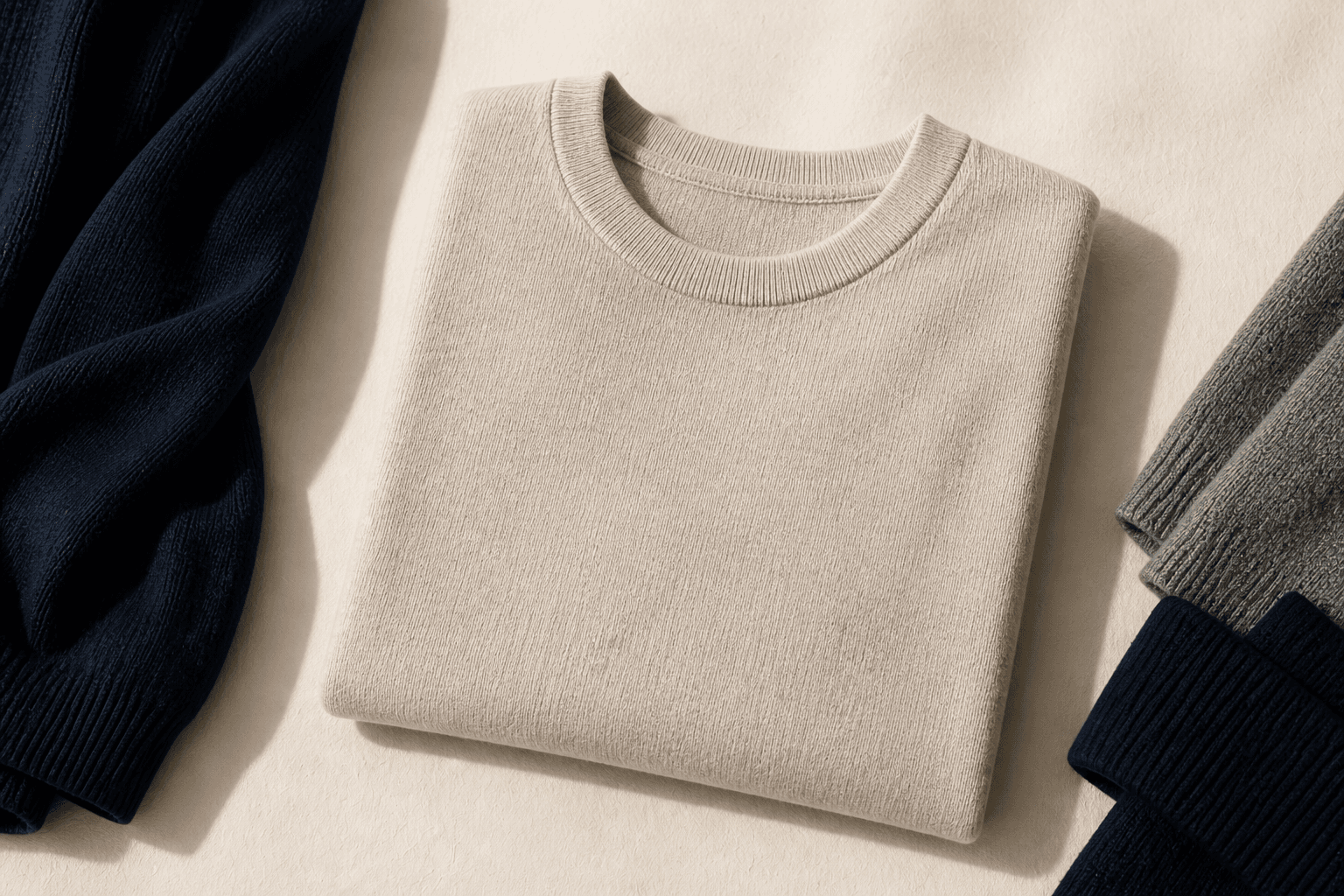
A crewneck in merino, cotton, or cashmere blend adds polish without formality. It makes jeans look more deliberate and gives trousers a softer alternative to a blazer.
Best colors: navy, grey, oatmeal, chocolate, olive
Overshirt or Chore Jacket
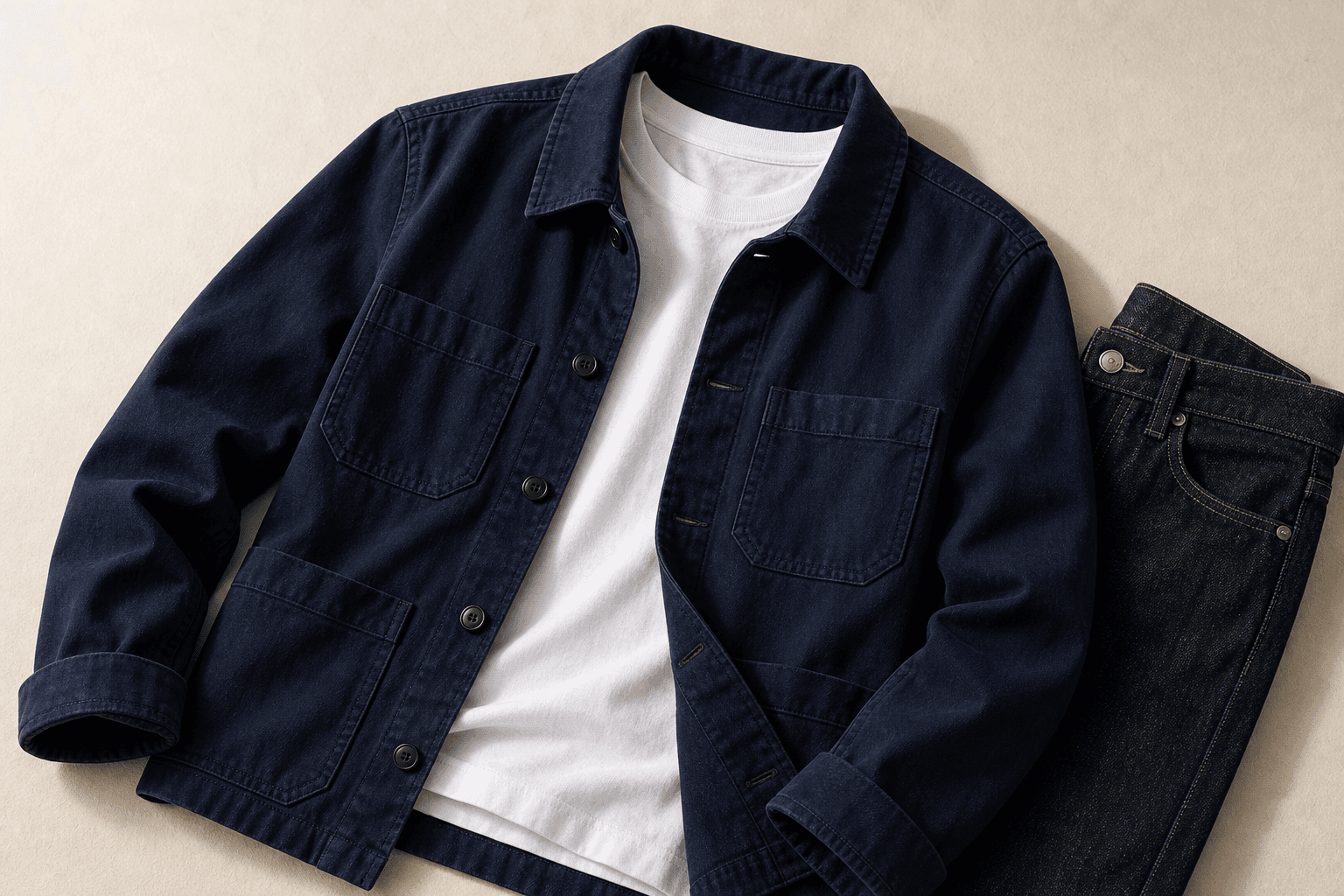
This is the modern casual jacket. It gives structure without making the outfit feel dressed up. The best versions have enough weight to hold shape and enough room to layer over a tee or knit.
Best colors: navy, olive, tan, brown, black
Lightweight Jacket
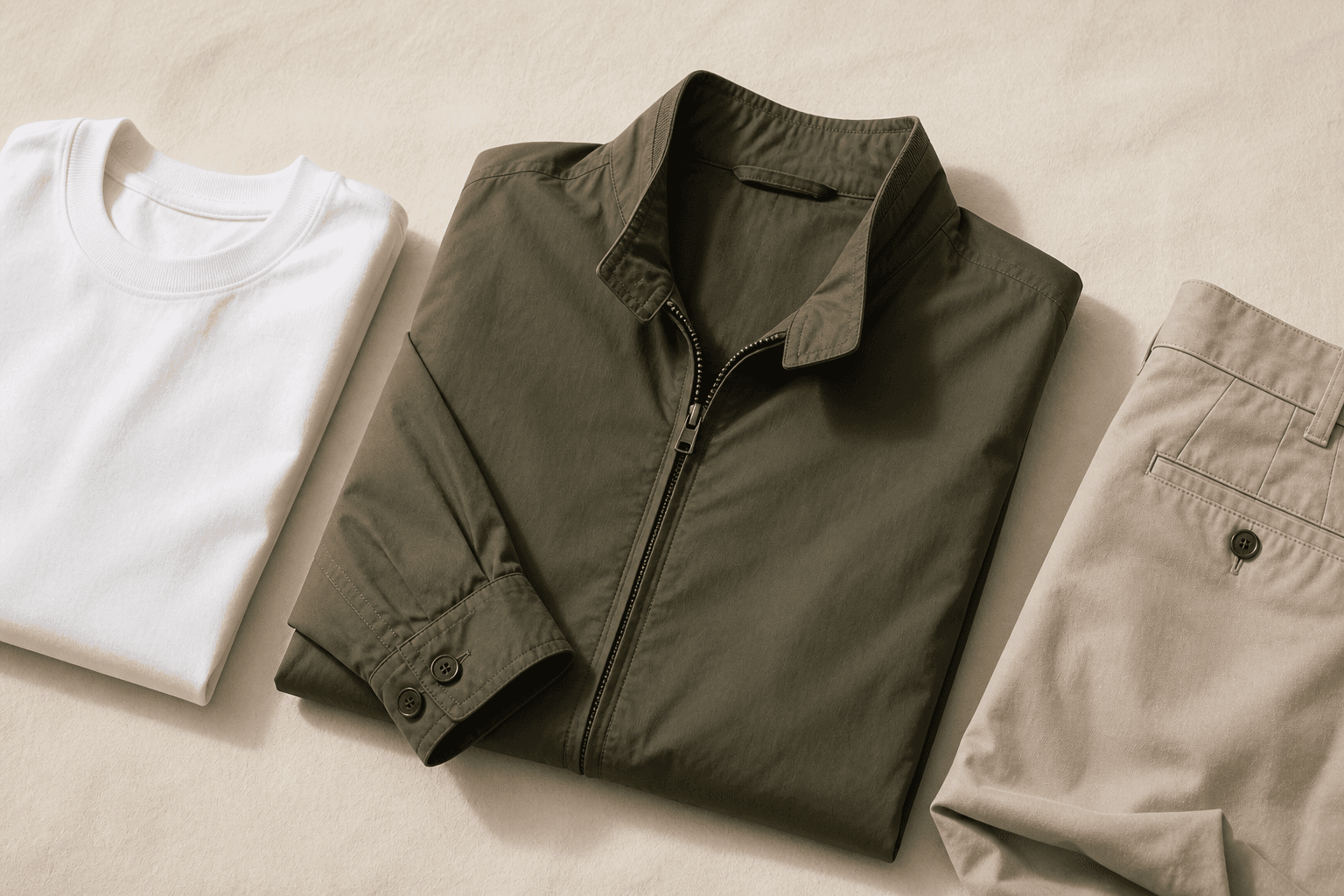
A bomber, Harrington, denim jacket, or cropped utility jacket gives the capsule a more casual outerwear option. The length matters: a jacket that ends around the hip works well with straight pants and keeps the silhouette clean.
Dark Straight Jeans
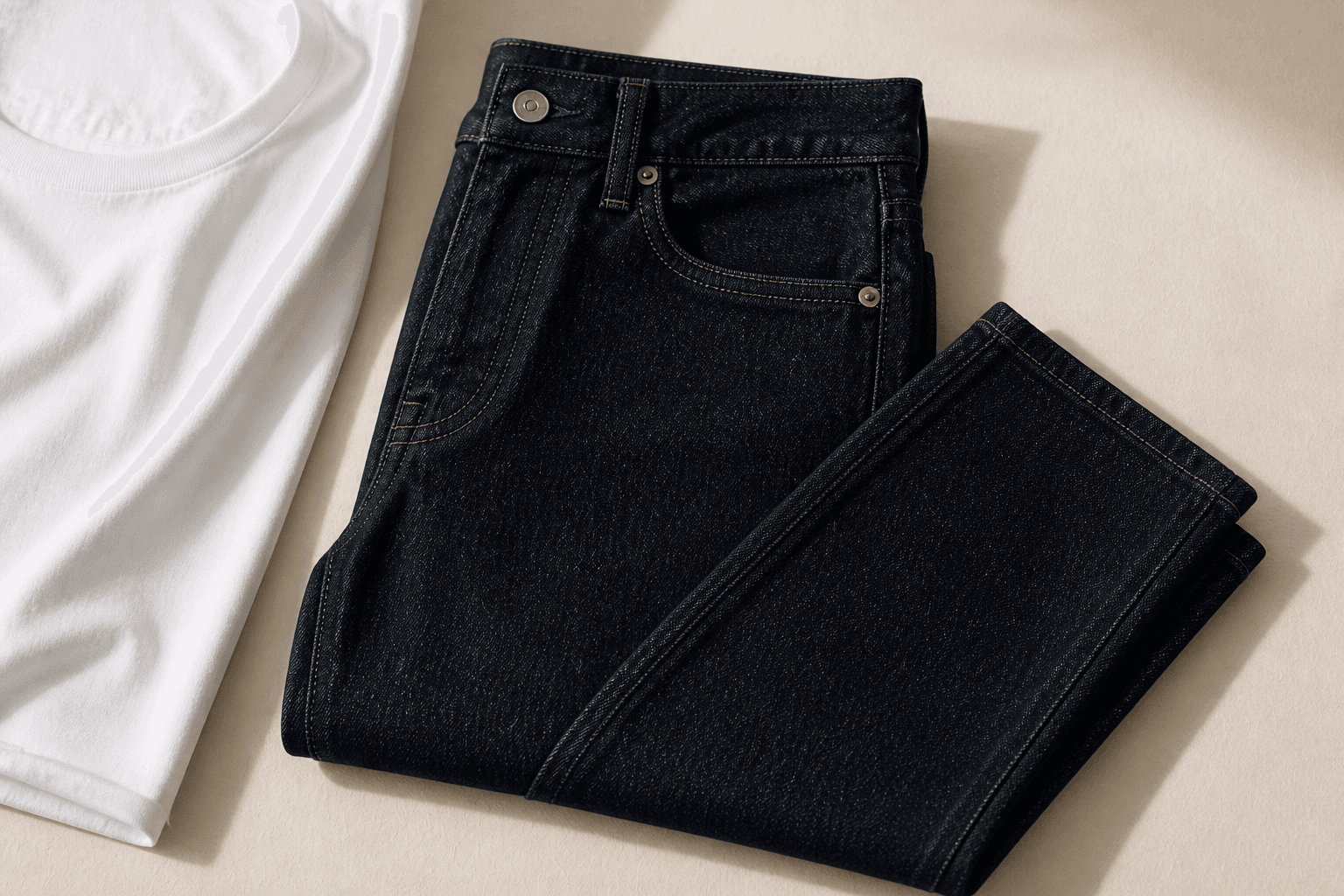
Dark straight jeans are the most useful denim in a capsule because they can move from casual daytime to dinner. Avoid excessive distressing. The cleaner the jean, the more contexts it can handle.
Best washes: dark indigo, rinsed black, grey-black
Relaxed Chinos or Cotton Trousers
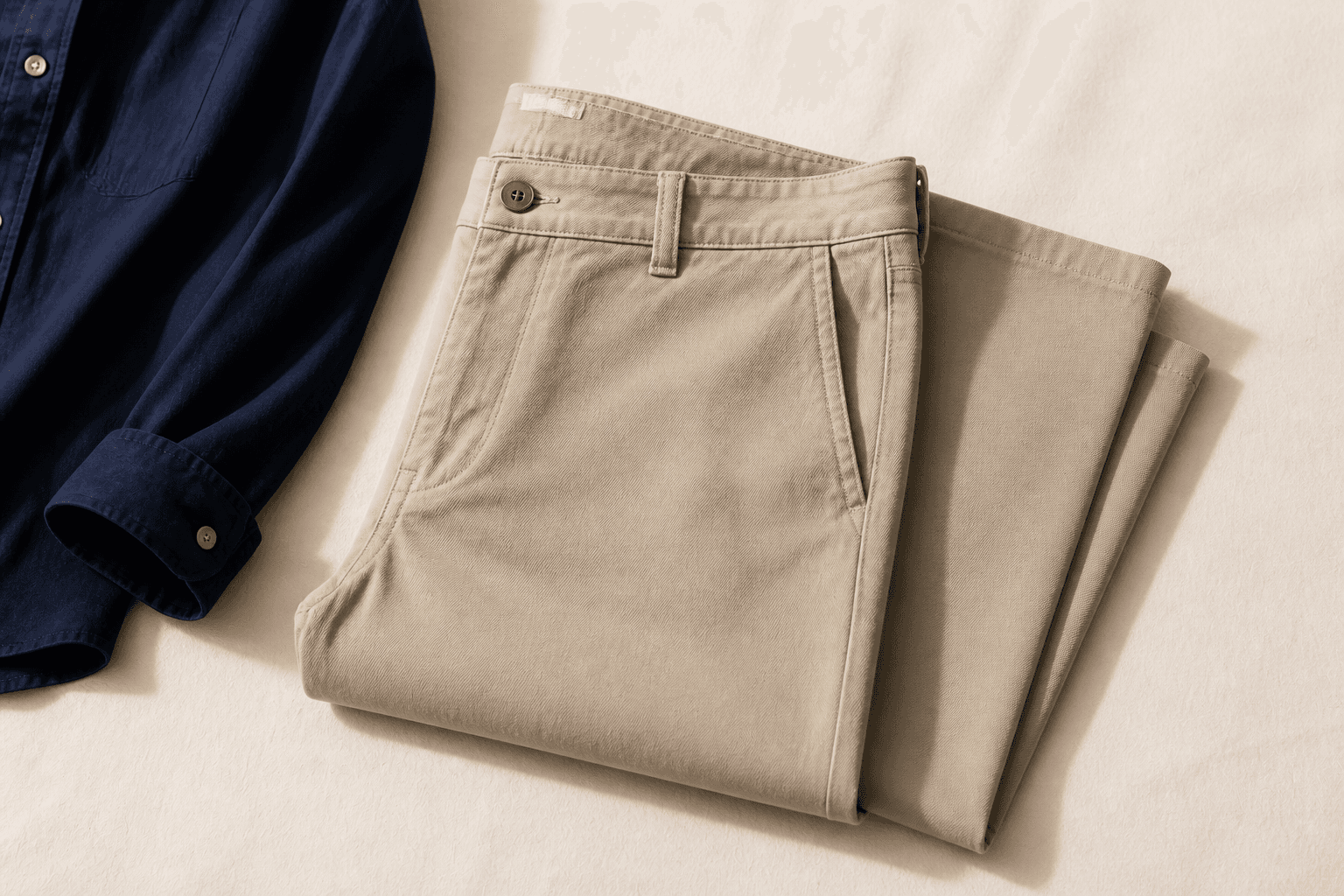
Chinos are only useful if they do not look like office khakis from 2012. Choose a slightly relaxed or straight fit, with a clean break or slight crop depending on your footwear.
Best colors: stone, olive, navy, tobacco, charcoal
Wool or Wool-Blend Trousers
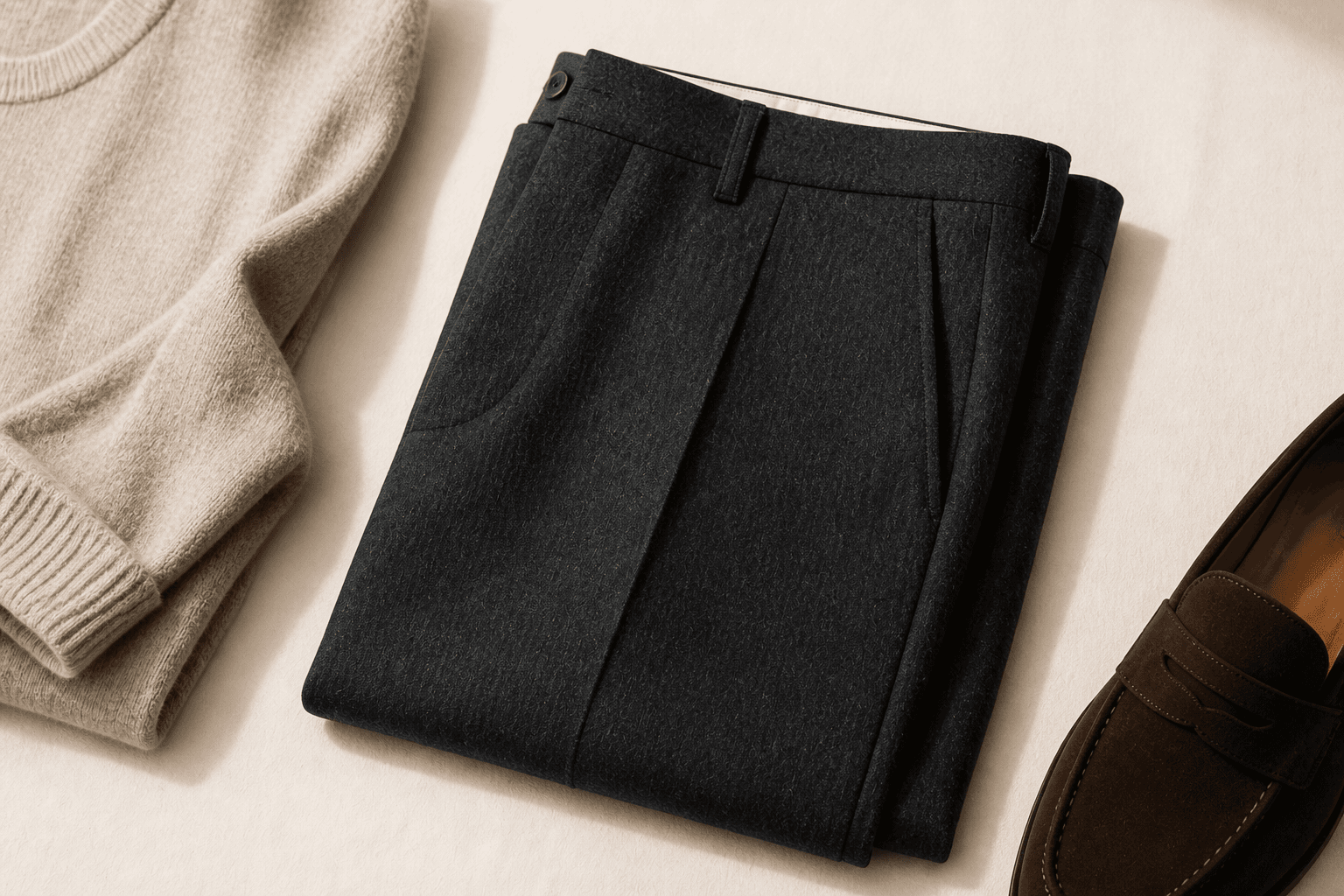
One pair of relaxed wool trousers can upgrade half your closet. Wear them with a tee and loafers, a knit and boots, or an oxford and chore jacket.
Best colors: charcoal, mid-grey, navy, brown
Casual Shorts That Are Not Gym Shorts
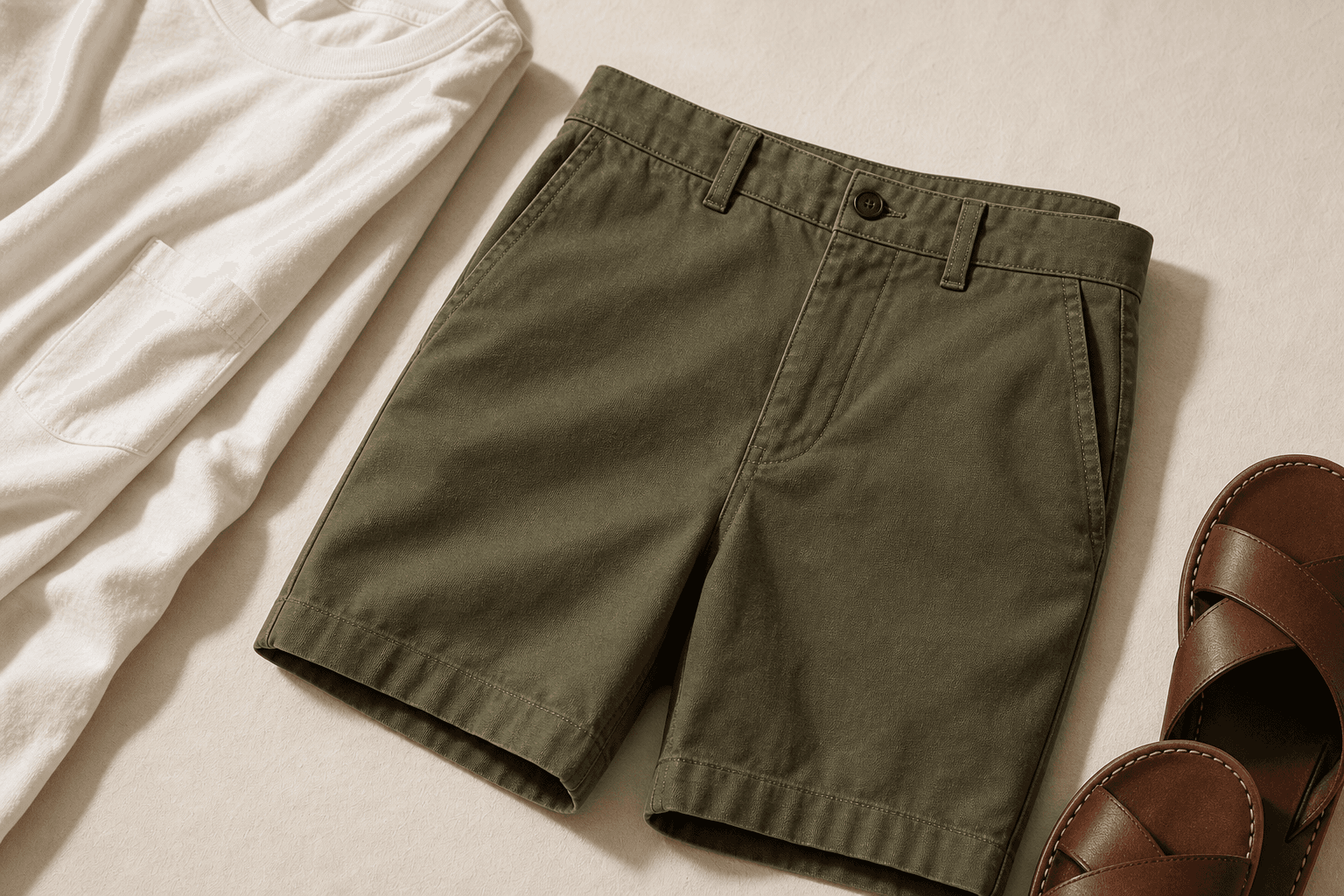
For warm weather, you need shorts that can leave the apartment without looking like workout gear. Cotton twill, linen blend, or nylon with a clean shape all work.
Best inseam: generally 5–7 inches for a modern casual look; longer if your proportions call for it
White or Off-White Sneakers
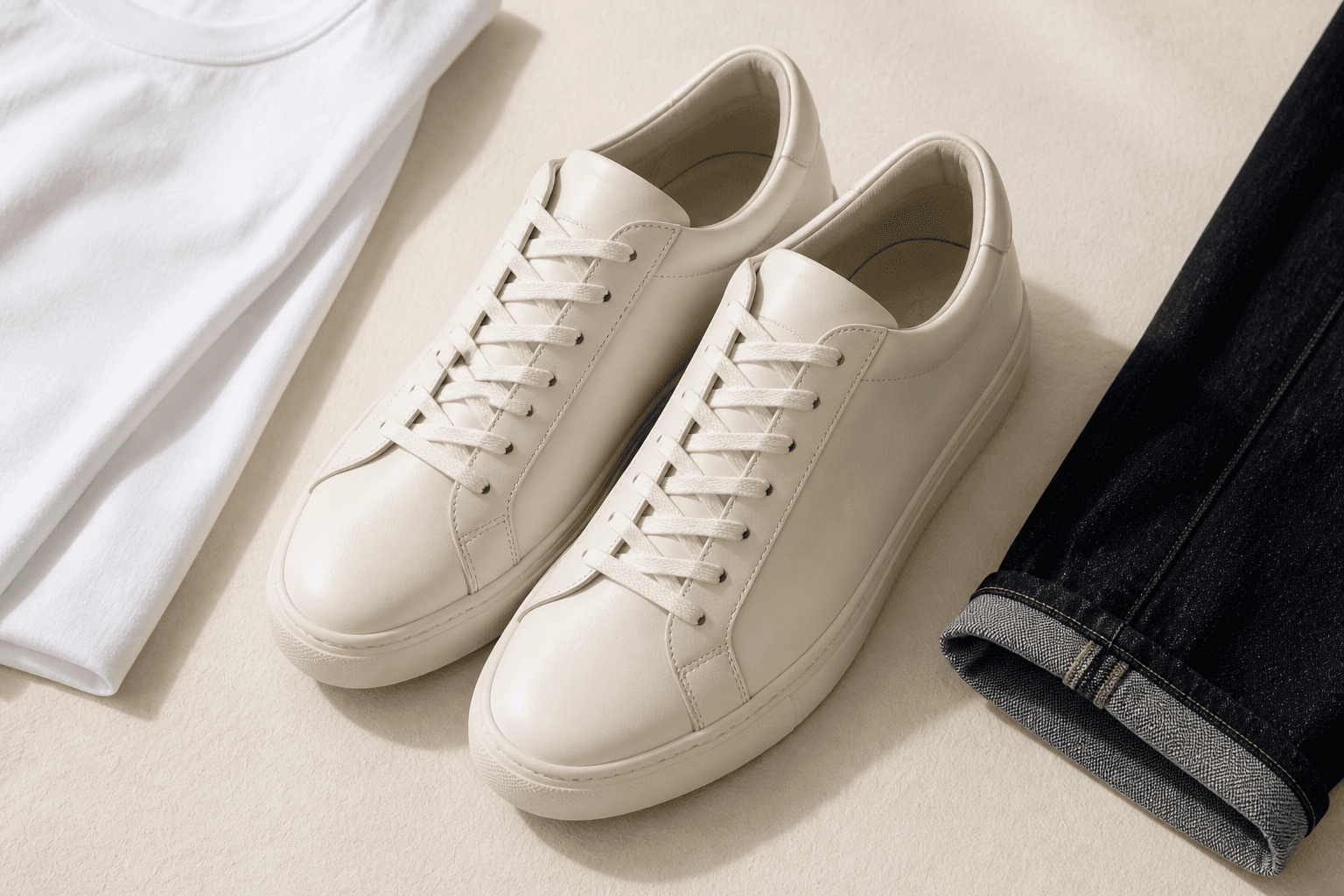
Minimal sneakers still work, but the cleaner they are, the more the rest of the outfit matters. With plain sneakers, focus on better pants and outerwear so the look does not become generic.
Loafers
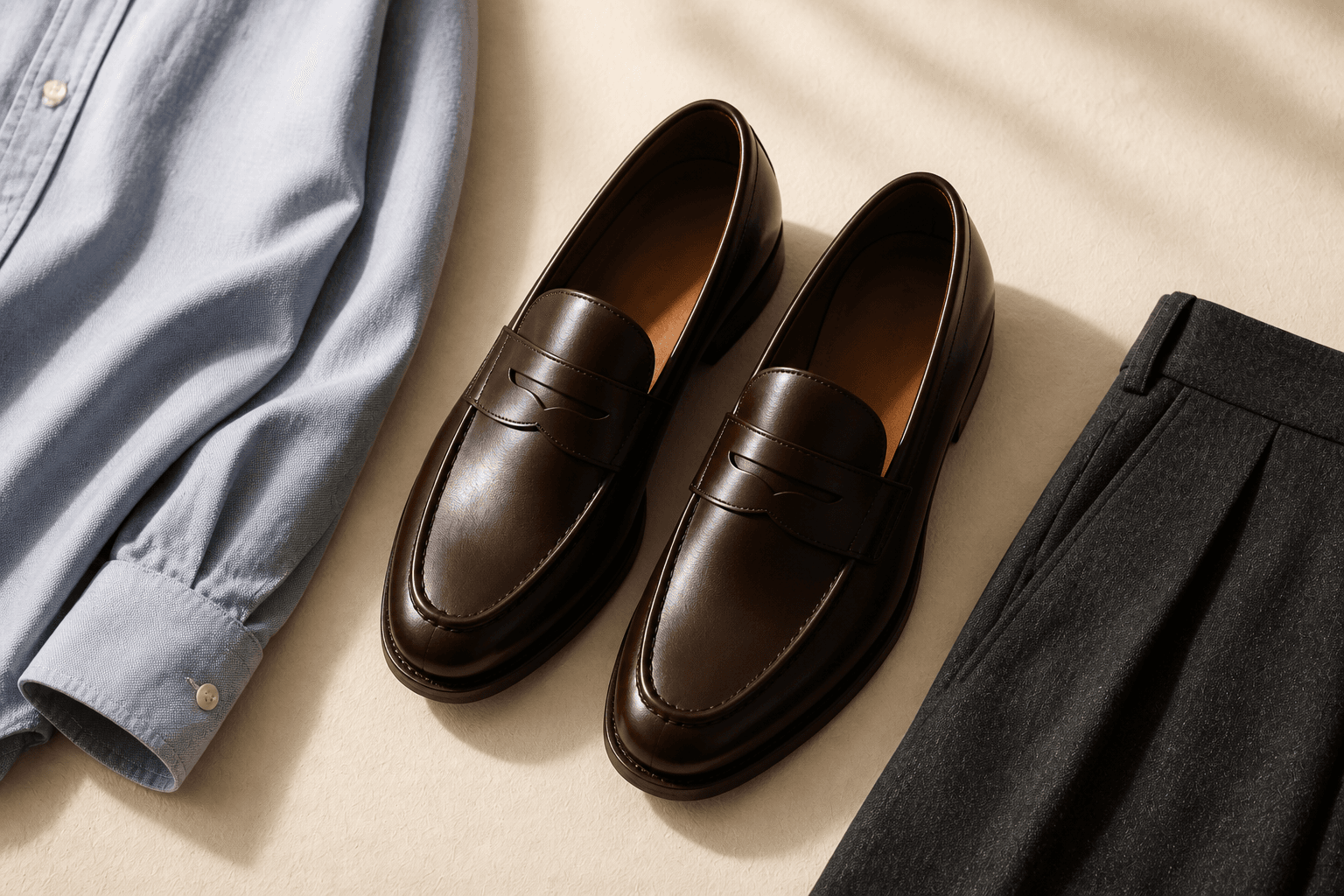
Loafers are one of the highest-leverage shoes in a men’s capsule. They sit between sneakers and dress shoes, which makes them useful for denim, chinos, trousers, summer outfits, and dinner.
Best colors: dark brown, black, burgundy
Boots
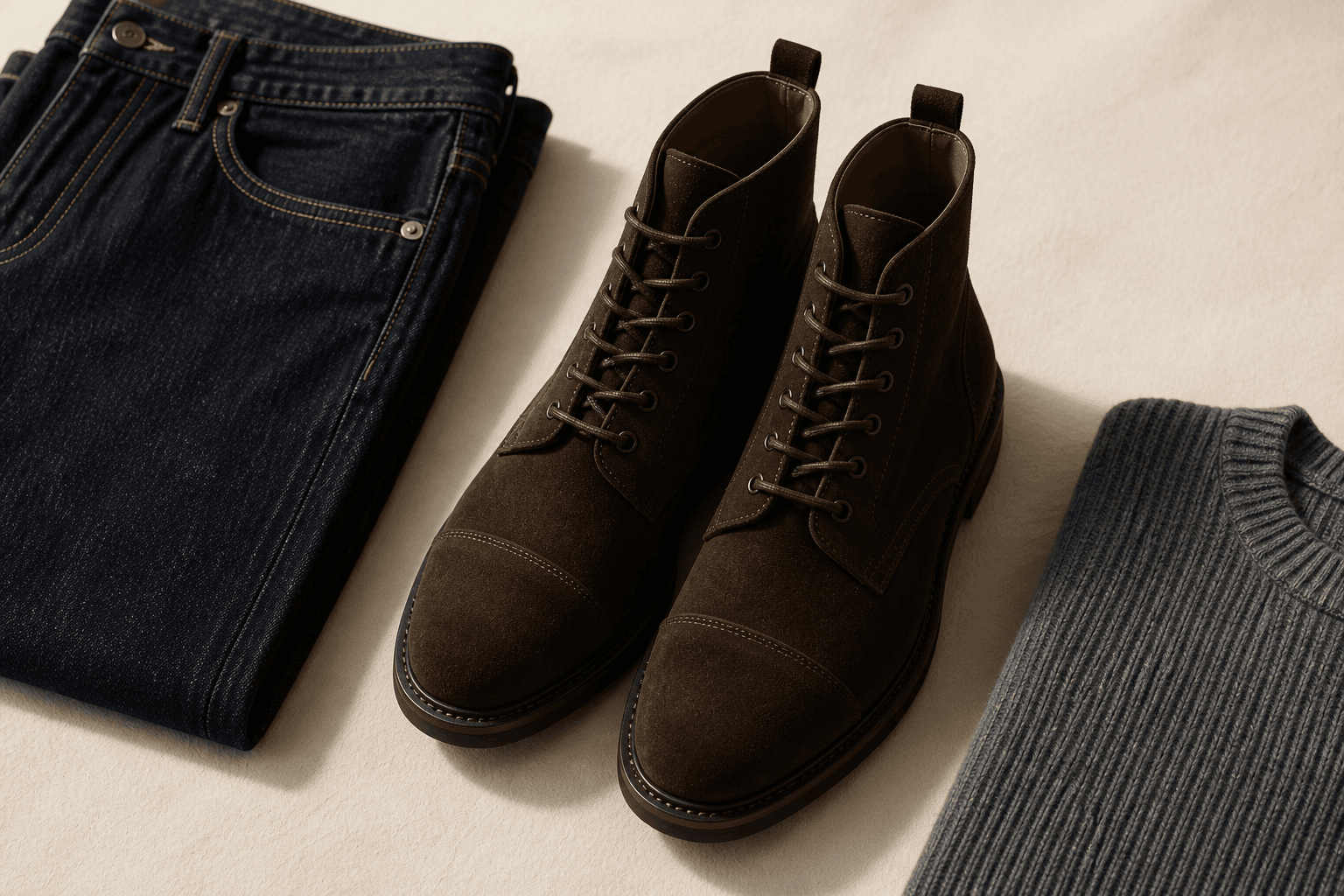
A simple boot gives the capsule weight. Chelsea boots, lace-up service boots, or suede desert boots all work, depending on whether your style leans sleek, rugged, or soft casual.
A Real Coat
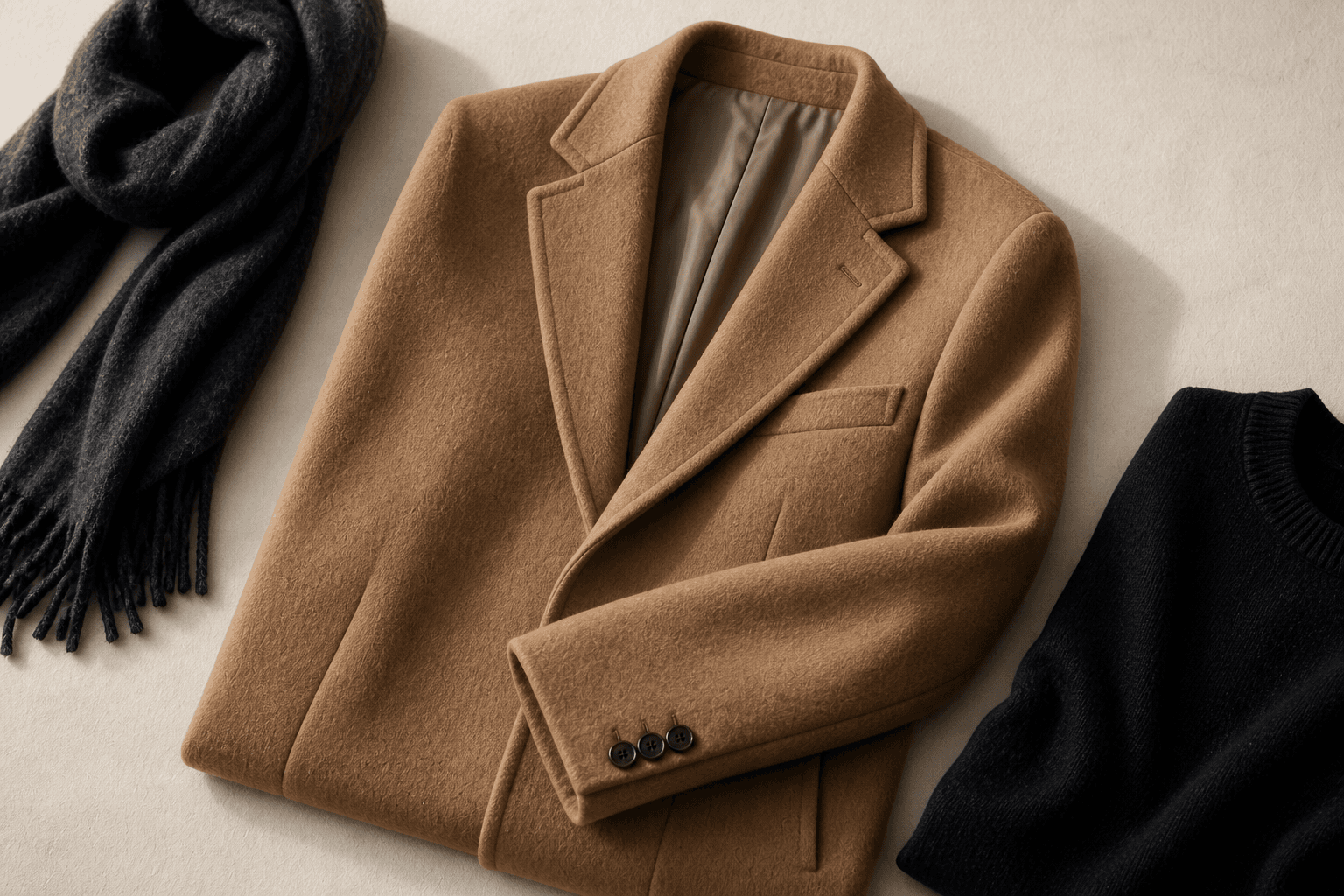
For cold weather, a capsule needs outerwear that does not ruin every outfit. A wool overcoat, parka, topcoat, or insulated jacket should be chosen based on climate first, then silhouette.
Accessories That Finish, Not Distract
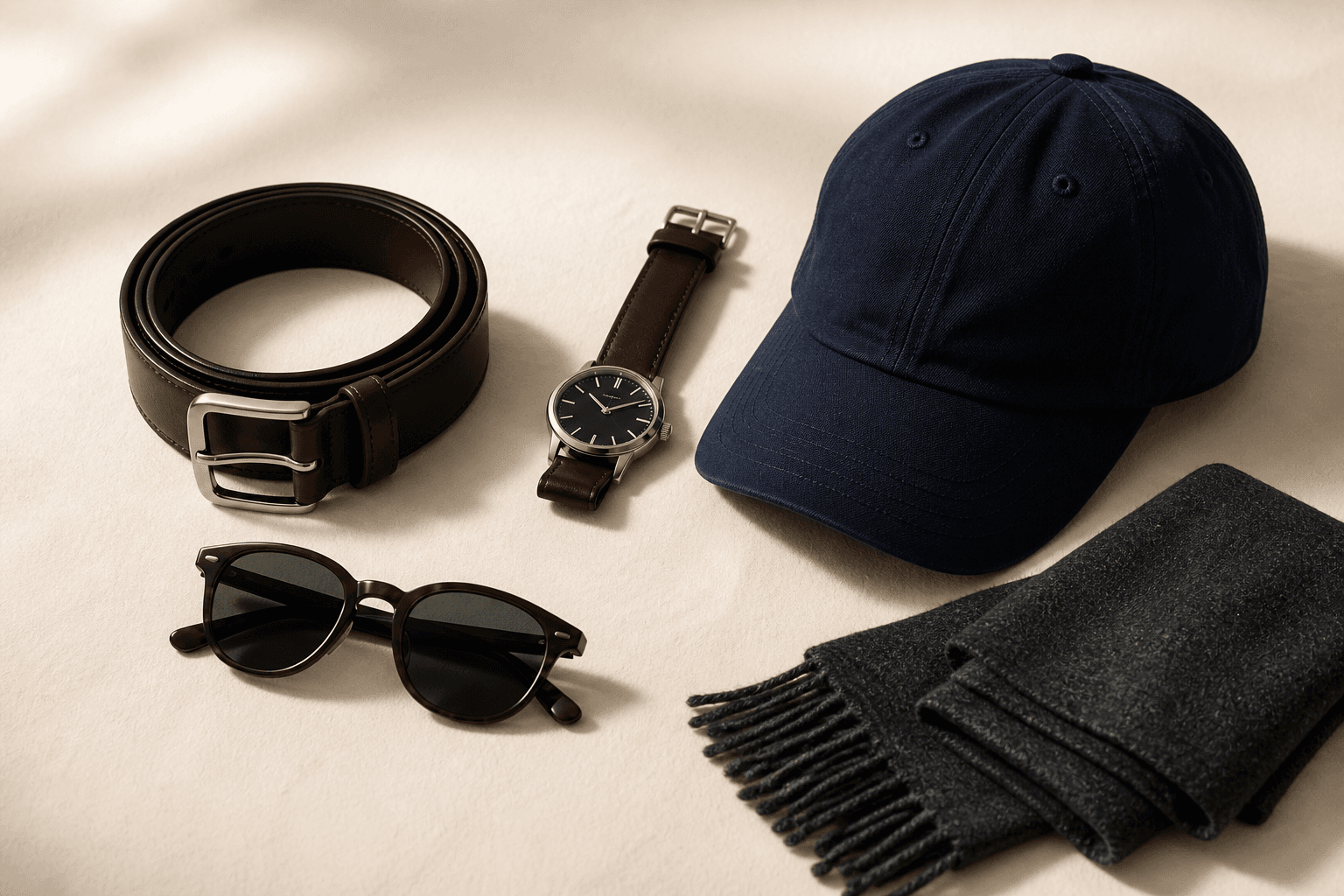
A belt, watch, cap, scarf, sunglasses, and simple bag can make a small wardrobe feel complete. The rule is restraint: accessories should clarify the outfit’s direction, not compete with every other piece.
The Outfit Formulas
Use these as templates, not uniforms. Swap colors and materials based on your wardrobe, but keep the underlying proportion logic intact.
Casual Daytime
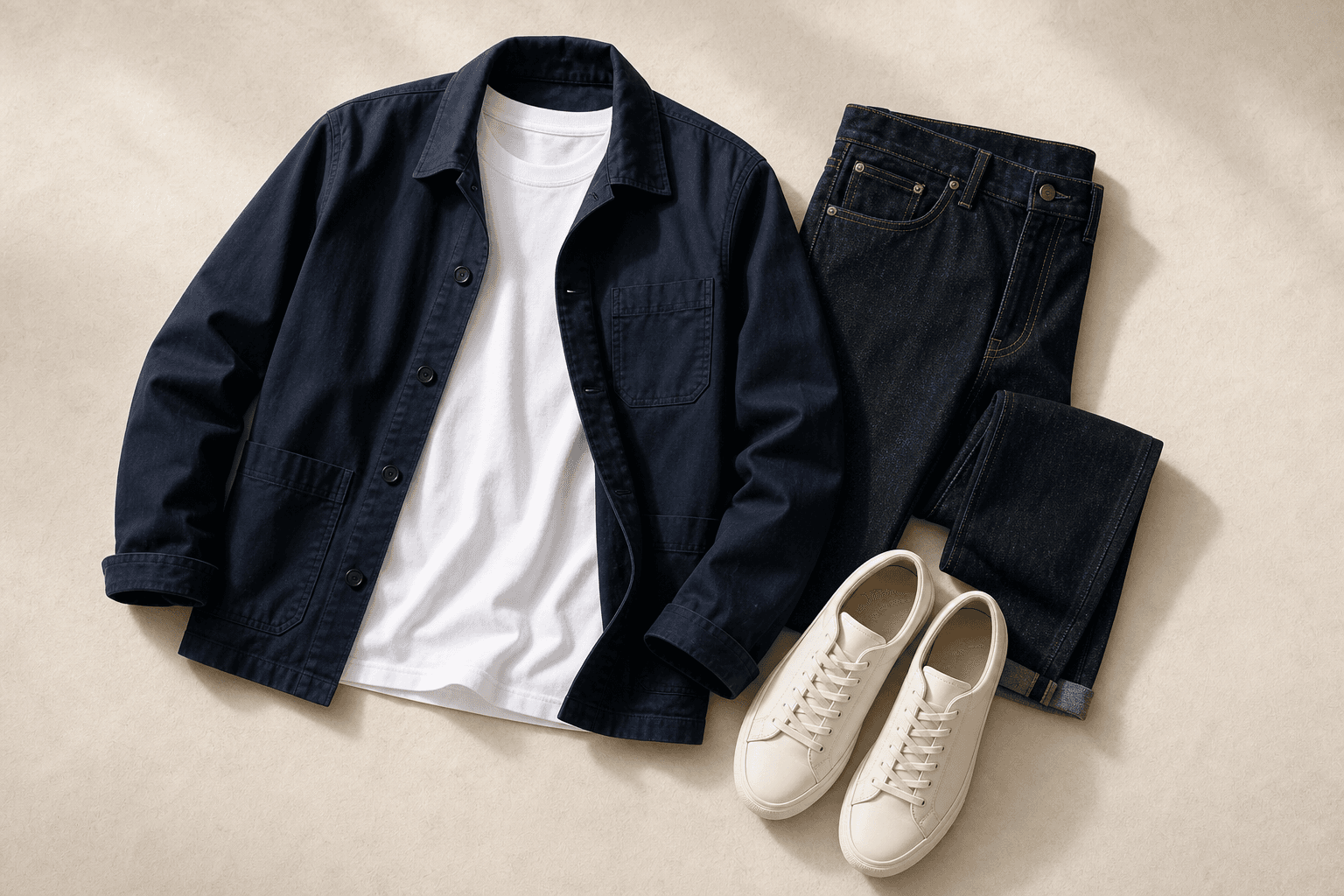
Why it works: simple base, structured top layer, clean footwear. The chore jacket keeps the tee-and-jeans combination from looking unfinished.
Formula: white tee + straight dark jeans + chore jacket + white sneakers
Casual Daytime, Warmer Weather
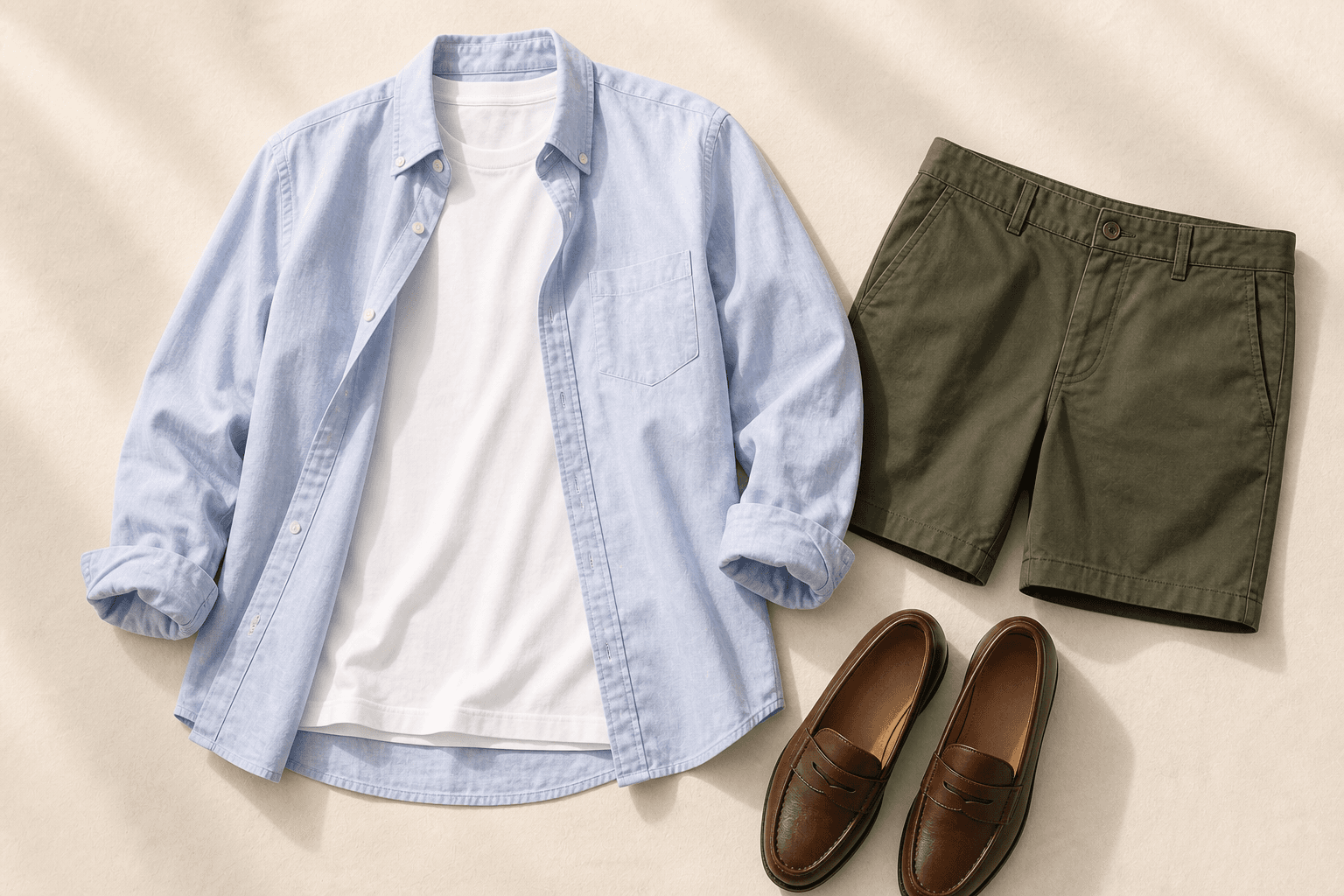
Why it works: the open shirt gives dimension without heat. Loafers make shorts look more intentional; canvas sneakers keep it more casual.
Formula: camp collar shirt or oxford worn open + white tee + cotton shorts + loafers or canvas sneakers
Work-Appropriate Without Looking Corporate
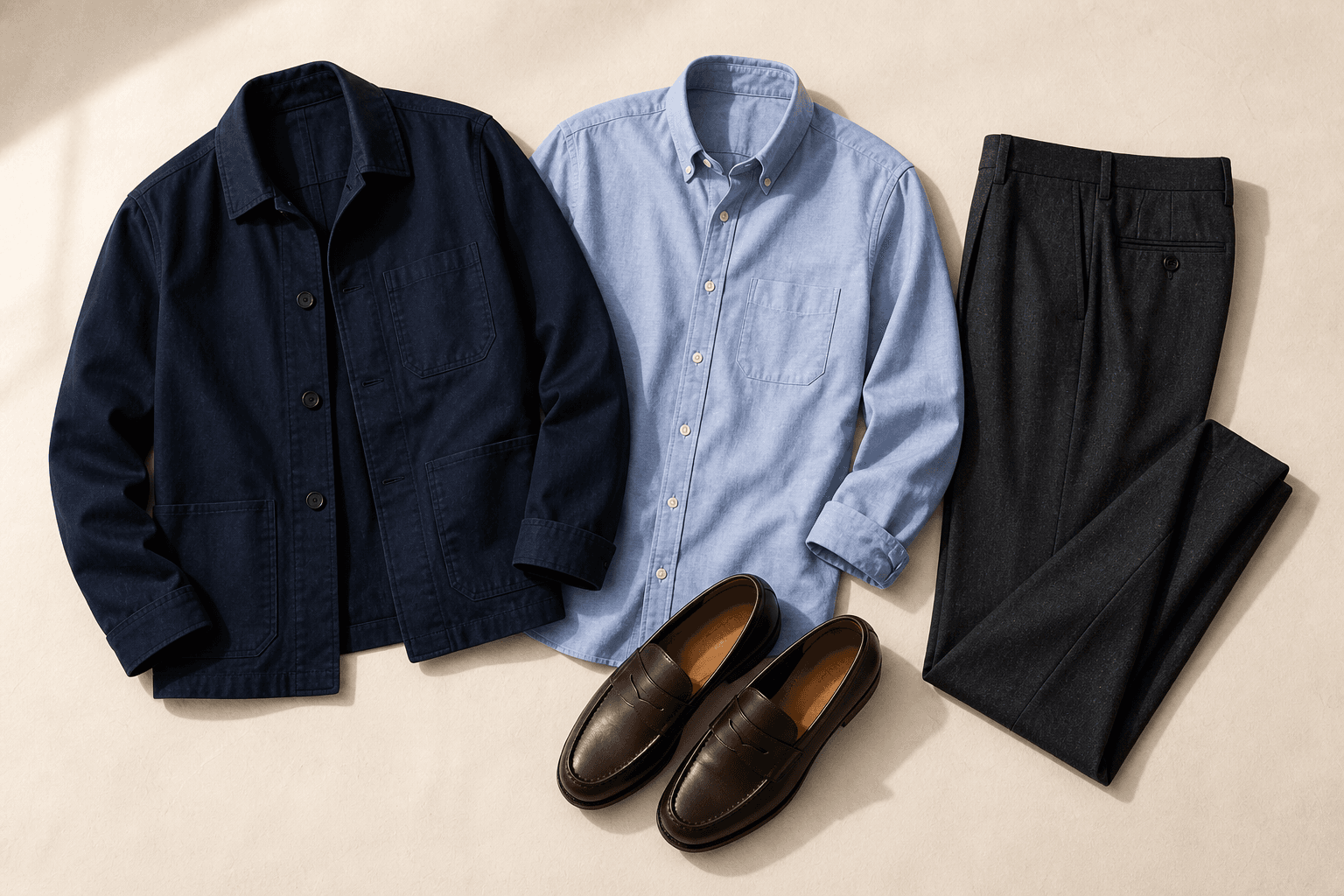
Why it works: the shirt and trousers carry the formality, while the jacket choice keeps it modern. This is better for many hybrid offices than a stiff blazer and slim chinos.
Formula: blue oxford + relaxed wool trousers + loafers + chore jacket or unstructured blazer
Travel or Walking-Heavy Day
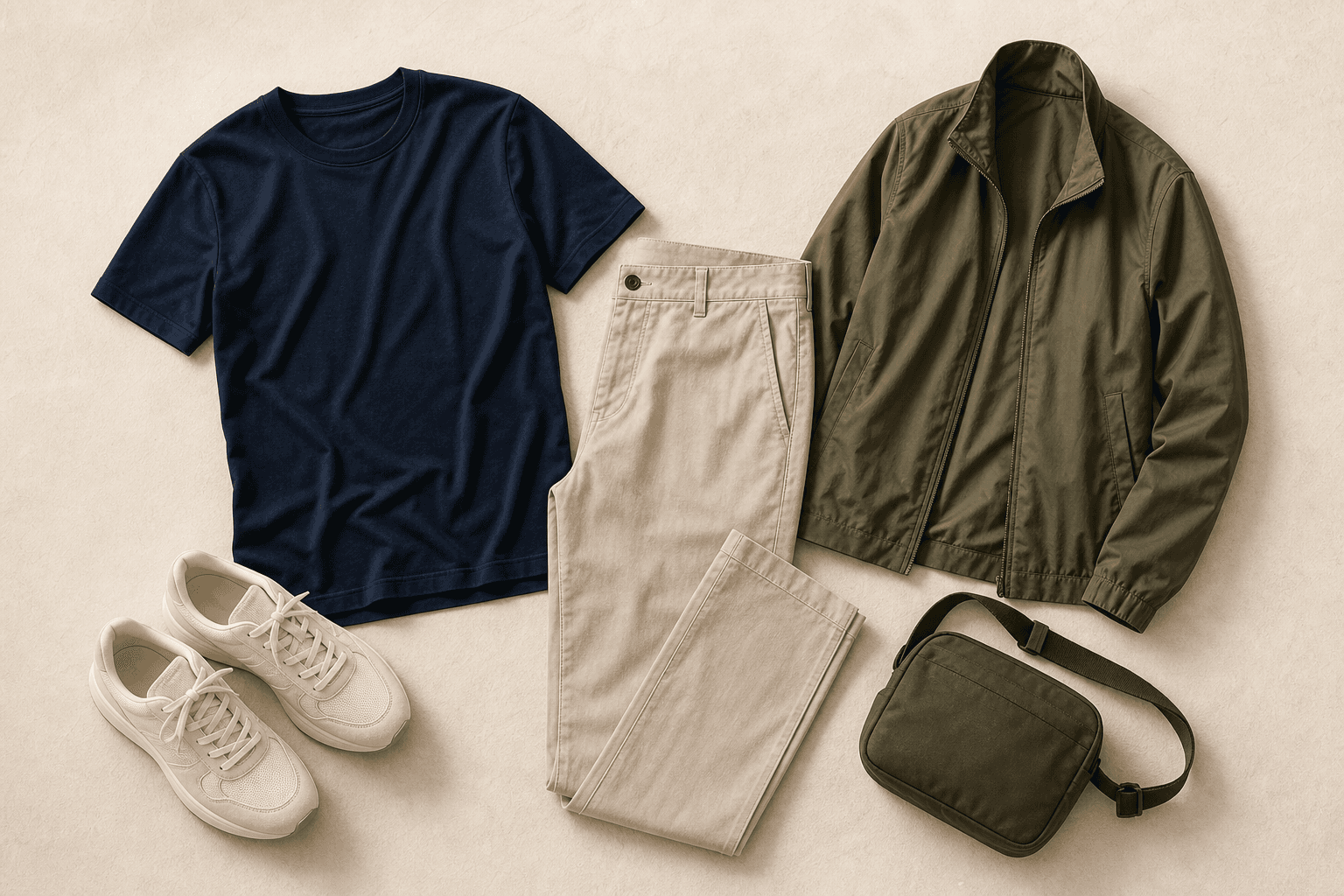
Why it works: breathable top, flexible pants, layer for temperature shifts, and shoes that can handle distance. Travel style fails when the outfit only works standing still.
Formula: merino tee or oxford + relaxed chinos + lightweight jacket + comfortable sneakers
Date Dinner
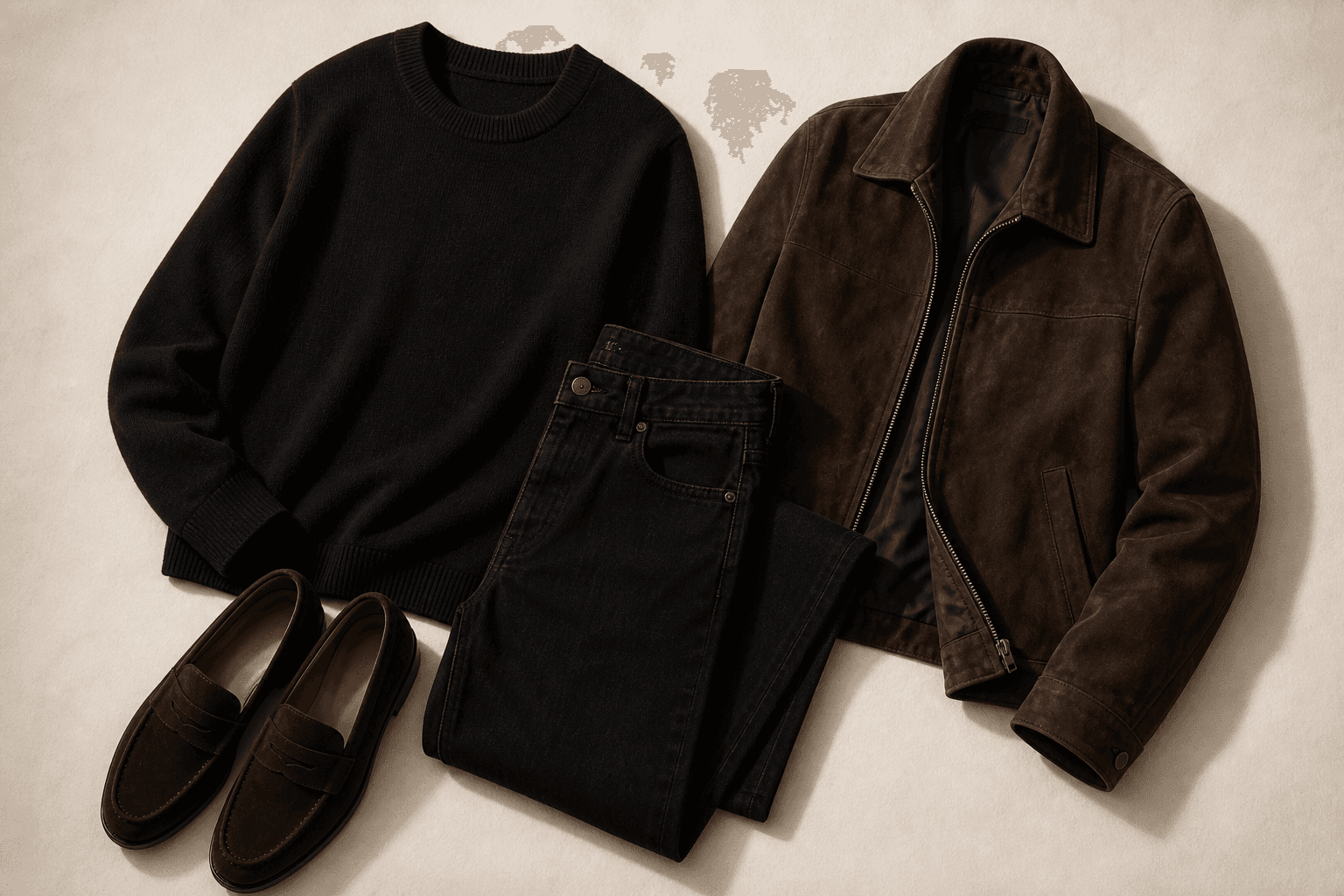
Why it works: dark tonal base, soft texture, and sharper footwear. It reads considered without looking dressed for a boardroom.
Formula: dark knit + straight black jeans + suede jacket or wool coat + loafers or boots
Rain or Bad Weather
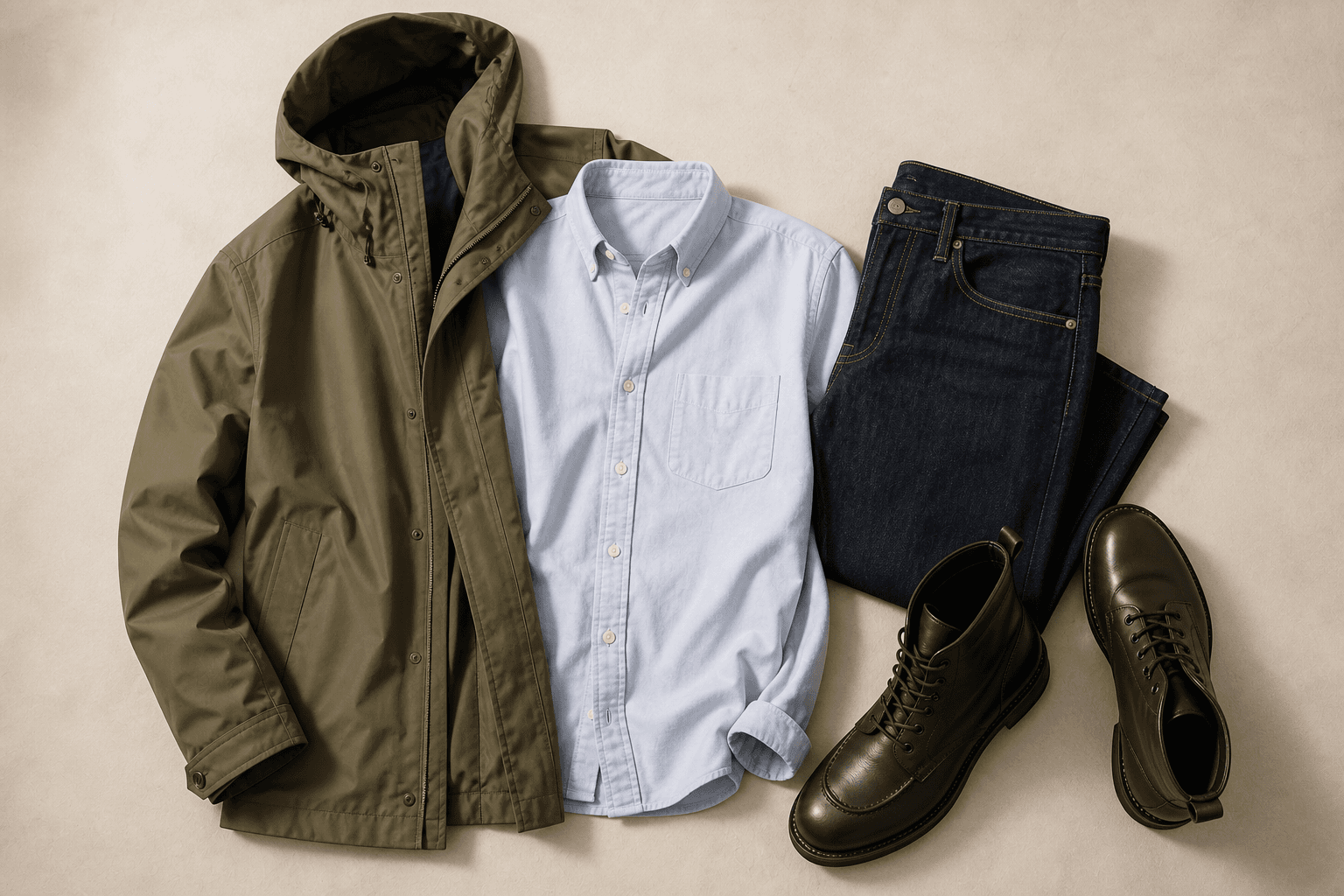
Why it works: the outerwear is functional, but the clean pants and boots keep the outfit from becoming purely technical. Avoid gym sneakers in heavy rain unless the whole outfit is intentionally sporty.
Formula: oxford or knit + straight jeans or chinos + rain shell or mac coat + leather boots
Elevated Version Using One Premium Piece
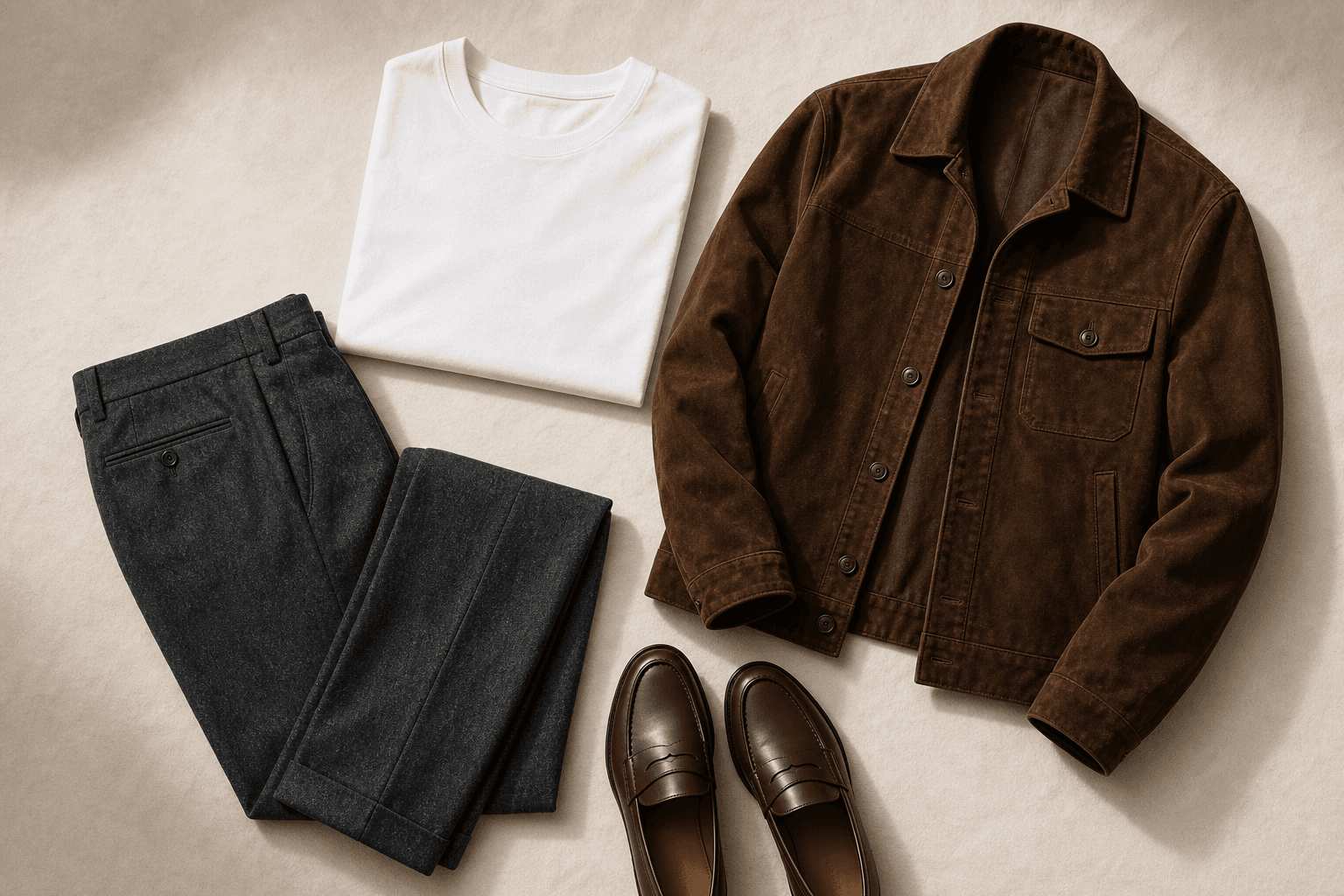
Why it works: the premium piece does the visual work, so the rest of the outfit can stay quiet. This is the cleanest way to make a capsule feel expensive without overbuilding it.
Formula: white tee + wool trousers + loafers + suede or leather jacket
Budget Version Using Existing Basics
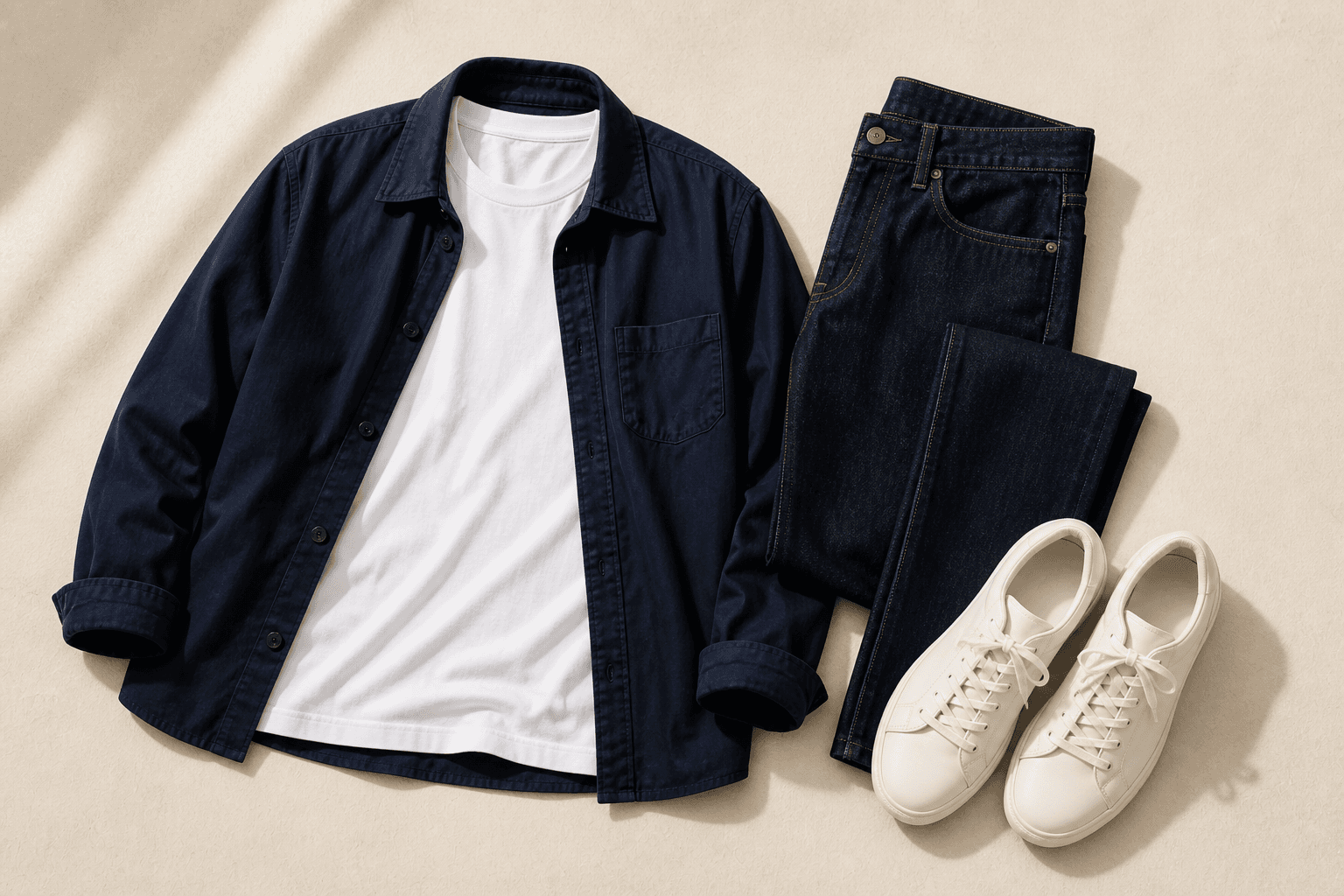
Why it works: a capsule starts with editing, not buying. Remove the warped tee, the jeans with the bad break, and the jacket that does not layer. Keep the pieces that create clean lines.
Formula: best-fitting tee + cleanest jeans + simple jacket + clean sneakers
The “Wrong but Interesting” Twist
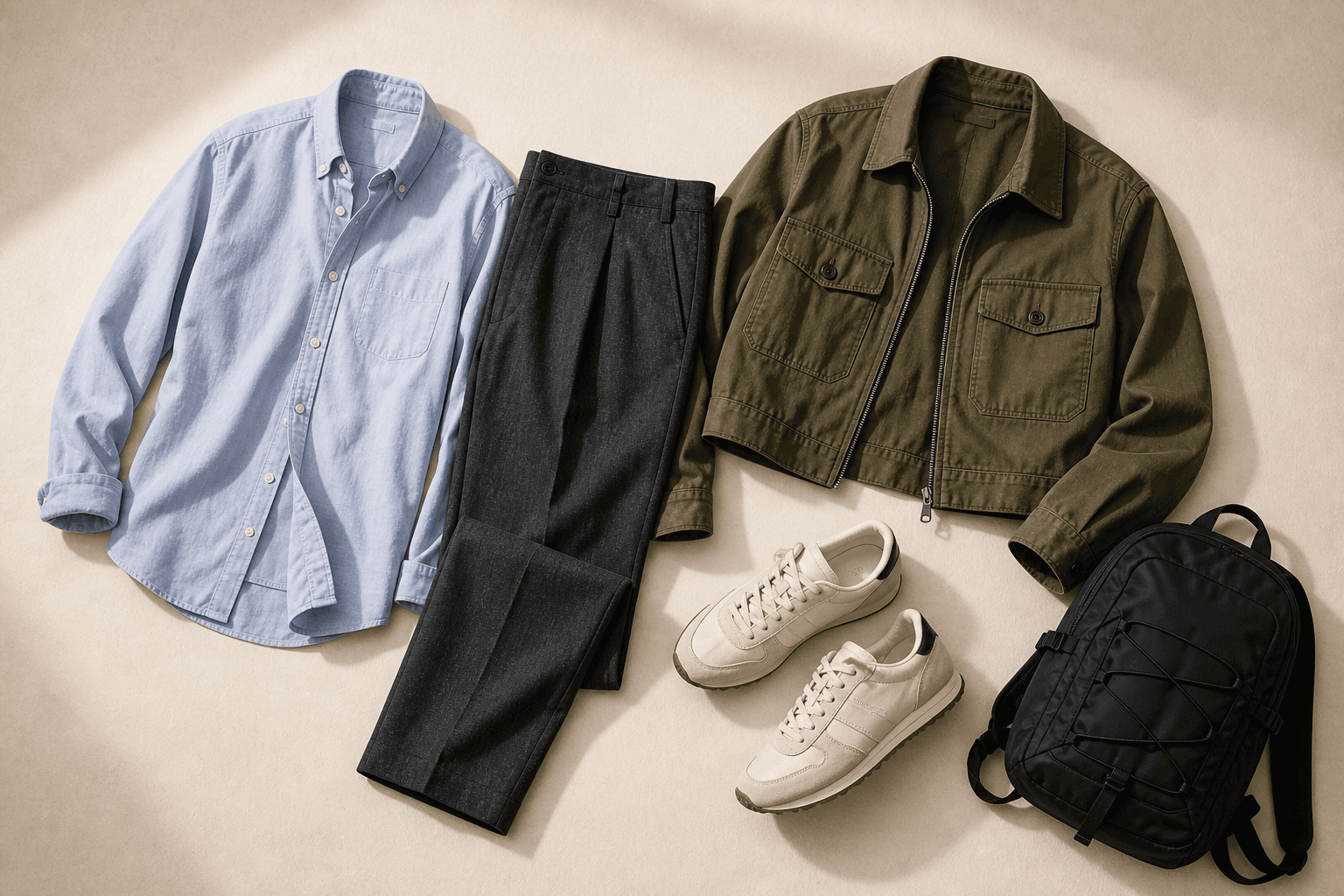
Why it works: the technical and casual pieces interrupt the traditional shirt-and-trouser base. The trick is keeping colors controlled so the clash feels intentional rather than random.
Formula: oxford shirt + wool trousers + technical backpack + retro sneakers + cropped utility jacket
Color Logic: Keep the Palette Boring Enough to Work
A men’s capsule wardrobe does not need to be colorless. It needs a hierarchy.
Base Neutrals
These should be most of the wardrobe:
- White
- Black
- Navy
- Charcoal
- Grey
- Stone
- Cream
- Dark indigo
Secondary Colors
These add warmth and depth without making outfits harder:
- Olive
- Brown
- Tobacco
- Camel
- Burgundy
- Faded blue
Accent Colors
Use sparingly:
- Red
- Cobalt
- Yellow
- Bright green
- Strong pattern
The simplest rule: keep the main outfit in two or three quiet colors, then use texture or footwear for interest. A navy chore jacket, white tee, dark jeans, and brown loafers is not visually loud, but it works because the colors are stable and the materials do different jobs.
Texture Logic: This Is What Keeps Basics From Looking Flat
A capsule made only of smooth cotton basics looks thin. Texture gives a small wardrobe depth.
Use contrast:
- Smooth tee + rough denim
- Oxford cloth + wool trousers
- Suede jacket + black jeans
- Cotton twill overshirt + merino knit
- Leather loafers + washed chinos
- Wool coat + ribbed scarf
Quality, cloth, proportion, and craft are the difference between ordinary basics and clothes with visual substance.
Fit and Proportion Rules
Fit matters more in a capsule because you repeat pieces more often. If one item fits poorly, it damages multiple outfits.
Tops
- T-shirts should skim the torso without clinging.
- Oxfords should have enough room through the chest to sit cleanly when open or tucked.
- Sweaters should end around the hip, not halfway down the thigh.
- Overshirts should be roomy enough to layer over a tee or knit.
Pants
- Straight fits are usually more versatile than skinny fits.
- Relaxed does not mean sloppy; the waist and rise still matter.
- The hem should relate to the shoe. Loafers often work with a slight crop or minimal break. Boots can handle a fuller break.
- Avoid pants that only work with one shoe.
Outerwear
- Cropped jackets work well with straight or relaxed pants.
- Longer coats work best when they have enough shoulder structure and clean drape.
- A coat should fit over your actual winter layers, not just a T-shirt in a fitting room.
Footwear Relationship
Footwear changes the whole capsule.
- Sneakers make trousers casual.
- Loafers make denim sharper.
- Boots give simple outfits weight.
- Sandals require the rest of the outfit to look deliberate.
- Dress shoes usually need enough formality above them to make sense.
Common Mistakes
Mistake 1: Buying Only Basics
Basics are not automatically stylish. A closet full of plain tees, slim chinos, and white sneakers can look anonymous. Add texture, better outerwear, stronger footwear, and one or two personal signatures.
Mistake 2: Confusing Minimal With Bland
Minimal style still needs proportion. If every piece is plain, close-fitting, and smooth, there is nothing for the eye to read.
Mistake 3: Ignoring Climate
A capsule built for internet aesthetics will fail in real weather. If you live somewhere humid, linen, cotton, open weaves, and washable layers matter. If you live somewhere cold, your coat and boots are not accessories; they are the outfit for half the year.
Mistake 4: Buying for Imaginary Occasions
Do not build a capsule around rare events. Start with the situations you actually face: commute, office, gym-adjacent errands, dinners, dates, travel, rain, heat, cold.
Mistake 5: Over-Correcting Into Costume
A capsule can lean rugged, preppy, minimal, streetwear, or classic. The mistake is buying every signal at once. One chore jacket is useful. Chore jacket plus work boots plus raw denim plus bandana plus heritage vest can become cosplay fast.
How to Start With the Closet You Already Own
Do not start by shopping. Start by sorting.
Step 1: Pull Your Best-Fitting Pieces
Ignore brand and price. Pull the clothes that fit best and make you feel most like yourself.
Step 2: Group by Color
Separate into neutrals, secondary colors, accents, and hard-to-style pieces. If one item only works with one other item, it is not a capsule piece.
Step 3: Build Three Reliable Outfits
Make one casual outfit, one work-appropriate outfit, and one dinner outfit. If you cannot do that, identify the missing bridge piece: usually footwear, outerwear, or pants.
Step 4: Upgrade the Highest-Leverage Gap
Most men do not need five new shirts. They need one better pair of pants, one better jacket, or one pair of shoes that connects casual and polished outfits.
Step 5: Add Personality Last
Once the base works, add the piece that makes it yours: a vintage watch, suede jacket, unusual loafer, washed cap, textured cardigan, western belt, or stronger color.
FAQ
How many pieces should be in a men’s capsule wardrobe?
A practical men’s capsule usually starts around 25–40 pieces, excluding underwear and workout-only clothing. The exact number matters less than whether the pieces combine into outfits for your real life: casual days, work, travel, dates, weather, and seasonal needs.
What colors are best for a men’s capsule wardrobe?
Start with white, navy, black, grey, stone, cream, dark indigo, brown, and olive. These colors mix easily without making every outfit look identical. Add stronger colors only after the base works.
Are jeans part of a capsule wardrobe?
Yes. Dark straight jeans are one of the most useful pieces in a men’s capsule because they work with tees, oxfords, knits, chore jackets, loafers, sneakers, and boots.
What shoes should be in a men’s capsule wardrobe?
Start with clean sneakers, loafers, and boots. Sneakers handle casual and travel outfits. Loafers bridge casual and smart casual. Boots add weight and work well in cooler weather.
How do I make a capsule wardrobe less boring?
Use texture, proportion, and footwear. A small wardrobe becomes more interesting when it mixes oxford cloth, denim, suede, wool, leather, ribbed knit, and cotton twill. Add one personal signature after the basics work.