Monochrome Dressing for Men: How to Wear One Color Without Looking Flat
How to wear one color with texture, tone, fit, and footwear so the outfit looks intentional instead of flat.
The point of monochrome dressing
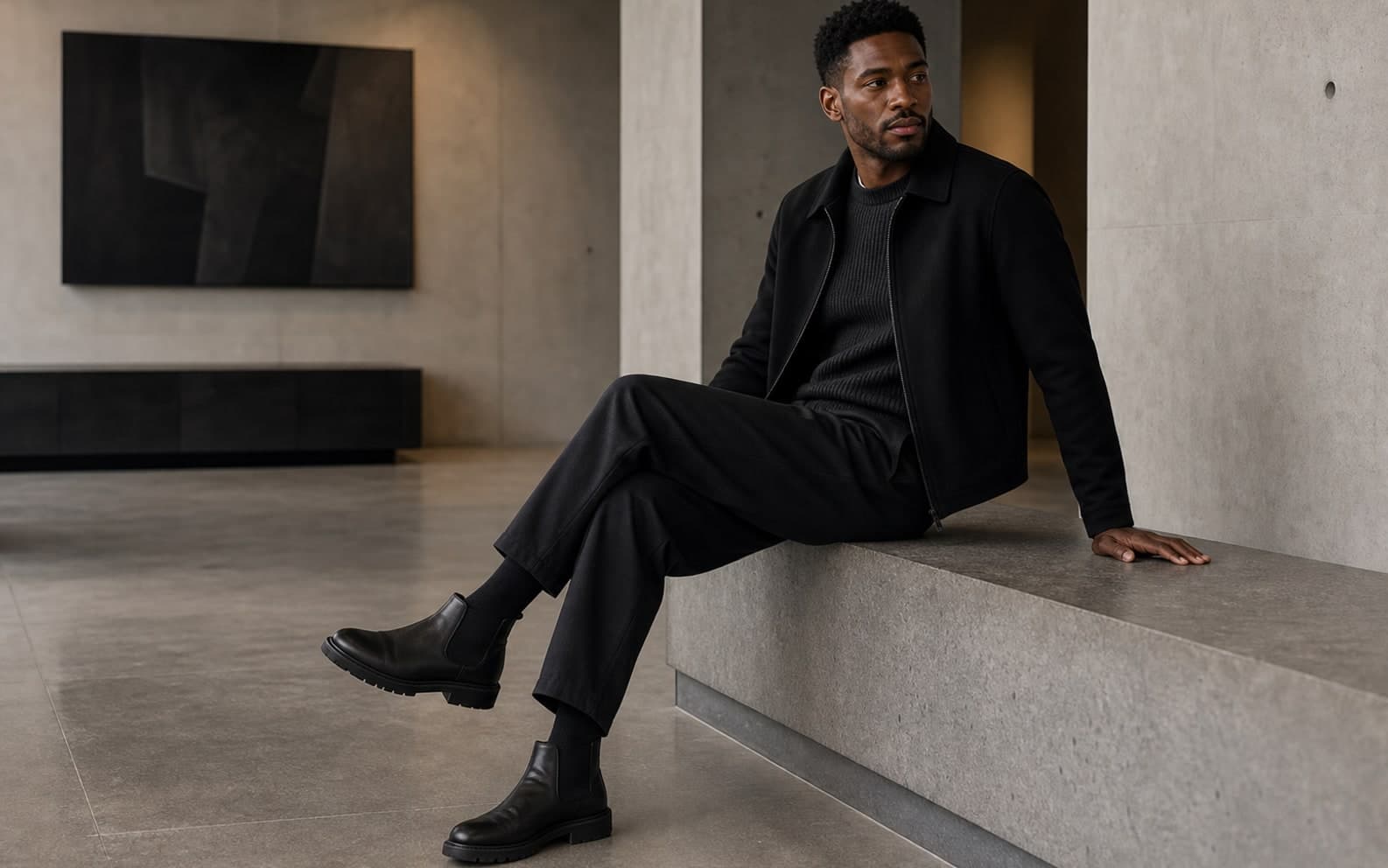
Monochrome dressing is not just wearing all black because it feels safe. Done well, it is a controlled style system: one color family, several tones, clear texture differences, and a silhouette that looks intentional from head to toe.
The mistake is treating monochrome as a shortcut. One black T-shirt, black jeans, and black sneakers can look fine, but it can also look lazy if every surface has the same weight and finish. A strong monochrome outfit works because the eye still has something to read: matte cotton against polished leather, faded denim against smooth wool, charcoal against heather grey, navy against ink, suede against twill.
The practical upside is obvious. Monochrome makes getting dressed faster, keeps outfits visually clean, and works across casual, office, travel, and night-out settings. The tradeoff is that it gives you fewer places to hide. Fit, fabric, proportion, and shoe choice matter more.
This guide is not about dressing like a fashion editor in an empty gallery. It is about building monochrome outfits that look sharp in real life.
What monochrome dressing is — and what it is not
| It is: | It is not: |
|---|---|
|
|
The best color families for men
Black
Black is the easiest entry point and the easiest to overdo. It works best when at least one piece has texture or shape: washed denim, leather, suede, wool, ribbed knitwear, a technical shell, or a cropped jacket.
Best uses: night out, dinner, concerts, travel, casual winter outfits.
Risk: looking severe, flat, or like every piece came from a different black dye lot by accident.
Fix: mix washed black with true black, or add dark charcoal to soften the outfit.
Grey
Grey is the most underrated monochrome color family because it handles texture well. Heather grey cotton, charcoal wool, faded grey denim, and black leather can sit together naturally.
Best uses: casual day, office, travel, transitional weather.
Risk: looking like gym clothes if the outfit is all sweatshirt fleece.
Fix: anchor grey with structured trousers, a wool overshirt, a topcoat, leather shoes, or a clean sneaker.
Navy and indigo
Navy is the most versatile monochrome base for men who do not want the severity of black. It pairs naturally with denim and works across casual and work settings.
Best uses: work office, smart casual, travel, casual dinner.
Risk: looking like a uniform if everything is smooth navy.
Fix: vary fabric: oxford cloth, denim, wool, suede, twill.
Brown and earth tones
Brown monochrome is more advanced but rewarding. Chocolate, tobacco, taupe, stone, camel, and espresso can look rich without being loud.
Best uses: fall/winter, date night, smart casual, rugged workwear.
Risk: looking muddy.
Fix: keep contrast between light and dark tones, and use clean footwear.
Cream, ivory, and stone
Light monochrome is high-risk, high-reward. It looks expensive when the fabrics have weight and the fit is relaxed but clean.
Best uses: spring/summer, resort, daytime events, warm-weather dinners.
Risk: looking precious or impractical.
Fix: use natural textures: linen, cotton twill, canvas, suede, open-weave knits.
Core pieces for a monochrome wardrobe
You do not need a separate wardrobe for monochrome dressing. You need a few pieces that can anchor tonal outfits across different events.
Washed black jeans
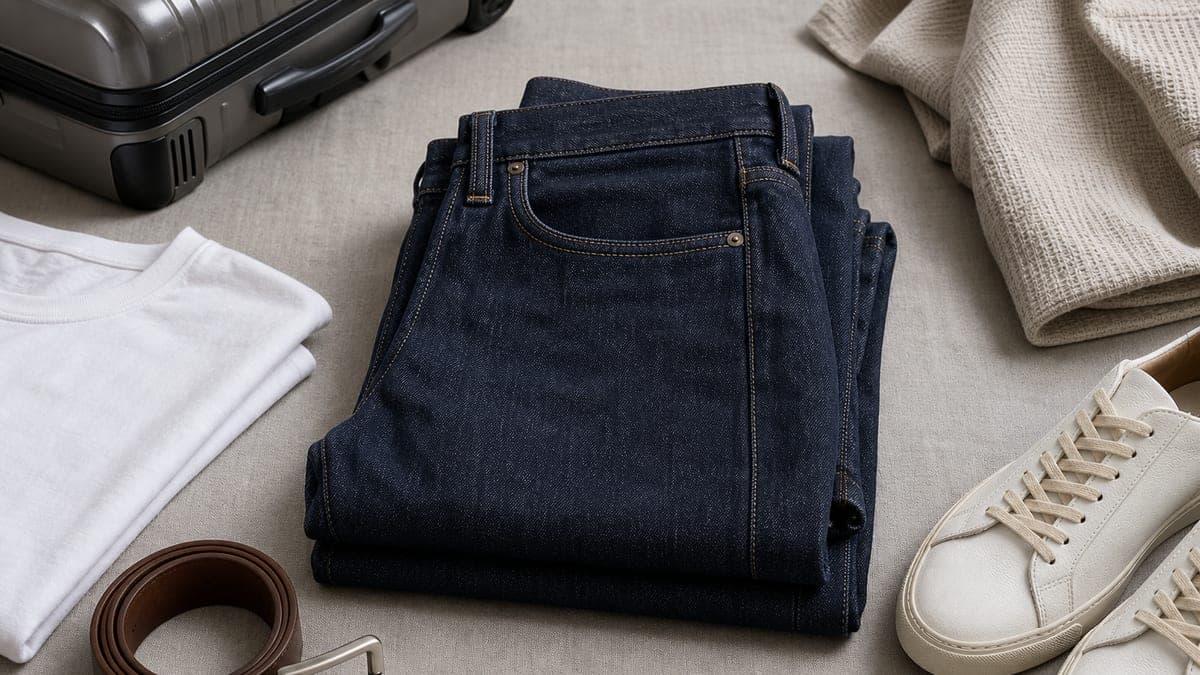
Washed black denim is easier than pitch-black denim because it already creates tonal variation. It works with black knits, leather jackets, charcoal coats, grey tees, and black boots.
Category: Bottom
Type: Straight-leg jeans
Color family: Black / charcoal
Best events: Casual day, night out, date dinner
Charcoal wool trousers
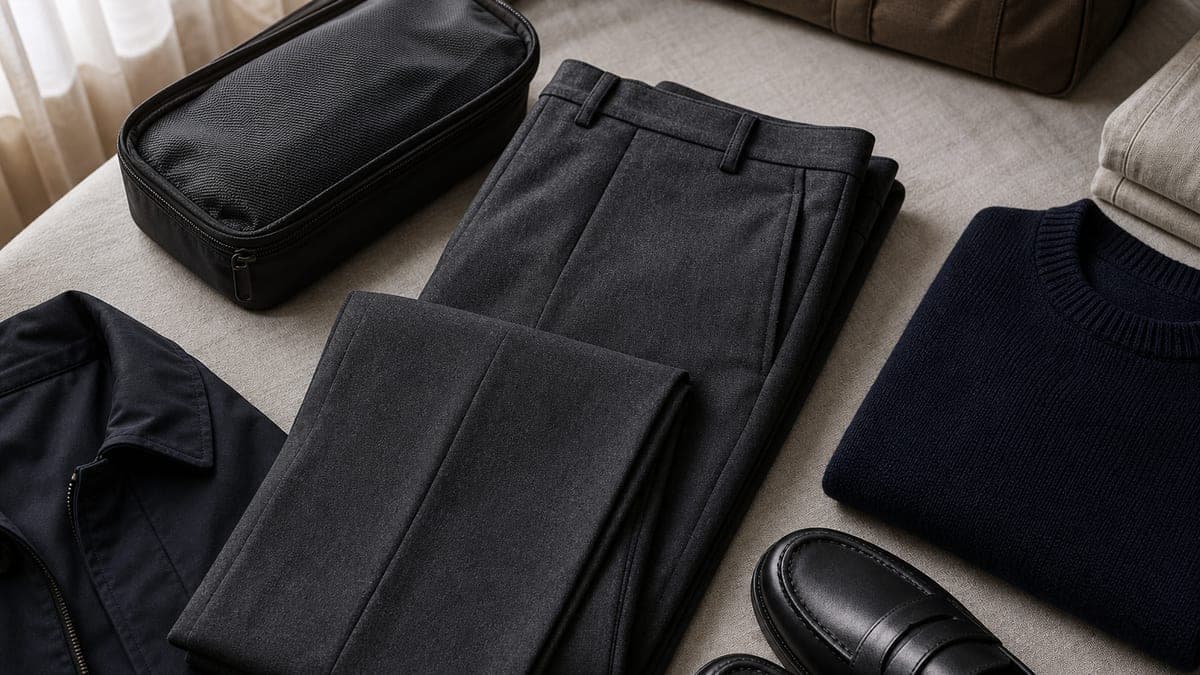
These are the bridge between casual and tailored monochrome. They make a tonal outfit look intentional instead of improvised.
Category: Bottom
Fit: Straight, relaxed, or gently tapered
Material: Wool or wool blend
Best events: Work office, dinner, smart casual
Black leather or suede boots
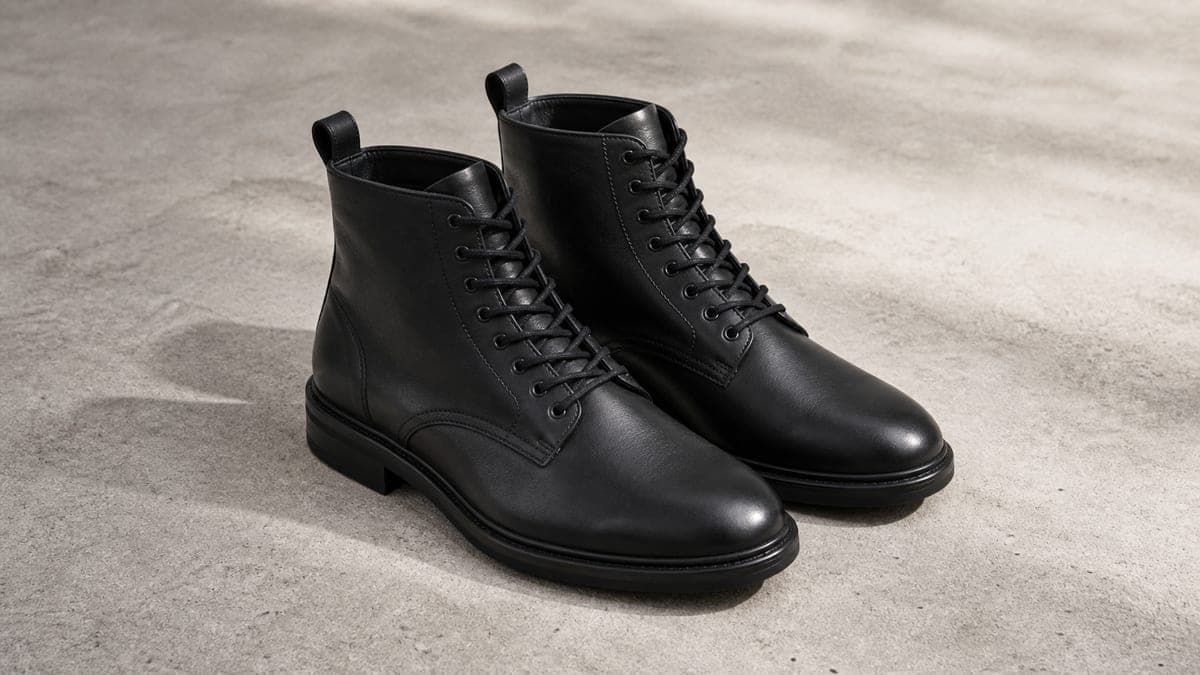
Footwear decides whether a monochrome outfit looks casual, polished, or sloppy. Boots add structure without requiring formal tailoring.
Category: Footwear
Type: Chelsea, side-zip, derby, or plain-toe boots
Texture: Smooth, grained, or nap
Best events: Night out, date dinner, cold weather
Dark overshirt
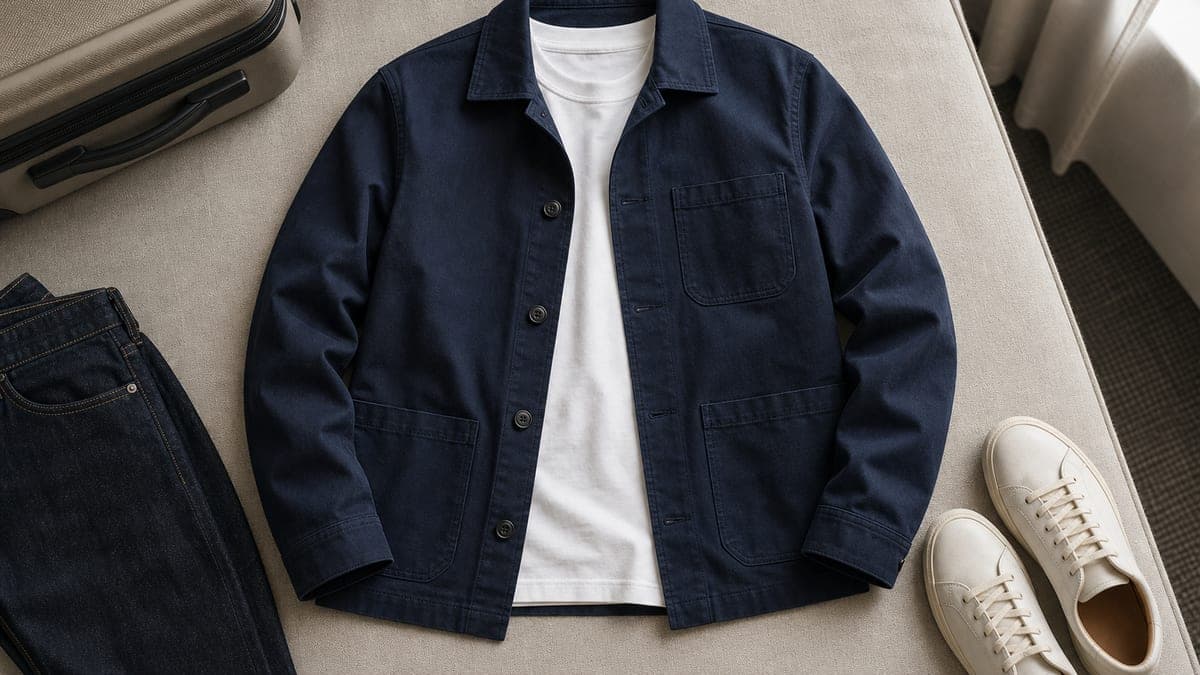
An overshirt gives monochrome outfits an easy second layer. It also creates shape without looking formal.
Category: Top / outerwear
Material: Cotton twill, wool, corduroy, moleskin
Texture: Brushed, ribbed, twill, soft nap
Best events: Casual day, travel, work office
Tonal knitwear
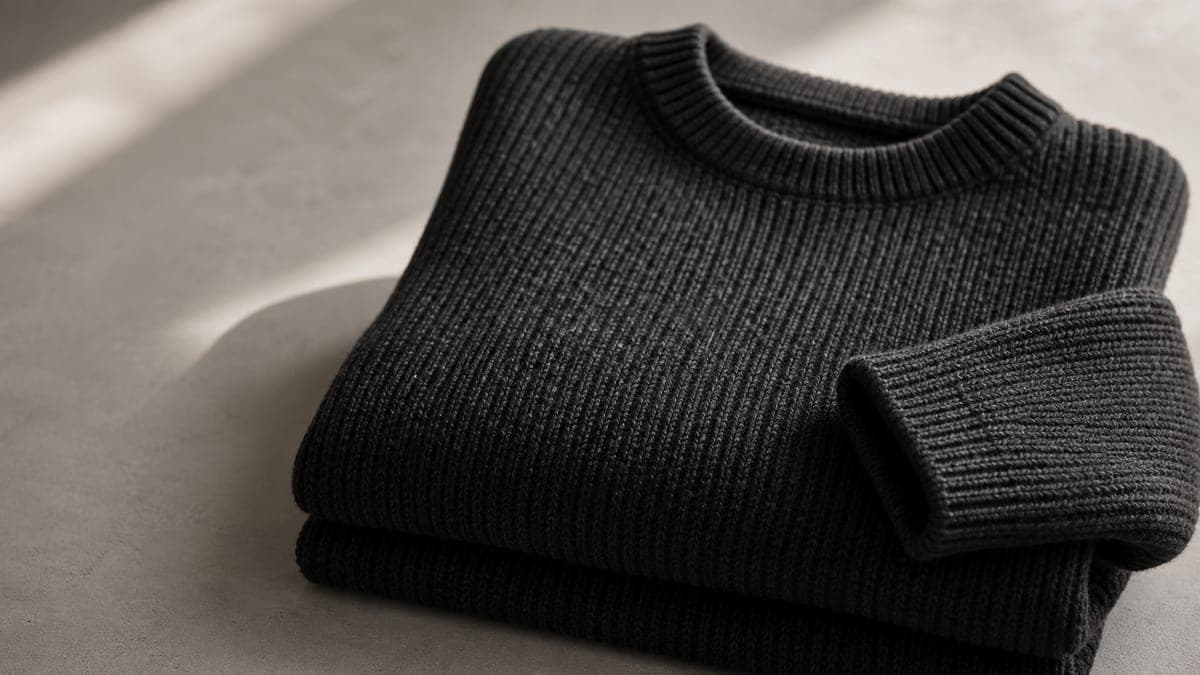
Knitwear is one of the easiest ways to keep a tonal outfit from looking dead. Ribbing, weight, and drape do a lot of visual work.
Category: Top
Type: Crewneck sweater, ribbed knit, cardigan, knit polo
Material: Cotton, merino, cashmere, wool blend
Best events: Work office, date dinner, travel
Cropped jacket
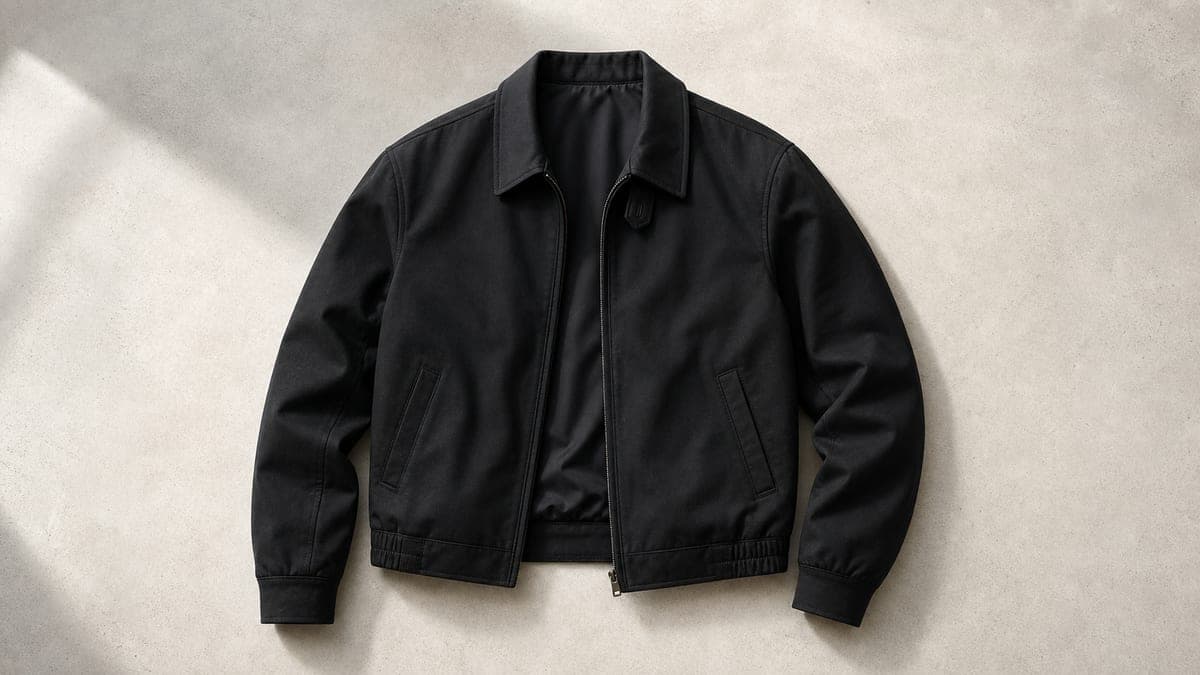
A cropped jacket gives monochrome outfits proportion. It shortens the torso visually and makes relaxed trousers or straight denim look deliberate.
Category: Outerwear
Type: Harrington, bomber, chore jacket, leather jacket, denim jacket
Fit: Cropped or hip-length
Best events: Casual day, night out, date dinner
Clean tonal sneakers
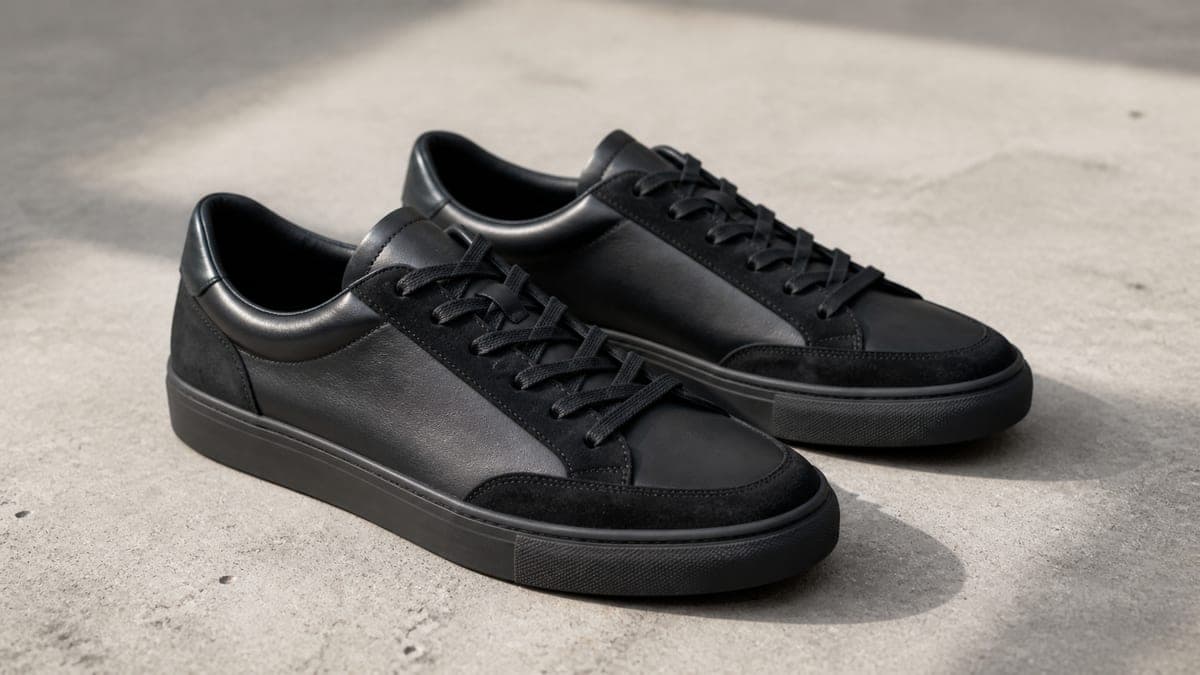
Sneakers work best when they either blend into the outfit or add controlled contrast through material. A black leather sneaker is sharper; a grey suede runner is softer.
Category: Footwear
Type: Minimal sneaker, retro runner, low-profile sneaker
Material: Leather, suede, mesh, canvas
Best events: Casual day, travel, smart casual
One dark coat
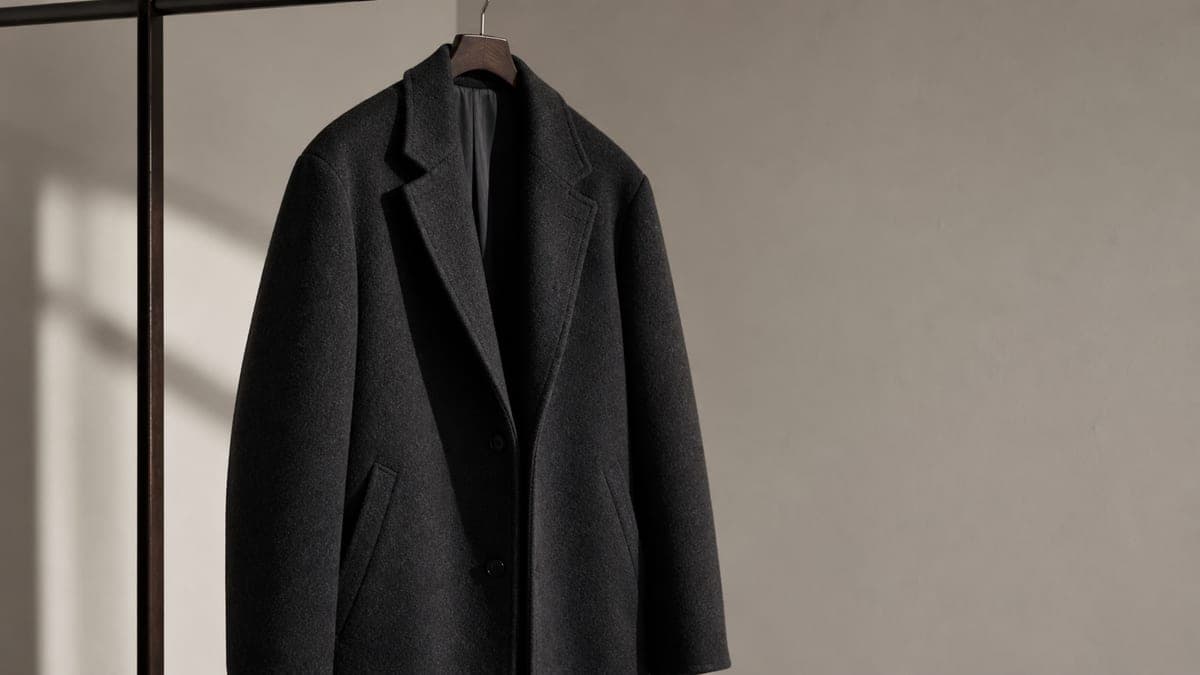
Outerwear can make or ruin monochrome. A strong coat turns simple layers into an outfit.
Category: Outerwear
Type: Wool coat, parka, mac coat, technical shell
Fit: Roomy enough to layer
Best events: Work office, outdoor weather, travel
Outfit formulas
Use these as templates, not uniforms. Keep the color family controlled, then let texture, proportion, and footwear decide how casual or polished the outfit feels.
Casual daytime: black without trying too hard
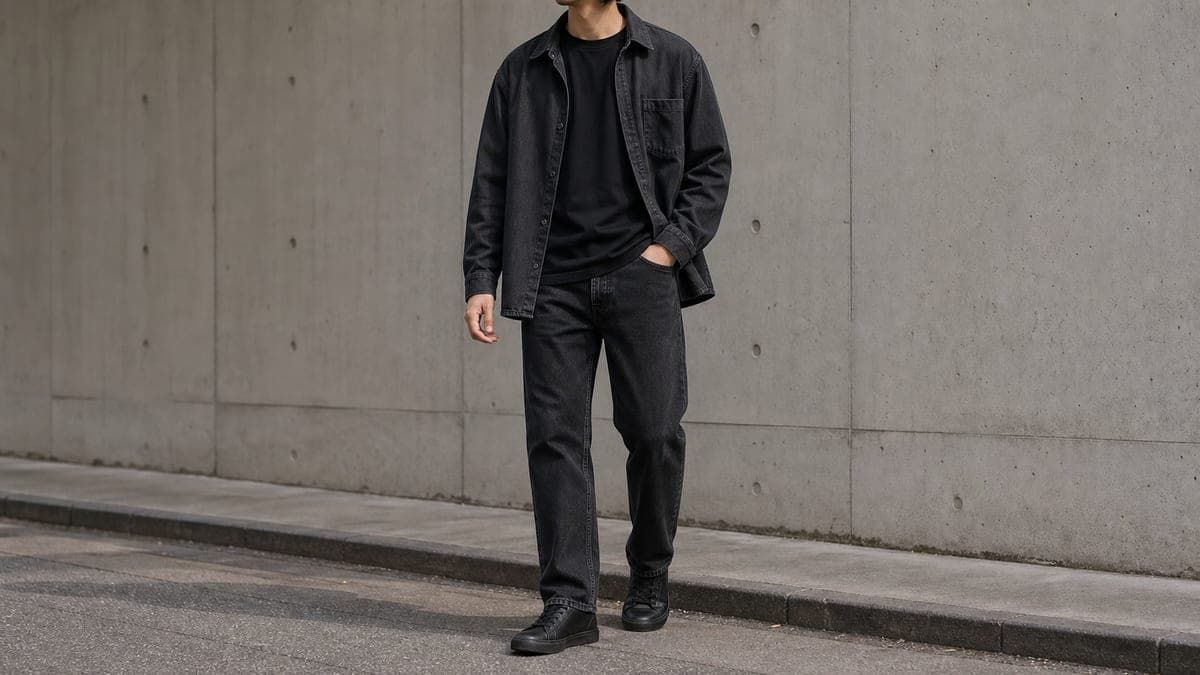
This works because the shirt and jeans are not the same black. The washed denim breaks up the outfit, while the overshirt adds structure. Keep the tee substantial enough that it does not look like an undershirt.
Formula: Washed black jeans + black heavyweight tee + charcoal overshirt + black sneakers
Work-appropriate: grey that does not look like sweats
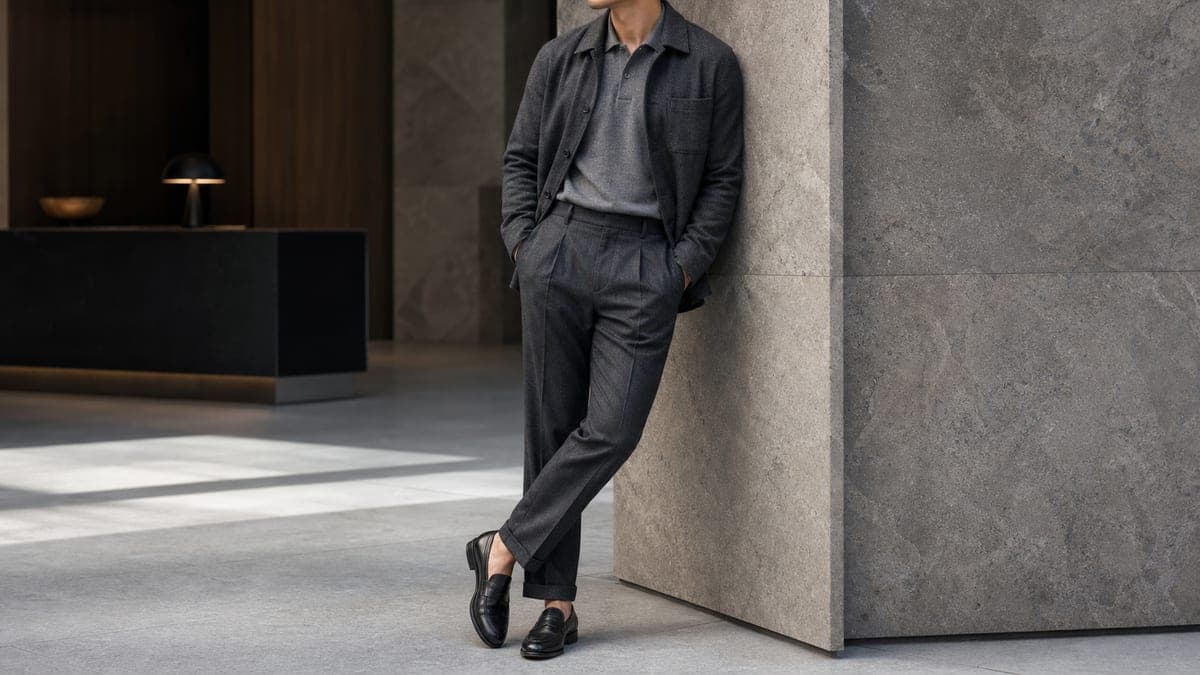
The key is fabric discipline. Grey jersey and fleece can drift into gym territory. Grey wool, knit cotton, and leather look intentional.
Formula: Charcoal wool trousers + medium-grey knit polo + dark grey overshirt or blazer + black loafers
Travel: navy and indigo
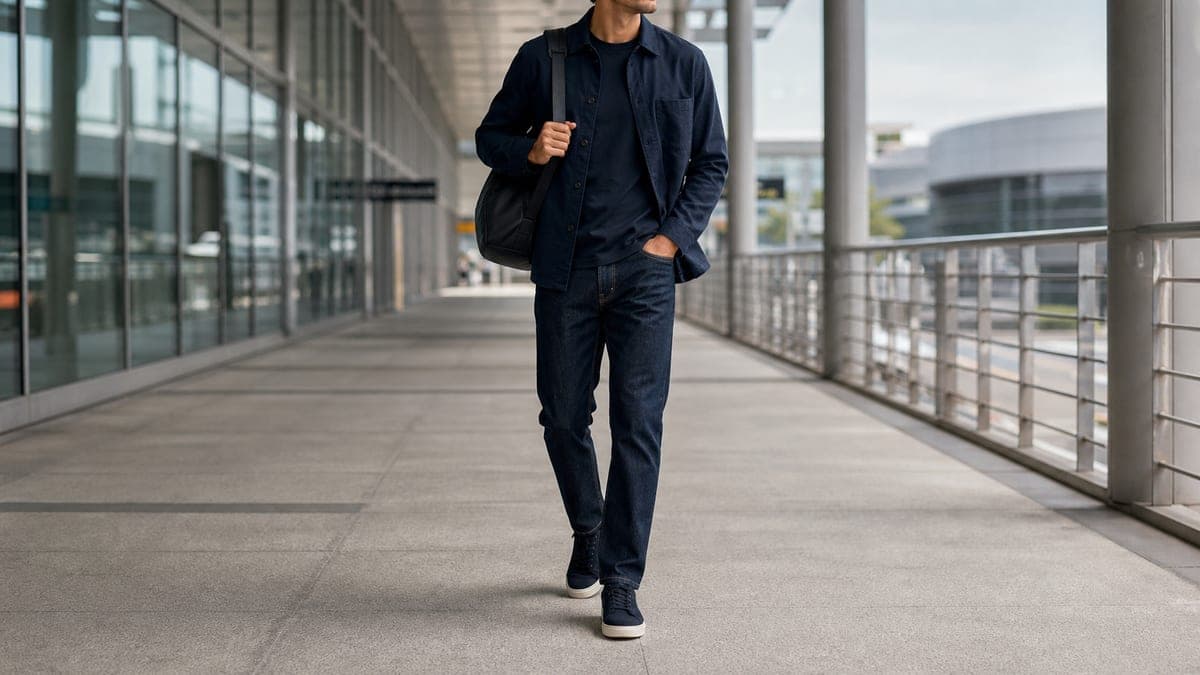
This is practical because it hides wear better than light colors and still looks composed after several hours of walking or sitting. The denim provides enough tonal variation to avoid a uniform effect.
Formula: Navy overshirt + dark indigo jeans + navy tee + dark suede sneakers
Date night: black and brown
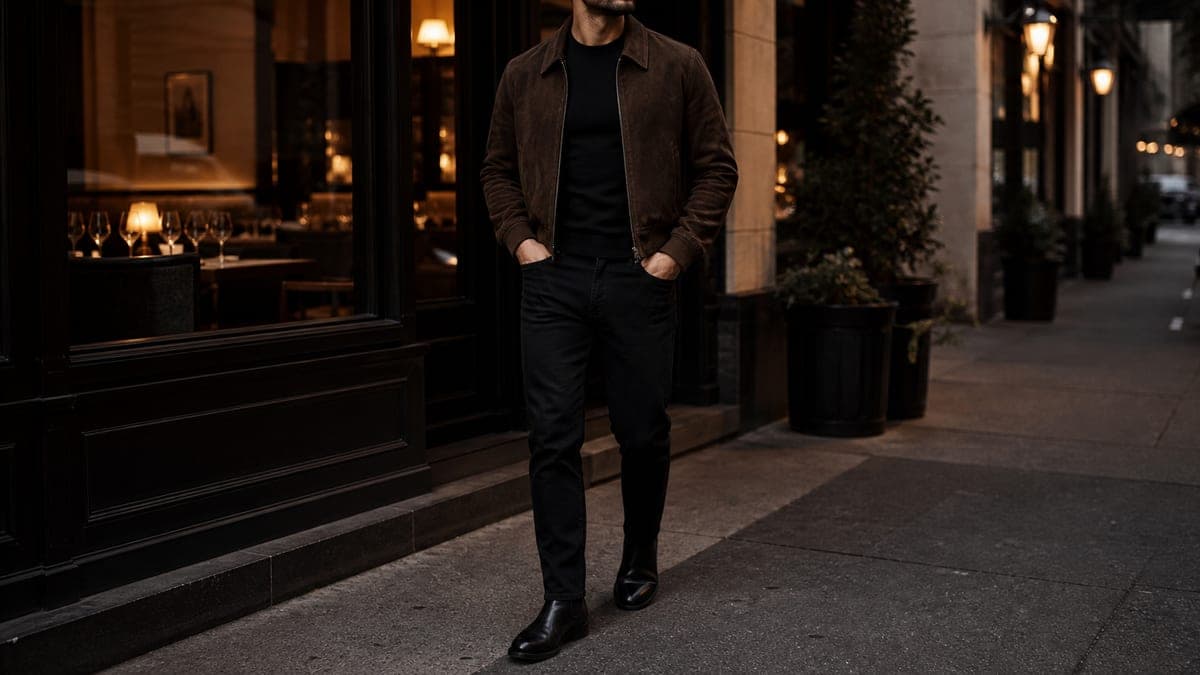
This is not pure monochrome, but it is tonal enough to function like one. The brown jacket softens the black base and makes the outfit feel warmer. Use a dark chocolate jacket, not a loud tan one.
Formula: Black jeans + black merino crewneck + dark brown suede jacket + black boots
Night out: all black with texture
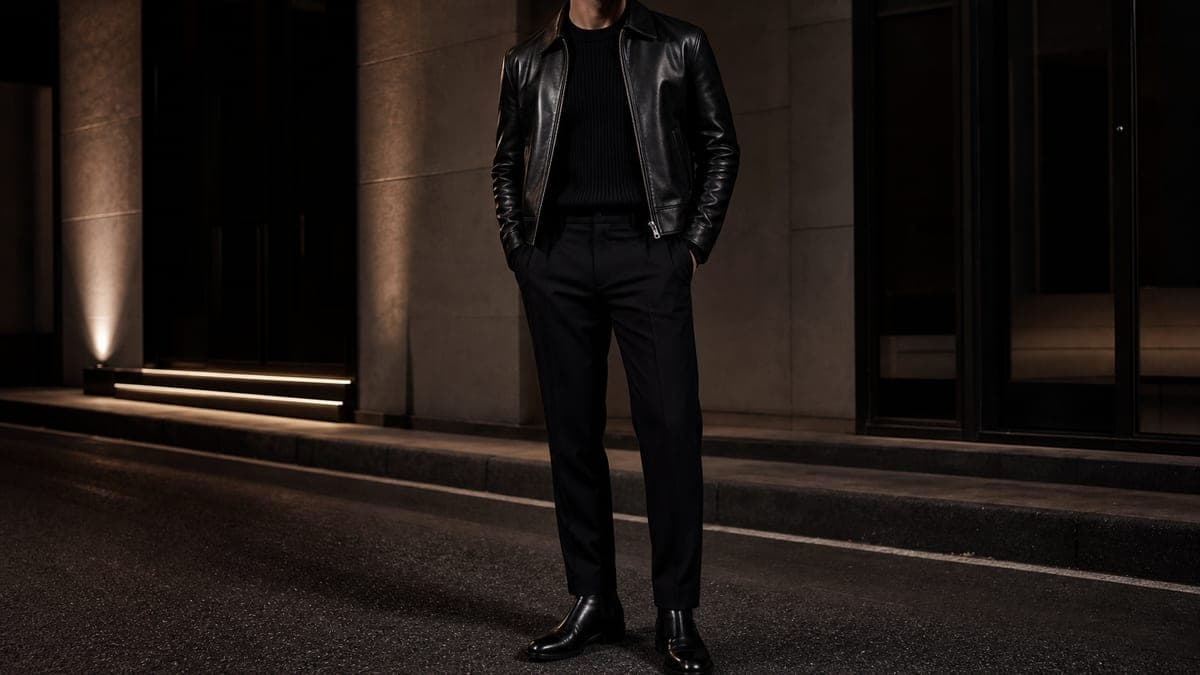
This works only if the textures are distinct. Ribbed knit, smooth leather, matte wool, and polished boots create separation. Avoid thin black jeans and a shiny black shirt unless you want the outfit to read club-costume.
Formula: Black ribbed knit + black straight trousers + black leather jacket + black boots
Weather-aware: black technical shell, grey base
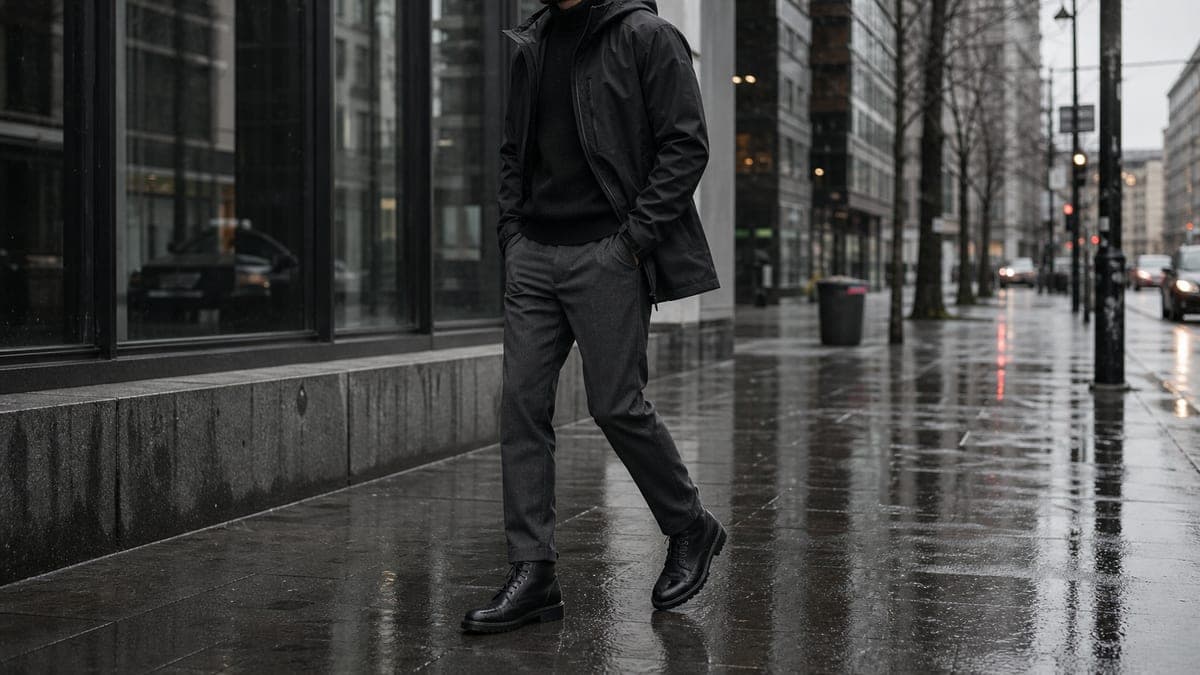
For rain or wind, monochrome is useful because technical pieces already tend to come in black, charcoal, navy, and olive. Keep the pants cleaner than hiking pants if the destination is urban.
Formula: Charcoal trousers + black thermal or knit + black waterproof shell + black waterproof boots
Summer tonal: cream and stone
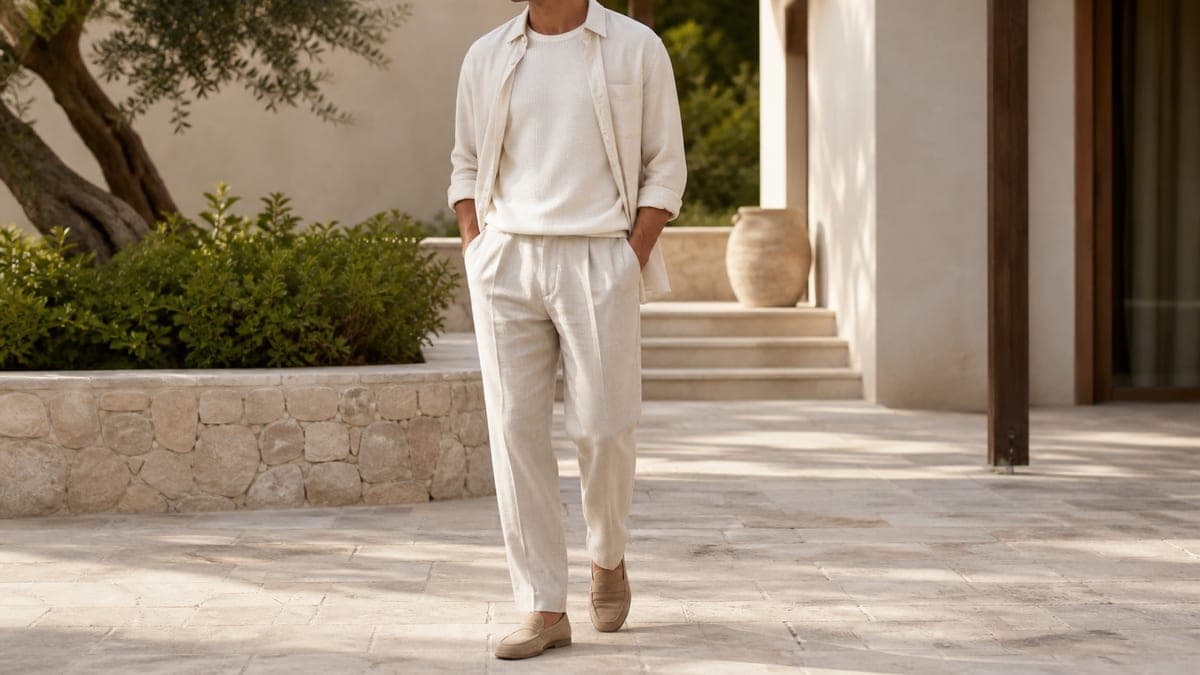
Light monochrome works best with breathable texture. Linen wrinkles; that is part of the point. The outfit should look relaxed, not sterile.
Formula: Stone linen trousers + ivory knit tee + cream overshirt + sand suede loafers
Budget version: start with what you already own
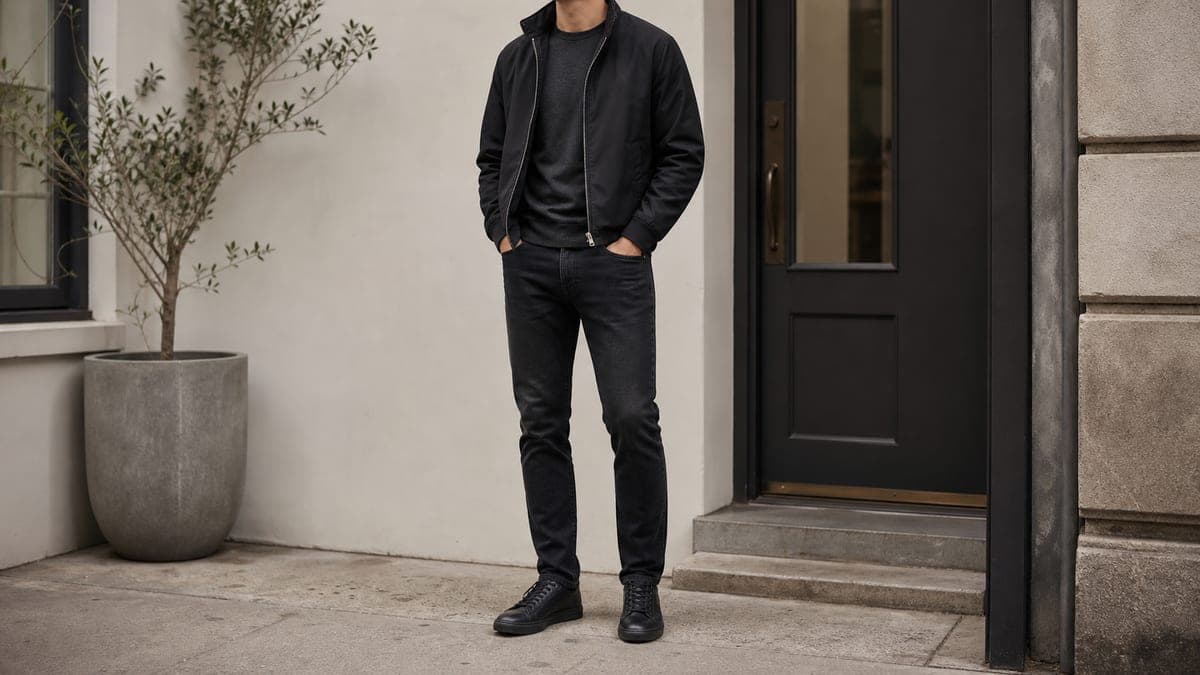
You do not need perfect tonal matching. Pick the color family where you already own the most pieces. For most men, that will be black, grey, navy, or olive. Then make one upgrade at a time.
Formula: Dark jeans + same-color tee or sweater + darker jacket + clean shoes
Upgrade order: Shoes first, outerwear second, knitwear third
The “wrong but interesting” twist
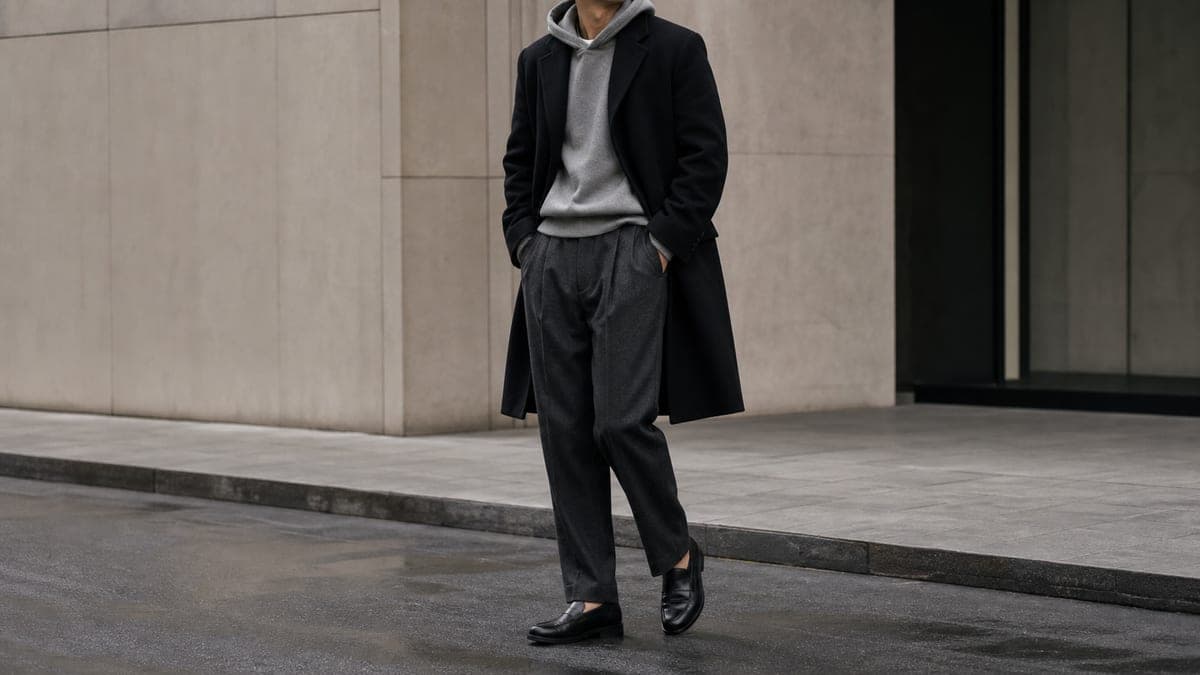
This works because the hoodie is casual, the coat is formal, and the loafers sharpen the bottom half. It should look like a controlled clash, not like you forgot your jacket. Keep the hoodie plain, dense, and clean.
Formula: Charcoal trousers + grey hoodie + black topcoat + black loafers
Color and texture logic
Monochrome works when the outfit has enough variation inside the color family. Think in layers:
Shade
Use at least two tones. Black and charcoal. Navy and indigo. Cream and stone. Brown and espresso. If every piece is the exact same color, the outfit can look like a uniform or a set.
Texture
Texture is the most important part of monochrome dressing. Use contrast:
- cotton jersey with wool
- denim with leather
- suede with twill
- ribbed knit with smooth trousers
- matte nylon with brushed fleece
- linen with canvas
The cleaner the color palette, the more texture matters.
Finish
Finish is different from texture. A black leather jacket and black wool trousers may both be smooth, but one reflects light and one absorbs it. That difference creates depth.
Weight
Do not mix heavy winter fabrics with thin summer pieces unless it is clearly transitional. A heavy black boot with lightweight linen trousers usually looks off. A dark suede loafer or minimal sneaker works better.
Fit and proportion rules
Avoid skinny-on-skinny monochrome
Slim black jeans with a tight black tee can look dated unless the whole outfit is intentionally sharp and styled. A straighter leg and slightly more relaxed top usually look more modern.
Use cropped or hip-length jackets with wider pants
A cropped jacket helps balance relaxed trousers or straight denim. Long tops over wide pants can make the outfit look heavy unless the fabric drapes well.
Let one piece create shape
In monochrome, the silhouette matters more than the color. Use one shape-defining piece:
- cropped jacket
- structured coat
- pleated trousers
- ribbed knit
- boot with a defined toe
- overshirt with chest pockets
Match footwear weight to pant shape
Wide trousers need a shoe with some presence: loafers, boots, chunky derbies, or substantial sneakers. Slim trousers need cleaner shoes. The wrong shoe can make a monochrome outfit look unfinished.
Break up the vertical block when needed
If you are wearing all black, small changes help: tuck the top, wear a belt, choose a cropped jacket, or use different textures. Otherwise the outfit can look like one long rectangle.
Common mistakes
Mistake 1: Everything is the same texture
All cotton, all fleece, or all synthetic fabric makes the outfit look flat. Add leather, wool, suede, denim, ribbing, or twill.
Mistake 2: The blacks do not relate
Black dye differences can look accidental. Washed black and true black can work. Faded brown-black next to blue-black usually looks worse. When in doubt, add charcoal as a bridge.
Mistake 3: The outfit has no silhouette
Monochrome does not automatically create style. If the clothes are shapeless, the outfit is shapeless. Fit still has to do the work.
Mistake 4: Over-accessorizing to “fix” the simplicity
A monochrome outfit does not need loud accessories. Use quiet finishing pieces: a leather belt, clean watch, textured socks, simple cap, structured bag, or subtle jewelry.
Mistake 5: Dressing too severe for the context
All black leather and boots can look strong at night. It can look too intense for a casual lunch. Adjust the fabric and shoe choice by event.
Mistake 6: Confusing minimal with boring
Minimal is not the absence of detail. It is controlled detail. Texture, proportion, and material are the details.
How to enter the look using your existing wardrobe
Start with the color family you already own most.
If your closet is mostly black
Build around washed black denim, black tees, black knitwear, black boots, and one charcoal or dark grey layer. Do not try to make every black match exactly.
If your closet is mostly navy
Use indigo denim, navy overshirts, navy tees, and dark suede sneakers. Add grey or black shoes to sharpen it.
If your closet is mostly grey
Separate gym grey from dressed grey. Sweatshirts are fine, but add wool trousers, black leather shoes, or a structured coat.
If your closet is mostly earth tones
Use brown, olive, taupe, stone, and cream. Keep shoes clean and avoid muddy mid-tones from head to toe.
First three outfits to build
- Black casual: washed black jeans + black tee + charcoal overshirt + black sneakers
- Grey smart casual: charcoal trousers + grey knit + black loafers
- Navy travel: indigo jeans + navy overshirt + navy tee + dark sneakers
FAQ
Is monochrome dressing the same as wearing all black?
No. All black is one version of monochrome, but monochrome can also mean grey, navy, brown, olive, cream, or any single color family. Tonal dressing often looks better than exact color matching because it creates depth.
How do men wear monochrome without looking boring?
Use texture, shade, and proportion. Mix denim with knitwear, wool with leather, suede with cotton, or matte nylon with fleece. A monochrome outfit needs visual contrast even when the colors are restrained.
What is the easiest monochrome outfit for men?
The easiest starting point is washed black jeans, a black or charcoal T-shirt, a charcoal overshirt, and black sneakers or boots. It is simple, but the washed denim and outer layer keep it from looking flat.
Can monochrome outfits work for the office?
Yes, especially in grey, navy, charcoal, and dark brown. Use wool trousers, knit polos, overshirts, blazers, loafers, or clean leather sneakers. Avoid making the outfit look like gymwear unless the office is very casual.
What shoes work best with monochrome outfits?
Black boots, loafers, derbies, clean leather sneakers, suede retro runners, and tonal sandals all work depending on the outfit. Match the visual weight of the shoe to the pants: wider trousers need more substantial footwear.