The Men's Footwear Hierarchy
How to choose sneakers, loafers, boots, derbies, and sandals by outfit, occasion, and proportion.
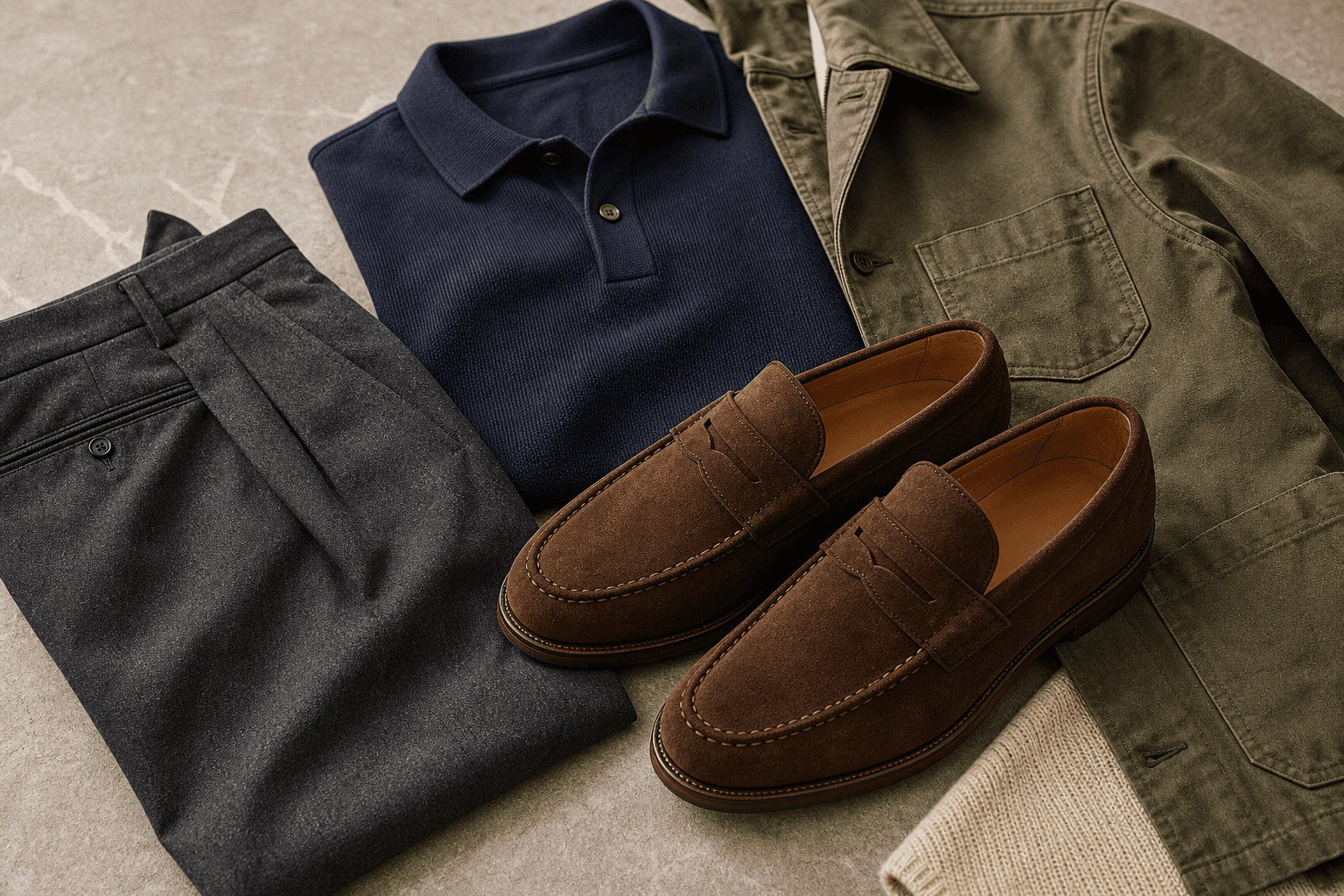
Most men think about shoes too late. They build an outfit from the shirt down, then add whatever pair feels least wrong. That is backwards. Shoes control the formality, silhouette, and mood of an outfit more than almost any other category. A white sneaker can make tailoring casual. A loafer can make denim feel considered. A boot can make simple clothes look grounded. A bad shoe can make an otherwise good outfit collapse.
The point is not to own every possible shoe. It is to understand the hierarchy: which shoes do what, where they work, what pants they need, and when they should be avoided. Modern menswear has become more flexible about dress codes, but that flexibility makes footwear more important, not less.
A practical shoe rotation should solve real contexts: walking, office, dinner, bad weather, travel, summer heat, casual weekends, and formal events. The hierarchy below is built for that.
What a Footwear Hierarchy Is
A footwear hierarchy is not a ranking from cheapest to most expensive or casual to formal. It is a system for knowing what each shoe is responsible for.
| A good rotation covers: | A weak rotation creates: |
|---|---|
|
|
The mistake is buying five versions of the same casual sneaker and then wondering why nothing looks right for a date, office, wedding, or winter trip.
The Core Footwear Categories
These are the main footwear jobs in a useful men's wardrobe. You do not need every version at once; you need enough range that the shoe supports the outfit instead of fighting it.
Minimal White or Off-White Sneakers
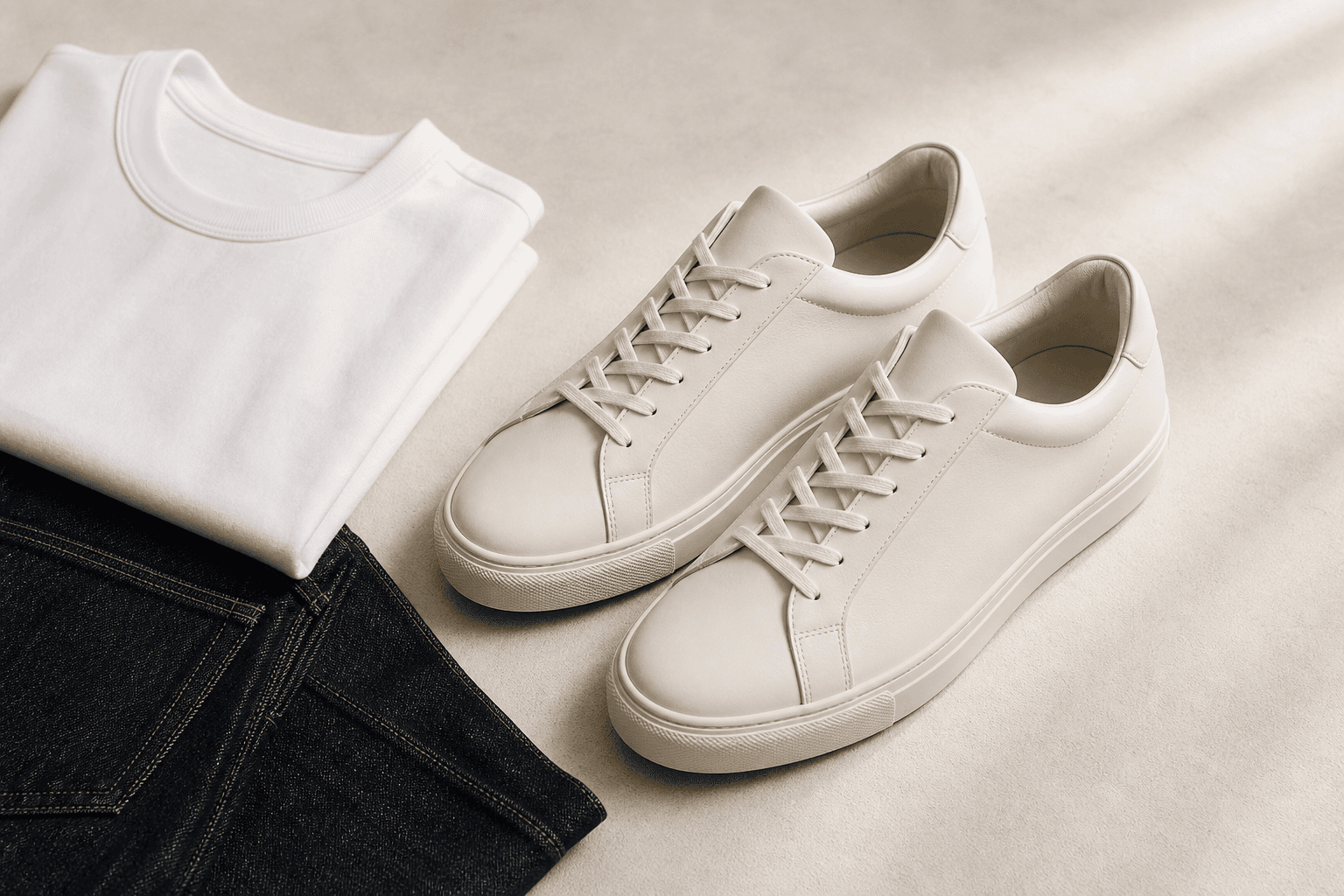
Minimal sneakers are the foundation because they are neutral, easy, and socially flexible. They work with a T-shirt and jeans, a chore jacket and chinos, or relaxed trousers and a knit polo. The cleaner the sneaker, the more it can move toward smart casual. The key is restraint: it should not look like a running shoe, a basketball shoe, or a logo board.
Category: Footwear / low-top sneaker
Best colors: white, off-white, cream, light gray
Material: leather, suede, canvas
Best with: straight jeans, chinos, relaxed trousers, shorts
Avoid: formal suits, black-tie events, bad weather, heavy winter outfits
Retro Runners
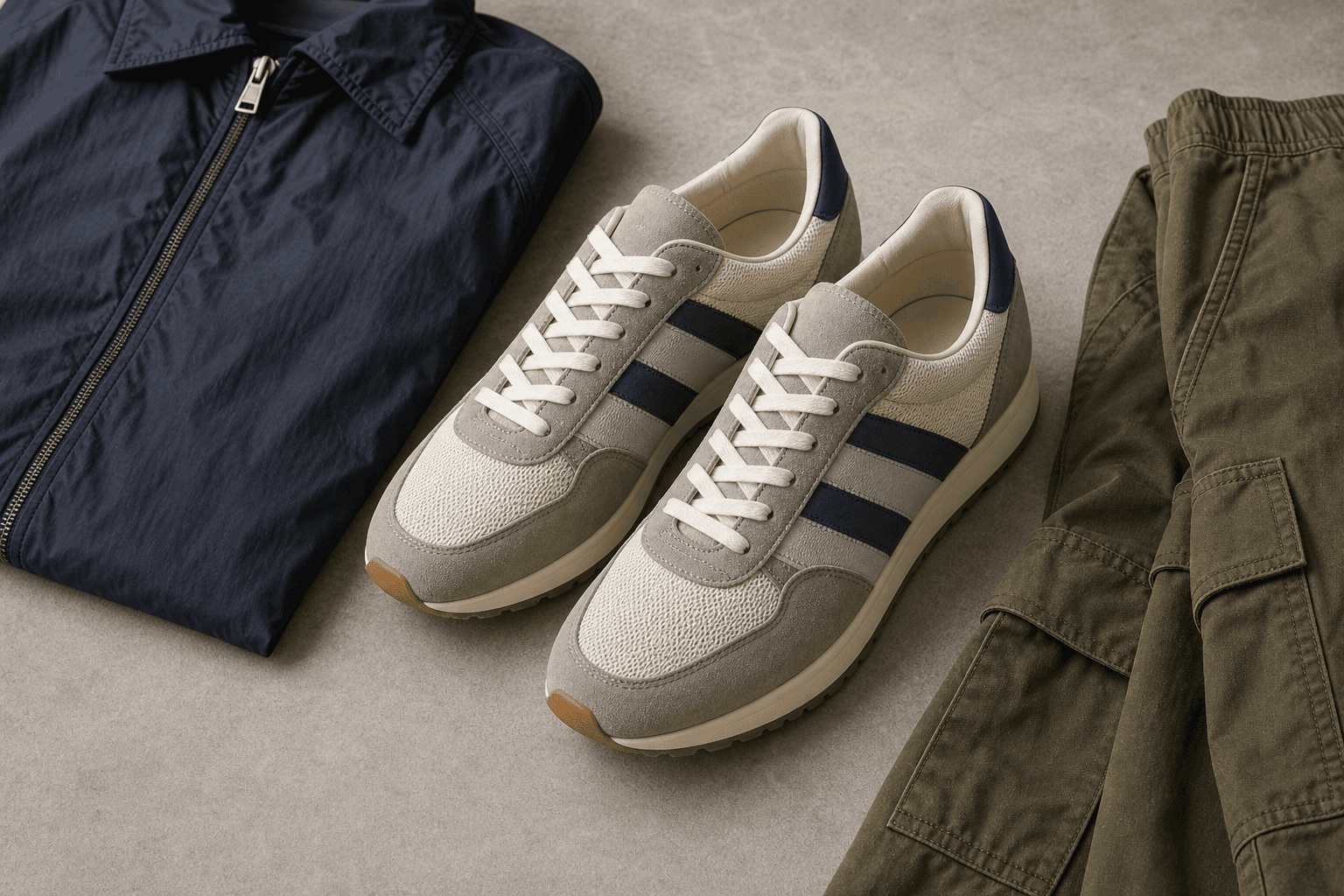
Retro runners are the casual shoe that makes a simple outfit feel more current. They are less sterile than white sneakers and easier to wear with streetwear, athleisure, and travel outfits. The best versions have texture: suede panels, mesh, gum soles, muted contrast, or vintage athletic references.
Category: Footwear / athletic sneaker
Best colors: gray, navy, cream, silver, brown, burgundy accents
Material: suede, mesh, nylon, leather
Best with: denim, cargos, shorts, track pants, relaxed chinos
Avoid: sharp dress trousers, suits, formal dinners
Loafers
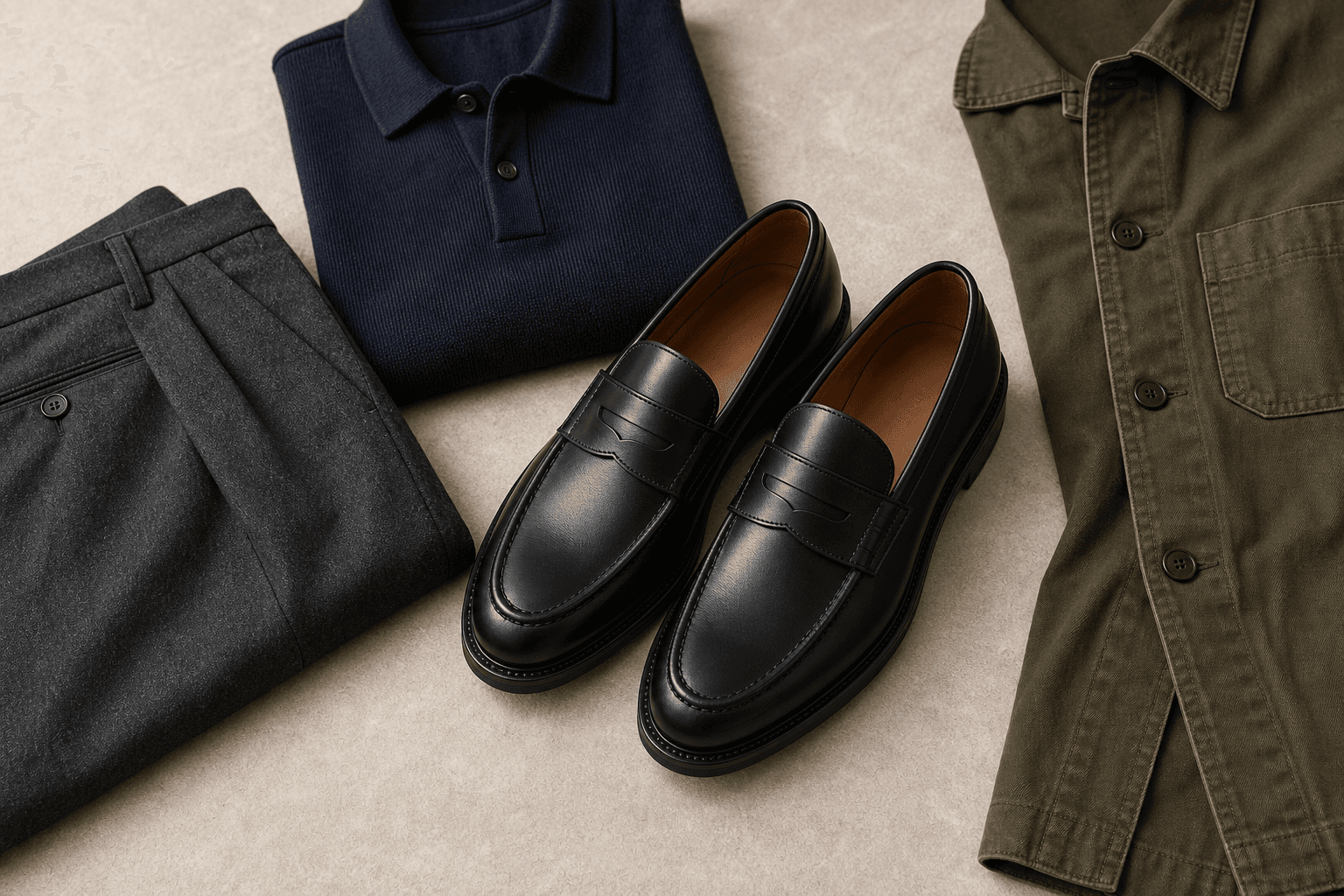
Loafers are the most useful bridge shoe in a man's wardrobe. They are not as formal as oxfords and not as casual as sneakers. A black leather loafer sharpens dark denim. A brown suede loafer softens summer tailoring. A burgundy penny loafer can make a white tee and relaxed trouser outfit look intentional.
Category: Footwear / penny loafer, tassel loafer, horsebit loafer
Best colors: black, dark brown, burgundy, tobacco suede
Material: leather, suede
Best with: denim, chinos, pleated trousers, relaxed tailoring
Avoid: heavy snow, technical outerwear, very athletic outfits
Desert Boots and Chukkas
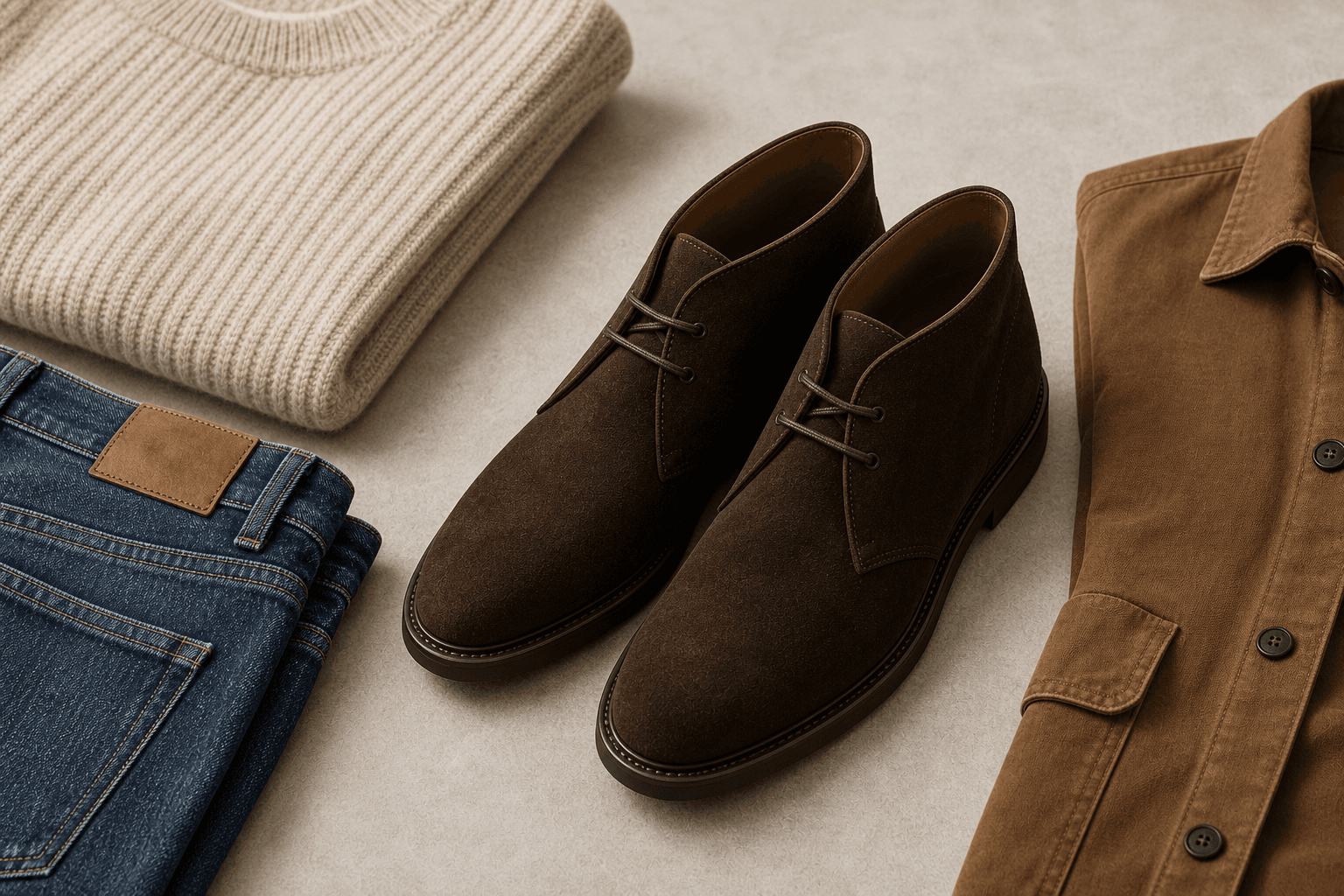
A desert boot is a softer alternative to a dress shoe and a cleaner alternative to a sneaker. It works especially well when an outfit has texture: washed denim, brushed cotton, wool overshirts, suede jackets, chore coats. Think of it as a transitional shoe, not winter equipment.
Category: Footwear / desert boot, chukka boot
Best colors: sand, taupe, dark brown, tobacco, black suede
Material: suede, leather
Best with: denim, chinos, cords, overshirts, knitwear
Avoid: heavy rain, snow, formal tailoring
Service Boots and Work Boots
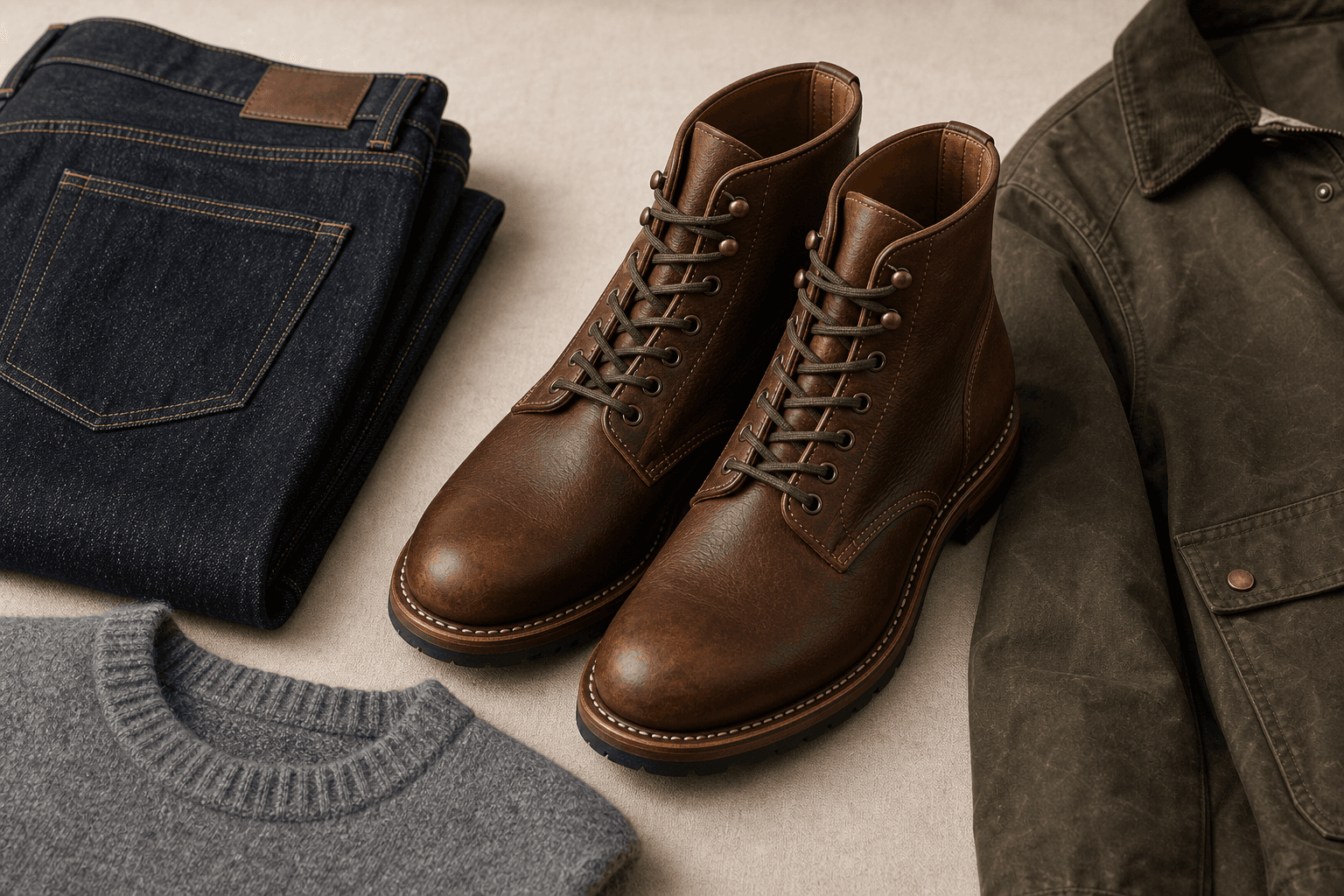
Boots give weight to an outfit. They make casual clothes look more deliberate because they add structure and grounding. They also solve practical problems: cold, wet sidewalks, travel, and long days. Boots usually need straight or relaxed pants, not skinny denim tucked awkwardly around the shaft.
Category: Footwear / service boot, work boot, moc-toe boot
Best colors: brown, black, oxblood, tan
Material: leather, suede, waxed leather
Best with: jeans, canvas pants, cargos, flannels, chore jackets, parkas
Avoid: very lightweight summer outfits, slim dress trousers, formal suits unless the boot is very sleek
Derbies
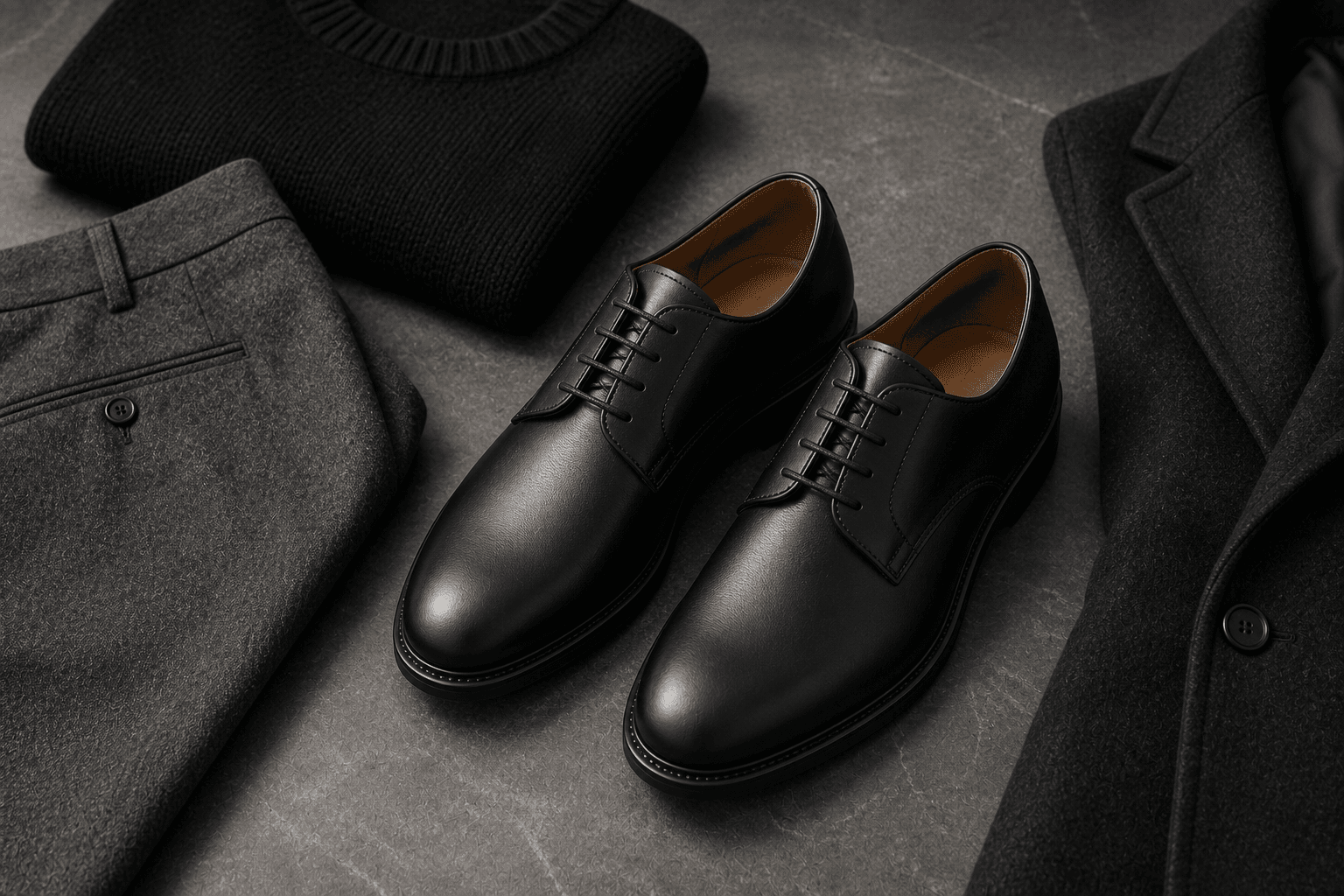
Derbies are more versatile than most men realize. Because the lacing is open and the shape is usually less severe than an oxford, a derby can work with tailoring and denim. A plain black derby is sharp for night-out looks. A dark brown derby works with wool trousers and denim. A chunky derby can modernize relaxed trousers.
Category: Footwear / plain-toe derby, split-toe derby, chunky derby
Best colors: black, dark brown, oxblood
Material: leather, suede
Best with: trousers, denim, tailoring, wool coats
Avoid: shorts, athletic outfits, beach settings
Oxfords
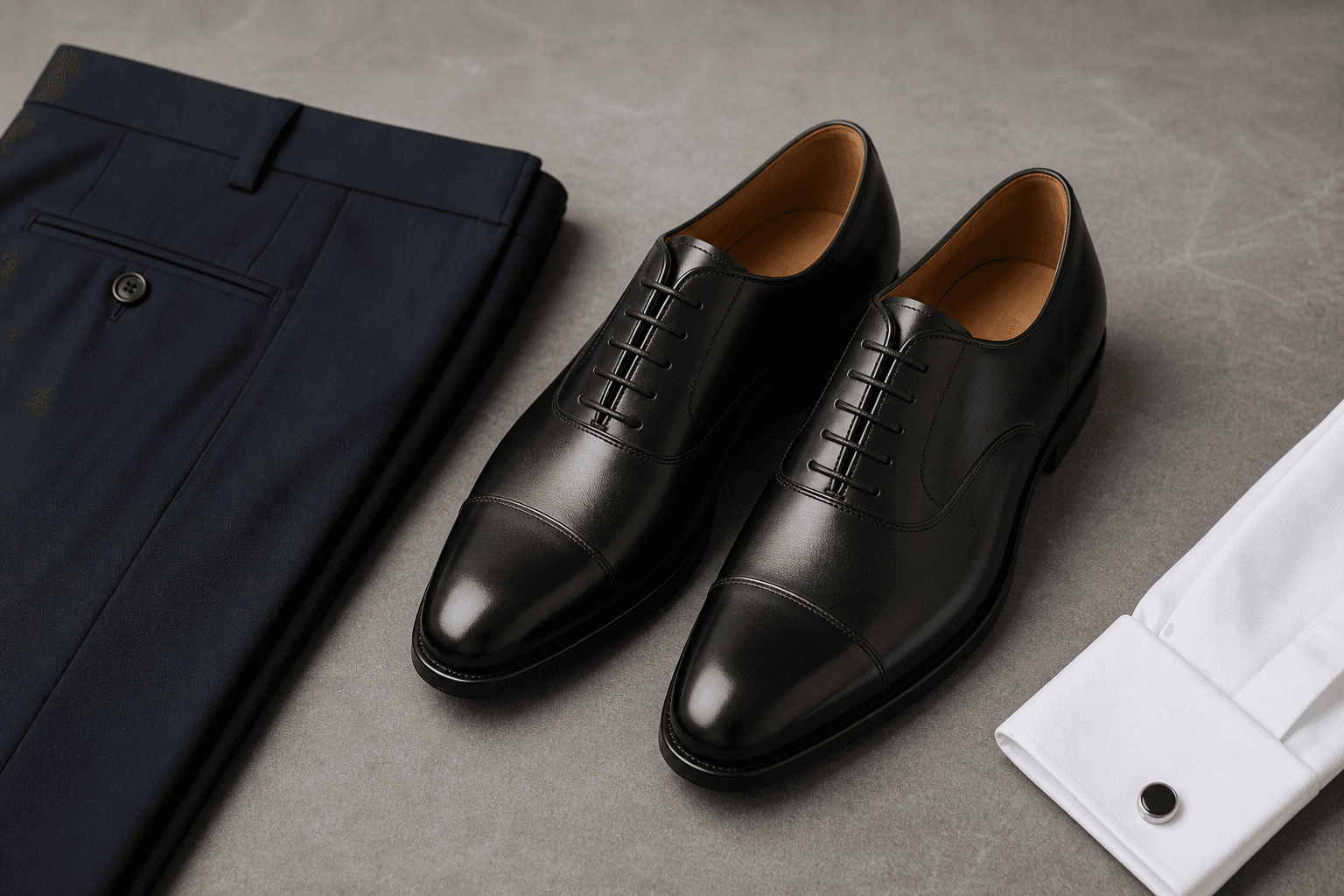
Oxfords are not everyday shoes for most modern wardrobes. They are formal tools. A black cap-toe oxford belongs with a dark suit, wedding attire, business formal looks, and conservative dress codes. It does not usually make jeans look better.
Category: Footwear / cap-toe oxford, plain-toe oxford
Best colors: black, dark brown
Material: polished leather
Best with: suits, tux alternatives, formal trousers
Avoid: casual denim, shorts, relaxed streetwear
Sandals and Summer Slip-Ons
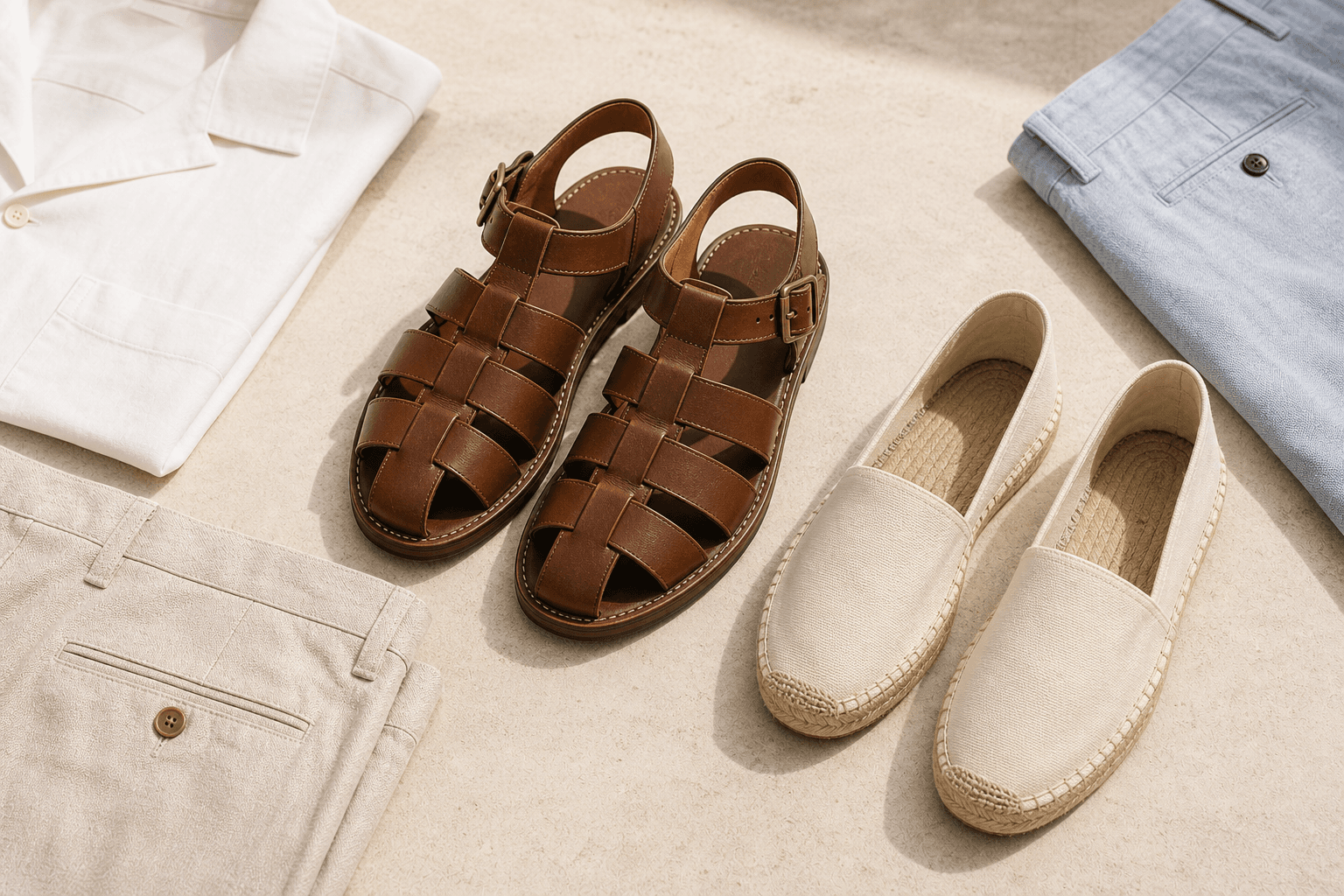
Summer footwear is where many otherwise good wardrobes fail. A leather sandal, fisherman sandal, espadrille, or clean canvas slip-on solves the middle ground between running sneakers and stiff dress shoes. It should look intentional, not like beach gear accidentally worn to dinner.
Category: Footwear / leather sandal, fisherman sandal, espadrille, canvas slip-on
Best colors: brown, black, tan, navy, cream
Material: leather, suede, canvas, rope, rubber sole
Best with: linen trousers, shorts, camp collars, summer knits
Avoid: formal offices, weddings unless explicitly casual, cold weather
The Practical Shoe Rotation
A realistic rotation does not need ten pairs. Start with five.
The Five-Pair Core
- Minimal sneaker: white, off-white, or cream leather.
- Retro runner: gray, navy, or muted suede and mesh.
- Loafer: black or dark brown leather; suede for softer wardrobes.
- Boot: brown or black leather service boot or chukka.
- Dress shoe: black oxford or dark derby, depending on how formal your life is.
This covers most casual, office, travel, date, dinner, and event situations.
Add Later
- Fisherman sandals or espadrilles for summer.
- Chunky derbies for sharper casual outfits.
- Weatherproof boots for winter cities.
- Sleek black boots for night-out looks.
- A second loafer in suede or burgundy.
Outfit Formulas
Use the shoe as the calibration point. The rest of the outfit should support its formality, bulk, season, and mood.
Casual Day: Minimal Sneaker
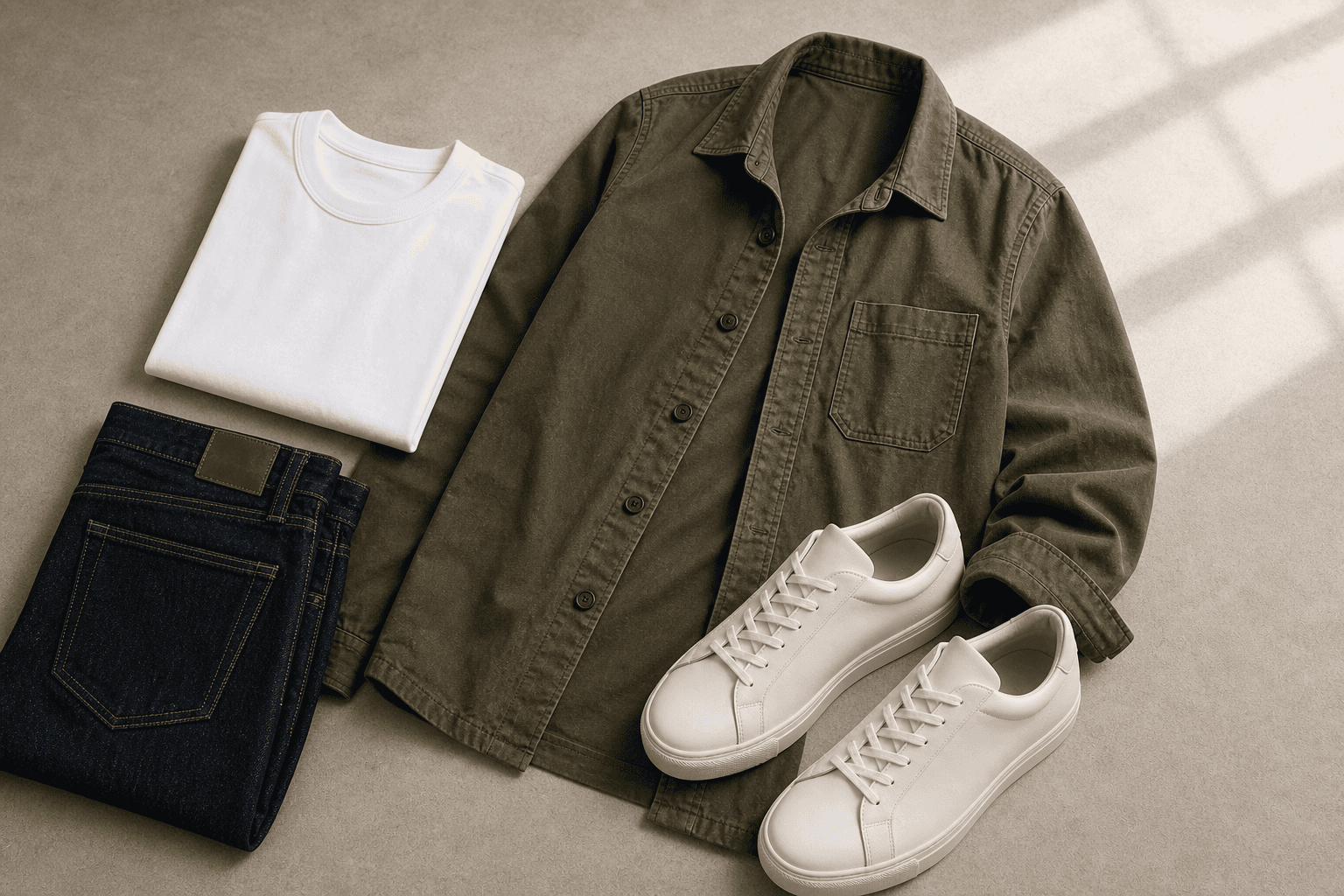
This is the baseline. The sneaker keeps it clean; the straight jeans prevent it from looking too athletic; the overshirt adds shape.
Formula: heavyweight tee + straight jeans + minimal sneakers + overshirt
Best tags: casual_day / minimal / classic / spring, fall / casual
Weekend Street Casual: Retro Runner
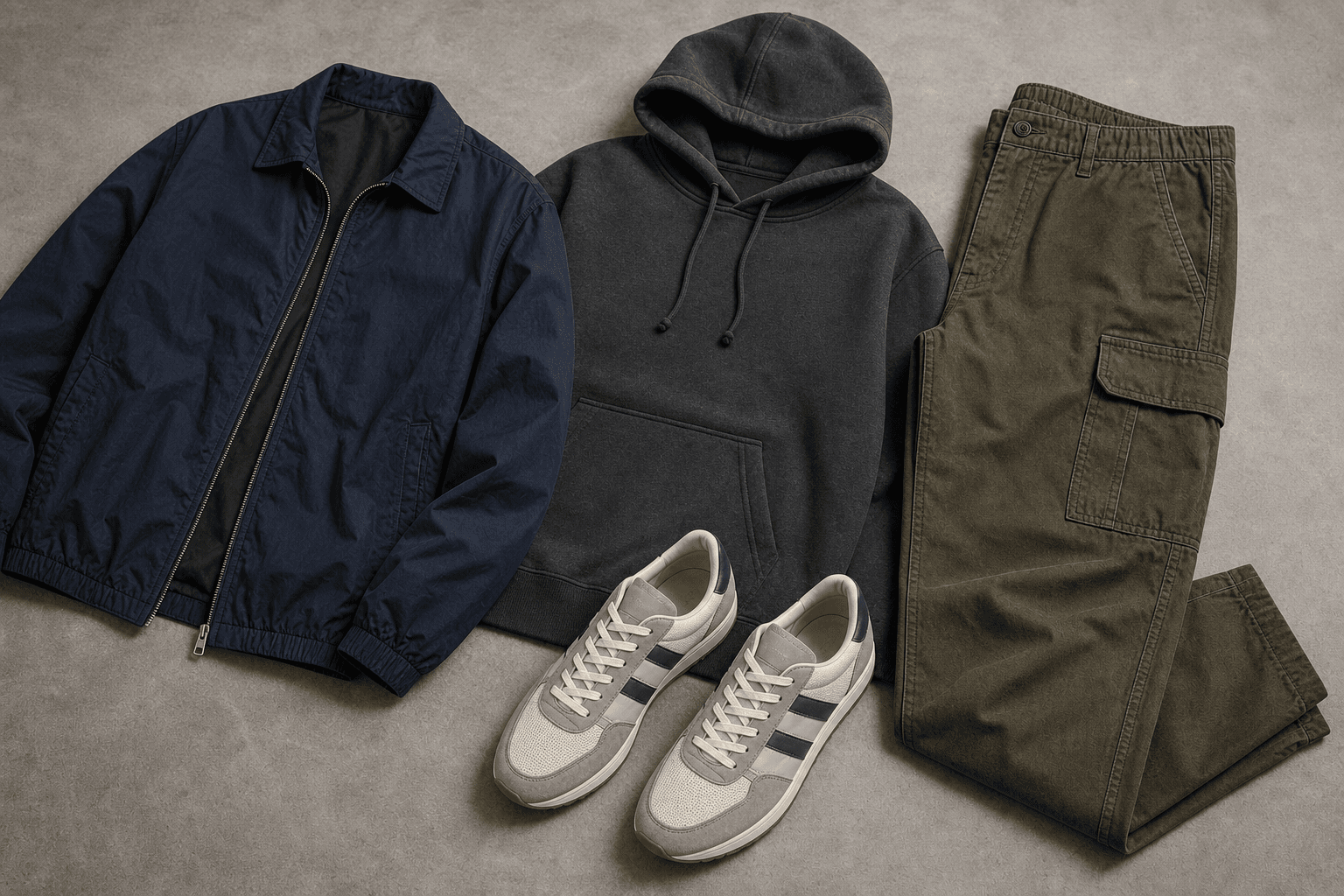
The runner makes sense because the whole outfit has athletic and utility references. Keep the colors muted so it does not look like gym wear.
Formula: hoodie + relaxed cargos + retro runners + nylon jacket
Best palette: gray, black, olive, cream, navy
Smart Casual Office: Loafer
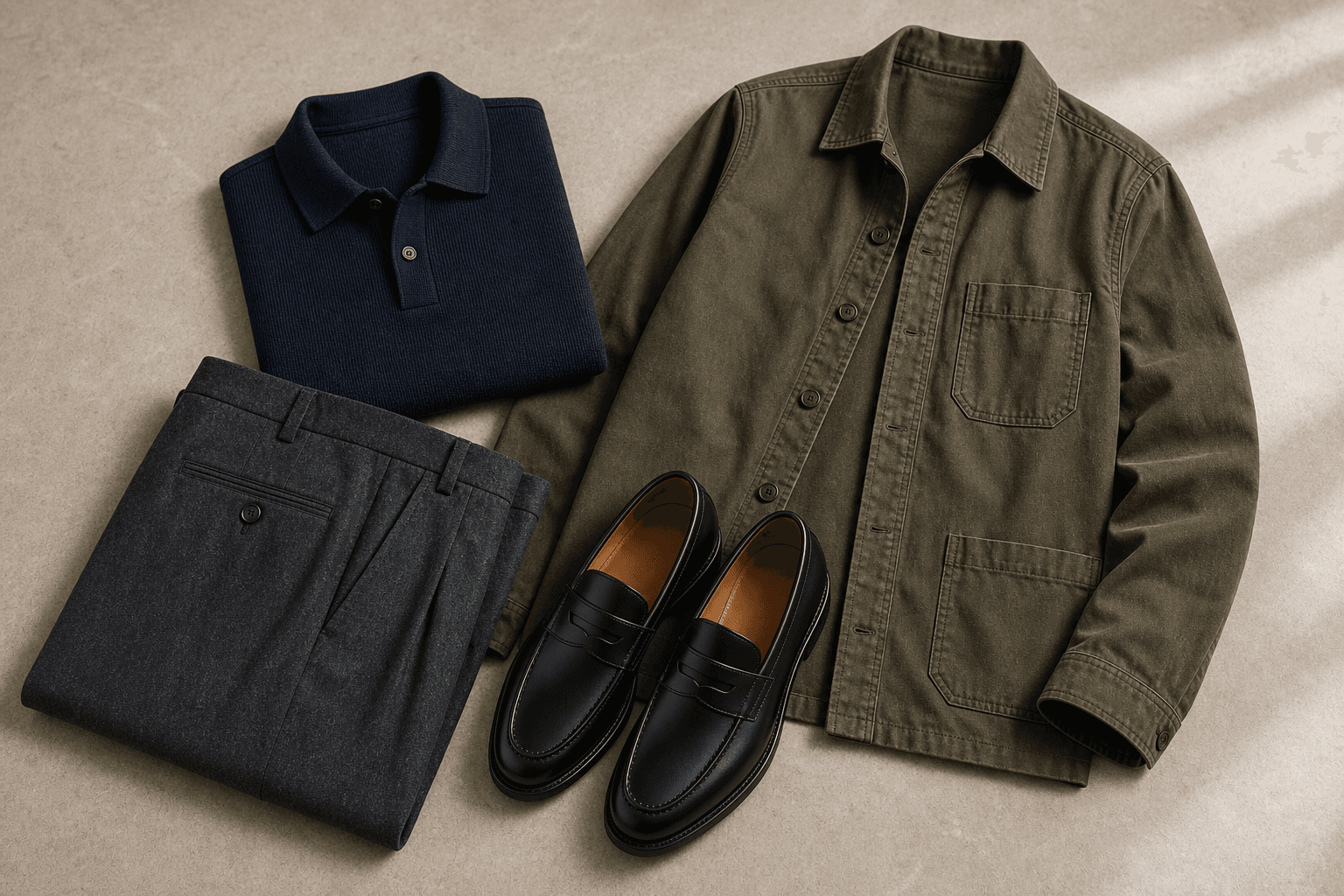
This is the simplest way to look polished without looking corporate. The loafer raises the formality; the chore jacket keeps the outfit modern.
Formula: knit polo + relaxed trousers + leather loafers + chore jacket
Best tags: work_office / smart_casual / classic / polished
Date Dinner: Suede Loafer or Chukka
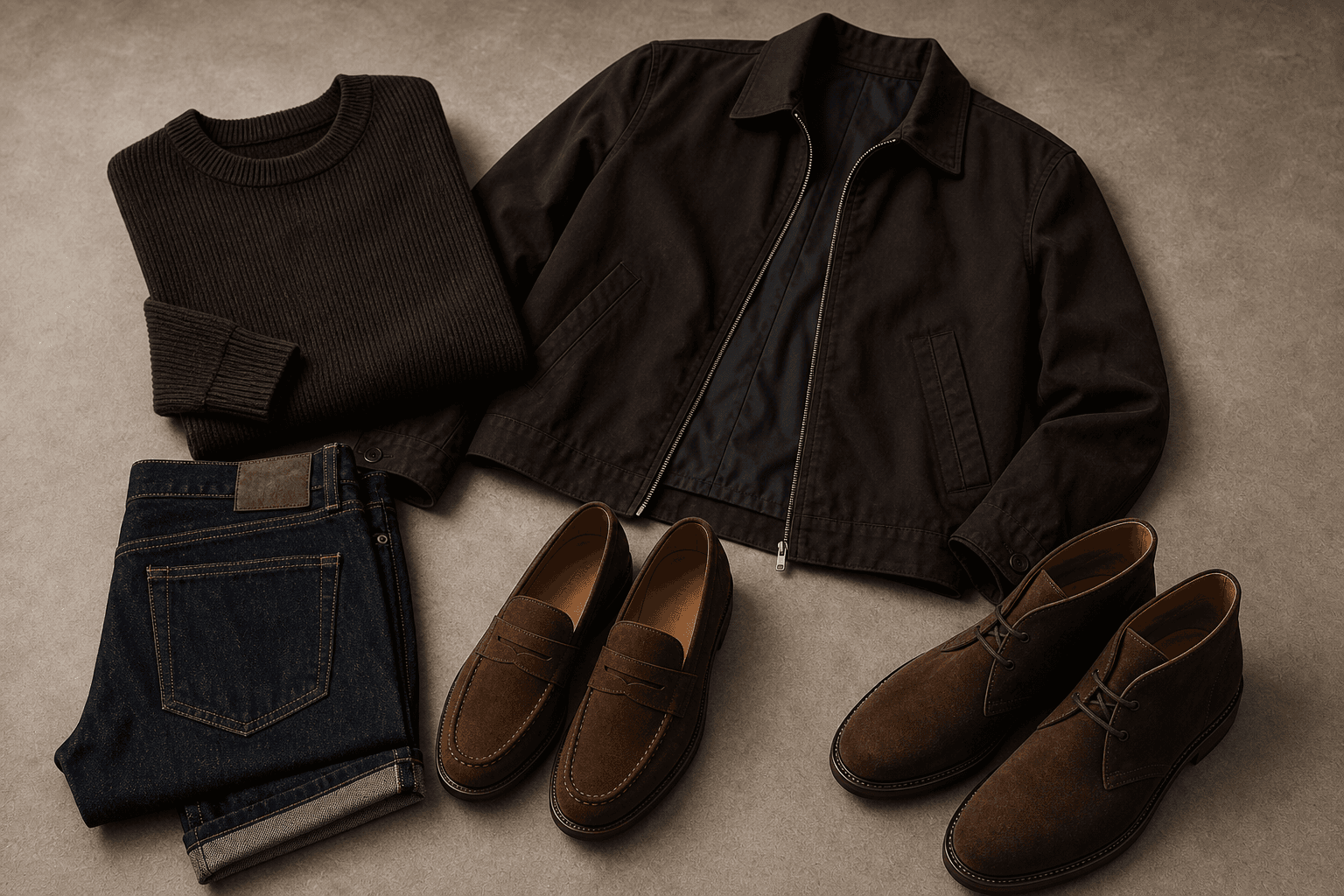
Suede adds softness. Dark denim keeps the outfit casual but restaurant-ready. The jacket creates structure.
Formula: dark knit + dark denim + suede loafers or chukkas + cropped jacket
Avoid: athletic sneakers unless the venue is very casual
Night Out: Black Derby or Sleek Boot
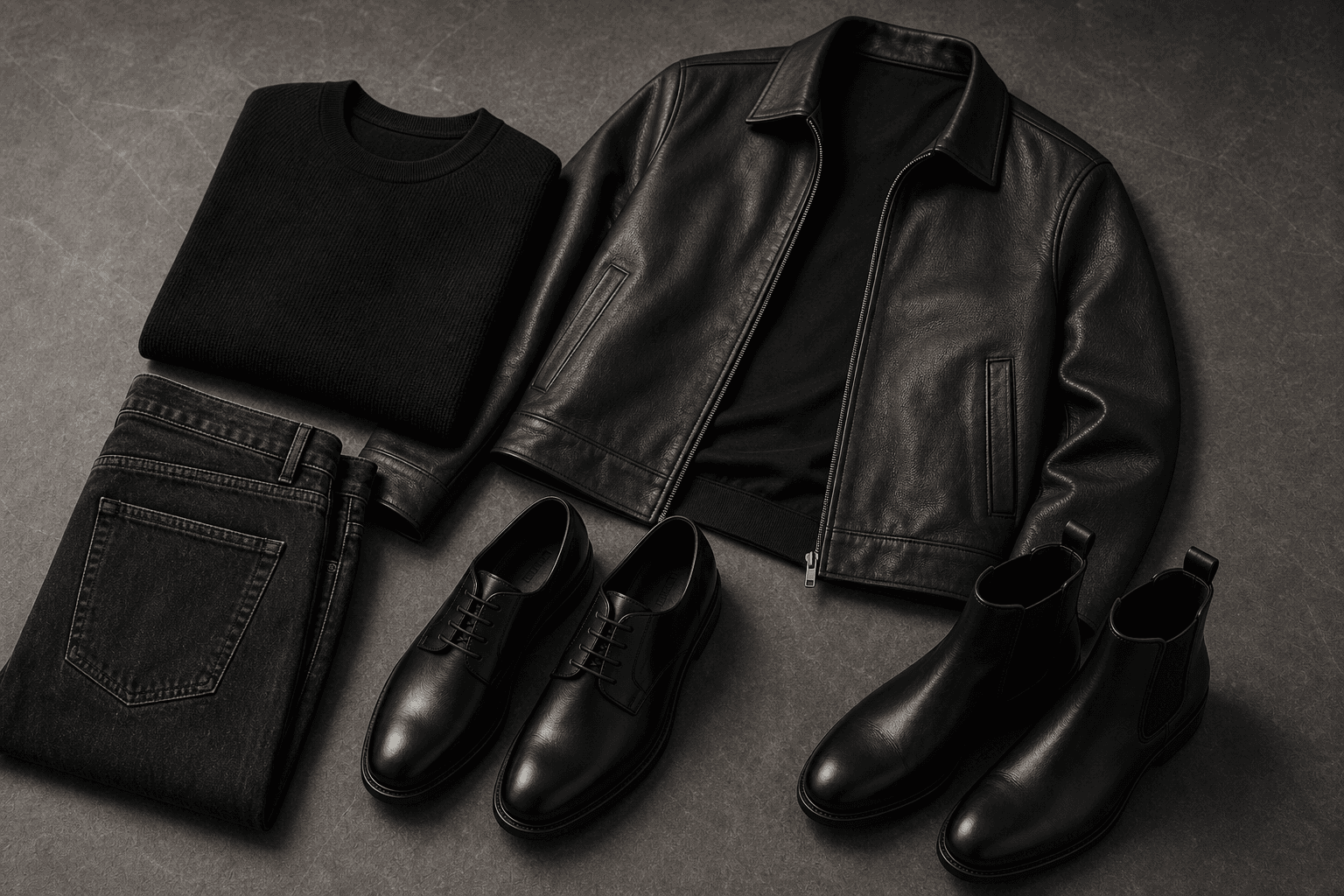
The shoe should carry weight. A black derby is sharper; a sleek boot is tougher. Both work better than a white sneaker for a darker night-out look.
Formula: black tee or knit + washed black jeans + cropped leather jacket + black derbies or boots
Travel Day: Retro Runner or Minimal Sneaker
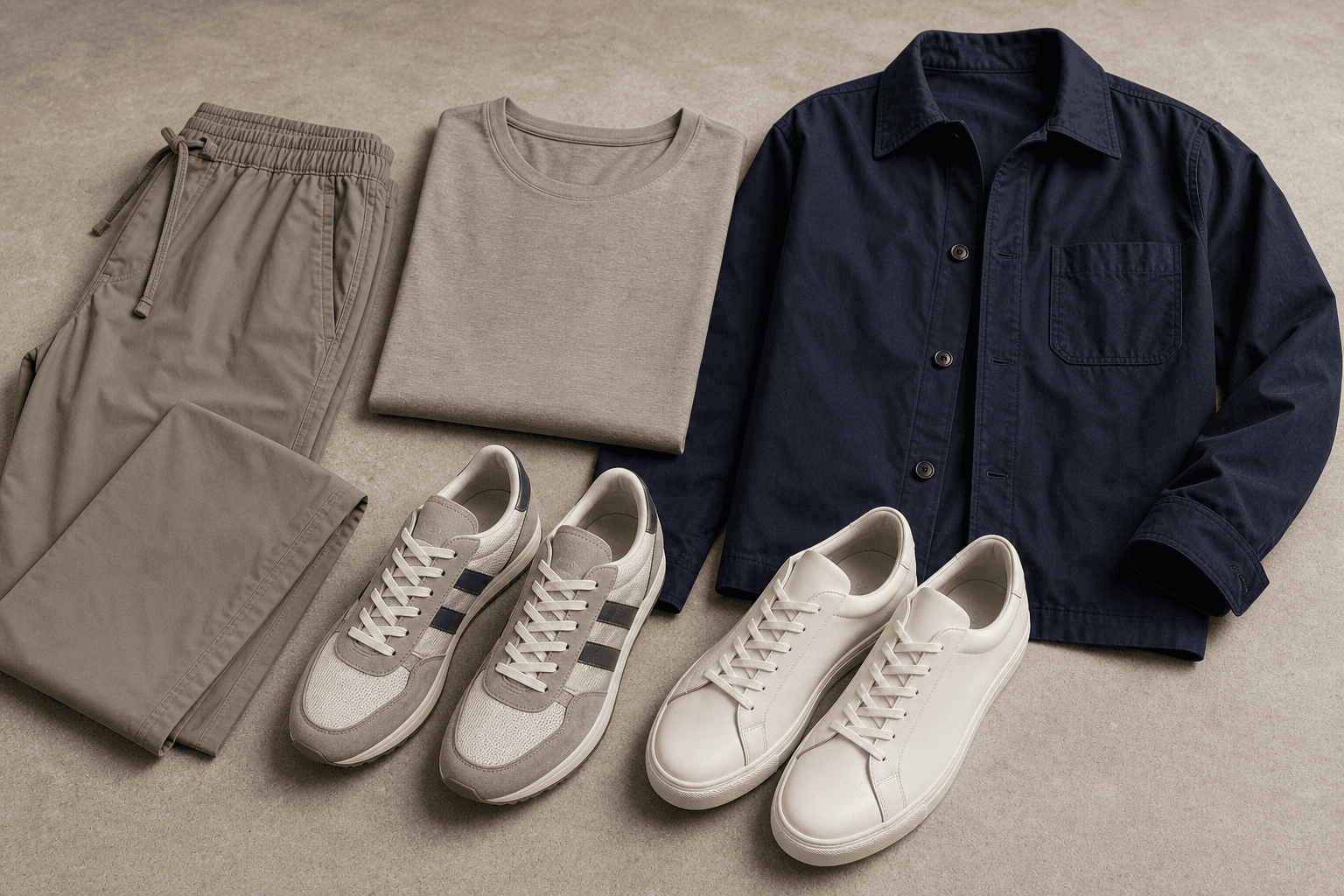
For travel, comfort matters, but the shoe still needs to fit the outfit. Retro runners are best for long walking days. Minimal sneakers are better when you need one pair to cover airport, museum, dinner, and city walking.
Formula: merino tee + relaxed travel trouser + retro runners + lightweight overshirt
Summer City: Leather Sandal or Espadrille
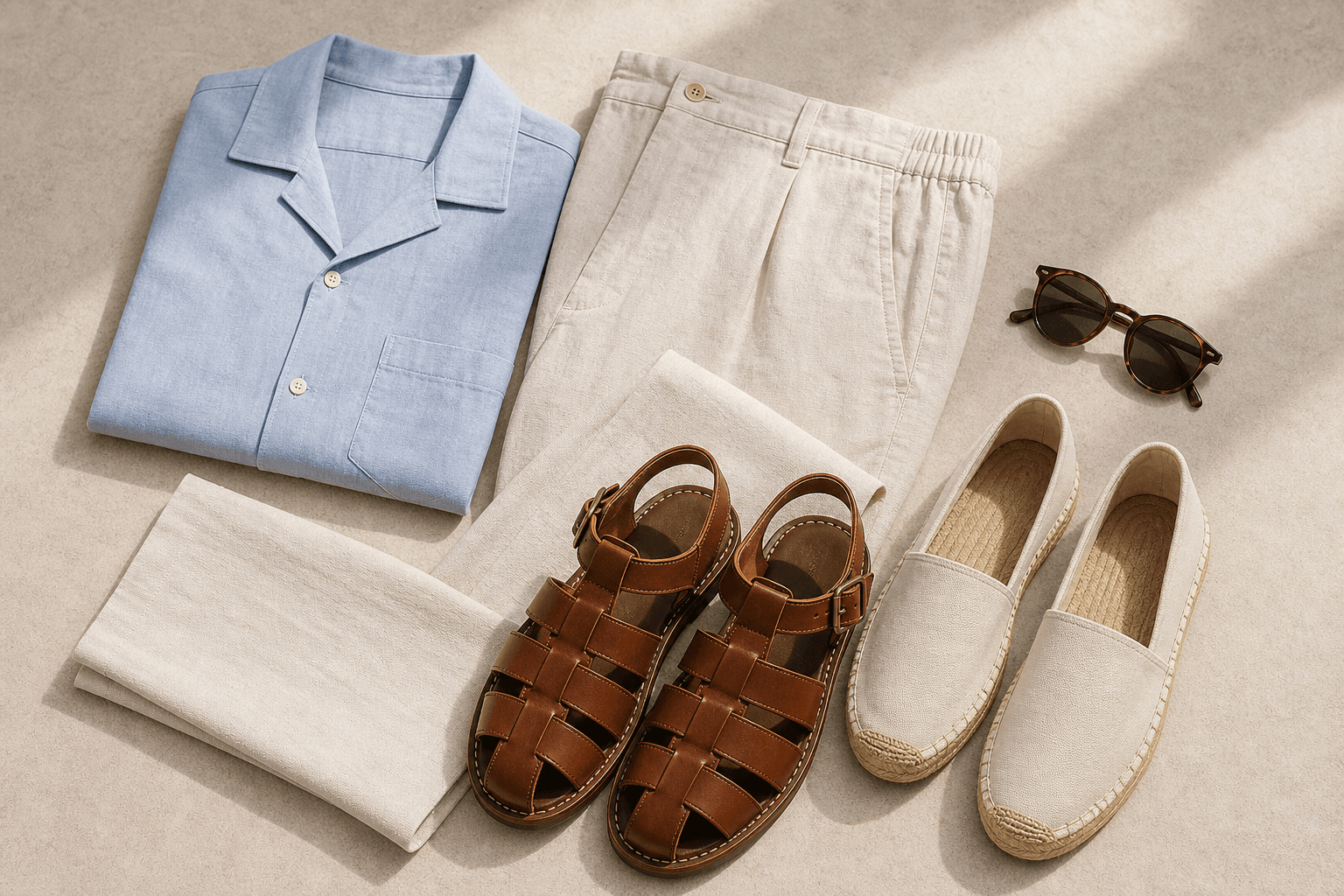
This works because the shoe matches the season and fabric. A heavy sneaker would make the outfit feel less breathable.
Formula: camp collar shirt + linen trousers + leather sandals or espadrilles
Weather-Aware: Boot
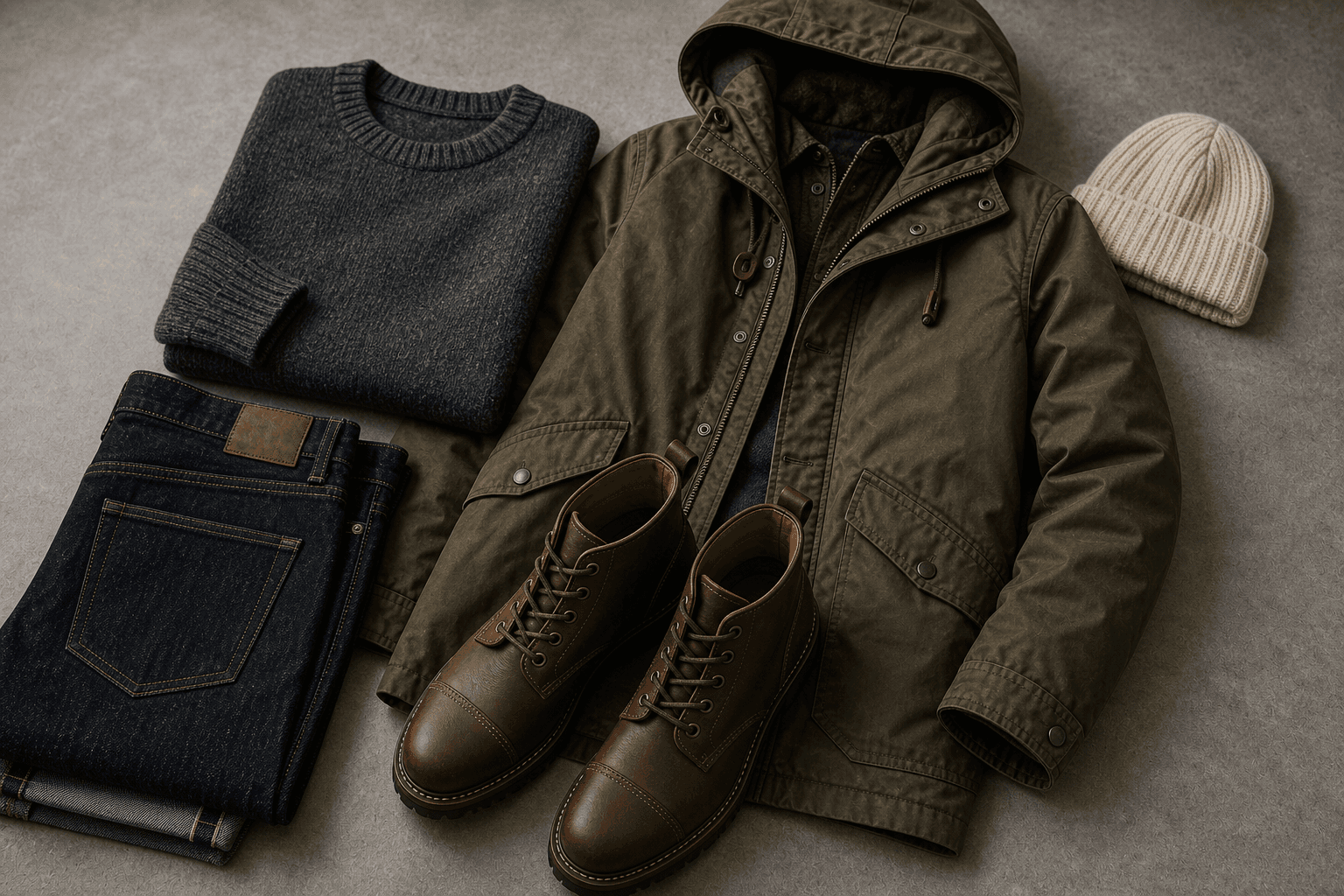
The boot is not decorative here. It solves the ground conditions and visually balances heavier outerwear.
Formula: wool sweater + straight denim + weatherproof boots + parka or waxed jacket
Wedding Guest: Oxford, Derby, or Loafer
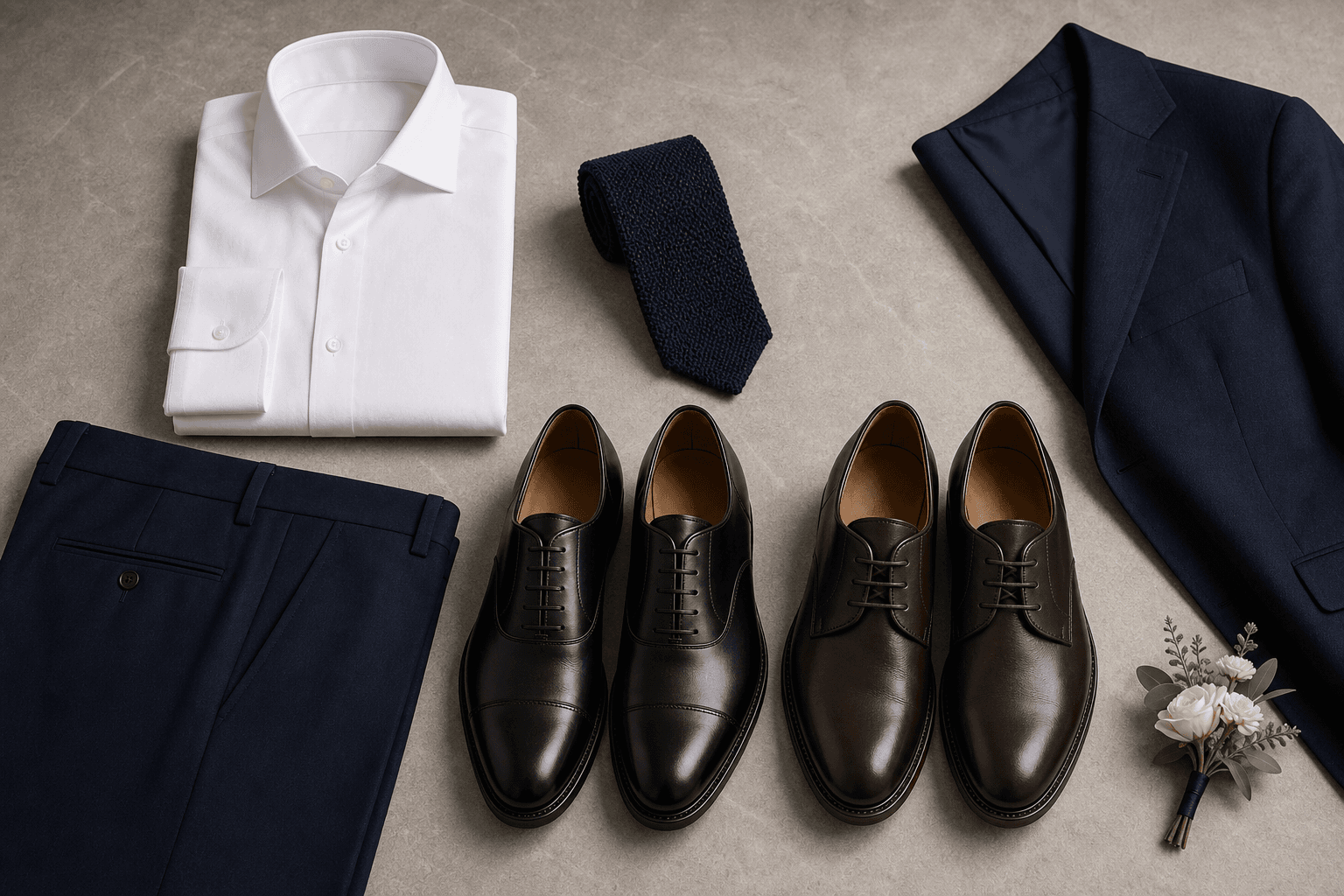
Use the dress code. Formal wedding: black oxford. Cocktail or semi-formal: dark derby or loafer. Summer casual wedding: suede loafer can work if the suit is relaxed and the setting supports it.
Formula: seasonal suit + dress shirt or knit + dress shoes
Wrong But Interesting: Loafers With Streetwear
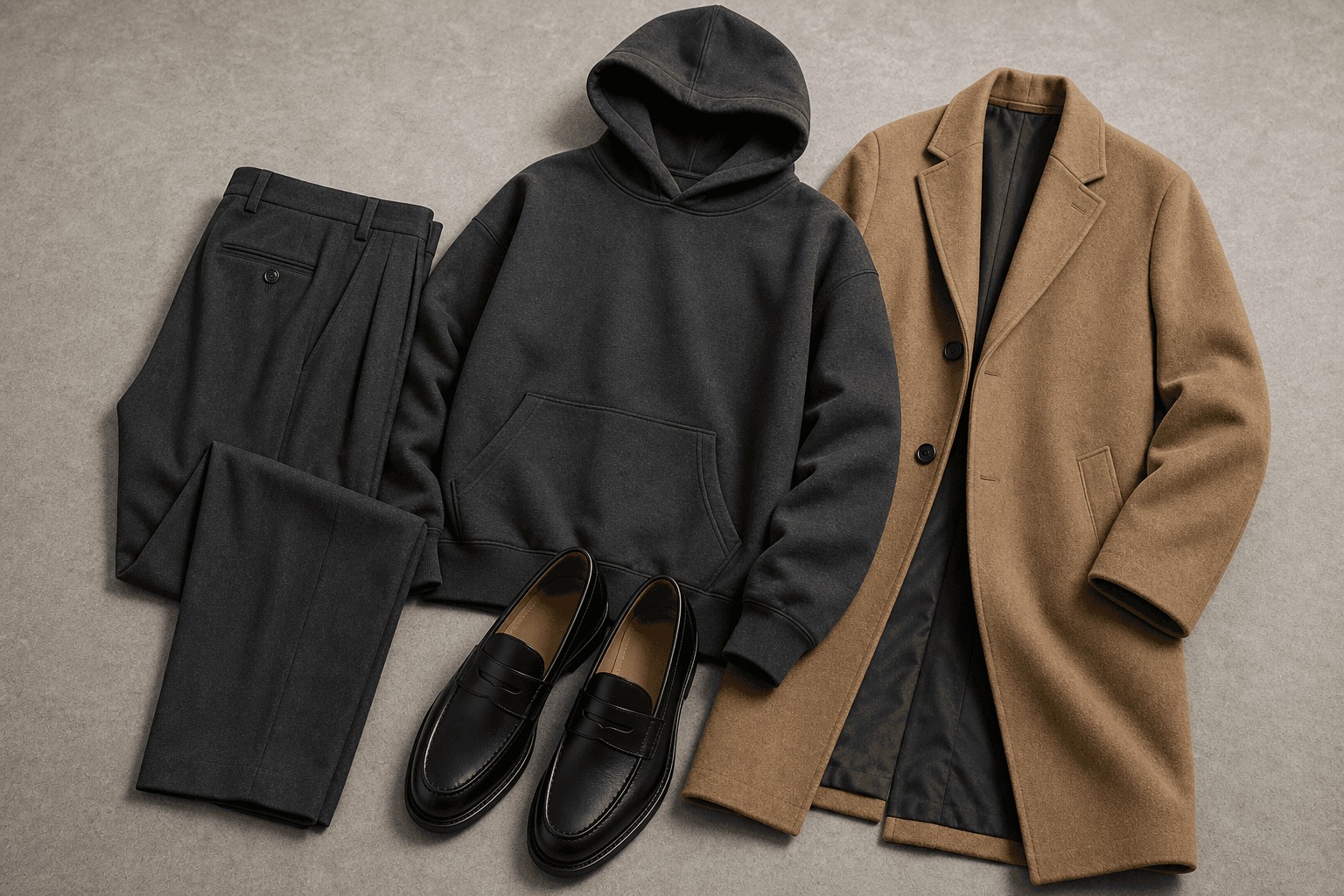
This works when the hoodie is clean, the trousers have drape, and the loafer is substantial. It fails when the hoodie is thin, the pants are sweatpants, or the shoe is too delicate.
Formula: blank hoodie + relaxed trousers + leather loafers + long coat
Color and Material Logic
The Safest Shoe Colors
- White or off-white for sneakers.
- Gray or navy for retro runners.
- Black for loafers, derbies, boots, and formal shoes.
- Dark brown for loafers, boots, chukkas, and derbies.
- Burgundy for loafers and derbies.
- Tan or tobacco for suede summer and fall shoes.
Leather vs Suede
Leather is sharper, more formal, and easier to polish. It works well for loafers, derbies, oxfords, and structured boots.
Suede is softer, more casual, and more textured. It works well for loafers, chukkas, desert boots, and summer or fall outfits.
Smooth vs Textured
Smooth leather looks cleaner and more formal. Suede, mesh, canvas, and grain leather make outfits feel more relaxed. Use texture when the outfit needs warmth or depth. Use smooth leather when the outfit needs clarity.
Fit and Proportion Rules
Match Shoe Bulk to Pant Width
Slim shoes need slimmer or cleaner pants. Chunky sneakers and boots need straight, relaxed, or wide pants. This is the most important footwear proportion rule.
Watch the Hem
The pant hem should interact with the shoe intentionally. It can crop above the shoe, break lightly, or stack deliberately. Random bunching makes even expensive shoes look wrong.
Do Not Over-Formalize Casual Clothes
Oxfords with jeans rarely solve a problem. Use loafers, derbies, or boots instead.
Do Not Over-Casualize Tailoring
Some suits can handle sneakers. Many cannot. If the suit is structured, dark, or formal, use proper leather shoes.
Season Matters
Suede loafers in winter slush, heavy boots in July, and running sneakers with linen tailoring all create friction. Sometimes friction is interesting. Usually it just looks uncalibrated.
Common Mistakes
Mistake 1: Owning Only Sneakers
Sneakers cover casual life. They do not cover every dinner, office, wedding, or winter situation. A loafer or derby opens up far more outfit range.
Mistake 2: Buying Statement Shoes Before Foundation Shoes
Loud sneakers, colored loafers, and unusual boots are useful only after the basics are solved. Start with neutral shoes that work repeatedly.
Mistake 3: Ignoring Maintenance
Dirty white sneakers, dried-out leather, and salt-stained boots cheapen the whole outfit. Shoe care is not optional if the shoe is visible.
Mistake 4: Wearing Dress Shoes Too Casually
A shiny oxford with jeans usually looks like a man trying to dress up without knowing the middle options. Choose loafers or derbies.
Mistake 5: Wearing Athletic Shoes With Everything
Running shoes are useful, but they are not universal. If the outfit is tailored, textured, or date-ready, a retro runner may work; a performance running shoe usually will not.
Mistake 6: Forgetting Weather
A good outfit that fails in rain, snow, or heat is not good enough. Your wardrobe needs shoes that solve climate, not just aesthetics.
How to Build From What You Own
Start by sorting your shoes into four groups:
- Clean casual: minimal sneakers, canvas sneakers, simple slip-ons.
- Athletic casual: retro runners, trail shoes, sport sneakers.
- Smart casual: loafers, chukkas, derbies.
- Weather/formal: boots, oxfords, waterproof shoes.
Then ask what is missing.
If you own five sneakers and no loafers, buy a loafer before another sneaker. If you own dress shoes but no casual shoe for dinners, get a suede loafer or chukka. If winter ruins your outfits, get a weatherproof boot. If summer forces you into gym sneakers, get a leather sandal, espadrille, or clean slip-on.
The goal is not more shoes. The goal is fewer dead zones.
FAQ
How many pairs of shoes does a man need?
Most men can cover the majority of situations with five pairs: a minimal sneaker, retro runner, loafer, boot, and dress shoe. Add sandals, weatherproof boots, or extra loafers depending on climate and lifestyle.
Are loafers more versatile than dress shoes?
For most modern wardrobes, yes. Loafers work with denim, chinos, trousers, and relaxed tailoring. Formal oxfords are important, but they are narrower in use.
Can men wear sneakers with suits?
Sometimes. Sneakers work best with relaxed, casual tailoring. Structured suits, formal weddings, and conservative settings usually need leather dress shoes.
What shoes should men wear for smart casual?
Loafers, derbies, chukkas, minimal sneakers, and sleek boots all work for smart casual. The right choice depends on the pants, season, and setting.
What is the most versatile men's shoe color?
Dark brown and black are the most versatile for leather shoes. White or off-white is the most versatile for minimal sneakers. Gray is especially useful for retro runners.