Travel Style: The Carry-On Wardrobe
A practical packing system for men who want fewer bags, better outfits, and clothes that survive the day.
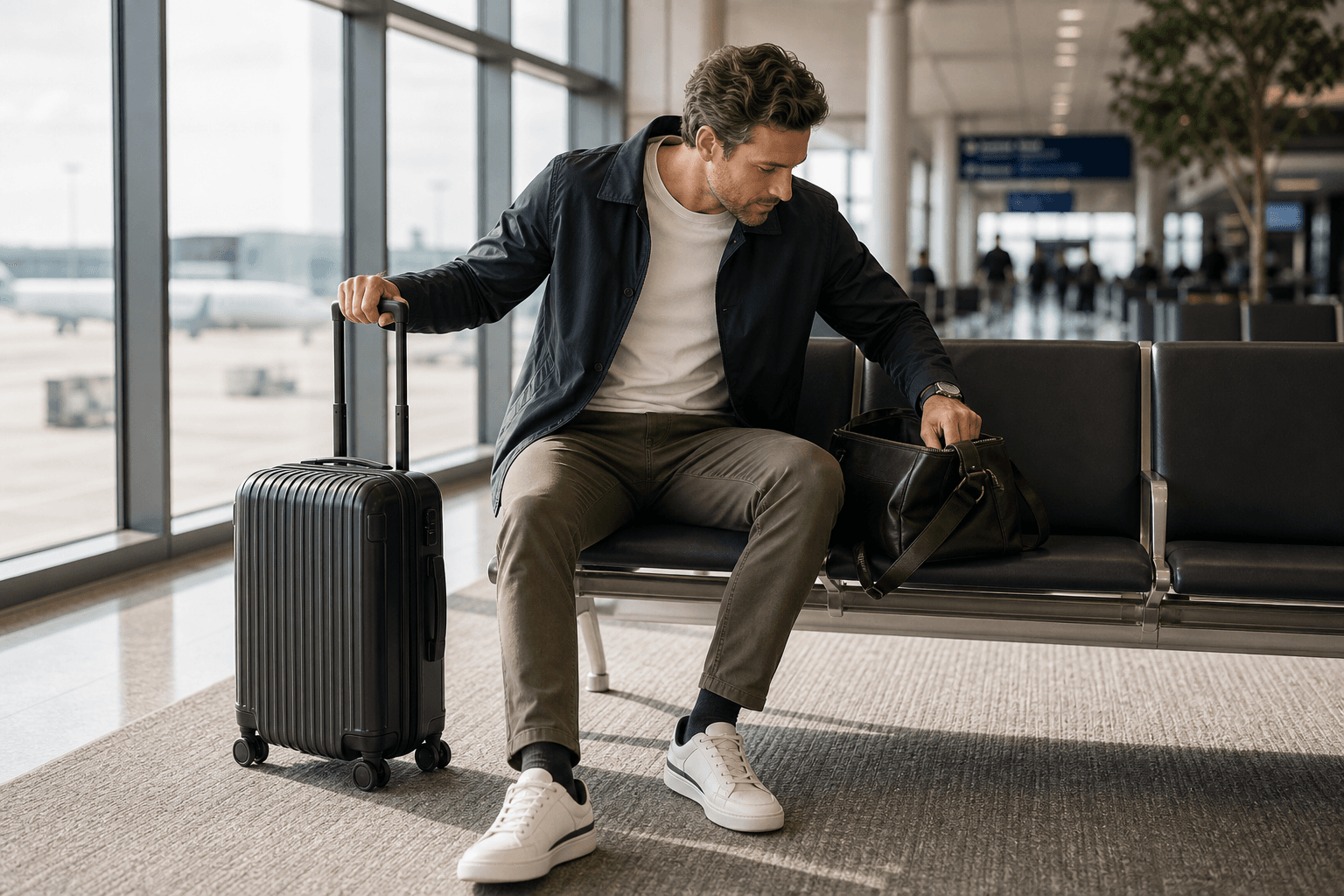
A good travel wardrobe is not a fantasy of dressing perfectly in every city. It is a compact system that handles the airport, the walk from the train station, the hotel check-in, dinner, weather changes, and the day you did not plan well.
The mistake most men make is packing by item instead of by formula. They bring five shirts, three pants, two jackets, and too many shoes, then discover half of it does not work together. A real carry-on wardrobe starts with the opposite question: what combinations can repeat without looking stale?
The answer is a tight color palette, two reliable pants, three to five tops, one sharp layer, one weather layer, and shoes that can walk all day without ruining dinner. The result should not feel like travel gear. It should look like your normal style, edited down to the pieces that earn their space.
What the Carry-On Wardrobe Is — and What It Is Not
The carry-on wardrobe is a temporary capsule built around movement. It is not simply your regular wardrobe made smaller. Travel puts pressure on clothes in ways daily life often does not: long sitting, temperature shifts, sweat, wrinkles, unpredictable weather, and repeated wear.
| It is: | It is not: |
|---|---|
|
|
The same capsule logic applies directly to travel: the best pieces are the ones that bridge casual and polished contexts, especially loafers, relaxed trousers, knits, and simple outerwear.
The Core Pieces
This is the strongest baseline for a one-week carry-on trip. Adjust for climate, itinerary, and laundry access.
White or Cream T-Shirt
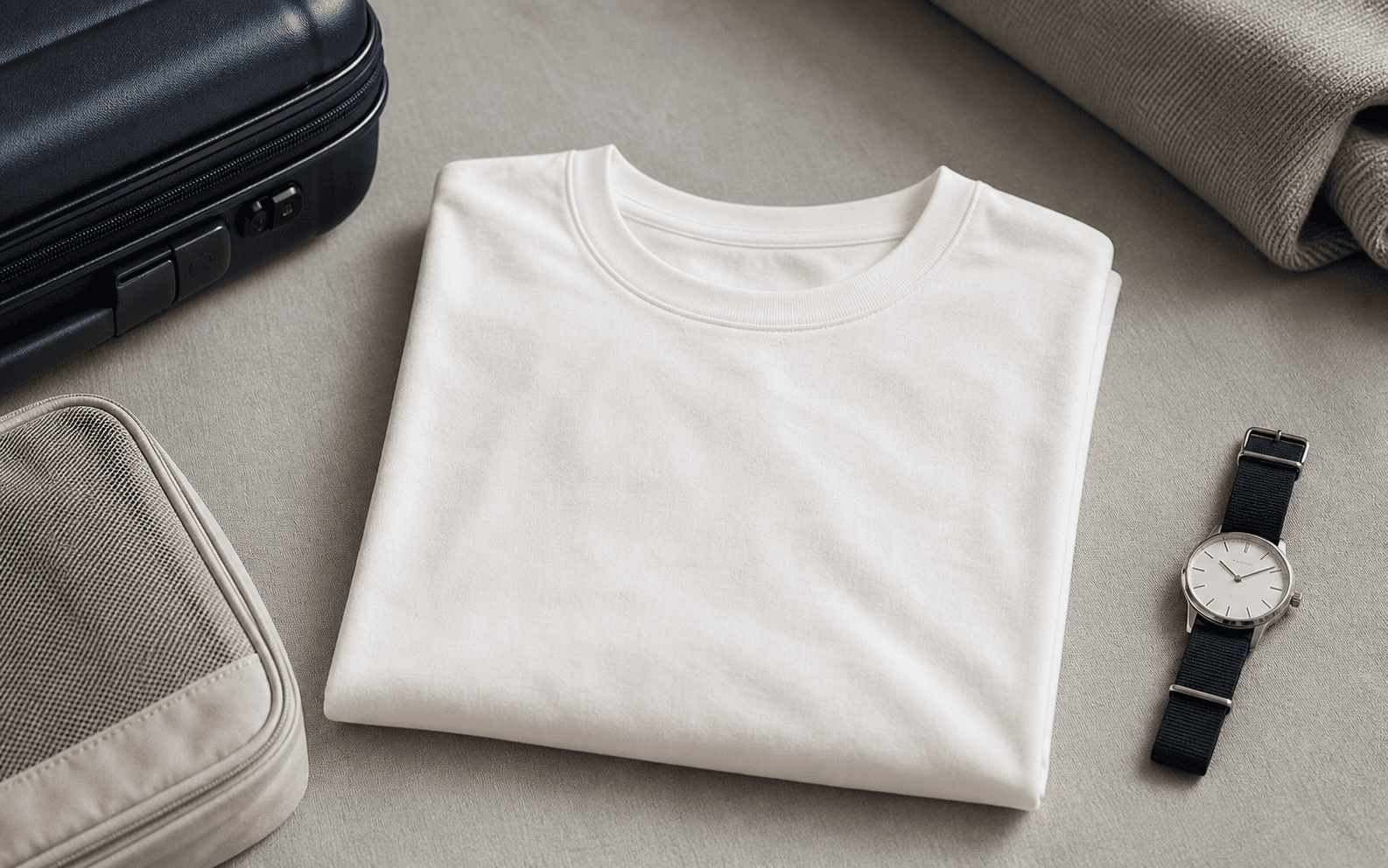
A clean tee gives you the simplest base for travel days, warm afternoons, and layered outfits. Choose one with enough weight to avoid looking like underwear.
Dark T-Shirt or Knit Tee
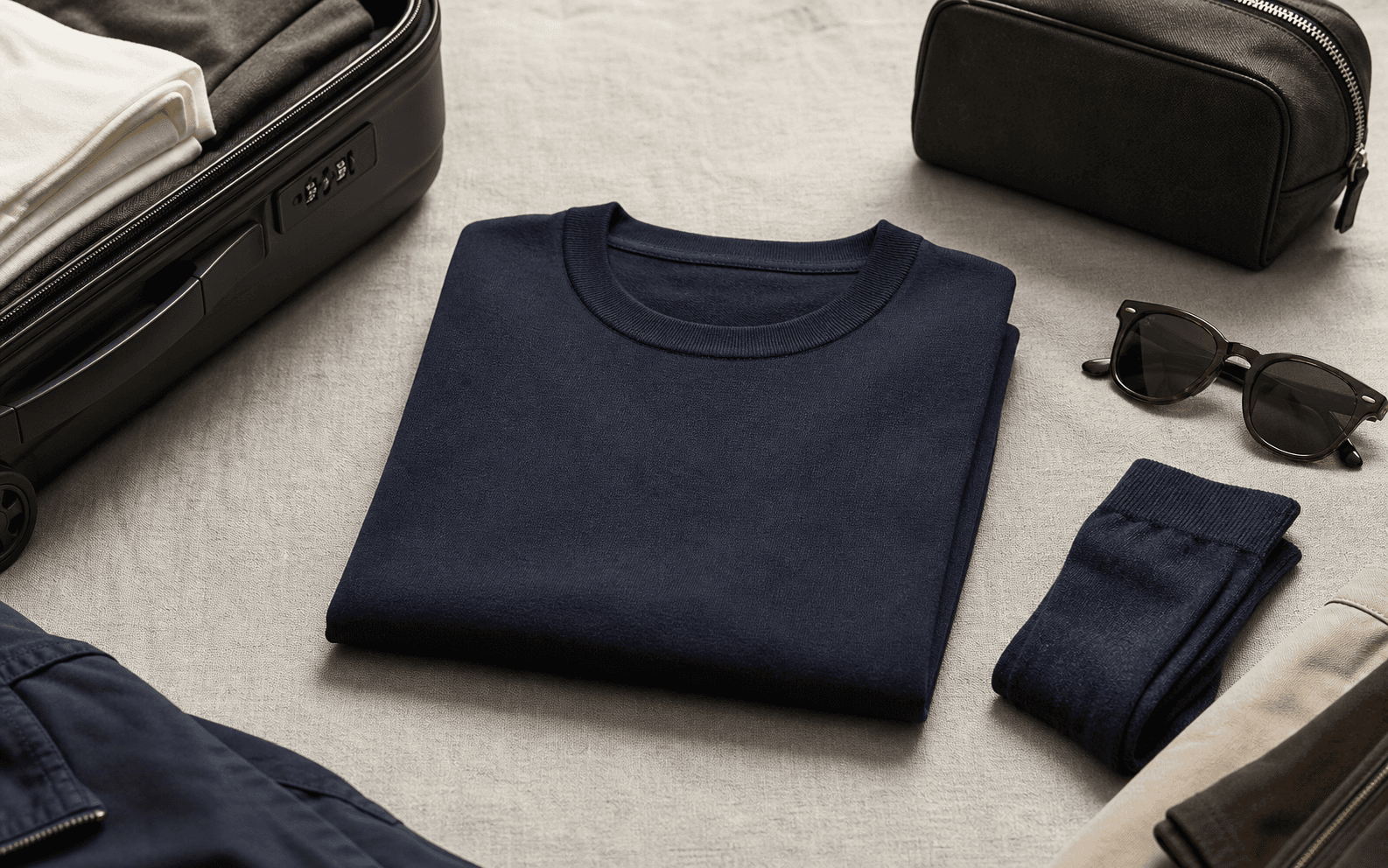
A black, navy, charcoal, or dark brown tee handles dinner better than a white tee and hides travel wear more easily. Merino is useful if you can tolerate it; cotton works if you prefer structure.
Oxford, Poplin, or Linen Shirt
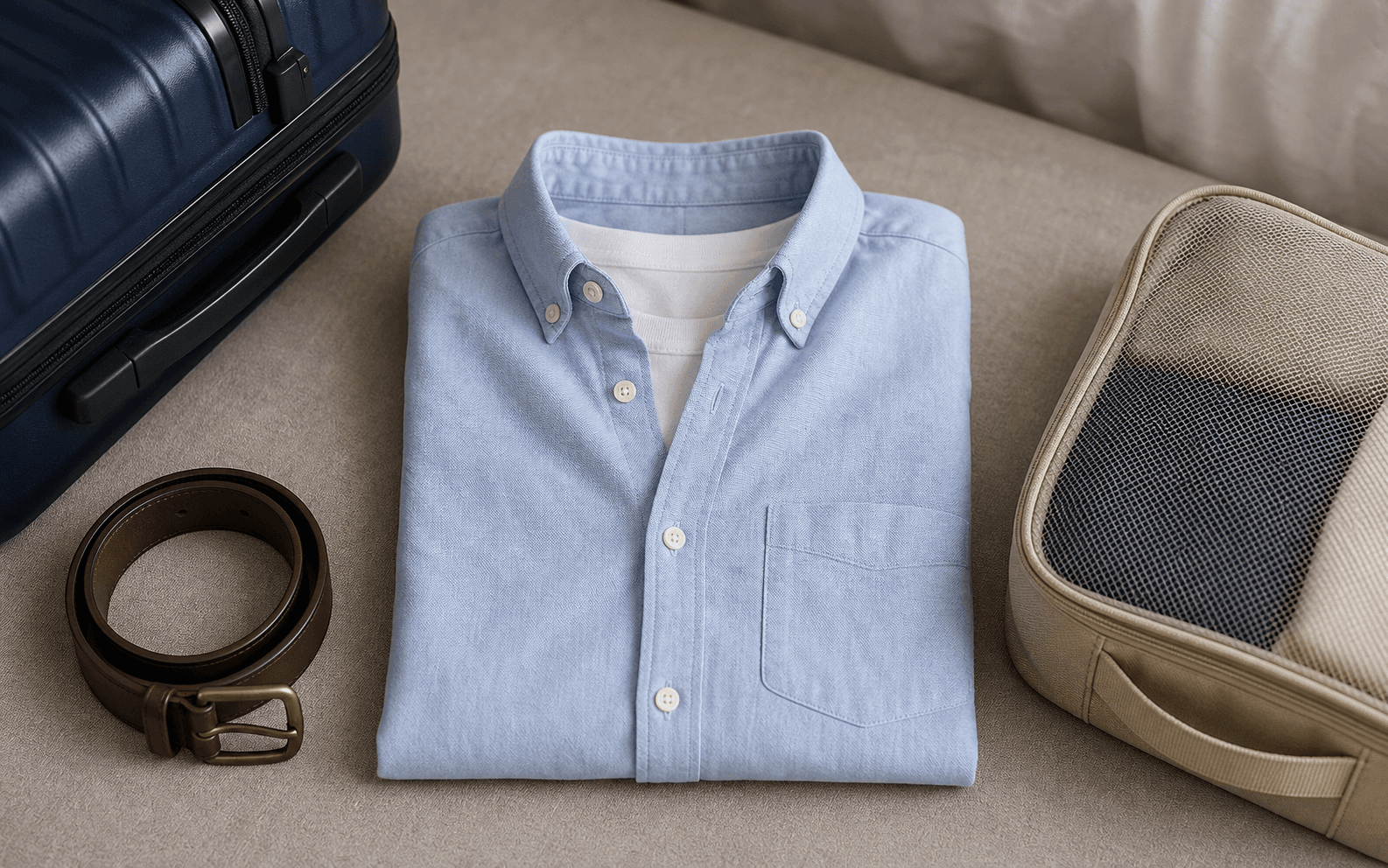
A button-down is the travel bridge piece. It can be worn closed, open over a tee, tucked into trousers, or layered under a jacket. For heat, linen or cotton-linen is better. For city trips, oxford cloth or poplin is more versatile.
Lightweight Knit
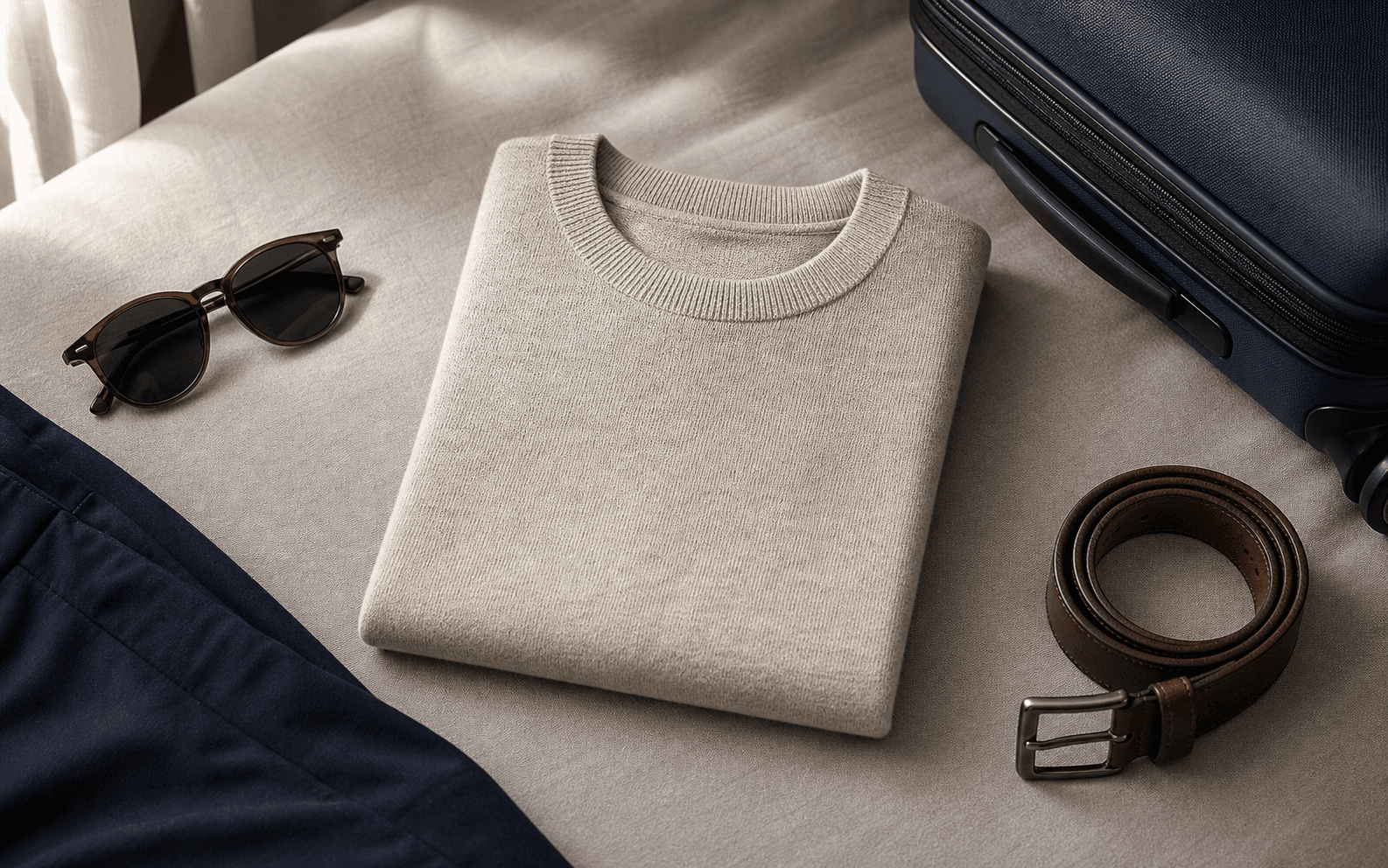
A fine-gauge crewneck, polo knit, or merino sweater solves cold flights, cool nights, and restaurants that overuse air conditioning. It also turns a tee-and-pants outfit into something more deliberate.
Straight or Relaxed Travel Jeans
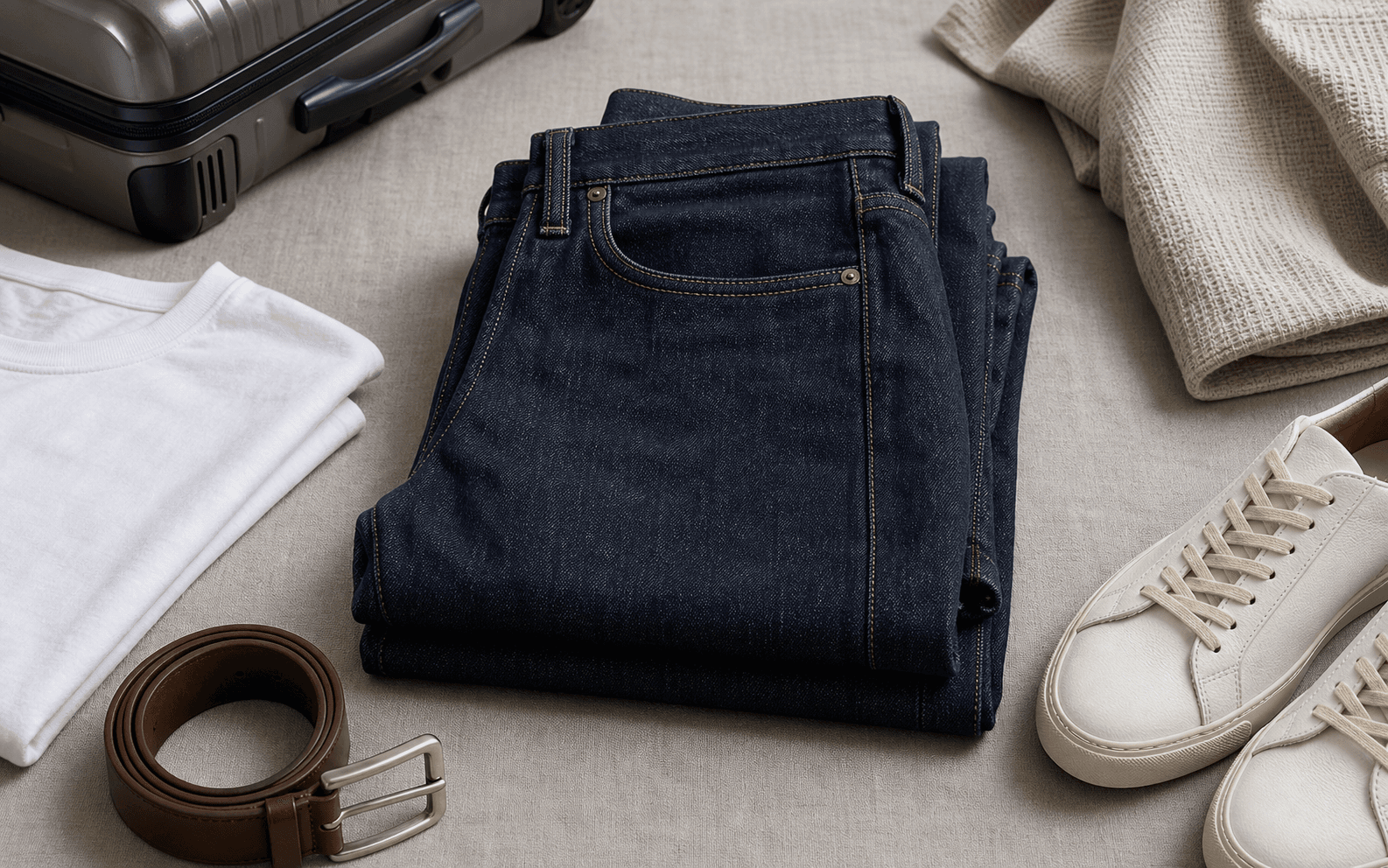
Dark jeans still work for most city travel if they are comfortable enough to sit in and clean enough for dinner. Avoid rigid denim if the travel day is long.
Relaxed Chinos or Cotton Trousers
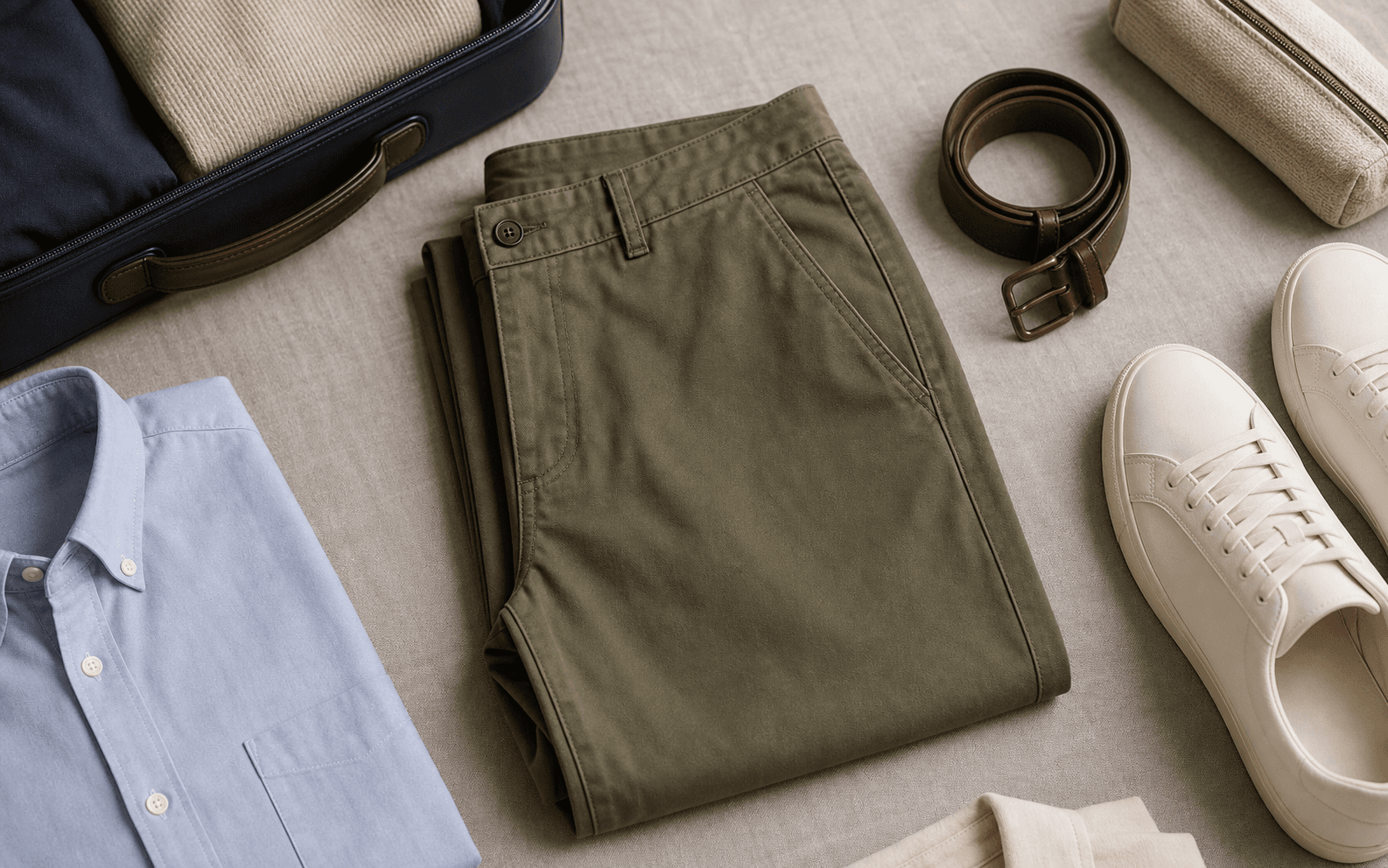
This is often the most useful travel bottom. Chinos or cotton trousers can handle walking, casual lunches, museums, offices, and dinner. The fit should be relaxed enough for movement but clean enough to pair with loafers.
Lightweight Wool or Technical Trousers
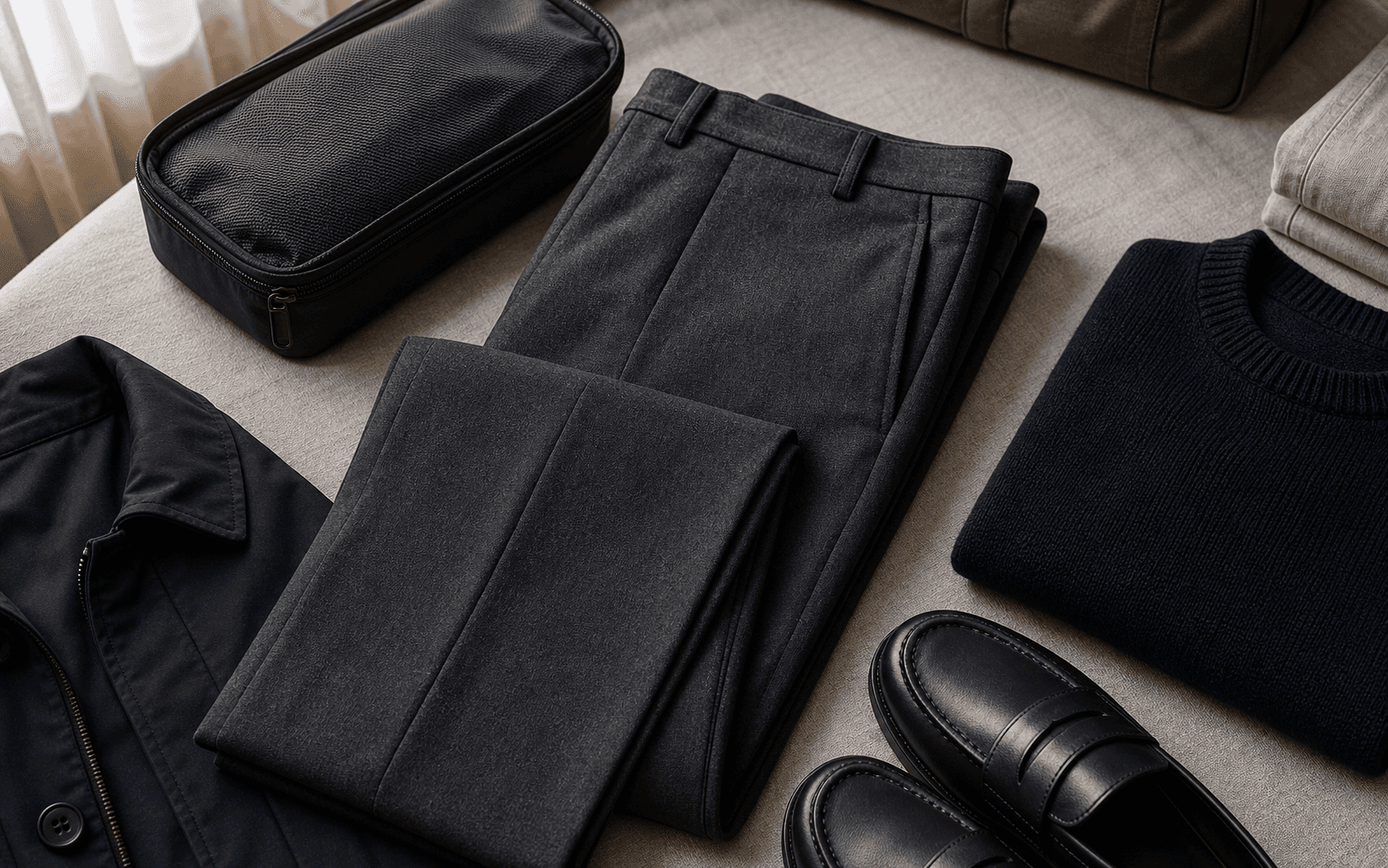
For work travel or upscale trips, one pair of wool-blend or wrinkle-resistant trousers can replace a second pair of jeans. The key is drape. If they look like hiking pants, they lose the point.
Shorts That Can Leave the Hotel
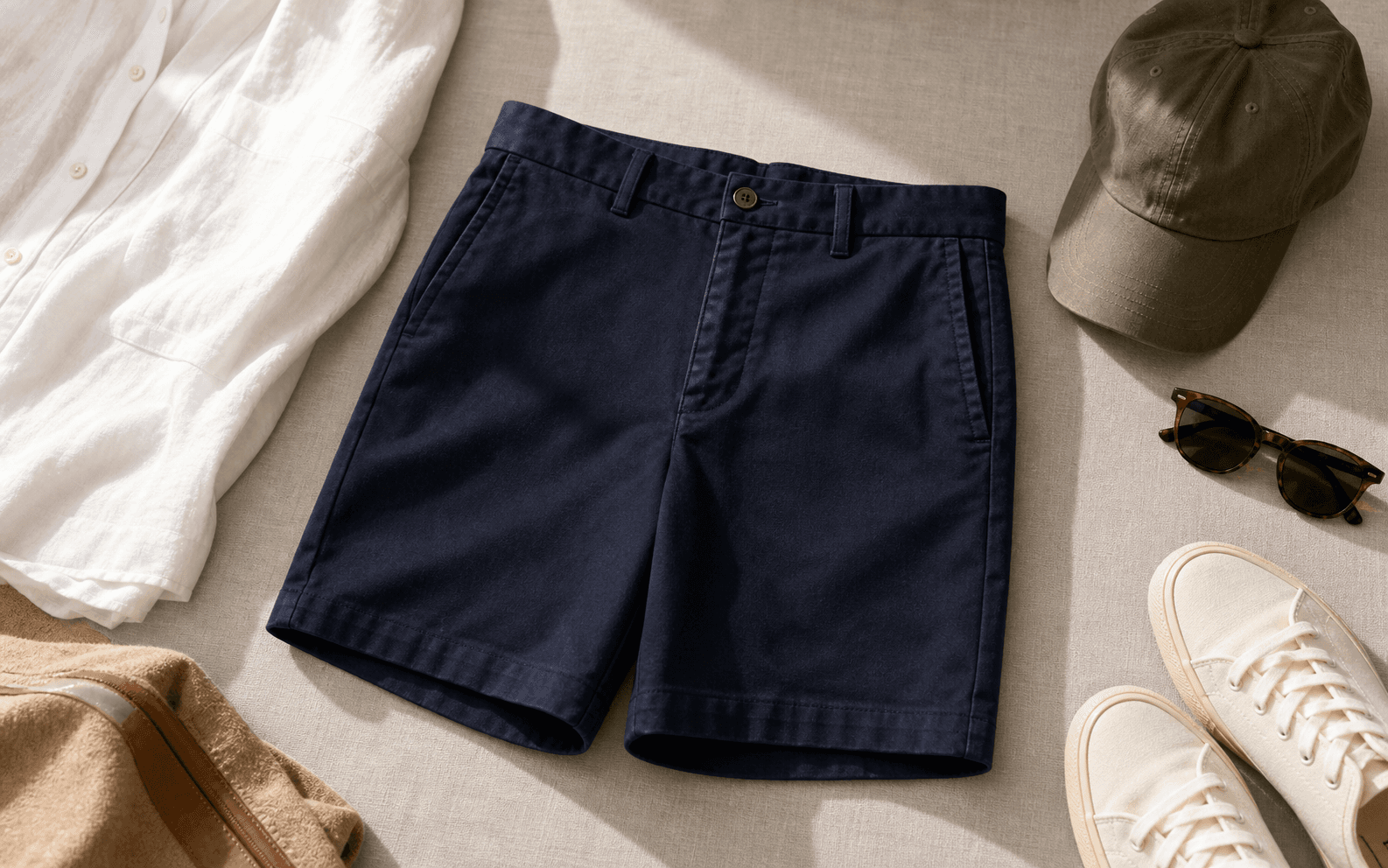
For warm destinations, bring one pair of clean shorts. Cotton twill, linen blend, or tailored nylon works. Gym shorts only make sense if the trip actually includes gym or beach time.
Lightweight Jacket
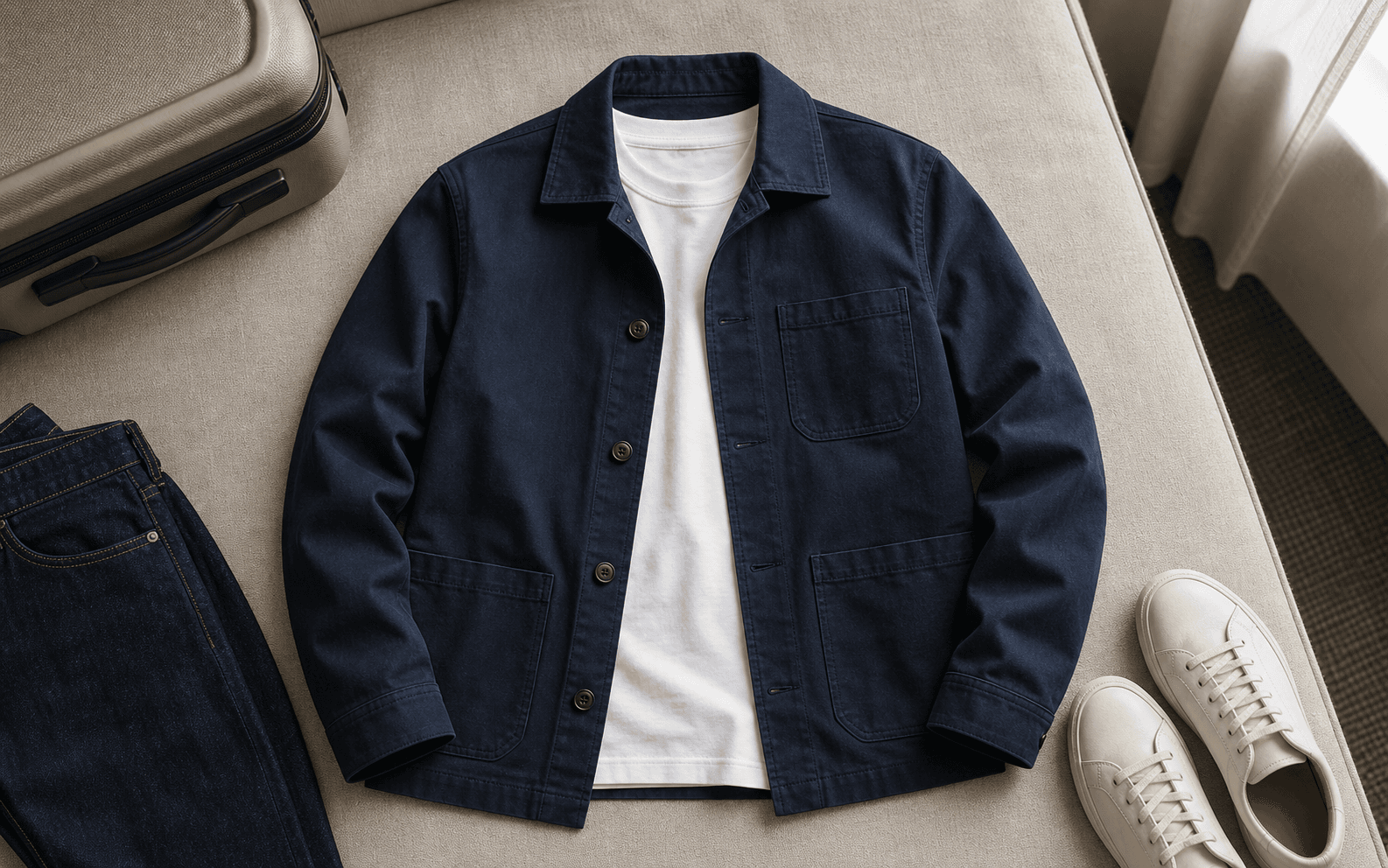
A chore jacket, Harrington, overshirt, or cropped utility jacket gives structure without weight. It should work over a tee, shirt, or knit. This is often the item that makes repeated outfits feel styled rather than recycled.
Weather Layer
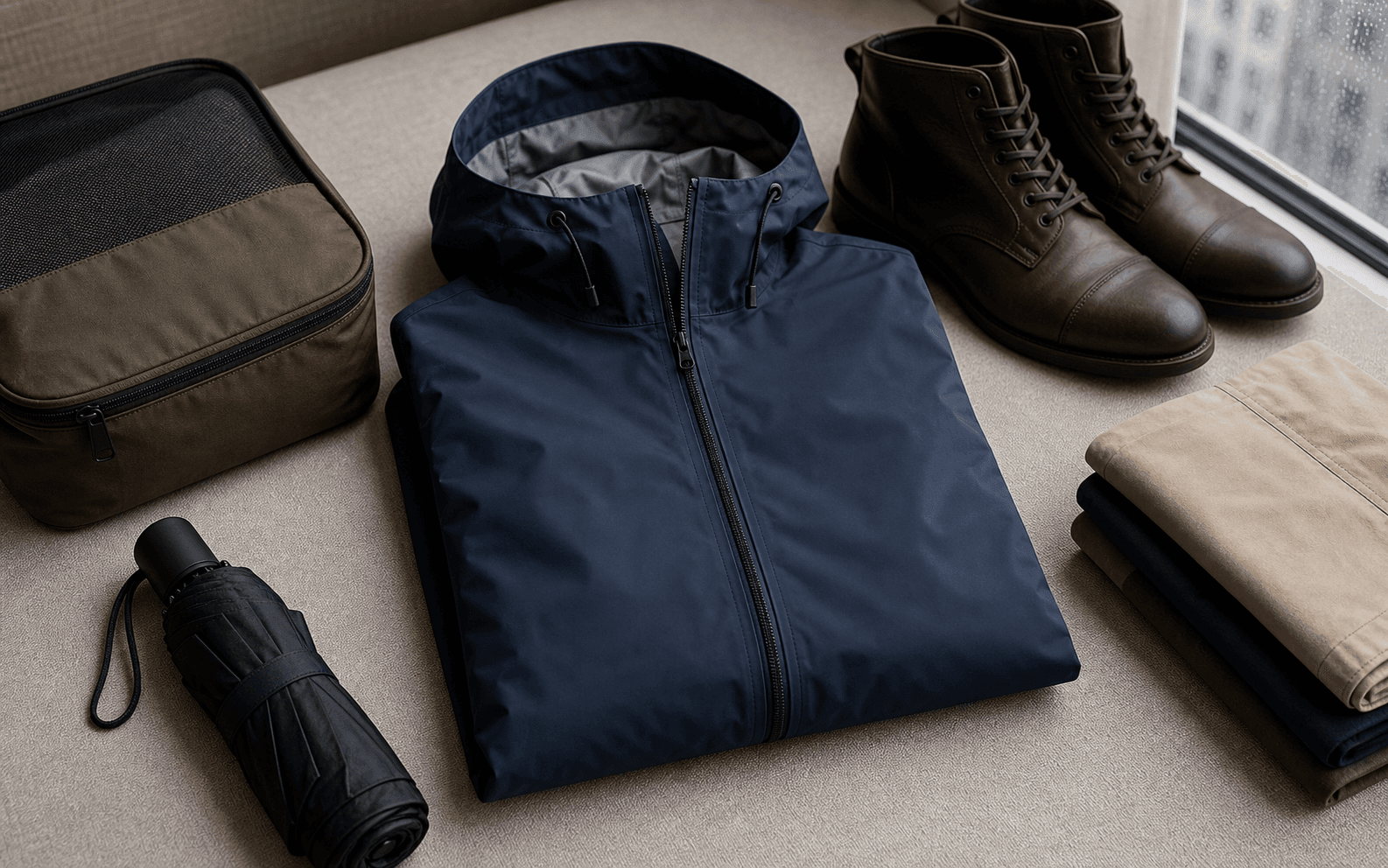
Do not rely on luck. A packable rain shell, mac coat, or technical jacket should be chosen according to the trip. If the city is rainy, this is not optional.
Walkable Sneakers
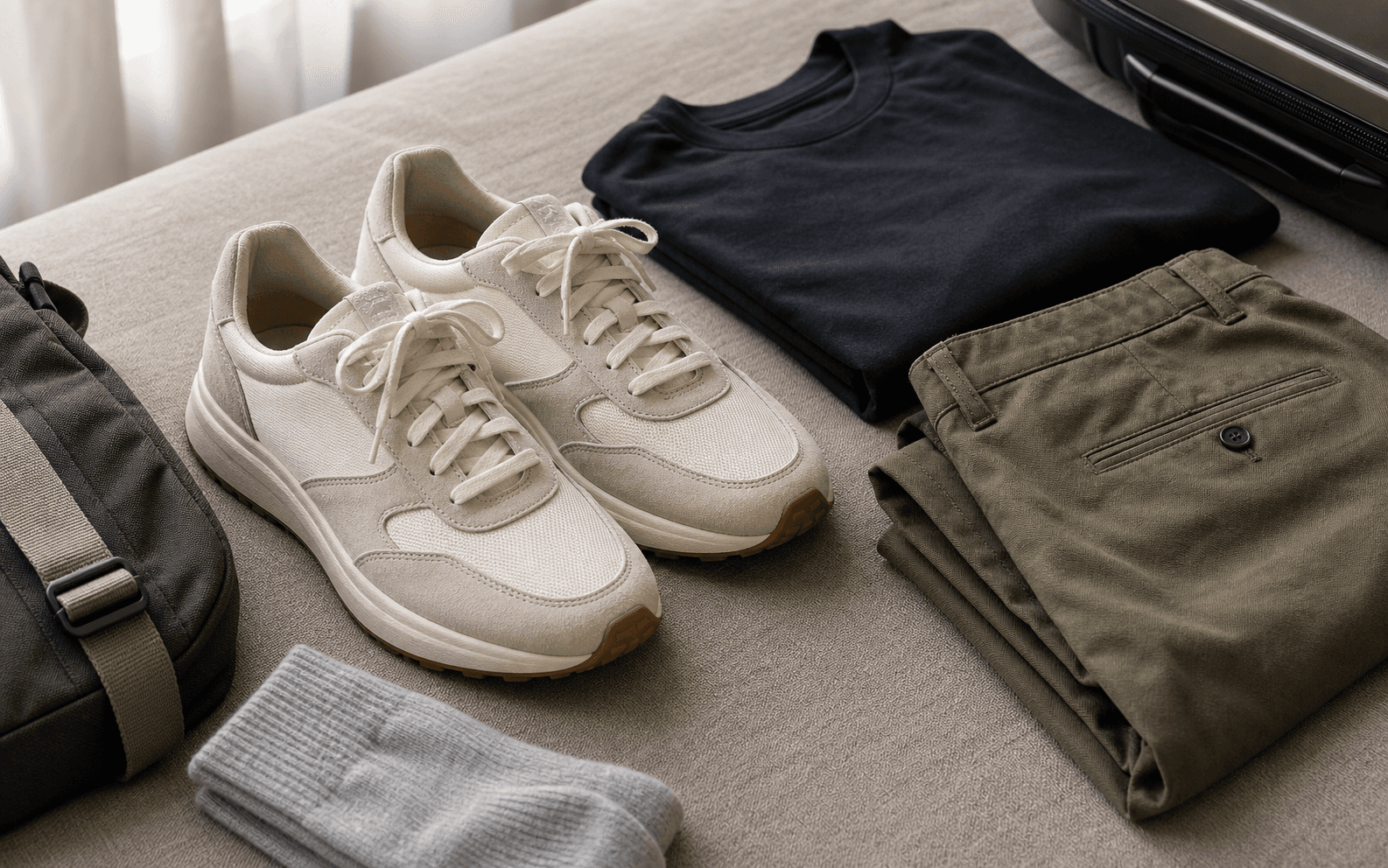
Your main shoe should be the pair you can walk in for ten miles without thinking about it. White leather sneakers can work, but retro runners, suede sneakers, or technical-leaning city sneakers often handle travel better.
Loafers or Boots
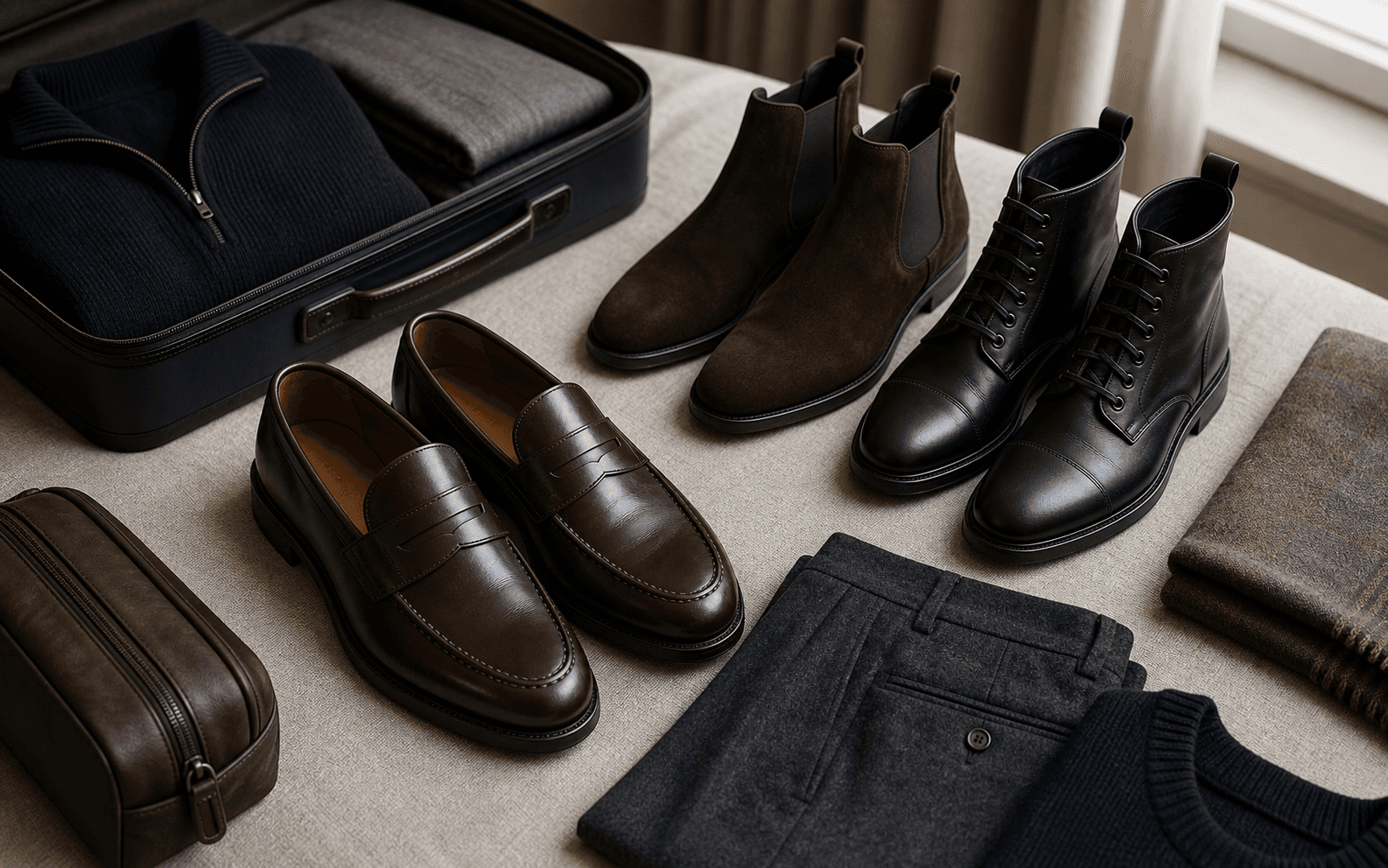
The second shoe depends on weather and itinerary. Loafers are better for warm city travel and dinner. Boots are better for rain, cold, and rough pavement. The bridge function is especially valuable when packing light: one shoe should make the same base outfit feel sharper.
Compact Accessories
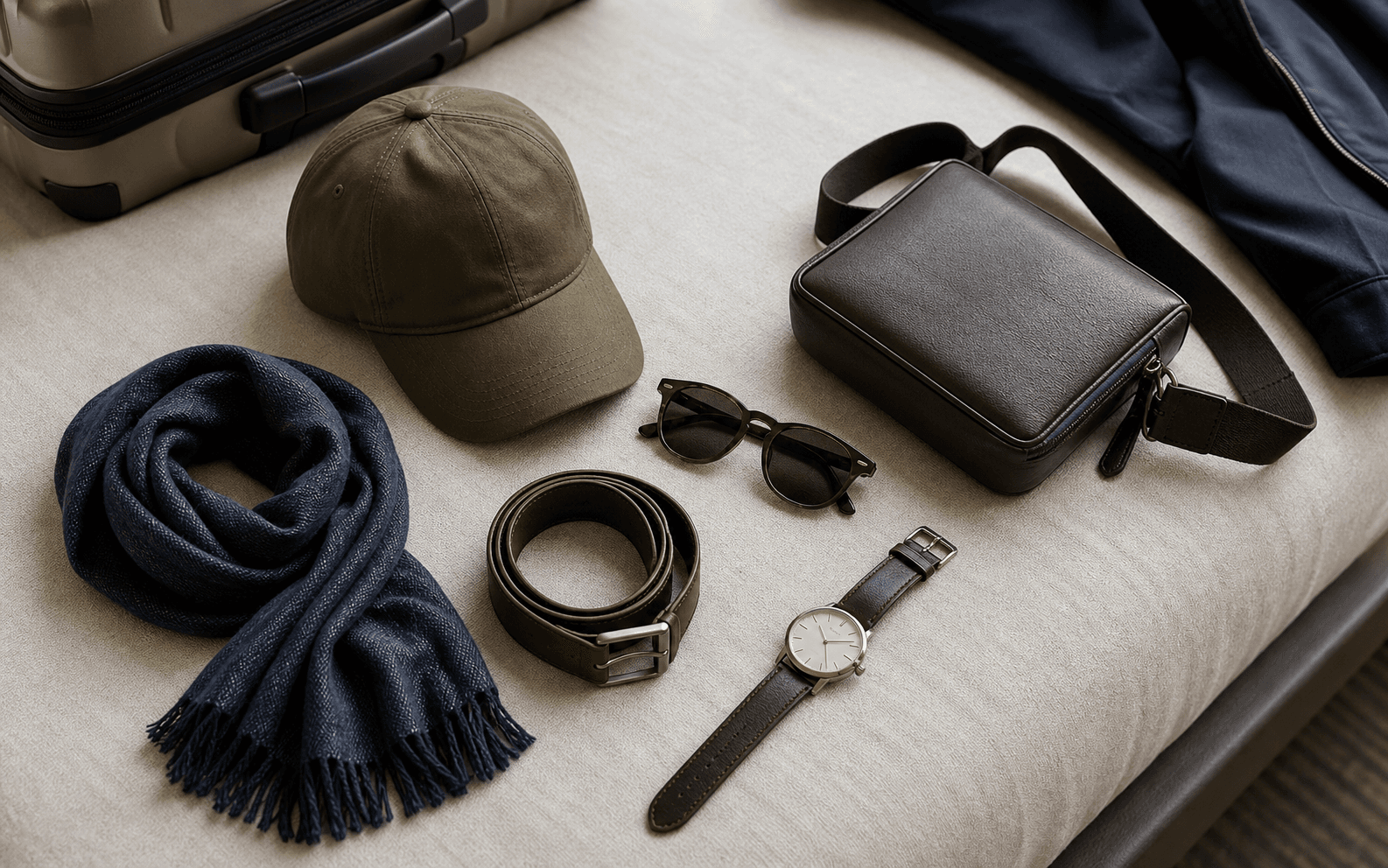
A cap, scarf, belt, sunglasses, watch, and crossbody or tote can change the tone of repeated outfits. Accessories are also the easiest way to make a compact wardrobe feel less sterile.
The Carry-On Packing List
For a one-week city trip, start here:
- 2 T-shirts: one light, one dark.
- 1 button-down shirt.
- 1 lightweight knit.
- 1 optional second shirt or camp collar for warm weather.
- 1 pair of jeans.
- 1 pair of chinos or trousers.
- 1 pair of shorts for warm destinations.
- 1 lightweight jacket.
- 1 weather layer.
- 1 pair of walkable sneakers.
- 1 pair of loafers or boots.
- 1 belt.
- 1 cap or sunglasses.
- Underwear and socks based on laundry access.
The rule: every top should work with every bottom, and both shoes should work with at least two-thirds of the outfits.
Outfit Formulas
Use these as templates. Swap the colors and fabrics for your destination, but keep the packing logic intact.
Airport Day
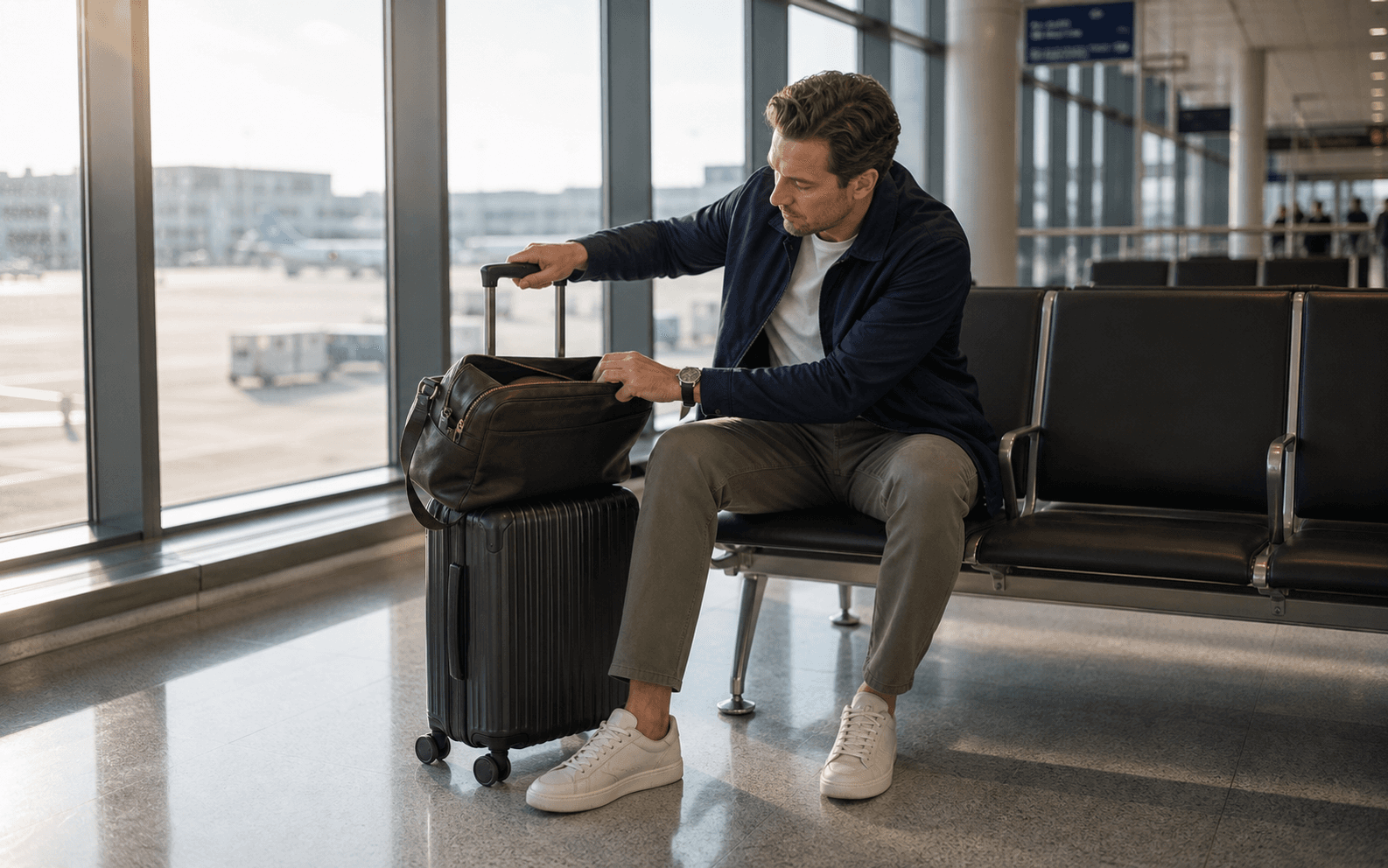
Why it works: the outfit handles sitting, walking, temperature shifts, and arrival without looking like sweatpants. The dark tee hides wear; the jacket adds shape.
Formula: dark tee + relaxed chinos + lightweight jacket + walkable sneakers
First Day in the City
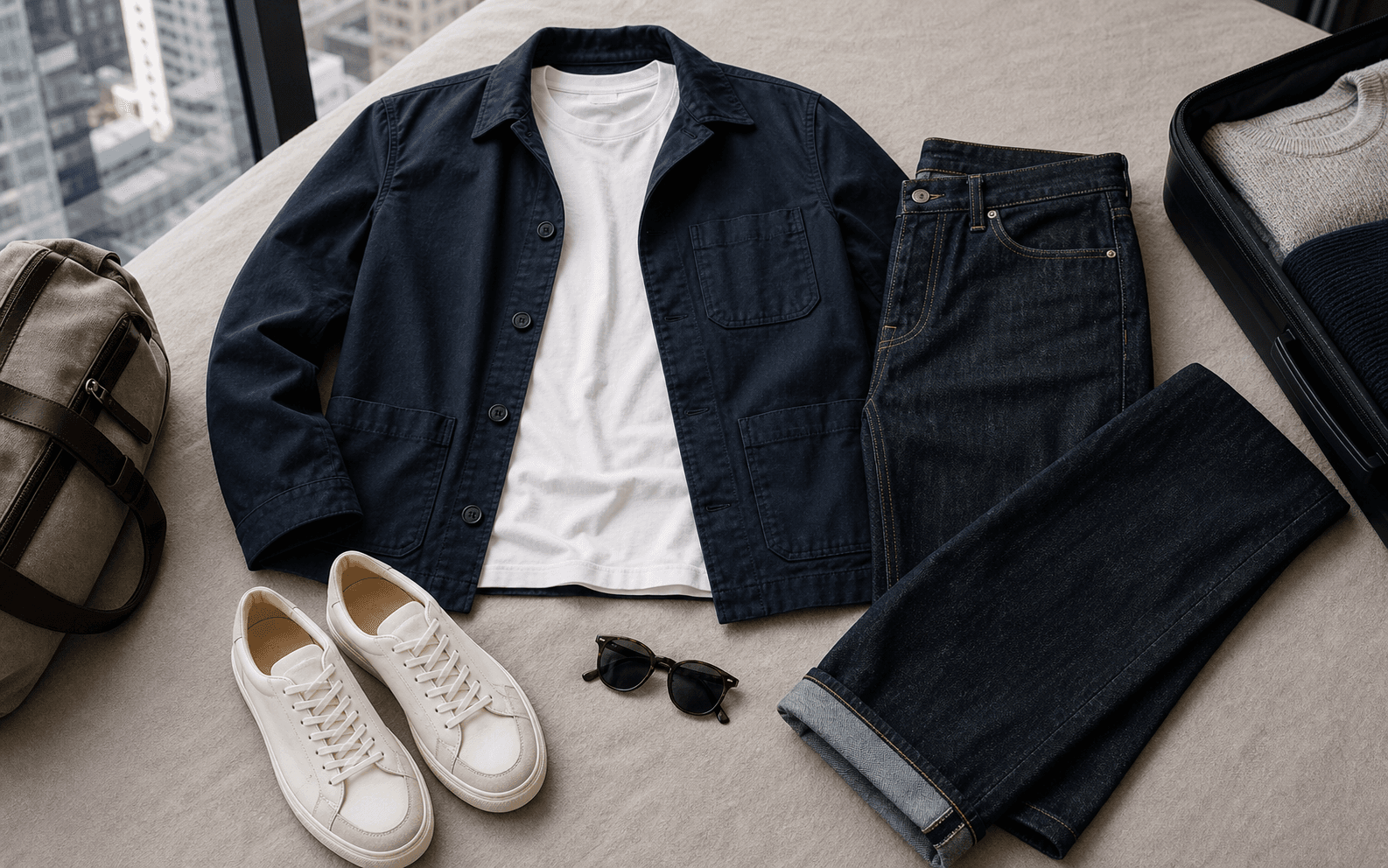
Why it works: simple, grounded, and flexible. It works for coffee, walking, casual lunch, and checking into a hotel.
Formula: white tee + dark jeans + chore jacket + sneakers
Dinner Without Packing Dress Clothes
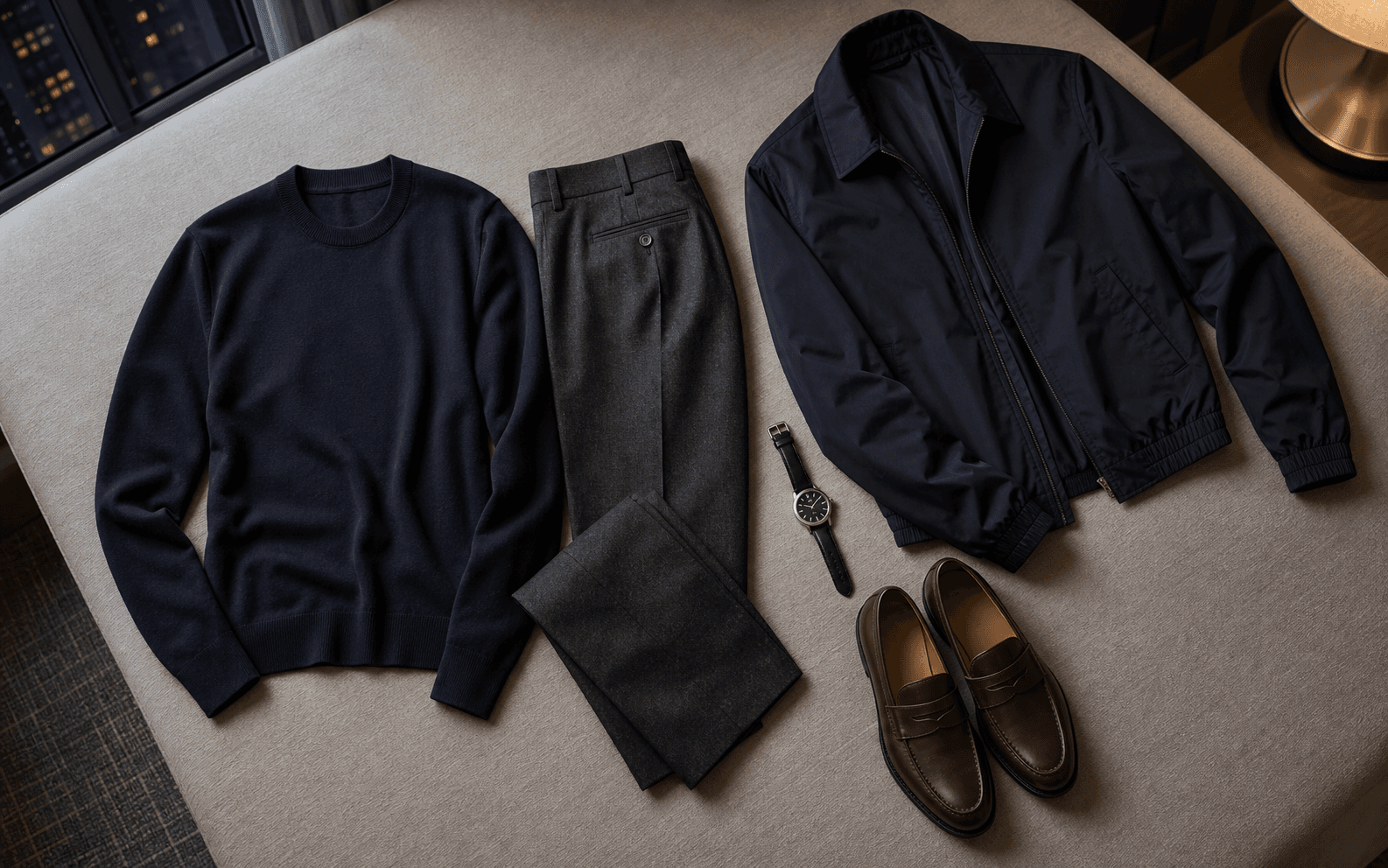
Why it works: the knit and loafers carry the polish. No blazer required unless the trip demands one.
Formula: dark knit + wool or cotton trousers + loafers + lightweight jacket
Warm-Weather Travel Day
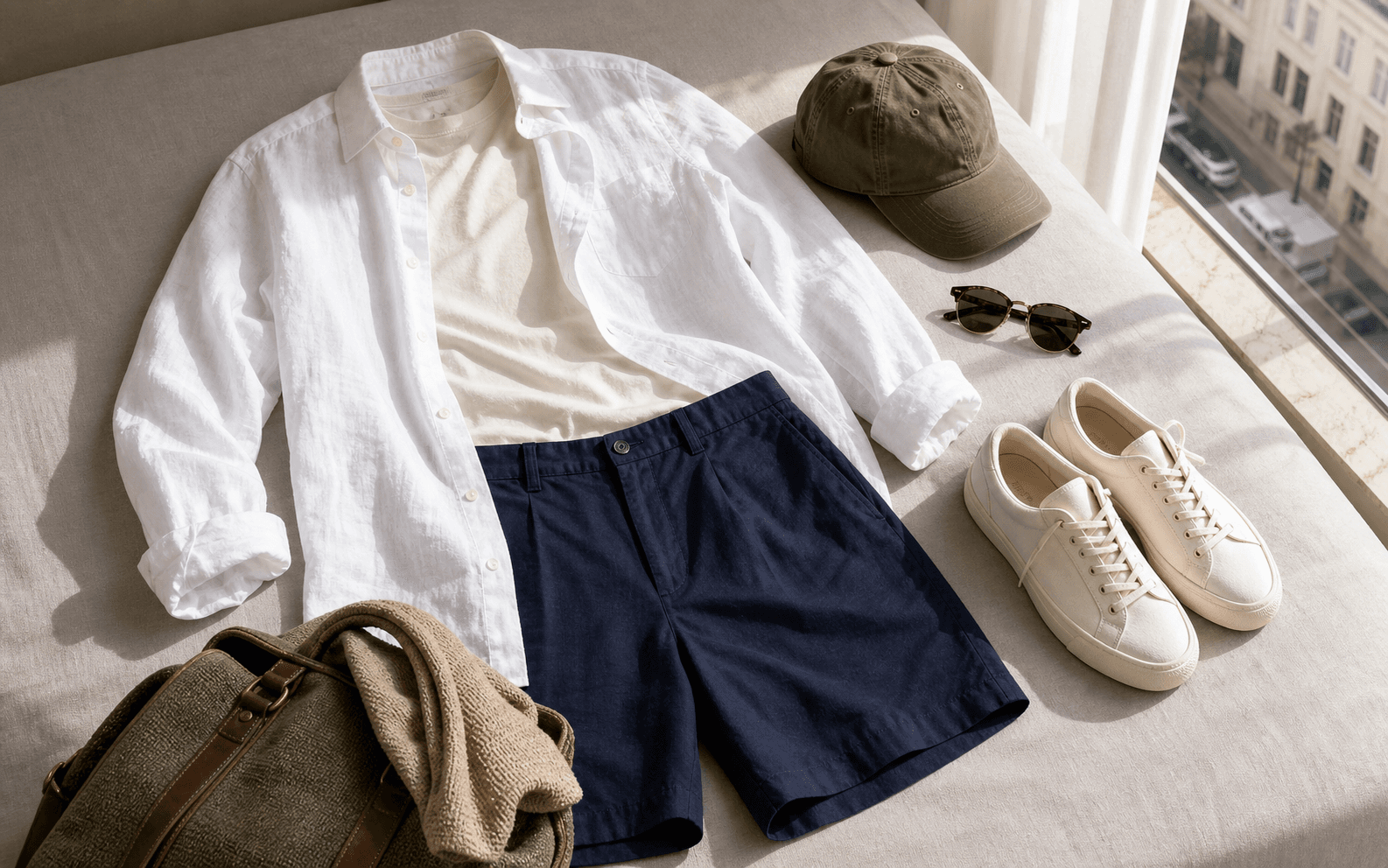
Why it works: breathable, layered, and still intentional. Linen and cotton-linen have enough visual texture to avoid looking like plain resort wear.
Formula: linen shirt open over a tee + tailored shorts + canvas sneakers or loafers
Work Trip Without a Suitcase
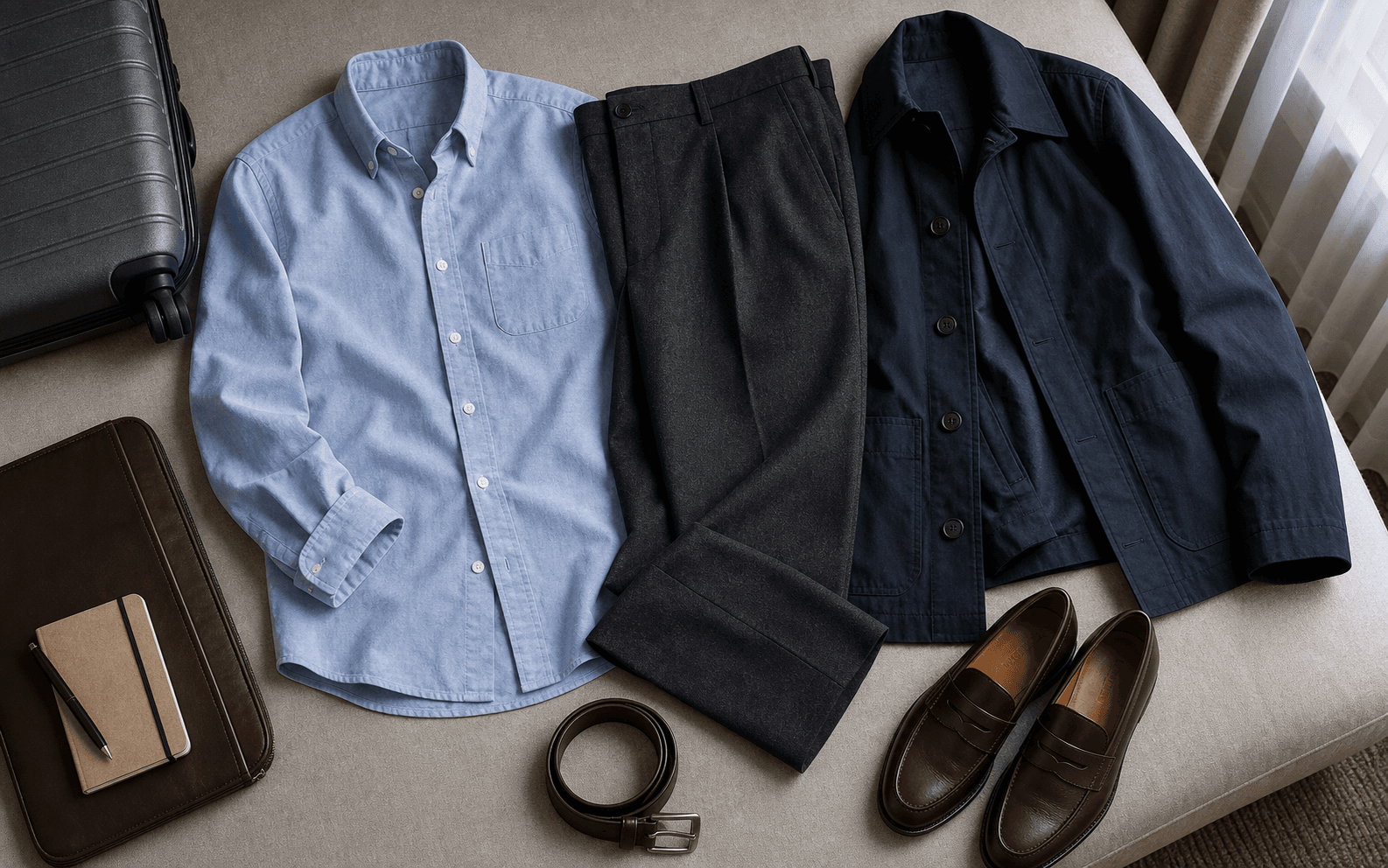
Why it works: the outfit is office-capable but not corporate-stiff. It can also turn into a dinner look by removing the jacket or swapping the shirt for a knit.
Formula: blue oxford + relaxed wool trousers + loafers + mac coat or chore jacket
Bad Weather City Day
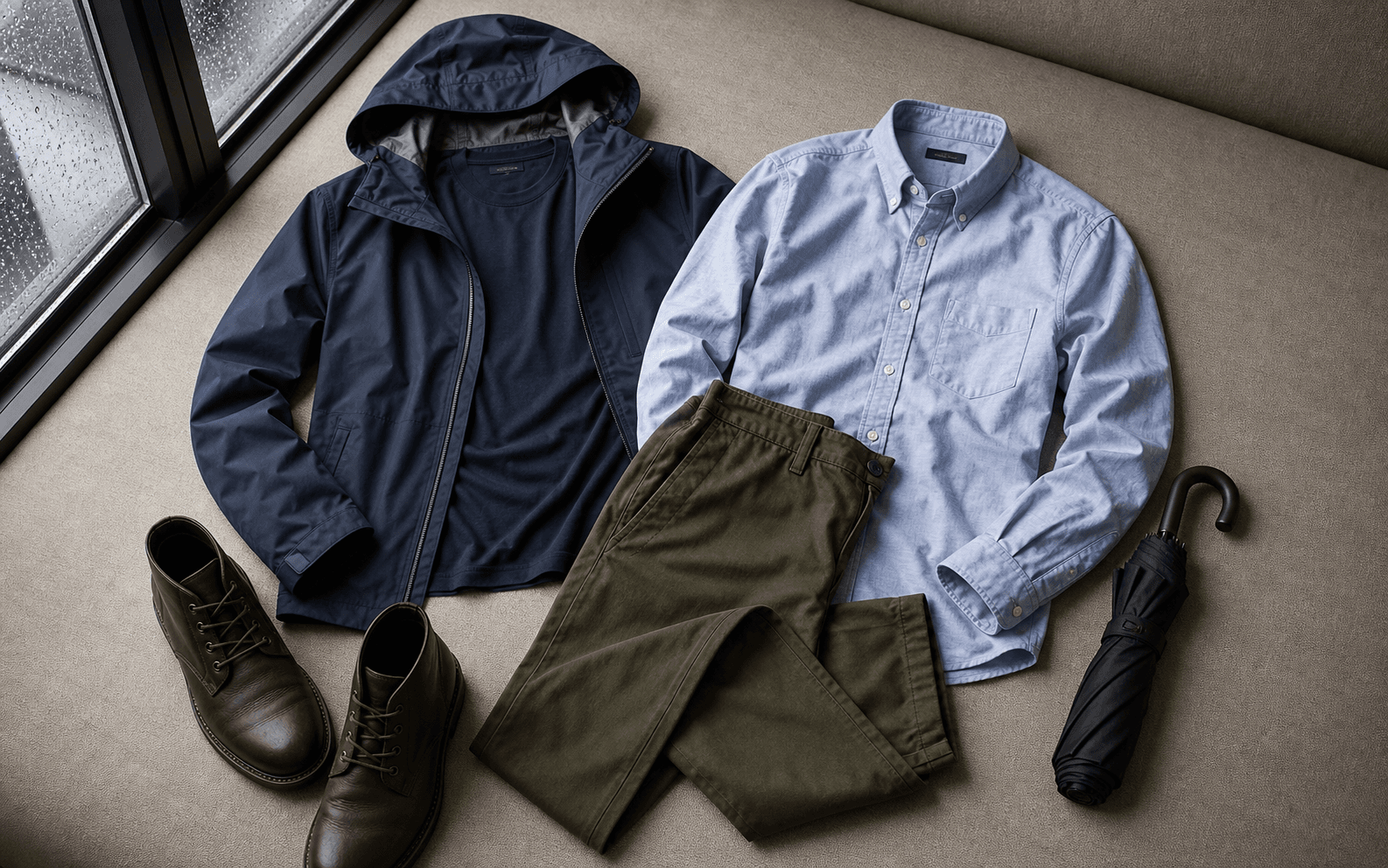
Why it works: function comes first, but the clean pants and leather boots keep the outfit from becoming purely technical.
Formula: dark tee or oxford + chinos + rain shell + leather boots
Long Walking Day
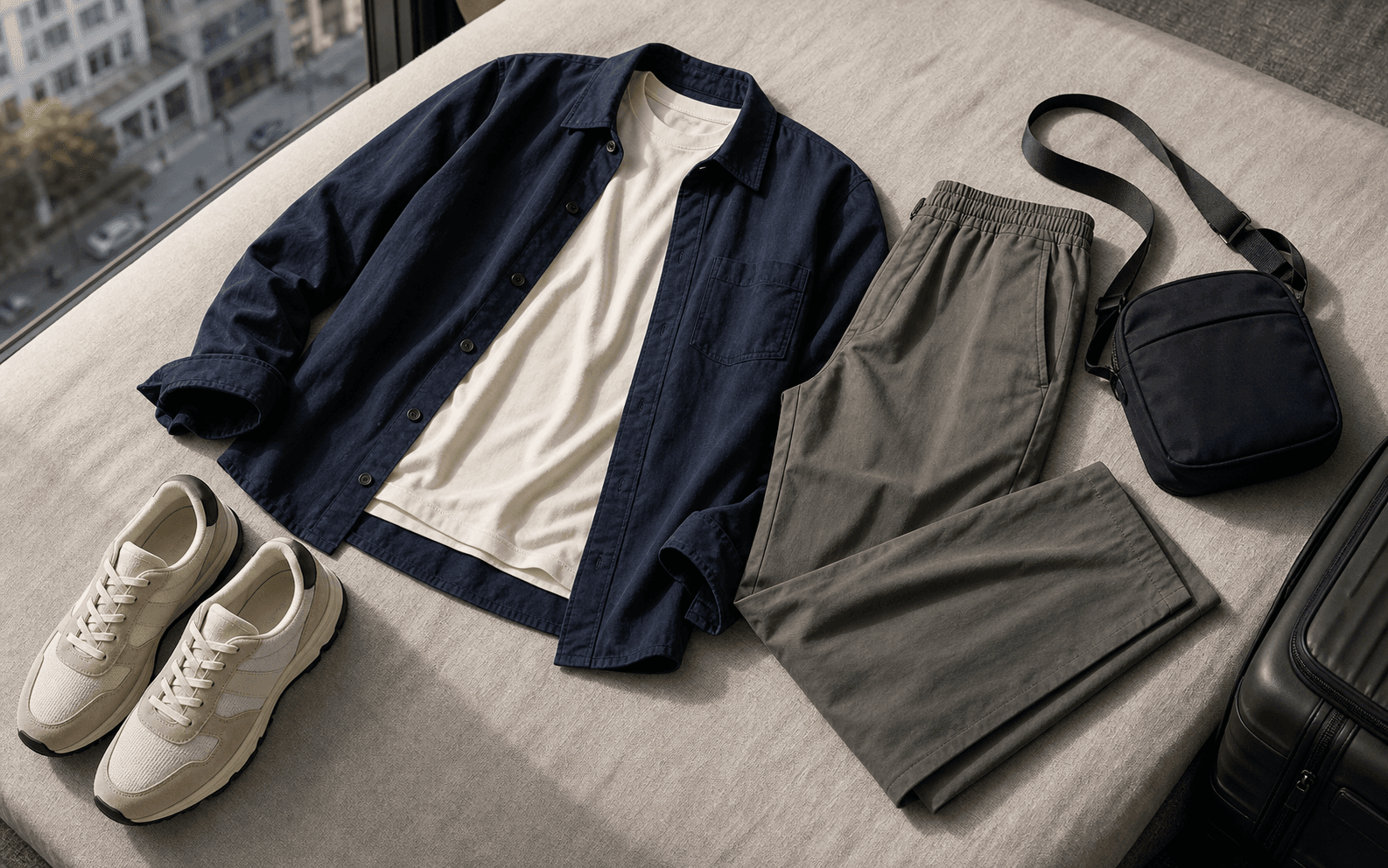
Why it works: this gives range of motion, temperature control, and footwear that will not punish you after several miles.
Formula: breathable tee + relaxed trousers + overshirt + retro runners
Elevated One-Piece Upgrade
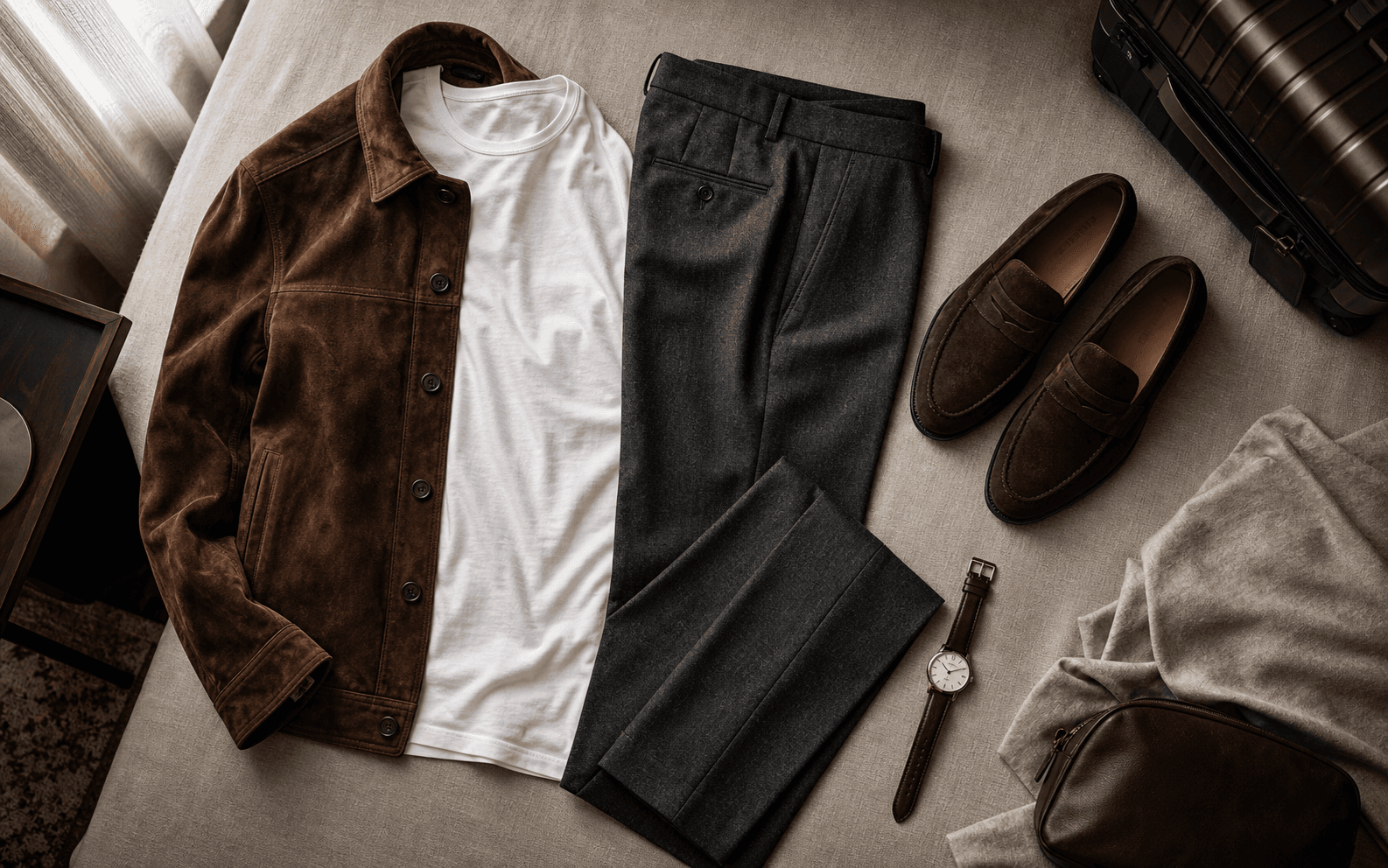
Why it works: the suede jacket does the visual work. The rest stays simple, which keeps the outfit packable and repeatable.
Formula: white tee + wool trousers + suede jacket + loafers
Budget Version From Existing Clothes
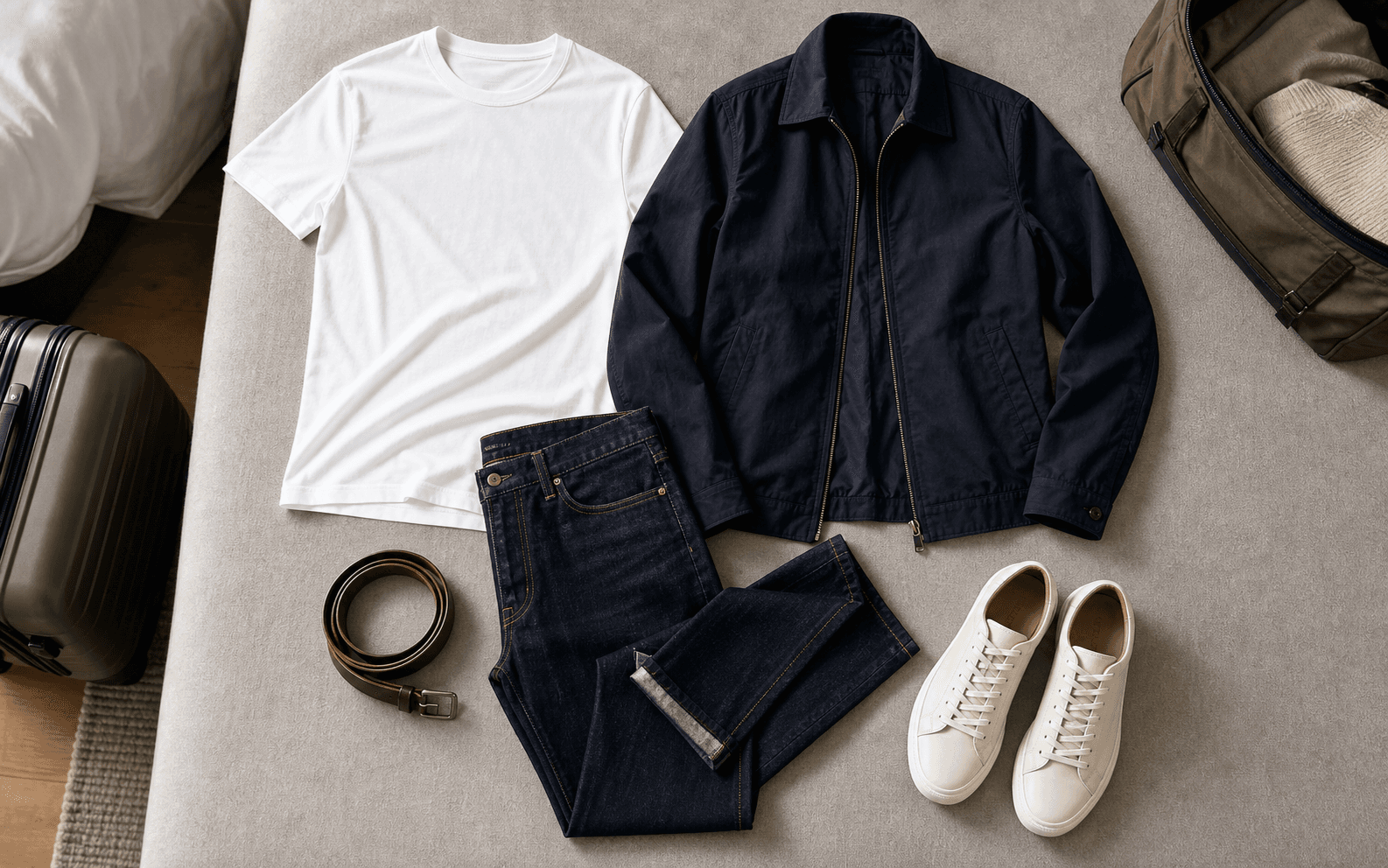
Why it works: the starting point is editing. Remove the shirts that wrinkle badly, the pants that only work with one shoe, and the shoes that cannot handle distance.
Formula: best-fitting tee + cleanest pants + light jacket + clean sneakers
The “Wrong but Interesting” Travel Twist
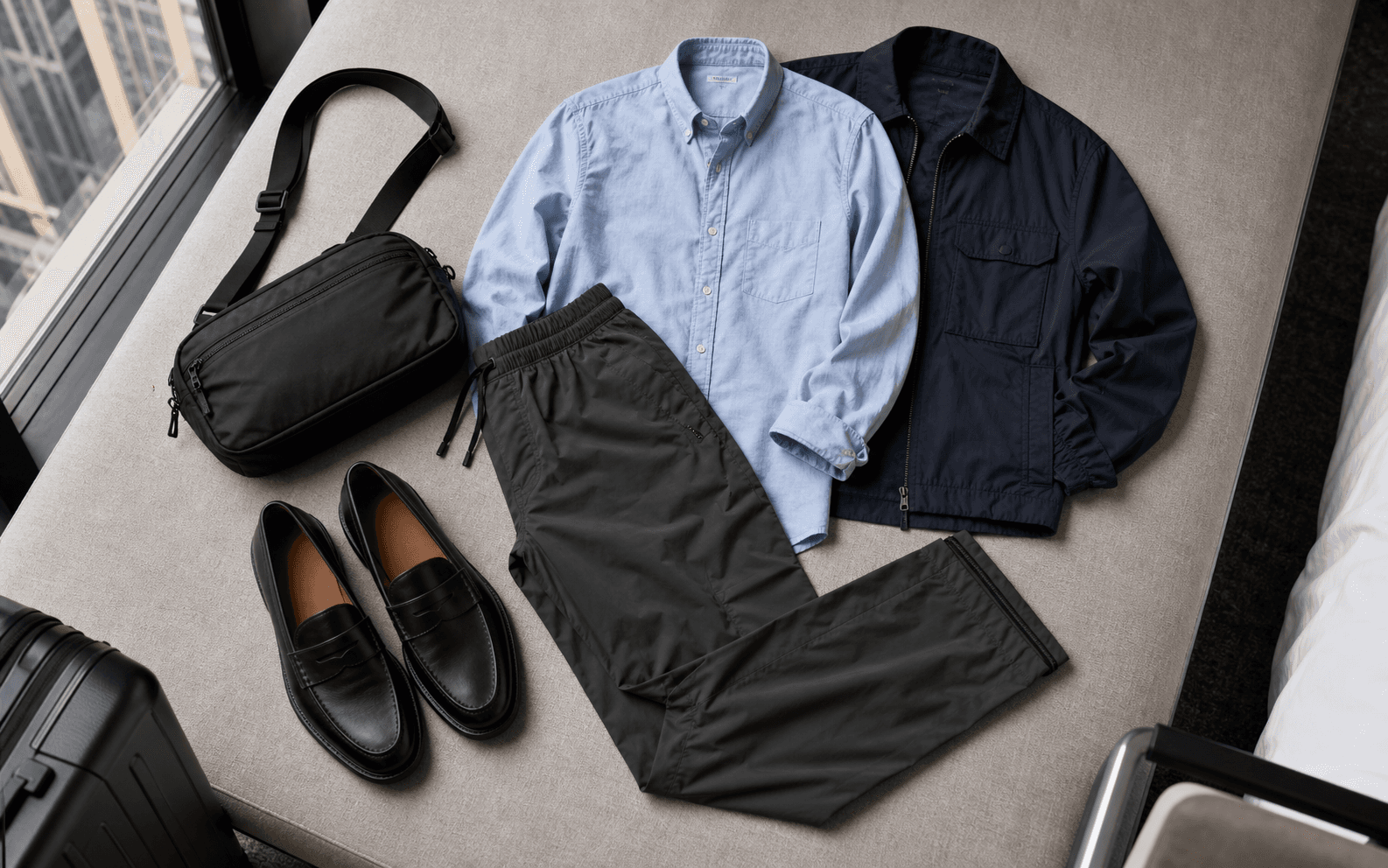
Why it works: the technical pants interrupt the preppy shirt-and-loafer base. The trick is keeping the colors quiet and the fit clean so it reads as intentional, not accidental.
Formula: oxford shirt + nylon hiking-style pants + loafers + cropped jacket
Color Logic: Pack a Narrow Palette
Travel is not the time for a dozen unrelated colors. Build around one base palette.
Best Base Colors
- Navy
- Black
- Charcoal
- Grey
- White
- Cream
- Stone
- Dark indigo
Best Secondary Colors
- Olive
- Brown
- Tobacco
- Tan
- Burgundy
- Faded blue
Best Accent Colors
- One cap color
- One patterned shirt
- One brighter knit or tee
- One scarf or bag detail
The simplest carry-on palette is navy, white, grey, olive, brown, and dark indigo. It gives enough range without making outfit planning difficult.
Fabric Logic: Travel Clothes Need Recovery
Travel clothes need to recover from sitting, folding, walking, and weather. That does not mean everything needs stretch or synthetics.
Use the right material for the job:
- Cotton jersey: comfortable, familiar, easy to wash.
- Merino: useful for odor resistance and temperature regulation if the feel works for you.
- Oxford cloth: more forgiving than smooth dress shirting.
- Linen: breathable but wrinkled by nature; better when the wrinkle looks intentional.
- Cotton twill: strong for chinos, overshirts, and chore jackets.
- Wool trousers: good drape and recovery if the fabric is not too delicate.
- Nylon shell: practical for rain and wind.
- Suede and leather: useful for footwear and one premium layer, but weather risk matters.
Climate should drive the fabric choices before trend does. For warm destinations, breathable tailoring, linen, cotton-linen, and open knits matter more than another dark layer. For cooler or wetter cities, the right shell, coat, and shoe choice matter more than packing extra shirts.
Fit Rules for Travel
Travel clothes need enough room to move, but not so much that they collapse.
Tops
- T-shirts should skim the body and hold their collar.
- Shirts should fit comfortably through the chest and shoulders.
- Knits should layer under jackets without bunching.
- Overshirts should fit over a tee or knit, not just one thin layer.
Pants
- Straight and relaxed fits travel better than skinny fits.
- A mid or higher rise is usually more comfortable for sitting.
- The hem should work with both shoes.
- Avoid pants that require constant adjusting.
Outerwear
- Jackets should have pockets that actually function.
- A travel jacket should layer over your bulkiest top.
- Cropped or hip-length jackets work best for city travel.
- Long coats work if the trip is colder or more formal, but they take more packing strategy.
Footwear
- Never bring a new shoe as your primary travel shoe.
- The main shoe must handle long walking days.
- The second shoe must change formality or weather capability.
- If a shoe only works for one outfit, it does not belong in the carry-on.
Common Mistakes
Mistake 1: Packing Too Many Shoes
Shoes consume space and weight. Two pairs is usually the limit: one walking pair and one sharper or weather-ready pair.
Mistake 2: Packing “Just in Case” Clothes
The carry-on fails when it becomes a container for anxiety. Pack for the actual itinerary, not imaginary edge cases.
Mistake 3: Ignoring Laundry
A one-week wardrobe becomes much easier if you can wash tees, socks, and underwear. Plan around laundry instead of overpacking.
Mistake 4: Bringing Clothes That Only Work Once
One statement shirt is fine. Three pieces that each require a special outfit are not.
Mistake 5: Dressing Only for the Plane
Airport comfort matters, but your travel outfit should still work after arrival. The best travel clothes move from transit to street without a full change.
Mistake 6: Overusing Technical Fabrics
Technical clothing is useful, but a full technical outfit can look like hiking gear. Mix one technical layer with normal clothes.
How to Build the Wardrobe From What You Already Own
Step 1: Pick the Shoes First
Start with your walking shoe and second shoe. Every outfit should work around them.
Step 2: Choose Two Bottoms
Pick one casual bottom and one sharper bottom. Dark jeans plus relaxed chinos is the easiest combination. For work travel, swap jeans for wool trousers.
Step 3: Build Around Three Tops
Choose one light tee, one dark tee, and one button-down. Add a knit if the climate requires it.
Step 4: Add One Shape Layer
A chore jacket, overshirt, Harrington, or lightweight blazer gives repeated outfits structure.
Step 5: Add Weather Protection
Choose the weather layer based on the destination, not aesthetics alone.
Step 6: Test the Matrix
Before packing, make at least six outfits from the pieces. If one item only works once, replace it.
FAQ
How many clothes should men pack for a one-week carry-on trip?
A practical one-week carry-on wardrobe usually needs two bottoms, three to five tops, one knit, one lightweight jacket, one weather layer, and two pairs of shoes. Underwear and socks depend on laundry access.
What are the best pants for men’s travel outfits?
The most versatile travel pants are relaxed chinos, dark straight jeans, and lightweight wool or wool-blend trousers. Choose pants that work with both sneakers and loafers or boots.
How many shoes should men bring in a carry-on?
Two pairs is usually enough: one comfortable walking sneaker and one sharper or weather-ready shoe, such as loafers or leather boots.
How do men look stylish while packing light?
Use a narrow color palette, repeatable outfit formulas, better outerwear, and shoes that change the formality of the same base pieces. Texture matters more than packing more items.
What should men avoid packing for travel?
Avoid one-use pieces, uncomfortable shoes, pants that only work with one outfit, wrinkle-prone shirts that cannot recover, and excessive “just in case” items.